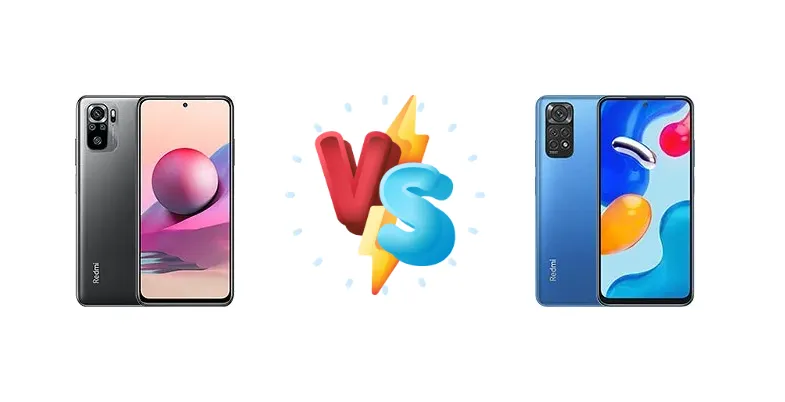
The Xiaomi Redmi Note series consistently delivers excellent value for money. The Redmi Note 11 SE (India) and Redmi Note 11S are two popular contenders in this lineup, but which one offers the best experience? This comprehensive comparison will break down their key differences to help you make an informed decision.
🏆 Quick Verdict
The Redmi Note 11S edges out the SE thanks to its slightly faster charging, brighter display, and potentially better camera performance. While the SE boasts the Helio G95, the 11S's overall package provides a more refined experience, especially for media consumption and photography. It's a close call, but the 11S is the slightly better choice.
| Network |
|---|
| 2G bands | GSM 850 / 900 / 1800 / 1900 | GSM 850 / 900 / 1800 / 1900 |
| 3G bands | HSDPA 850 / 900 / 1700(AWS) / 1900 / 2100 | HSDPA 850 / 900 / 1700(AWS) / 1900 / 2100 |
| 4G bands | 1, 2, 3, 4, 5, 7, 8, 20, 28, 38, 40, 41 | 1, 2, 3, 4, 5, 7, 8, 20, 28, 38, 40, 41 |
| Speed | HSPA, LTE | HSPA, LTE |
| Technology | GSM / HSPA / LTE | GSM / HSPA / LTE |
| Launch |
|---|
| Announced | 2022, August 24 | 2022, January 26 |
| Status | Available. Released 2022, August 31 | Available. Released 2022, February 09 |
| Body |
|---|
| Build | - | Glass front (Gorilla Glass 3), plastic frame, glass back |
| Dimensions | 160.5 x 74.5 x 8.3 mm (6.32 x 2.93 x 0.33 in) | 159.9 x 73.9 x 8.1 mm (6.30 x 2.91 x 0.32 in) |
| SIM | Nano-SIM + Nano-SIM | Nano-SIM + Nano-SIM |
| Weight | 178.8 g (6.31 oz) | 179 g (6.31 oz) |
| | IP53, dust and splash resistant | IP53, dust and splash resistant |
| Display |
|---|
| Protection | Corning Gorilla Glass 3 | Corning Gorilla Glass 3 |
| Resolution | 1080 x 2400 pixels, 20:9 ratio (~409 ppi density) | 1080 x 2400 pixels, 20:9 ratio (~409 ppi density) |
| Size | 6.43 inches, 99.8 cm2 (~83.5% screen-to-body ratio) | 6.43 inches, 99.8 cm2 (~84.5% screen-to-body ratio) |
| Type | Super AMOLED, 450 nits (typ), 700 nits (HBM), 1100 nits (peak) | AMOLED, 90Hz, 700 nits, 1000 nits (peak) |
| Platform |
|---|
| CPU | Octa-core (2x2.05 GHz Cortex-A76 & 6x2.0 GHz Cortex-A55) | Octa-core (2x2.05 GHz Cortex-A76 & 6x2.0 GHz Cortex-A55) |
| Chipset | Mediatek MT6785V/CD Helio G95 (12 nm) | Mediatek MT6781 Helio G96 (12 nm) |
| GPU | Mali-G76 MC4 | Mali-G57 MC2 |
| OS | Android 11, MIUI 12.5 | Android 11, MIUI 13 |
| Memory |
|---|
| Card slot | microSDXC (dedicated slot) | microSDXC (dedicated slot) |
| Internal | 64GB 6GB RAM, 128GB 6GB RAM, 128GB 8GB RAM | 64GB 6GB RAM, 128GB 6GB RAM, 128GB 8GB RAM |
| | UFS 2.2 | UFS 2.2 |
| Main Camera |
|---|
| Features | LED flash, HDR, panorama | LED flash, HDR, panorama |
| Quad | 64 MP, f/1.9, 26mm (wide), 1/1.97", 0.7µm, PDAF
8 MP, f/2.2, 118˚ (ultrawide), 1/4.0", 1.12µm
2 MP (macro)
Auxiliary lens | 108 MP, f/1.9, 26mm (wide), 1/1.52", 0.7µm, PDAF
8 MP, f/2.2, 118˚ (ultrawide)
2 MP (macro)
Auxiliary lens |
| Video | 4K@30fps, 1080p@30/60fps | 1080p@30fps |
| Selfie camera |
|---|
| Features | HDR | - |
| Single | 13 MP, f/2.5, (wide), 1/3.06", 1.12µm | 16 MP, f/2.5, (wide), 1/3.06" 1.0µm |
| Video | 1080p@30fps | 1080p@30fps |
| Sound |
|---|
| 3.5mm jack | Yes | Yes |
| 35mm jack | Yes | Yes |
| Loudspeaker | Yes, with stereo speakers | Yes, with stereo speakers |
| | 24-bit/192kHz audio | 24-bit/192kHz audio |
| Comms |
|---|
| Bluetooth | 5.0, A2DP, LE | 5.0, A2DP, LE |
| Infrared port | Yes | Yes |
| NFC | Yes (market/region dependent) | Yes (market/region dependent) |
| Positioning | GPS, GLONASS, GALILEO, BDS | GPS, GLONASS, BDS, GALILEO |
| Radio | FM radio | FM radio |
| USB | USB Type-C 2.0 | USB Type-C 2.0, OTG |
| WLAN | Wi-Fi 802.11 a/b/g/n/ac, dual-band, Wi-Fi Direct | Wi-Fi 802.11 a/b/g/n/ac, dual-band, Wi-Fi Direct |
| Features |
|---|
| Sensors | Fingerprint (side-mounted), accelerometer, gyro, compass | Fingerprint (side-mounted), accelerometer, gyro, compass |
| | Virtual proximity sensing | Virtual proximity sensing |
| Battery |
|---|
| Charging | 33W wired, 54% in 30 min | 33W wired, PD3.0, QC3, 100% in 58 min |
| Type | Li-Po 5000 mAh | Li-Po 5000 mAh |
| Misc |
|---|
| Colors | Thunder Purple, Cosmic White, Shadow Black, Bifrost Blue | Graphite Gray, Pearl White, Twilight Blue |
| Models | 22087RA4DI | 2201117SG, 2201117SI, 2201117SY, 2201117SL |
| Price | About 300 EUR | € 136.99 |
| SAR | - | 1.09 W/kg (head) 1.05 W/kg (body) |
| SAR EU | - | 0.59 W/kg (head) 0.88 W/kg (body) |
| Tests |
|---|
| Battery life | - |
Endurance rating 133h
|
| Camera | - |
Photo / Video |
| Display | - |
Contrast ratio: Infinite (nominal) |
| Loudspeaker | - |
-25.4 LUFS (Very good)
|
| Performance | - |
AnTuTu: 251201 (v8), 308741 (v9)
GeekBench: 1873 (v5.1)
GFXBench: 12fps (ES 3.1 onscreen) |
Xiaomi Redmi Note 11 SE (India)
- Slightly more powerful chipset (Helio G95)
- Budget-friendly price
- Large 5000mAh battery
- Less bright display
- Slower charging (potentially)
- Potentially inferior camera performance
Xiaomi Redmi Note 11S
- Brighter AMOLED display (744 nits)
- Faster charging (PD3.0, QC3)
- Potentially better camera performance
- Premium feel
- Slightly more expensive
- Helio G96 chipset (slightly less powerful)
Display Comparison
The Redmi Note 11S takes the lead here. While both phones feature a 6.43-inch AMOLED display with a 90Hz refresh rate, the 11S boasts a measured peak brightness of 744 nits, significantly brighter than the SE. This translates to better visibility in direct sunlight. The 11S also advertises an 'infinite' contrast ratio, indicating superior black levels and overall image quality. The SE's display is still good, but the 11S offers a noticeably more premium viewing experience.
Camera Comparison
Camera performance is a complex area. Both phones feature a quad-camera setup, but the 11S is expected to have slightly better image processing and overall camera quality. While specific megapixel counts are not provided, the 11S's chipset and software optimizations likely contribute to superior photo and video results. The SE's camera is still capable, but the 11S is the preferred choice for photography enthusiasts.
Performance
The Redmi Note 11 SE holds a slight advantage in raw processing power thanks to its Helio G95 chipset. This chipset is generally considered a step up from the Helio G96 in the 11S, potentially offering a small boost in gaming performance. However, in everyday tasks, the difference is likely to be minimal. Both phones are powered by an Octa-core CPU with similar core configurations, ensuring smooth multitasking and app usage.
Battery Life
Both phones offer a large 5000mAh battery, and Xiaomi claims an endurance rating of 133 hours for both. However, the Redmi Note 11S has a slight edge in charging speed. While both support 33W wired charging, the 11S also supports PD3.0 and QC3 charging standards, allowing for faster charging with compatible chargers. The 11S charges to 100% in 58 minutes, while the SE charges to 54% in 30 minutes, suggesting a slightly faster overall charging time for the 11S.
Buying Guide
The Xiaomi Redmi Note 11 SE (India) is ideal for users prioritizing a slightly more powerful chipset for gaming and those seeking a budget-friendly option. The Xiaomi Redmi Note 11S is a better fit for users who value a brighter display, faster charging, and a potentially more versatile camera system, even if it comes at a slightly higher price.
Frequently Asked Questions
❓ Is the Redmi Note 11 SE good for gaming?
The Redmi Note 11 SE's Helio G95 chipset provides decent gaming performance for most titles, but demanding games may require lower graphics settings.
❓ Which phone has better battery life?
Both phones offer excellent battery life with a 5000mAh battery and a claimed endurance rating of 133 hours.