
Xiaomi Redmi K90 Pro Max vs. vivo iQOO 11 Pro: A Deep Dive into Flagship Performance
| Phones Images | |||||
|---|---|---|---|---|---|
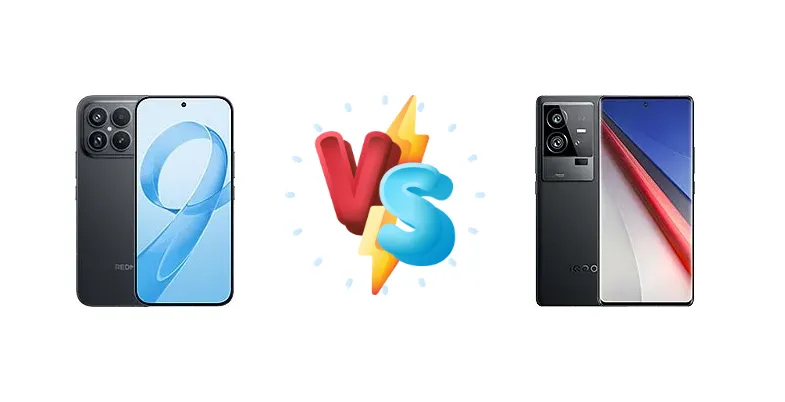
|
🏆 Quick Verdict
For the average user prioritizing raw speed and future-proofing, the Xiaomi Redmi K90 Pro Max edges out the iQOO 11 Pro thanks to its Snapdragon 8 Elite Gen 5. However, the iQOO 11 Pro’s 200W charging and potentially superior thermal management make it a compelling alternative for those who value convenience and sustained performance.
| PHONES | ||
|---|---|---|
| Phone Names | Xiaomi Redmi K90 Pro Max | vivo iQOO 11 Pro |
| Network | ||
|---|---|---|
| 2G bands | GSM 850 / 900 / 1800 / 1900 | GSM 850 / 900 / 1800 / 1900 |
| 3G bands | HSDPA 800 / 850 / 900 / 1700(AWS) / 1900 / 2100 | HSDPA 800 / 850 / 900 / 1700(AWS) / 1900 / 2100 |
| 4G bands | 1, 3, 4, 5, 7, 8, 18, 19, 26, 28, 34, 38, 39, 40, 41, 42, 48, 66 | 1, 2, 3, 4, 5, 7, 8, 12, 17, 18, 19, 20, 25, 26, 28, 34, 38, 39, 40, 41, 42, 66 |
| 5G bands | 1, 3, 5, 7, 8, 18, 26, 28, 38, 40, 41, 48, 66, 77, 78, 80, 81, 83, 84, 89 SA/NSA | 1, 2, 3, 5, 7, 8, 12, 20, 28, 38, 40, 41, 66, 77, 78, 79 SA/NSA |
| Speed | HSPA, LTE, 5G | HSPA, LTE, 5G |
| Technology | GSM / HSPA / LTE / 5G | GSM / CDMA / HSPA / CDMA2000 / LTE / 5G |
| - | CDMA2000 1x | |
| Launch | ||
|---|---|---|
| Announced | 2025, October 23 | 2022, December 08 |
| Status | Available. Released 2025, October 23 | Available. Released 2022, December 21 |
| Body | ||
|---|---|---|
| Build | Glass front (Dragon Crystal Glass), aluminum alloy frame, fiber-reinforced plastic back or silicone polymer back | - |
| Dimensions | 163.3 x 77.8 x 7.9 mm (6.43 x 3.06 x 0.31 in) | 164.8 x 75.3 x 8.9 mm or 9.1 mm |
| SIM | Nano-SIM + Nano-SIM | Nano-SIM + Nano-SIM |
| Weight | 218 g (7.69 oz) | 210.5 g or 213 g (7.44 oz) |
| Display | ||
|---|---|---|
| Protection | Xiaomi Dragon Crystal Glass | - |
| Resolution | 1200 x 2608 pixels, 19.5:9 ratio (~416 ppi density) | 1440 x 3200 pixels, 20:9 ratio (~518 ppi density) |
| Size | 6.9 inches, 116.6 cm2 (~91.8% screen-to-body ratio) | 6.78 inches, 111.0 cm2 (~89.4% screen-to-body ratio) |
| Type | AMOLED, 68B colors, 2560Hz PWM, 120Hz, Dolby Vision, HDR Vivid, HDR10+, 3500 nits (peak) | LTPO4 AMOLED, 1B colors, 144Hz, HDR10+, 1800 nits (peak) |
| Platform | ||
|---|---|---|
| CPU | Octa-core (2x4.6 GHz Oryon V3 Phoenix L + 6x3.62 GHz Oryon V3 Phoenix M) | Octa-core (1x3.2 GHz Cortex-X3 & 2x2.8 GHz Cortex-A715 & 2x2.8 GHz Cortex-A710 & 3x2.0 GHz Cortex-A510) |
| Chipset | Qualcomm SM8850-AC Snapdragon 8 Elite Gen 5 (3 nm) | Qualcomm SM8550-AB Snapdragon 8 Gen 2 (4 nm) |
| GPU | Adreno 840 | Adreno 740 |
| OS | Android 16, HyperOS 3 | Android 13, Funtouch 13 (International), OriginOS 3 (China) |
| Memory | ||
|---|---|---|
| Card slot | No | No |
| Internal | 256GB 12GB RAM, 512GB 12GB RAM, 512GB 16GB RAM, 1TB 16GB RAM | 256GB 8GB RAM, 256GB 12GB RAM, 512GB 16GB RAM |
| - | UFS 4.0 | |
| Main Camera | ||
|---|---|---|
| Features | Color spectrum sensor, LED flash, HDR, panorama | Dual-LED flash, HDR, panorama |
| Single | - | 16 MP, f/2.5, (wide) |
| Triple | 50 MP, f/1.7, 23mm (wide), 1/1.31", 1.2µm, dual pixel PDAF, OIS 50 MP, f/3.0, 115mm (periscope telephoto), 1/2.76", 0.64µm, PDAF (30cm - ∞), OIS, 5x optical zoom 50 MP, f/2.4, 18mm, 102˚ (ultrawide), 1/2.88", 0.61µm | 50 MP, f/1.8, (wide), 1/1.49", 1.0µm, PDAF, OIS 13 MP, f/2.5, 50mm (telephoto), PDAF, optical zoom 50 MP, f/2.3, 15mm, 150˚ (ultrawide), 1/2.76", 0.64µm, AF |
| Video | 8K@30fps, 4K@30/60fps, 1080p@30/60/120/240/960fps, 720p@1920fps, gyro-EIS, HDR10+ | 8K@30fps, 4K@24/30/60fps, 1080p@30/60/120/240fps, gyro-EIS |
| Selfie camera | ||
|---|---|---|
| Features | - | HDR |
| Single | 32 MP, f/2.2, 21mm (wide), 1/3.44", 0.64µm | 16 MP, f/2.5, (wide) |
| Video | 4K@30fps, 1080p@30/60fps | 1080p@30fps, gyro-EIS |
| Sound | ||
|---|---|---|
| 3.5mm jack | - | No |
| 35mm jack | No | No |
| Loudspeaker | Yes, with stereo speakers (with Dolby Atmos) | Yes, with stereo speakers |
| - | 32-bit/384kHz audio | |
| Comms | ||
|---|---|---|
| Bluetooth | 5.4, A2DP, LE, LHDC 5.0, ASHA, MIHC | 5.3, A2DP, LE, aptX HD, aptX Adaptive, aptX Lossless |
| Infrared port | Yes | Yes |
| NFC | Yes | Yes |
| Positioning | GPS (L1+L5), BDS (B1I+B1c+B2a), GALILEO (E1+E5a), QZSS (L1+L5), NavIC, GLONASS | GPS, GLONASS, GALILEO, BDS |
| Radio | No | No |
| USB | USB Type-C 3.2, Display Port, OTG | USB Type-C 2.0, OTG |
| WLAN | Wi-Fi 802.11 a/b/g/n/ac/6/7, dual-band, Wi-Fi Direct | Wi-Fi 802.11 a/b/g/n/ac/6, dual-band, Wi-Fi Direct |
| Features | ||
|---|---|---|
| Sensors | Fingerprint (under display, ultrasonic), accelerometer, proximity, gyro, compass | Fingerprint (under display, ultrasonic), accelerometer, gyro, proximity, compass |
| Battery | ||
|---|---|---|
| Charging | 100W wired, PD3.0, QC3+, 100W PPS 50W wireless 22.5W reverse wireless | 200W wired, PD3.0, 100% in 10 min 50W wireless 10W reverse wireless |
| Type | Si/C Li-Ion 7560 mAh | 4700 mAh |
| Misc | ||
|---|---|---|
| Colors | Black, White, Denim Blue, Lamborgini White | Black, Green, White (BMW M branding) |
| Models | - | V2254A |
| Price | About 500 EUR | About 800 EUR |
Xiaomi Redmi K90 Pro Max
- Potentially highest CPU performance with Snapdragon 8 Elite Gen 5
- Faster wireless charging (50W vs 50W)
- Reverse wireless charging capability
- Potentially higher thermal throttling due to more powerful chipset
- Slower wired charging (100W vs 200W)
vivo iQOO 11 Pro
- Incredibly fast 200W wired charging (10 min full charge)
- Potentially better thermal management due to efficient Snapdragon 8 Gen 2
- Balanced performance and efficiency
- Slightly less raw CPU power compared to the K90 Pro Max
- Lower reverse wireless charging wattage
Display Comparison
While both devices are expected to feature high-refresh-rate AMOLED displays, the provided data focuses on performance. The iQOO 11 Pro’s charging speed suggests a focus on minimizing screen-on time, while the K90 Pro Max’s processor demands a display capable of keeping up with high frame rates. Expect both to offer vibrant colors and sharp visuals, but detailed analysis of peak brightness, color accuracy, and PWM dimming rates would be needed for a definitive display comparison. The K90 Pro Max’s processor may benefit from a display with adaptive refresh rates to optimize power consumption.
Camera Comparison
The provided data doesn’t detail camera specifications. However, given the flagship positioning of both devices, we can expect multi-camera systems with high-resolution main sensors. The iQOO 11 Pro, historically, has focused on computational photography and image stabilization. The K90 Pro Max, leveraging its processing power, could excel in real-time image processing and AI-powered features. Without sensor size and aperture information, a direct comparison is impossible, but the K90 Pro Max’s chipset could offer an edge in post-processing speed.
Performance
The core difference lies in the chipsets. The Redmi K90 Pro Max’s Snapdragon 8 Elite Gen 5, built on a 3nm process, utilizes Oryon V3 Phoenix cores, promising significant performance gains over the Snapdragon 8 Gen 2’s Cortex architecture. The 4.6 GHz peak clock speed of the Oryon cores is substantially higher than the 3.2 GHz Cortex-X3 in the iQOO 11 Pro. However, the 4nm process of the Snapdragon 8 Gen 2 offers better power efficiency, potentially leading to less thermal throttling during sustained workloads. The K90 Pro Max’s performance advantage will be most noticeable in CPU-intensive tasks and potentially in graphically demanding games, but thermal management will be crucial to unlock its full potential. The iQOO 11 Pro’s LPDDR5x RAM will contribute to fast data access, complementing the Snapdragon 8 Gen 2’s capabilities.
Battery Life
The iQOO 11 Pro’s 200W wired charging is a game-changer, promising a full charge in just 10 minutes. This drastically reduces downtime compared to the Redmi K90 Pro Max’s 100W charging, even with its support for PD3.0, QC3+, and PPS. While the K90 Pro Max offers 50W wireless charging and 22.5W reverse wireless charging, the iQOO 11 Pro’s 50W wireless charging is competitive, and its 10W reverse wireless charging is less significant. The battery capacity isn’t specified, but the iQOO 11 Pro’s charging speed effectively mitigates any potential disadvantage from a smaller battery size.
Buying Guide
Buy the Xiaomi Redmi K90 Pro Max if you need the absolute fastest processor available in an Android phone and are willing to potentially manage thermals with careful usage. Buy the vivo iQOO 11 Pro if you prioritize incredibly fast charging – a full charge in just 10 minutes – and a more balanced thermal profile for extended gaming sessions or demanding tasks.