
Xiaomi Redmi K80 vs OnePlus 12R: A Deep Dive into Performance and Value
| Phones Images | |||||
|---|---|---|---|---|---|
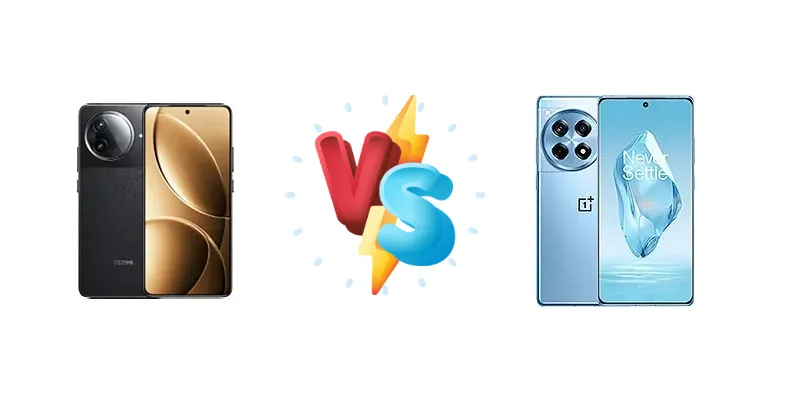
|
🏆 Quick Verdict
For users prioritizing raw processing power and future-proofing, the Xiaomi Redmi K80 is the clear winner thanks to its Snapdragon 8 Gen 3. However, the OnePlus 12R offers a more balanced package with excellent battery life (14:32h active use) and incredibly fast 100W charging, making it ideal for those who value longevity and convenience.
| PHONES | ||
|---|---|---|
| Phone Names | Xiaomi Redmi K80 | OnePlus 12R |
| Network | ||
|---|---|---|
| 2G bands | GSM 850 / 900 / 1800 / 1900 | GSM 850 / 900 / 1800 / 1900 |
| 3G bands | HSDPA 800 / 850 / 900 / 1700(AWS) / 2100 | HSDPA 850 / 900 / 1700(AWS) / 1900 / 2100 |
| 4G bands | 1, 3, 4, 5, 7, 8, 18, 19, 26, 28, 34, 38, 39, 40, 41, 42, 48, 66 | 1, 2, 3, 4, 5, 7, 8, 12, 17, 18, 19, 20, 26, 28, 32, 38, 39, 40, 41, 66 |
| 5G bands | 1, 3, 5, 7, 8, 26, 28, 38, 40, 41, 48, 66, 77, 78 SA/NSA | 1, 2, 3, 5, 7, 8, 12, 20, 28, 38, 40, 41, 66, 77, 78 SA/NSA |
| Speed | HSPA, LTE, 5G | HSPA, LTE, 5G |
| Technology | GSM / CDMA / HSPA / CDMA2000 / LTE / 5G | GSM / CDMA / HSPA / LTE / 5G |
| Launch | ||
|---|---|---|
| Announced | 2024, November 27 | 2024, January 23 |
| Status | Available. Released 2024, November 27 | Available. Released 2024, February 06 |
| Body | ||
|---|---|---|
| Build | - | Glass front (Gorilla Glass Victus 2), aluminum frame, glass back |
| Dimensions | 160.3 x 75 x 8.1 mm (6.31 x 2.95 x 0.32 in) | 163.3 x 75.3 x 8.8 mm (6.43 x 2.96 x 0.35 in) |
| SIM | Nano-SIM + Nano-SIM | · Nano-SIM + Nano-SIM + eSIM (max 2 at a time)· Nano-SIM + Nano-SIM |
| Weight | 206 g (7.27 oz) | 207 g (7.30 oz) |
| Display | ||
|---|---|---|
| Protection | Corning Gorilla Glass 7i | Corning Gorilla Glass Victus 2 |
| Resolution | 1440 x 3200 pixels, 20:9 ratio (~526 ppi density) | 1264 x 2780 pixels (~450 ppi density) |
| Size | 6.67 inches, 107.4 cm2 (~89.3% screen-to-body ratio) | 6.78 inches, 111.7 cm2 (~90.9% screen-to-body ratio) |
| Type | OLED, 68B colors, 120Hz, Dolby Vision, HDR10+, 1800 nits (HBM), 3200 nits (peak) | LTPO4 AMOLED, 1B colors, 120Hz, HDR10+, Dolby Vision, 1600 nits (HBM), 4500 nits (peak) |
| Platform | ||
|---|---|---|
| CPU | Octa-core (1x3.3 GHz Cortex-X4 & 3x3.2 GHz Cortex-A720 & 2x3.0 GHz Cortex-A720 & 2x2.3 GHz Cortex-A520) | Octa-core (1x3.2 GHz Cortex-X3 & 2x2.8 GHz Cortex-A715 & 2x2.8 GHz Cortex-A710 & 3x2.0 GHz Cortex-A510) |
| Chipset | Qualcomm SM8650-AB Snapdragon 8 Gen 3 (4 nm) | Qualcomm SM8550-AB Snapdragon 8 Gen 2 (4 nm) |
| GPU | Adreno 750 | Adreno 740 |
| OS | Android 15, HyperOS 2 | Android 14, up to 3 major Android upgrades, OxygenOS 15 |
| Memory | ||
|---|---|---|
| Card slot | No | No |
| Internal | 256GB 12GB RAM, 256GB 16GB RAM, 512GB 12GB RAM, 512GB 16GB RAM, 1TB 16GB RAM | 128GB 8GB RAM, 256GB 8GB RAM, 256GB 12GB RAM, 256GB 16GB RAM |
| Main Camera | ||
|---|---|---|
| Dual | 50 MP, f/1.6, 24mm (wide), 1/1.55", 1.0µm, dual pixel PDAF, OIS 8 MP, (ultrawide) | - |
| Features | Color spectrum sensor, LED flash, HDR, panorama | Laser AF, color spectrum sensor, LED flash, HDR, panorama |
| Triple | - | 50 MP, f/1.8, 24mm (wide), 1/1.56", 1.0µm, multi-directional PDAF, OIS 8 MP, f/2.2, 16mm, 112˚ (ultrawide), 1/4.0", 1.12µm 2 MP (macro) |
| Video | 8K@24fps, 4K@24/30/60fps, 1080p@30/60/120/240/960fps, 720p@1920fps, gyro-EIS | 4K@30/60fps, 1080p@30/60/120/240fps, gyro-EIS, OIS |
| Selfie camera | ||
|---|---|---|
| Features | HDR | HDR, panorama |
| Single | 20 MP, (wide) | 16 MP, f/2.4, 26mm (wide), 1/3", 1.0µm |
| Video | 1080p@30/60fps, gyro-EIS | 1080p@30fps, gyro-EIS |
| Sound | ||
|---|---|---|
| 35mm jack | No | No |
| Loudspeaker | Yes, with stereo speakers | Yes, with stereo speakers |
| Comms | ||
|---|---|---|
| Bluetooth | 5.4, A2DP, LE, aptX HD, aptX Adaptive, aptX Lossless, LHDC 5 | 5.3, A2DP, LE, aptX HD |
| Infrared port | Yes | Yes |
| NFC | Yes | Yes |
| Positioning | GPS (L1+L5), GLONASS (G1), BDS (B1I+B1c+B2a), GALILEO (E1+E5a), QZSS (L1+L5), NavIC (L5) | GPS, GALILEO, GLONASS, BDS, QZSS |
| Radio | No | No |
| USB | USB Type-C, OTG | USB Type-C 2.0 |
| WLAN | Wi-Fi 802.11 a/b/g/n/ac/6e/7, dual-band, Wi-Fi Direct | Wi-Fi 802.11 a/b/g/n/ac/6/7, dual-band |
| Features | ||
|---|---|---|
| Sensors | Fingerprint (under display, ultrasonic), accelerometer, proximity, gyro, compass | Fingerprint (under display, optical), accelerometer, gyro, proximity, compass |
| Battery | ||
|---|---|---|
| Charging | 90W wired, PD3.0, QC3+ | 100W wired, 100% in 26 min |
| Type | Si/C Li-Ion 6550 mAh | Li-Ion 5500 mAh |
| Misc | ||
|---|---|---|
| Colors | Black, White, Mint, Blue | Iron Gray, Cool Blue, Electric Violet, Sunset Dune |
| Models | 24117RK2CC | CPH2609, CPH2585, CPH2611 |
| Price | About 350 EUR | € 410.84 / $ 399.95 / £ 649.00 |
| SAR | - | 1.19 W/kg (head) 0.82 W/kg (body) |
Xiaomi Redmi K80
- Latest Snapdragon 8 Gen 3 for top-tier performance
- 90W fast charging for quick power-ups
- Potential for future software updates and support
- Potential for higher thermal throttling under heavy load
- Battery life unknown, potentially less than the 12R
OnePlus 12R
- Excellent 14:32h active use battery life
- Ultra-fast 100W charging (0-100% in 26 minutes)
- Proven Snapdragon 8 Gen 2 platform with stable performance
- Older generation processor compared to the K80
- May not match the K80’s peak performance in demanding tasks
Display Comparison
The OnePlus 12R boasts a bright display, peaking at 1181 nits measured, ensuring excellent visibility even in direct sunlight. While the Redmi K80’s display specifications are currently unavailable, the OnePlus 12R’s brightness level sets a high bar. The 12R’s panel likely utilizes LTPO technology, contributing to power efficiency. Without knowing the Redmi K80’s panel type, it’s difficult to assess its power consumption characteristics. Both devices likely employ high refresh rate panels, but the OnePlus 12R’s brightness advantage is a significant differentiator.
Camera Comparison
Camera details for the Redmi K80 are currently unavailable. The OnePlus 12R’s camera system, while not detailed in the provided data, likely focuses on delivering consistent image quality in various lighting conditions. Without sensor size or aperture information for either device, a direct comparison is impossible. However, the absence of details regarding advanced camera features on the K80 suggests the 12R may have a more refined camera experience, assuming a similar sensor hierarchy.
Performance
The Redmi K80’s Snapdragon 8 Gen 3 (4nm) represents a substantial upgrade over the OnePlus 12R’s Snapdragon 8 Gen 2 (4nm). The K80’s CPU configuration – 1x3.3 GHz Cortex-X4, 3x3.2 GHz Cortex-A720, 2x3.0 GHz Cortex-A720, and 2x2.3 GHz Cortex-A520 – offers a more modern architecture and higher clock speeds compared to the 12R’s 1x3.2 GHz Cortex-X3, 2x2.8 GHz Cortex-A715, 2x2.8 GHz Cortex-A710, and 3x2.0 GHz Cortex-A510. This translates to faster application loading, smoother multitasking, and superior gaming performance. However, the 8 Gen 3’s increased power consumption may lead to more noticeable thermal throttling under sustained load, a factor the 8 Gen 2 mitigates with its proven thermal profile.
Battery Life
The OnePlus 12R shines in the battery department, achieving an impressive 14 hours and 32 minutes of active use. This is coupled with incredibly fast 100W wired charging, capable of fully charging the device in just 26 minutes. The Redmi K80 offers 90W wired charging, which is still very fast, but slower than the 12R. While the K80’s battery capacity is unknown, the 12R’s combination of long battery life and rapid charging provides a significant convenience advantage. The 12R’s charging also supports PD3.0 and QC3+, offering broader compatibility.
Buying Guide
Buy the Xiaomi Redmi K80 if you demand the absolute best performance for demanding tasks like gaming and video editing, and are willing to potentially manage slightly higher thermal output. Buy the OnePlus 12R if you prioritize all-day battery life, incredibly fast charging, and a consistently smooth experience without pushing the absolute limits of processing power. It's the pragmatic choice for power users who don't necessarily need the latest and greatest.