
Xiaomi Redmi K80 Ultra vs Samsung Galaxy S24+: A Deep Dive into Performance and Value
| Phones Images | |||||
|---|---|---|---|---|---|
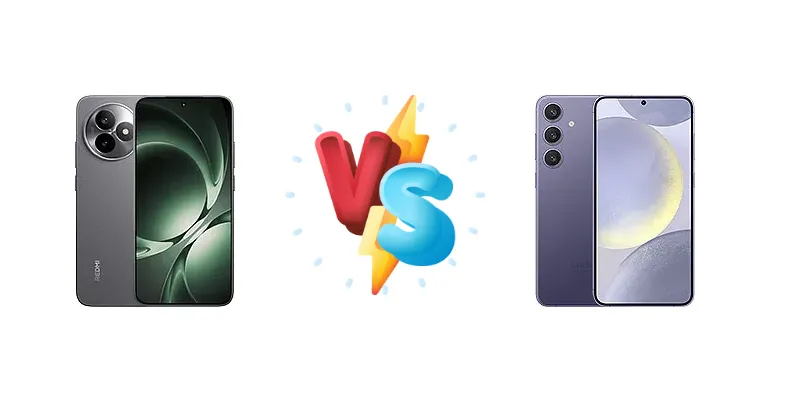
|
🏆 Quick Verdict
For the average user prioritizing a polished software experience, strong camera performance, and reliable long-term support, the Samsung Galaxy S24+ is the better choice. However, the Xiaomi Redmi K80 Ultra offers a compelling performance-per-dollar proposition, particularly for gamers and those who prioritize charging speed.
| PHONES | ||
|---|---|---|
| Phone Names | Xiaomi Redmi K80 Ultra | Samsung Galaxy S24+ |
| Network | ||
|---|---|---|
| 2G bands | GSM 850 / 900 / 1800 / 1900 | GSM 850 / 900 / 1800 / 1900 |
| 3G bands | HSDPA 800 / 850 / 900 / 1700(AWS) / 2100 | HSDPA 850 / 900 / 1700(AWS) / 1900 / 2100 |
| 4G bands | 1, 3, 4, 5, 7, 8, 18, 19, 26, 28, 34, 38, 39, 40, 41, 42, 48, 66 | 1, 2, 3, 4, 5, 7, 8, 12, 13, 17, 18, 19, 20, 25, 26, 28, 32, 38, 39, 40, 41, 66 - International |
| 5G bands | 1, 3, 5, 7, 8, 26, 28, 38, 40, 41, 48, 66, 77, 78 SA/NSA | 1, 2, 3, 5, 7, 8, 12, 20, 25, 26, 28, 38, 40, 41, 66, 75, 77, 78 SA/NSA/Sub6 - International |
| Speed | HSPA, LTE, 5G | HSPA, LTE (up to 7CA), 5G |
| Technology | GSM / CDMA / HSPA / CDMA2000 / LTE / 5G | GSM / CDMA / HSPA / EVDO / LTE / 5G |
| Launch | ||
|---|---|---|
| Announced | 2025, June 26 | 2024, January 17 |
| Status | Available. Released 2025, June 26 | Available. Released 2024, January 24 |
| Body | ||
|---|---|---|
| Build | Glass front, aluminum frame | Glass front (Gorilla Glass Victus 2), glass back (Gorilla Glass Victus 2), aluminum frame |
| Dimensions | 163.1 x 77.9 x 8.2 mm (6.42 x 3.07 x 0.32 in) | 158.5 x 75.9 x 7.7 mm (6.24 x 2.99 x 0.30 in) |
| SIM | Nano-SIM + Nano-SIM | · Nano-SIM + Nano-SIM + eSIM + eSIM (max 2 at a time) - INT· Nano-SIM + eSIM + eSIM (max 2 at a time) - USA· Nano-SIM + Nano-SIM - CN |
| Weight | 219 g (7.72 oz) | 196 g or 197 g (6.91 oz) |
| Display | ||
|---|---|---|
| Protection | Scratch/drop-resistant glass | Corning Gorilla Glass Victus 2 |
| Resolution | 1280 x 2772 pixels, 19.5:9 ratio (~447 ppi density) | 1440 x 3120 pixels, 19.5:9 ratio (~513 ppi density) |
| Size | 6.83 inches, 114.5 cm2 (~90.2% screen-to-body ratio) | 6.7 inches, 110.2 cm2 (~91.6% screen-to-body ratio) |
| Type | OLED, 68B colors, 144Hz, Dolby Vision, HDR10+, HDR Vivid, 1800 nits (HBM), 3200 nits (peak) | Dynamic LTPO AMOLED 2X, 120Hz, HDR10+, 2600 nits (peak) |
| Platform | ||
|---|---|---|
| CPU | Octa-core (1x3.63 GHz Cortex-X925 & 3x3.3 GHz Cortex-X4 & 4x2.4 GHz Cortex-A720) | 8-core (1x3.39GHz Cortex-X4 & 3x3.1GHz Cortex-A720 & 2x2.9GHz Cortex-A720 & 2x2.2GHz Cortex-A520)10-core (1x3.2GHz Cortex-X4 & 2x2.9GHz Cortex-A720 & 3x2.6GHz Cortex-A720 & 4x1.95GHz Cortex-A520) |
| Chipset | Mediatek Dimensity 9400+ (3 nm) | Qualcomm SM8650-AC Snapdragon 8 Gen 3 (4 nm) - USA/Canada/ChinaExynos 2400 (4 nm) - International |
| GPU | Immortalis-G925 | Adreno 750 (1 GHz) - USA/Canada/ChinaXclipse 940 - International |
| OS | Android 15, HyperOS 2 | Android 14, up to 7 major Android upgrades, One UI 8.0 |
| Memory | ||
|---|---|---|
| Card slot | No | No |
| Internal | 256GB 12GB RAM, 256GB 16GB RAM, 512GB 12GB RAM, 512GB 16GB RAM, 1TB 16GB RAM | 256GB 12GB RAM, 512GB 12GB RAM |
| Main Camera | ||
|---|---|---|
| Dual | 50 MP, f/1.9, 23mm (wide), 1/1.55", 1.0µm, PDAF, OIS 8 MP, 119˚ (ultrawide), 1/4.0", 1.12µm | - |
| Features | Color spectrum sensor, Dual-LED dual-tone flash, HDR, panorama | LED flash, auto-HDR, panorama |
| Triple | - | 50 MP, f/1.8, 24mm (wide), 1/1.56", 1.0µm, dual pixel PDAF, OIS 10 MP, f/2.4, 67mm (telephoto), 1/3.94", 1.0µm, PDAF, OIS, 3x optical zoom 12 MP, f/2.2, 13mm, 120˚ (ultrawide), 1/2.55" 1.4µm, Super Steady video |
| Video | 8K@30fps, 4K@30/60fps, 1080p@30/60/120/240/960fps, gyro-EIS | 8K@24/30fps, 4K@30/60fps, 1080p@30/60/120/240fps, HDR10+, stereo sound rec., gyro-EIS |
| Selfie camera | ||
|---|---|---|
| Features | HDR | HDR, HDR10+ |
| Single | 20 MP, (wide), 1/2.0", 0.8µm | 12 MP, f/2.2, 26mm (wide), 1/3.2", 1.12µm, dual pixel PDAF |
| Video | 1080p@30/60fps | 4K@30/60fps, 1080p@30fps |
| Sound | ||
|---|---|---|
| 35mm jack | No | No |
| Loudspeaker | Yes, with stereo speakers | Yes, with stereo speakers |
| Comms | ||
|---|---|---|
| Bluetooth | 5.4, A2DP, LE, LHDC 5 | 5.3, A2DP, LE |
| Infrared port | Yes | - |
| NFC | Yes | Yes |
| Positioning | GPS (L1+L5), BDS (B1I+B1C+B2a+B2b), GALILEO (E1+E5a+E5b), QZSS (L1+L5), NavIC, GLONASS | GPS, GLONASS, BDS, GALILEO, QZSS |
| Radio | Unspecified | No |
| USB | USB Type-C | USB Type-C 3.2, DisplayPort 1.2, OTG |
| WLAN | Wi-Fi 802.11 a/b/g/n/ac/6/7, dual-band, Wi-Fi Direct | Wi-Fi 802.11 a/b/g/n/ac/6e, tri-band, Wi-Fi Direct |
| Features | ||
|---|---|---|
| Sensors | Fingerprint (under display, ultrasonic), accelerometer, gyro, proximity, compass | Fingerprint (under display, ultrasonic), accelerometer, gyro, proximity, compass, barometer |
| Battery | ||
|---|---|---|
| Charging | 100W wired, PD3.0 Bypass charging | 45W wired, PD3.0, 65% in 30 min 15W wireless (Qi) 4.5W reverse wireless |
| Type | Si/C Li-Ion 7410 mAh | Li-Ion 4900 mAh |
| Misc | ||
|---|---|---|
| Colors | Gray, White, Blue, Green | Onyx Black, Marble Grey, Cobalt Violet, Amber Yellow, Jade Green, Sandstone Orange, Sapphire Blue |
| Models | - | SM-S926B, SM-S926B/DS, SM-S926U, SM-S926U1, SM-S926W, SM-S926N, SM-S9260, SM-S926E, SM-S926E/DS |
| Price | About 310 EUR | $ 429.50 / € 549.00 / £ 445.98 |
| SAR | - | 1.16 W/kg (head) 0.84 W/kg (body) |
| SAR EU | - | 0.74 W/kg (head) 1.25 W/kg (body) |
Xiaomi Redmi K80 Ultra
- Blazing-fast 100W charging
- Potentially superior CPU performance with Dimensity 9400+
- Likely more aggressive pricing
- Camera performance is an unknown quantity
- Software support may be less consistent than Samsung
Samsung Galaxy S24+
- Refined software experience with One UI
- Strong and versatile camera system
- Excellent display quality and brightness
- Slower 45W charging
- Exynos variant may exhibit thermal throttling
Display Comparison
The Samsung Galaxy S24+ boasts a peak brightness of 1452 nits, ensuring excellent visibility even in direct sunlight. While the K80 Ultra’s display specs are not provided, Samsung’s panel technology is known for its color accuracy and vibrancy. The S24+ likely utilizes LTPO technology for adaptive refresh rates, contributing to improved battery efficiency. The absence of detailed display information for the K80 Ultra makes a direct comparison difficult, but Samsung’s established display prowess gives it an edge.
Camera Comparison
The context data provides limited camera details for both devices. However, Samsung’s Galaxy S24+ is expected to deliver a more consistent and refined camera experience, leveraging its advanced image processing algorithms and likely a larger main sensor. The K80 Ultra’s camera performance is an unknown quantity, and the absence of sensor size information makes it difficult to assess its capabilities. We can assume the S24+ will excel in both photo and video capture, offering features like advanced stabilization and computational photography. The K80 Ultra will likely rely more on hardware capabilities, and its image processing may not be as sophisticated.
Performance
The core battle lies in the chipsets. The Xiaomi K80 Ultra’s Mediatek Dimensity 9400+ (3nm) features a unique CPU configuration with a Cortex-X925 prime core clocked at 3.63 GHz, suggesting a focus on single-core performance. The Samsung Galaxy S24+ utilizes the Qualcomm Snapdragon 8 Gen 3 (4nm) in the US/Canada/China, and the Exynos 2400 (4nm) internationally. While both are 4nm chips, the Dimensity 9400+'s 3nm process *should* offer better power efficiency. However, the Snapdragon 8 Gen 3 is renowned for its optimized GPU performance and thermal management. The Exynos 2400’s performance is more variable, with some reports of throttling under sustained load. The K80 Ultra’s LPDDR5x RAM is standard for this class, and the Snapdragon 8 Gen 3 also supports LPDDR5x. The K80 Ultra’s CPU architecture, with its X925 core, is geared towards raw speed, while the S24+'s Snapdragon prioritizes sustained performance.
Battery Life
The Samsung Galaxy S24+ achieves a 12:30 hour active use score, demonstrating solid battery life. It supports 45W wired charging, reaching 65% in 30 minutes, alongside 15W wireless and 4.5W reverse wireless charging. The Xiaomi Redmi K80 Ultra, however, boasts a significantly faster 100W wired charging, likely achieving a full charge in under 40 minutes. While the K80 Ultra’s battery capacity is unknown, the faster charging speed is a major advantage for users who prioritize quick top-ups. The S24+'s wireless charging and reverse wireless charging capabilities offer added convenience.
Buying Guide
Buy the Xiaomi Redmi K80 Ultra if you need uncompromising CPU performance for demanding tasks like gaming and video editing, and value incredibly fast charging above all else. Buy the Samsung Galaxy S24+ if you prefer a more refined and consistent user experience, a versatile camera system, and the peace of mind that comes with Samsung’s software support and ecosystem integration.