
Xiaomi Redmi K70 vs Motorola Edge S30: A Deep Dive into Performance and Value
| Phones Images | |||||
|---|---|---|---|---|---|
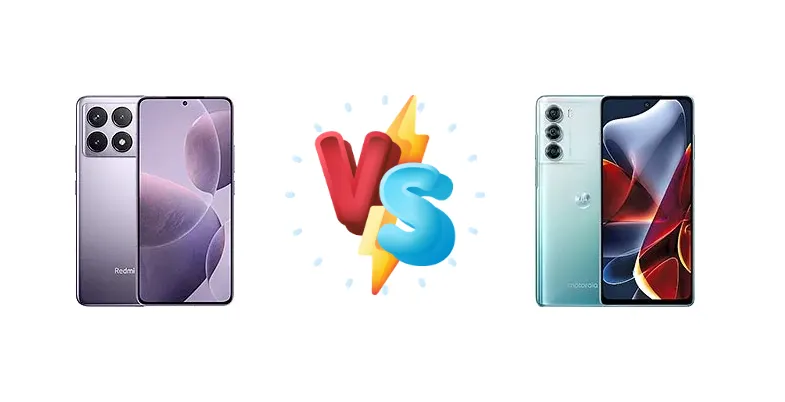
|
🏆 Quick Verdict
For most users, the Xiaomi Redmi K70 is the superior choice. Its Snapdragon 8 Gen 2 offers a substantial performance uplift and improved efficiency over the Edge S30’s Snapdragon 888+, justifying the price difference. The K70’s 120W charging is a game-changer, significantly reducing downtime.
| PHONES | ||
|---|---|---|
| Phone Names | Xiaomi Redmi K70 | Motorola Edge S30 |
| Network | ||
|---|---|---|
| 2G bands | GSM 850 / 900 / 1800 / 1900 | GSM 850 / 900 / 1800 / 1900 |
| 3G bands | HSDPA 800 / 850 / 900 / 1700(AWS) / 2100 | HSDPA 850 / 900 / 1800 / 1900 / 2100 |
| 4G bands | 1, 3, 4, 5, 8, 18, 19, 26, 28, 34, 38, 39, 40, 41, 42, 48, 66 | 1, 2, 3, 4, 5, 7, 8, 12, 17, 34, 38, 39, 40, 41 |
| 5G bands | 1, 3, 5, 8, 28, 38, 41, 48, 66, 77, 78 SA/NSA | 1, 3, 5, 7, 8, 20, 28, 38, 41, 78 SA/NSA/Sub6 |
| Speed | HSPA, LTE, 5G | HSPA 42.2/5.76 Mbps, LTE Cat20 2000/150 Mbps, 5G |
| Technology | GSM / CDMA / HSPA / CDMA2000 / LTE / 5G | GSM / HSPA / LTE / 5G |
| Launch | ||
|---|---|---|
| Announced | 2023, November 29 | 2021, December 12 |
| Status | Available. Released 2023, November 29 | Available. Released 2021, December 21 |
| Body | ||
|---|---|---|
| Build | - | Glass front, plastic frame, plastic back |
| Dimensions | 160.9 x 75 x 8.2 mm (6.33 x 2.95 x 0.32 in) | 168.1 x 75.5 x 8.9 mm (6.62 x 2.97 x 0.35 in) |
| SIM | Nano-SIM + Nano-SIM | Nano-SIM + Nano-SIM |
| Weight | 209 g (7.37 oz) | 202 g (7.13 oz) |
| - | Water-repellent design | |
| Display | ||
|---|---|---|
| Resolution | 1440 x 3200 pixels, 20:9 ratio (~526 ppi density) | 1080 x 2460 pixels (~395 ppi density) |
| Size | 6.67 inches, 107.4 cm2 (~89.0% screen-to-body ratio) | 6.8 inches, 109.8 cm2 (~86.5% screen-to-body ratio) |
| Type | OLED, 68B colors, 120Hz, Dolby Vision, HDR10+, 4000 nits (peak) | LCD, 144Hz, HDR10 |
| Platform | ||
|---|---|---|
| CPU | Octa-core (1x3.2 GHz Cortex-X3 & 2x2.8 GHz Cortex-A715 & 2x2.8 GHz Cortex-A710 & 3x2.0 GHz Cortex-A510) | Octa-core (1x2.99 GHz Cortex-X1 & 3x2.42 GHz Cortex-A78 & 4x1.80 GHz Cortex-A55) |
| Chipset | Qualcomm SM8550-AB Snapdragon 8 Gen 2 (4 nm) | Qualcomm SM8350 Snapdragon 888+ 5G (5 nm) |
| GPU | Adreno 740 | Adreno 660 |
| OS | Android 14, HyperOS | Android 11, MYUI 2.0 |
| Memory | ||
|---|---|---|
| Card slot | No | No |
| Internal | 256GB 12GB RAM, 256GB 16GB RAM, 512GB 12GB RAM, 512GB 16GB RAM, 1TB 16GB RAM | 128GB 6GB RAM, 128GB 8GB RAM, 256GB 8GB RAM, 256GB 12GB RAM |
| - | UFS 3.1 | |
| Main Camera | ||
|---|---|---|
| Features | Color spectrum sensor, LED flash, HDR, panorama | Dual-LED dual-tone flash, HDR, panorama |
| Triple | 50 MP, f/1.6, (wide), 1/1.55", 1.0µm, PDAF, OIS 8 MP, (ultrawide) 2 MP (macro) | 108 MP, f/1.9, (wide), 1/1.52", 0.7µm, PDAF 13 MP, f/2.2, 120˚ (ultrawide), 1.12µm Auxiliary lens |
| Video | 8K@24fps, 4K@24/30/60fps, 1080p@30/60/120/240/960fps, 720p@1920fps, gyro-EIS | 4K@30fps, 1080p@30ps, 10-bit HDR10+, gyro-EIS |
| Selfie camera | ||
|---|---|---|
| Features | HDR | HDR |
| Single | 16 MP, (wide) | 16 MP, f/2.2, (wide), 1.0µm |
| Video | 1080p@30/60fps, gyro-EIS | 1080p@30fps |
| Sound | ||
|---|---|---|
| 3.5mm jack | - | No |
| 35mm jack | No | No |
| Loudspeaker | Yes, with stereo speakers | Yes |
| Comms | ||
|---|---|---|
| Bluetooth | 5.3, A2DP, LE | 5.2, A2DP, LE, aptX HD, aptX Adaptive |
| Infrared port | Yes | - |
| NFC | Yes | No |
| Positioning | GPS (L1+L5), GLONASS (G1), BDS (B1I+B1c+B2a), GALILEO (E1+E5a), QZSS (L1+L5), NavIC (L5) | GPS, GLONASS, GALILEO, BDS |
| Radio | No | No |
| USB | USB Type-C, OTG | USB Type-C 3.1 |
| WLAN | Wi-Fi 802.11 a/b/g/n/ac/6e/7, dual-band, Wi-Fi Direct | Wi-Fi 802.11 a/b/g/n/ac/6e, dual-band, Wi-Fi Direct |
| Features | ||
|---|---|---|
| Sensors | Fingerprint (under display, optical), accelerometer, proximity, gyro, compass | Fingerprint (side-mounted), accelerometer, gyro, proximity, compass |
| - | Ready For support | |
| Battery | ||
|---|---|---|
| Charging | 120W wired, PD3.0, QC3+, 100% in 18 min | 33W wired |
| Type | Li-Po 5000 mAh | Li-Po 5000 mAh |
| Misc | ||
|---|---|---|
| Colors | Black, Silver, Blue/Green, Purple | Glacier Blue, Phantom Black |
| Models | 23113RKC6C | XT2175-2 |
| Price | About 320 EUR | About 280 EUR |
Xiaomi Redmi K70
- Significantly faster Snapdragon 8 Gen 2 processor
- Ultra-fast 120W charging
- Improved power efficiency and thermal management
- Likely higher price point
- May lack expandable storage (depending on variant)
Motorola Edge S30
- More affordable price
- Still capable Snapdragon 888+ processor
- Decent performance for everyday tasks
- Slower 33W charging
- Less efficient processor, prone to throttling
Display Comparison
While display specs aren't provided, both phones likely feature high refresh rate AMOLED panels, common in this price bracket. However, the K70’s chipset allows for more sophisticated display features like variable refresh rate (LTPO) for improved power efficiency. The Snapdragon 8 Gen 2’s integrated display engine can also drive higher peak brightness and more accurate color calibration. The Edge S30, relying on the older 888+, may exhibit slightly less refined display performance.
Camera Comparison
Without specific camera specs, it’s difficult to make a definitive statement. However, the Snapdragon 8 Gen 2’s ISP (Image Signal Processor) is substantially more advanced than the 888+'s. This means the K70 can capture more detail, handle dynamic range more effectively, and offer superior low-light performance. The K70’s ISP also supports more advanced features like 8K video recording and improved computational photography algorithms. The Edge S30 will likely deliver respectable image quality, but will fall behind in challenging conditions.
Performance
The core difference lies in the chipsets. The Xiaomi Redmi K70’s Snapdragon 8 Gen 2 (4nm) boasts a newer CPU architecture – Cortex-X3, A715, and A710 cores – compared to the Motorola Edge S30’s Snapdragon 888+ (5nm) with its Cortex-X1, A78, and A55 cores. The 4nm process node of the Gen 2 translates to significantly better power efficiency and thermal performance, reducing the likelihood of throttling during sustained workloads. The K70’s CPU clock speeds (up to 3.2 GHz) also exceed those of the Edge S30 (2.99 GHz). This architectural and process node advantage gives the K70 a clear edge in both single-core and multi-core performance.
Battery Life
The Redmi K70’s 120W wired charging is a massive advantage. A full charge from 0-100% takes a mere 18 minutes, minimizing downtime. The Edge S30’s 33W charging is comparatively slow, requiring significantly longer to reach a full charge. While battery capacity isn’t specified, the Snapdragon 8 Gen 2’s superior efficiency means the K70 will likely offer comparable or better battery life despite potentially having a smaller battery capacity than the Edge S30.
Buying Guide
Buy the Xiaomi Redmi K70 if you prioritize raw performance for demanding tasks like gaming and video editing, and value incredibly fast charging. You'll benefit from a more future-proof device with better thermal management. Buy the Motorola Edge S30 if you're on a tighter budget and still need a capable phone for everyday tasks and moderate gaming. It offers a solid experience at a lower price point, but compromises on long-term performance and charging speed.