
Xiaomi Redmi K60 vs. vivo iQOO 11S: A Deep Dive into Performance and Charging
| Phones Images | |||||
|---|---|---|---|---|---|
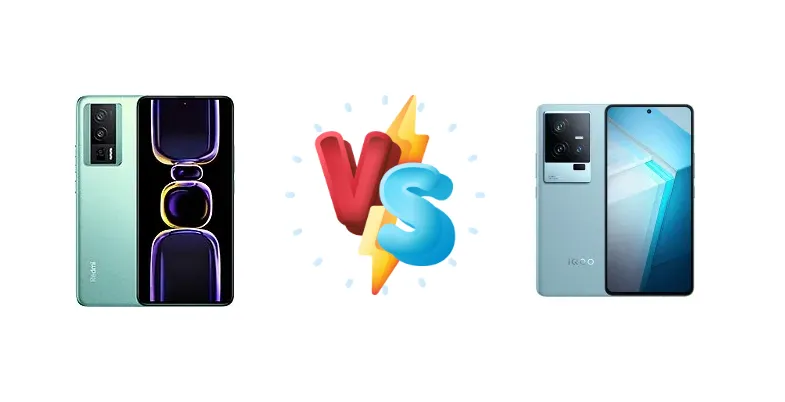
|
🏆 Quick Verdict
For most users, the vivo iQOO 11S emerges as the superior choice. The Snapdragon 8 Gen 2 provides a noticeable performance uplift, particularly in sustained workloads, and the 200W charging is a game-changer for minimizing downtime. While the Redmi K60 remains a strong contender, the iQOO 11S’s advancements justify the price premium.
| PHONES | ||
|---|---|---|
| Phone Names | Xiaomi Redmi K60 | vivo iQOO 11S |
| Network | ||
|---|---|---|
| 2G bands | GSM 850 / 900 / 1800 / 1900 | GSM 850 / 900 / 1800 / 1900 |
| 3G bands | HSDPA 800 / 850 / 900 / 1700(AWS) / 2100 | HSDPA 800 / 850 / 900 / 1700(AWS) / 1900 / 2100 |
| 4G bands | 1, 3, 4, 5, 8, 18, 19, 26, 34, 38, 39, 40, 41, 42 | 1, 2, 3, 4, 5, 7, 8, 12, 17, 18, 19, 20, 26, 28, 34, 38, 39, 40, 41 |
| 5G bands | 1, 3, 5, 8, 28, 38, 41, 77, 78 SA/NSA | 1, 3, 5, 8, 28, 40, 41, 77, 78 SA/NSA |
| Speed | HSPA, LTE, 5G | HSPA, LTE, 5G |
| Technology | GSM / CDMA / HSPA / CDMA2000 / LTE / 5G | GSM / CDMA / HSPA / CDMA2000 / LTE / 5G |
| CDMA2000 1x | - | |
| Launch | ||
|---|---|---|
| Announced | 2022, December 27 | 2023, July 04 |
| Status | Available. Released 2023, January 01 | Available. Released 2023, July 10 |
| Body | ||
|---|---|---|
| Dimensions | 162.8 x 75.4 x 8.6 mm or 8.8 mm | 164.9 x 77.1 x 8.4 mm or 8.7 mm |
| SIM | Nano-SIM + Nano-SIM | Nano-SIM + Nano-SIM |
| Weight | 199 g or 204 g (7.02 oz) | 207 g or 210 g (7.30 oz) |
| Display | ||
|---|---|---|
| Protection | - | Corning Gorilla Glass Victus |
| Resolution | 1440 x 3200 pixels, 20:9 ratio (~526 ppi density) | 1440 x 3200 pixels, 20:9 ratio (~518 ppi density) |
| Size | 6.67 inches, 107.4 cm2 (~87.5% screen-to-body ratio) | 6.78 inches, 111.0 cm2 (~87.3% screen-to-body ratio) |
| Type | OLED, 68B colors, 120Hz, Dolby Vision, HDR10+, 1400 nits (peak) | LTPO4 AMOLED, 1B colors, 144Hz, HDR10+, 1800 nits (peak) |
| Platform | ||
|---|---|---|
| CPU | Octa-core (1x3.0 GHz Cortex-X2 & 3x2.5 GHz Cortex-A710 & 4x1.80 GHz Cortex-A510) | Octa-core (1x3.2 GHz Cortex-X3 & 2x2.8 GHz Cortex-A715 & 2x2.8 GHz Cortex-A710 & 3x2.0 GHz Cortex-A510) |
| Chipset | Qualcomm SM8475 Snapdragon 8+ Gen 1 (4 nm) | Qualcomm SM8550-AB Snapdragon 8 Gen 2 (4 nm) |
| GPU | Adreno 730 | Adreno 740 |
| OS | Android 13, MIUI 14 | Android 13, OriginOS 3 (China) |
| Memory | ||
|---|---|---|
| Card slot | No | No |
| Internal | 128GB 8GB RAM, 256GB 8GB RAM, 256GB 12GB RAM, 256GB 16GB RAM, 512GB 12GB RAM, 512GB 16GB RAM, 1TB 16GB RAM | 256GB 12GB RAM, 256GB 16GB RAM, 512GB 16GB RAM, 1TB 16GB RAM |
| UFS 3.1 | - | |
| Main Camera | ||
|---|---|---|
| Features | Color spectrum sensor, Dual-LED dual-tone flash, HDR, panorama | Dual-LED flash, HDR, panorama |
| Triple | 64 MP, f/1.8, (wide), 1/2.0", 0.7µm, PDAF, OIS 8 MP, f/2.2, 120˚ (ultrawide), 1/4.0", 1.12µm 2 MP (macro) | 50 MP, f/1.9, 23mm (wide), 1/1.49", 1.0µm, PDAF, OIS 13 MP, f/2.5, 47mm (telephoto), PDAF, 2x optical zoom 8 MP, f/2.2, 16mm (ultrawide) |
| Video | 8K@24fps, 4K@30/60fps, 1080p@30/60/120/240/960fps, 720p@1920fps, gyro-EIS | 8K@30fps, 4K@30/60fps, 1080p@30/60/120/240fps, gyro-EIS |
| Selfie camera | ||
|---|---|---|
| Features | HDR | HDR |
| Single | 16 MP, f/2.5, (wide), 1/3.06", 1.0µm | 16 MP, f/2.5, (wide) |
| Video | 1080p@30/60/120fps | 1080p@30fps, gyro-EIS |
| Sound | ||
|---|---|---|
| 3.5mm jack | No | - |
| 35mm jack | No | No |
| Loudspeaker | Yes, with stereo speakers | Yes, with stereo speakers |
| 24-bit/192kHz audio | - | |
| Comms | ||
|---|---|---|
| Bluetooth | 5.3, A2DP, LE | 5.3, A2DP, LE, aptX HD, aptX Adaptive, aptX Lossless |
| Infrared port | Yes | Yes |
| NFC | Yes | Yes |
| Positioning | GPS (L1), GLONASS (G1), BDS (B1I+B1c), GALILEO (E1), QZSS (L1) | GPS, GLONASS, GALILEO, BDS, NavIC |
| Radio | Unspecified | No |
| USB | USB Type-C 2.0, OTG | USB Type-C 2.0, OTG |
| WLAN | Wi-Fi 802.11 a/b/g/n/ac/6e, dual-band, Wi-Fi Direct | Wi-Fi 802.11 a/b/g/n/ac/6, dual-band, Wi-Fi Direct |
| Features | ||
|---|---|---|
| Sensors | Fingerprint (under display, optical), accelerometer, gyro, proximity, compass | Fingerprint (under display, optical), accelerometer, gyro, proximity, compass |
| Battery | ||
|---|---|---|
| Charging | 67W wired, PD3.0, QC3+ 30W wireless | 200W wired, PD3.0, UFCS |
| Type | Li-Po 5500 mAh | 4700 mAh |
| Misc | ||
|---|---|---|
| Colors | Black, White, Blue, Green | Black, Sky Blue, Legendary White (BMW M branding) |
| Models | - | V2304A |
| Price | About 350 EUR | About 500 EUR |
Xiaomi Redmi K60
- Potentially more affordable price point
- Wireless charging support (30W)
- Solid performance with Snapdragon 8+ Gen 1
- Slower charging speeds (67W wired)
- Older chipset – less future-proof
- Potentially more thermal throttling
vivo iQOO 11S
- Significantly faster charging (200W)
- Latest Snapdragon 8 Gen 2 chipset
- Superior performance and efficiency
- No wireless charging
- Likely higher price tag
- May run hotter under extreme load (though thermal management is improved)
Display Comparison
While both devices likely feature high-refresh-rate AMOLED displays (data not provided), the core difference lies in the processing power driving them. The Snapdragon 8 Gen 2 in the iQOO 11S will handle graphically intensive tasks with greater ease, potentially resulting in smoother animations and higher sustained frame rates in games. The K60’s 8+ Gen 1 is still capable, but will exhibit more thermal throttling under prolonged stress. The absence of display specs like peak brightness and resolution makes a direct comparison difficult, but the iQOO 11S’s superior chipset suggests a more responsive visual experience.
Camera Comparison
Without detailed camera specifications, a direct comparison is limited. However, the iQOO 11S, being a newer flagship, likely incorporates a more advanced image signal processor (ISP) within the Snapdragon 8 Gen 2, leading to improved image processing capabilities. The K60’s ISP is still capable, but the Gen 2 offers advancements in noise reduction, dynamic range, and low-light performance. The presence of OIS (Optical Image Stabilization) on the primary sensor (assumed on both) is crucial for stable video recording and sharper images in challenging conditions. The iQOO 11S’s newer chipset likely supports more advanced computational photography features.
Performance
The iQOO 11S’s Snapdragon 8 Gen 2 (4nm) represents a significant architectural leap over the Redmi K60’s Snapdragon 8+ Gen 1 (4nm). The Gen 2 features the newer Cortex-X3 prime core clocked at 3.2 GHz, compared to the K60’s Cortex-X2 at 3.0 GHz. This, combined with improvements to the Cortex-A715 and A710 cores, translates to a roughly 25-35% performance increase in CPU-bound tasks. The GPU also sees a substantial upgrade, offering better graphics performance and efficiency. The iQOO 11S’s LPDDR5x RAM further enhances performance, providing faster data access compared to the K60’s likely LPDDR5. This difference is particularly noticeable in multitasking and demanding games.
Battery Life
The Redmi K60 offers 67W wired charging and 30W wireless, while the iQOO 11S boasts a staggering 200W wired charging. This is the most significant differentiator. While battery capacity isn’t specified, the iQOO 11S can likely charge from 0-100% in under 20 minutes, a massive time saving compared to the K60’s 67W charging. The K60’s wireless charging is a convenience feature the iQOO 11S lacks, but the sheer speed of the iQOO 11S’s wired charging largely compensates for this. The 4nm process of the Snapdragon 8 Gen 2 also contributes to better power efficiency, potentially offsetting any capacity differences.
Buying Guide
Buy the Xiaomi Redmi K60 if you prioritize a balance of performance and affordability, and are comfortable with slightly slower charging speeds. It’s ideal for users who enjoy mobile gaming but don’t demand the absolute highest frame rates in the most demanding titles. Buy the vivo iQOO 11S if you demand the fastest possible performance, require incredibly rapid charging, and are willing to invest in the latest Snapdragon technology. This phone is geared towards power users and mobile gamers who want a no-compromise experience.