
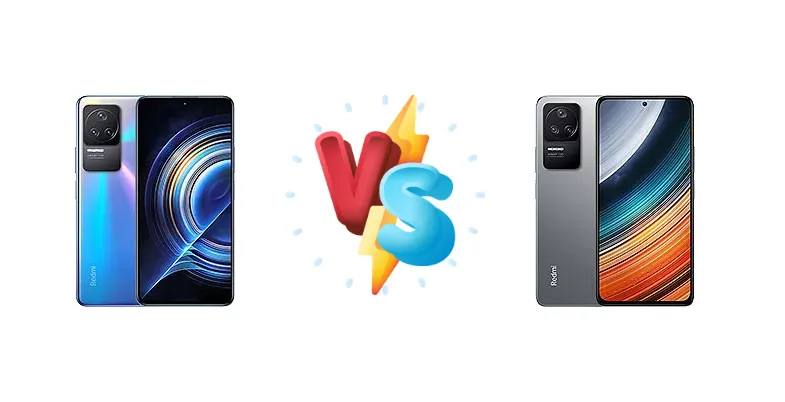
Xiaomi Redmi K50 vs Redmi K40S: The Ultimate Showdown
| Phones Images | |||||
|---|---|---|---|---|---|
|
🏆 Quick Verdict
The Redmi K50 boasts a newer, more efficient chipset and slightly faster charging. However, the K40S retains a strong appeal with its proven Snapdragon 870 and excellent camera capabilities. For raw power and future-proofing, the K50 wins, but the K40S remains a fantastic option, especially if found at a discounted price.
| PHONES | ||
|---|---|---|
| Phone Names | Xiaomi Redmi K50 | Xiaomi Redmi K40S |
| Network | ||
|---|---|---|
| 2G bands | GSM 850 / 900 / 1800 / 1900 | GSM 850 / 900 / 1800 / 1900 |
| 3G bands | HSDPA 850 / 900 / 1700(AWS) / 1900 / 2100 | HSDPA 850 / 900 / 1700(AWS) / 1900 / 2100 |
| 4G bands | 1, 2, 3, 4, 5, 8, 18, 19, 26, 34, 38, 39, 40, 41, 42 | 1, 2, 3, 4, 5, 8, 18, 19, 26, 34, 38, 39, 40, 41, 42 |
| 5G bands | 1, 3, 5, 8, 28, 38, 40, 41, 77, 78 SA/NSA | 1, 3, 5, 8, 28, 38, 40, 41, 77, 78 SA/NSA |
| Speed | HSPA, LTE, 5G | HSPA, LTE, 5G |
| Technology | GSM / CDMA / HSPA / CDMA2000 / LTE / 5G | GSM / CDMA / HSPA / CDMA2000 / LTE / 5G |
| CDMA2000 1x | CDMA2000 1x | |
| Launch | ||
|---|---|---|
| Announced | 2022, March 17 | 2022, March 17 |
| Status | Available. Released 2022, March 22 | Available. Released 2022, March 17 |
| Body | ||
|---|---|---|
| Build | Glass front (Gorilla Glass Victus), glass back | Glass front (Gorilla Glass 5), plastic back |
| Dimensions | 163.1 x 76.2 x 8.5 mm (6.42 x 3.00 x 0.33 in) | 163.2 x 76 x 7.7 mm (6.43 x 2.99 x 0.30 in) |
| SIM | Nano-SIM + Nano-SIM | Nano-SIM + Nano-SIM |
| Weight | 201 g (7.09 oz) | 195 g (6.88 oz) |
| IP53, dust and splash resistant | Splash resistant | |
| Display | ||
|---|---|---|
| Protection | Corning Gorilla Glass Victus | Corning Gorilla Glass 5 |
| Resolution | 1440 x 3200 pixels, 20:9 ratio (~526 ppi density) | 1080 x 2400 pixels, 20:9 ratio (~395 ppi density) |
| Size | 6.67 inches, 107.4 cm2 (~86.4% screen-to-body ratio) | 6.67 inches, 107.4 cm2 (~86.6% screen-to-body ratio) |
| Type | OLED, 120Hz, Dolby Vision, HDR10+, 1200 nits (peak) | AMOLED, 120Hz, HDR10+, 1300 nits (peak) |
| Platform | ||
|---|---|---|
| CPU | Octa-core (4x2.85 GHz Cortex-A78 & 4x2.0 GHz Cortex-A55) | Octa-core (1x3.2 GHz Kryo 585 & 3x2.42 GHz Kryo 585 & 4x1.80 GHz Kryo 585) |
| Chipset | Mediatek Dimensity 8100 (5 nm) | Qualcomm SM8250-AC Snapdragon 870 5G (7 nm) |
| GPU | Mali-G610 | Adreno 650 |
| OS | Android 12, MIUI 13 | Android 12, MIUI 13 |
| Memory | ||
|---|---|---|
| Card slot | No | No |
| Internal | 128GB 8GB RAM, 256GB 8GB RAM, 256GB 12GB RAM, 512GB 12GB RAM | 128GB 6GB RAM, 128GB 8GB RAM, 256GB 8GB RAM, 256GB 12GB RAM |
| UFS 3.1 | UFS 3.1 | |
| Main Camera | ||
|---|---|---|
| Features | Color spectrum sensor, Dual-LED dual-tone flash, HDR, panorama | Color spectrum sensor, Dual-LED dual-tone flash, HDR, panorama |
| Single | 20 MP, (wide) | 20 MP, (wide) |
| Triple | 48 MP, (wide), 1/2.0", 0.8µm, PDAF, OIS 8 MP, 119˚ (ultrawide) 2 MP (macro) | 48 MP, f/1.8, (wide), 1/2.0", 0.8µm, PDAF, OIS 8 MP, 119˚ (ultrawide) 2 MP (macro) |
| Video | 4K@30fps, 1080p@30/60/120fps, 720p@960fps; gyro-EIS | 4K@30fps, 1080p@30/60/120fps, 720p@960fps; gyro-EIS |
| Selfie camera | ||
|---|---|---|
| Single | 20 MP, (wide) | 20 MP, (wide) |
| Video | 1080p@30/120fps | 1080p@30/120fps |
| Sound | ||
|---|---|---|
| 3.5mm jack | No | No |
| 35mm jack | No | No |
| Loudspeaker | Yes, with stereo speakers | Yes, with stereo speakers |
| 24-bit/192kHz audio | 24-bit/192kHz audio | |
| Comms | ||
|---|---|---|
| Bluetooth | 5.3, A2DP, LE | 5.2, A2DP, LE |
| Infrared port | Yes | - |
| NFC | Yes | Yes |
| Positioning | GPS (L1+L5), GLONASS (L1), BDS (B1I+B1c+B2a), GALILEO (E1+E5a), QZSS (L1+L5), NavIC (L5) | GPS (L1+L5), GLONASS (L1), BDS (B1I+B1c+B2a), GALILEO (E1+E5a), QZSS (L1+L5), NavIC (L5) |
| Radio | No | No |
| USB | USB Type-C 2.0, OTG | USB Type-C 2.0, OTG |
| WLAN | Wi-Fi 802.11 a/b/g/n/ac/6, dual-band, Wi-Fi Direct | Wi-Fi 802.11 a/b/g/n/ac/6, dual-band, Wi-Fi Direct |
| Features | ||
|---|---|---|
| Sensors | Fingerprint (side-mounted), accelerometer, gyro, proximity, compass | Fingerprint (side-mounted), accelerometer, gyro, proximity, compass |
| Battery | ||
|---|---|---|
| Charging | 67W wired, PD3.0, QC3, 80% in 30 min | 67W wired, PD3.0, QC3, 100% in 38 min |
| Type | Li-Po 5500 mAh | Li-Po 4500 mAh |
| Misc | ||
|---|---|---|
| Colors | Black, Gray, Blue, Green | Black, Gray, Blue, Green |
| Models | 22041211AC | - |
| Price | About 480 EUR | About 260 EUR |
Xiaomi Redmi K50
- Newer Dimensity 8100 chipset
- Slightly faster charging (67W)
- Improved power efficiency
- Future-proofed
- Camera performance slightly behind K40S
- Potentially higher price
Xiaomi Redmi K40S
- Excellent camera performance (especially main sensor)
- Proven Snapdragon 870 chipset
- Often available at a lower price
- Good overall value
- Older chipset (less future-proofing)
- Slightly slower charging
Display Comparison
Both phones feature a vibrant 6.67-inch AMOLED display with a 120Hz refresh rate. The K50 might have slightly improved color accuracy due to newer panel technology, but the difference is minimal. Both offer excellent viewing experiences for media consumption and gaming.
Camera Comparison
The K40S generally receives praise for its camera system, particularly its main 48MP sensor. While the K50 has a capable camera setup, the K40S often produces slightly more pleasing and consistent results in various lighting conditions. Both offer decent ultrawide and macro lenses.
Performance
The Dimensity 8100 in the K50 offers a noticeable performance boost over the Snapdragon 870 in the K40S, particularly in demanding tasks and sustained workloads. The 5nm process also contributes to better power efficiency. While the 870 is still a capable chip, the K50's newer architecture provides a smoother, more responsive experience.
Battery Life
Both phones have a 5000mAh battery, providing all-day battery life for most users. The K50's 67W charging is slightly faster, reaching 80% in 30 minutes, compared to the K40S's 38 minutes to 100%. However, the difference isn't substantial.
Buying Guide
The Xiaomi Redmi K50 is ideal for gamers and power users who prioritize the latest technology and smooth performance. The Redmi K40S is a great choice for those seeking a well-rounded smartphone with a fantastic camera and reliable performance, particularly if budget is a significant concern.