
Xiaomi Redmi K50 Ultra vs K60 Pro: The Ultimate Showdown
| Phones Images | |||||
|---|---|---|---|---|---|
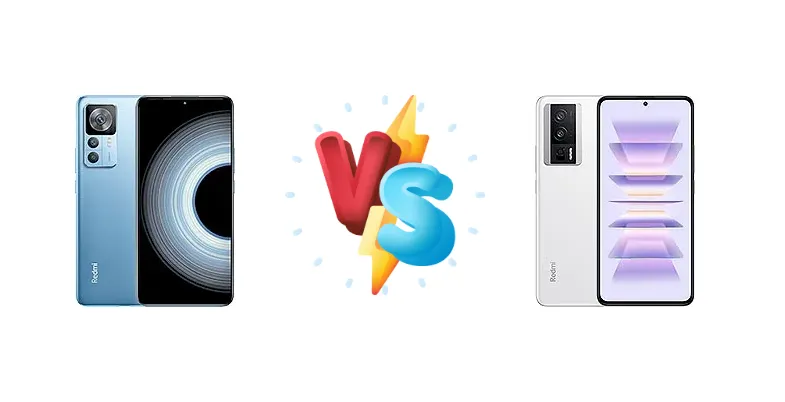
|
🏆 Quick Verdict
The Redmi K60 Pro edges out the K50 Ultra thanks to the newer Snapdragon 8 Gen 2 chipset, offering improved efficiency and performance. While the K50 Ultra boasts incredible value, the K60 Pro's added features like wireless charging and a slightly refined experience make it the better overall choice.
| PHONES | ||
|---|---|---|
| Phone Names | Xiaomi Redmi K50 Ultra | Xiaomi Redmi K60 Pro |
| Network | ||
|---|---|---|
| 2G bands | GSM 850 / 900 / 1800 / 1900 | GSM 850 / 900 / 1800 / 1900 |
| 3G bands | HSDPA 850 / 900 / 1700(AWS) / 1900 / 2100 | HSDPA 800 / 850 / 900 / 1700(AWS) / 2100 |
| 4G bands | 1, 3, 4, 5, 8, 18, 19, 26, 34, 38, 39, 40, 41, 42 | 1, 3, 4, 5, 8, 18, 19, 26, 34, 38, 39, 40, 41, 42 |
| 5G bands | 1, 3, 5, 8, 28, 38, 40, 41, 77, 78 SA/NSA | 1, 3, 5, 8, 28, 38, 41, 77, 78 SA/NSA |
| Speed | HSPA, LTE, 5G | HSPA, LTE, 5G |
| Technology | GSM / CDMA / HSPA / CDMA2000 / LTE / 5G | GSM / CDMA / HSPA / CDMA2000 / LTE / 5G |
| CDMA2000 1x | CDMA2000 1x | |
| Launch | ||
|---|---|---|
| Announced | 2022, August 11 | 2022, December 27 |
| Status | Available. Released 2022, August 25 | Available. Released 2023, January 01 |
| Body | ||
|---|---|---|
| Dimensions | 163.1 x 75.9 x 8.6 mm (6.42 x 2.99 x 0.34 in) | 162.8 x 75.4 x 8.6 mm or 8.9 mm |
| SIM | Nano-SIM + Nano-SIM | Nano-SIM + Nano-SIM |
| Weight | 202 g (7.13 oz) | 201 g or 205 g (7.09 oz) |
| Display | ||
|---|---|---|
| Resolution | 1220 x 2712 pixels, 20:9 ratio (~446 ppi density) | 1440 x 3200 pixels, 20:9 ratio (~526 ppi density) |
| Size | 6.67 inches, 107.4 cm2 (~86.7% screen-to-body ratio) | 6.67 inches, 107.4 cm2 (~87.5% screen-to-body ratio) |
| Type | OLED, 68B colors, 144Hz, HDR10+, Dolby Vision | OLED, 68B colors, 120Hz, Dolby Vision, HDR10+, 1400 nits (peak) |
| Platform | ||
|---|---|---|
| CPU | Octa-core (1x3.19 GHz Cortex-X2 & 3x2.75 GHz Cortex-A710 & 4x1.80 GHz Cortex-A510) | Octa-core (1x3.2 GHz Cortex-X3 & 2x2.8 GHz Cortex-A715 & 2x2.8 GHz Cortex-A710 & 3x2.0 GHz Cortex-A510) |
| Chipset | Qualcomm SM8475 Snapdragon 8+ Gen 1 (4 nm) | Qualcomm SM8550-AB Snapdragon 8 Gen 2 (4 nm) |
| GPU | Adreno 730 | Adreno 740 |
| OS | Android 12, MIUI 13 | Android 13, MIUI 14 |
| Memory | ||
|---|---|---|
| Card slot | No | No |
| Internal | 128GB 8GB RAM, 256GB 8GB RAM, 256GB 12GB RAM, 512GB 12GB RAM | 128GB 8GB RAM, 256GB 8GB RAM, 256GB 12GB RAM, 512GB 12GB RAM, 512GB 16GB RAM |
| UFS 3.1 | UFS 4.0 UFS 3.1 - 128GB only | |
| Main Camera | ||
|---|---|---|
| Features | Color spectrum sensor, LED flash, HDR, panorama | Color spectrum sensor, Dual-LED dual-tone flash, HDR, panorama |
| Triple | 108 MP, f/1.6, (wide), 1/1.67", PDAF, OIS 8 MP, f/2.2, 120˚, (ultrawide) 2 MP (macro) | 54 MP, f/1.9, (wide), 1/1.49", 1.0µm, PDAF, OIS 8 MP, 118˚ (ultrawide), 1/4.0", 1.12µm 2 MP (macro) |
| Video | 4K@30/60fps, 1080p@30/60/120/240/960fps | 8K@24fps, 4K@30/60fps, 1080p@30/60/120/240/960fps, 720p@1920fps, gyro-EIS |
| Selfie camera | ||
|---|---|---|
| Features | HDR | HDR |
| Single | 20 MP, (wide) | 16 MP, (wide), 1/3.06", 1.0µm |
| Video | 1080p@30/60fps, 720p@120fps | 1080p@30/60/120fps |
| Sound | ||
|---|---|---|
| 3.5mm jack | No | No |
| 35mm jack | No | No |
| Loudspeaker | Yes, with stereo speakers | Yes, with stereo speakers |
| 24-bit/192kHz audio | 24-bit/192kHz audio | |
| Comms | ||
|---|---|---|
| Bluetooth | 5.2, A2DP, LE, aptX HD, aptX Adaptive | 5.3, A2DP, LE |
| Infrared port | Yes | Yes |
| NFC | Yes | Yes |
| Positioning | GPS (L1+L5), GLONASS (L1), BDS (B1I+B1c+B2a), GALILEO (E1+E5a), QZSS (L1+L5), NavIC (L5) | GPS (L1+L5), GLONASS (G1), BDS (B1I+B2a+Bc), GALILEO (E1+E5a), QZSS (L1+L5), NavIC |
| Radio | No | Unspecified |
| USB | USB Type-C 2.0, OTG | USB Type-C 2.0, OTG |
| WLAN | Wi-Fi 802.11 a/b/g/n/ac/6e, dual-band, Wi-Fi Direct | Wi-Fi 802.11 a/b/g/n/ac/6e, dual-band, Wi-Fi Direct |
| Features | ||
|---|---|---|
| Sensors | Fingerprint (under display, optical), accelerometer, gyro, proximity, compass | Fingerprint (under display, optical), accelerometer, gyro, proximity, compass |
| Battery | ||
|---|---|---|
| Charging | 120W wired, PD3.0, 100% in 19 min | 120W wired, PD3.0, QC3+, 100% in 19 min 30W wireless |
| Type | Li-Po 5000 mAh | Li-Po 5000 mAh |
| Misc | ||
|---|---|---|
| Colors | Black, Gray, Blue, Mercedes AMG | Black, White, Mint, Champion Black |
| Models | 22081212C | 22127RK46C |
| Price | About 430 EUR | About 460 EUR |
Xiaomi Redmi K50 Ultra
- Exceptional value for money
- Flagship Snapdragon 8+ Gen 1 performance
- Blazing-fast 120W charging
- Excellent display
- Slightly older chipset compared to K60 Pro
- No wireless charging
- Design may not appeal to everyone
Xiaomi Redmi K60 Pro
- Latest Snapdragon 8 Gen 2 chipset
- Improved efficiency and performance
- 30W wireless charging
- Slightly better camera performance
- Refined software experience
- Slightly higher price than K50 Ultra
- Design is similar to K50 Ultra
Display Comparison
Both phones feature vibrant AMOLED displays with 120Hz refresh rates. The K60 Pro likely has slightly improved color accuracy and brightness due to its newer panel, but the difference is minimal. Both offer excellent viewing experiences.
Camera Comparison
While both phones offer capable camera systems, the K60 Pro likely has a slightly improved main sensor and image processing. Expect better low-light performance and more natural-looking photos from the K60 Pro. Both phones should capture detailed and vibrant images in good lighting conditions.
Performance
The Snapdragon 8 Gen 2 in the K60 Pro provides a noticeable performance boost over the Snapdragon 8+ Gen 1 in the K50 Ultra. Expect smoother multitasking, faster app loading times, and improved gaming performance on the K60 Pro. The K50 Ultra is still incredibly fast, but the Gen 2 is the clear winner.
Battery Life
Both phones offer 120W fast charging, achieving a full charge in approximately 19 minutes. The K60 Pro's more efficient Snapdragon 8 Gen 2 chipset may result in slightly better battery life under heavy usage, and the addition of 30W wireless charging provides added convenience.
Buying Guide
The Xiaomi Redmi K50 Ultra is ideal for gamers and power users seeking maximum performance on a budget. If you prioritize the latest technology, wireless charging, and a slightly more polished experience, the Redmi K60 Pro is the way to go.