
Xiaomi Redmi K50 Ultra vs Redmi K60: The Ultimate Showdown
| Phones Images | |||||
|---|---|---|---|---|---|
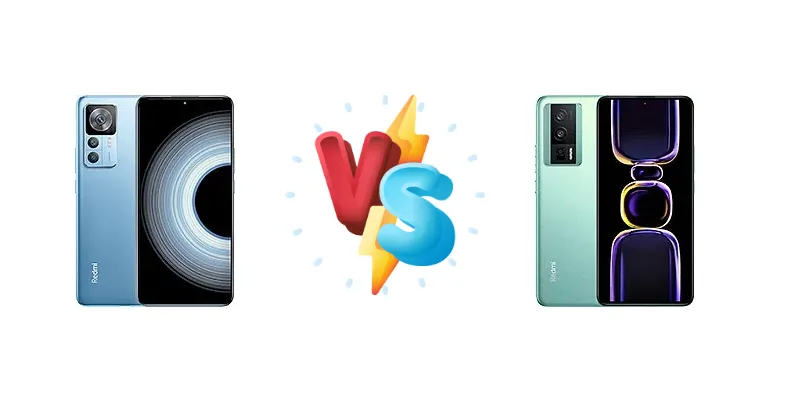
|
🏆 Quick Verdict
The Redmi K50 Ultra takes the lead with its significantly faster 120W charging and potentially slightly better display. However, the K60 offers wireless charging and a potentially more refined software experience. For charging speed and raw power, the K50 Ultra wins, but the K60 provides more versatility.
| PHONES | ||
|---|---|---|
| Phone Names | Xiaomi Redmi K50 Ultra | Xiaomi Redmi K60 |
| Network | ||
|---|---|---|
| 2G bands | GSM 850 / 900 / 1800 / 1900 | GSM 850 / 900 / 1800 / 1900 |
| 3G bands | HSDPA 850 / 900 / 1700(AWS) / 1900 / 2100 | HSDPA 800 / 850 / 900 / 1700(AWS) / 2100 |
| 4G bands | 1, 3, 4, 5, 8, 18, 19, 26, 34, 38, 39, 40, 41, 42 | 1, 3, 4, 5, 8, 18, 19, 26, 34, 38, 39, 40, 41, 42 |
| 5G bands | 1, 3, 5, 8, 28, 38, 40, 41, 77, 78 SA/NSA | 1, 3, 5, 8, 28, 38, 41, 77, 78 SA/NSA |
| Speed | HSPA, LTE, 5G | HSPA, LTE, 5G |
| Technology | GSM / CDMA / HSPA / CDMA2000 / LTE / 5G | GSM / CDMA / HSPA / CDMA2000 / LTE / 5G |
| CDMA2000 1x | CDMA2000 1x | |
| Launch | ||
|---|---|---|
| Announced | 2022, August 11 | 2022, December 27 |
| Status | Available. Released 2022, August 25 | Available. Released 2023, January 01 |
| Body | ||
|---|---|---|
| Dimensions | 163.1 x 75.9 x 8.6 mm (6.42 x 2.99 x 0.34 in) | 162.8 x 75.4 x 8.6 mm or 8.8 mm |
| SIM | Nano-SIM + Nano-SIM | Nano-SIM + Nano-SIM |
| Weight | 202 g (7.13 oz) | 199 g or 204 g (7.02 oz) |
| Display | ||
|---|---|---|
| Resolution | 1220 x 2712 pixels, 20:9 ratio (~446 ppi density) | 1440 x 3200 pixels, 20:9 ratio (~526 ppi density) |
| Size | 6.67 inches, 107.4 cm2 (~86.7% screen-to-body ratio) | 6.67 inches, 107.4 cm2 (~87.5% screen-to-body ratio) |
| Type | OLED, 68B colors, 144Hz, HDR10+, Dolby Vision | OLED, 68B colors, 120Hz, Dolby Vision, HDR10+, 1400 nits (peak) |
| Platform | ||
|---|---|---|
| CPU | Octa-core (1x3.19 GHz Cortex-X2 & 3x2.75 GHz Cortex-A710 & 4x1.80 GHz Cortex-A510) | Octa-core (1x3.0 GHz Cortex-X2 & 3x2.5 GHz Cortex-A710 & 4x1.80 GHz Cortex-A510) |
| Chipset | Qualcomm SM8475 Snapdragon 8+ Gen 1 (4 nm) | Qualcomm SM8475 Snapdragon 8+ Gen 1 (4 nm) |
| GPU | Adreno 730 | Adreno 730 |
| OS | Android 12, MIUI 13 | Android 13, MIUI 14 |
| Memory | ||
|---|---|---|
| Card slot | No | No |
| Internal | 128GB 8GB RAM, 256GB 8GB RAM, 256GB 12GB RAM, 512GB 12GB RAM | 128GB 8GB RAM, 256GB 8GB RAM, 256GB 12GB RAM, 256GB 16GB RAM, 512GB 12GB RAM, 512GB 16GB RAM, 1TB 16GB RAM |
| UFS 3.1 | UFS 3.1 | |
| Main Camera | ||
|---|---|---|
| Features | Color spectrum sensor, LED flash, HDR, panorama | Color spectrum sensor, Dual-LED dual-tone flash, HDR, panorama |
| Triple | 108 MP, f/1.6, (wide), 1/1.67", PDAF, OIS 8 MP, f/2.2, 120˚, (ultrawide) 2 MP (macro) | 64 MP, f/1.8, (wide), 1/2.0", 0.7µm, PDAF, OIS 8 MP, f/2.2, 120˚ (ultrawide), 1/4.0", 1.12µm 2 MP (macro) |
| Video | 4K@30/60fps, 1080p@30/60/120/240/960fps | 8K@24fps, 4K@30/60fps, 1080p@30/60/120/240/960fps, 720p@1920fps, gyro-EIS |
| Selfie camera | ||
|---|---|---|
| Features | HDR | HDR |
| Single | 20 MP, (wide) | 16 MP, f/2.5, (wide), 1/3.06", 1.0µm |
| Video | 1080p@30/60fps, 720p@120fps | 1080p@30/60/120fps |
| Sound | ||
|---|---|---|
| 3.5mm jack | No | No |
| 35mm jack | No | No |
| Loudspeaker | Yes, with stereo speakers | Yes, with stereo speakers |
| 24-bit/192kHz audio | 24-bit/192kHz audio | |
| Comms | ||
|---|---|---|
| Bluetooth | 5.2, A2DP, LE, aptX HD, aptX Adaptive | 5.3, A2DP, LE |
| Infrared port | Yes | Yes |
| NFC | Yes | Yes |
| Positioning | GPS (L1+L5), GLONASS (L1), BDS (B1I+B1c+B2a), GALILEO (E1+E5a), QZSS (L1+L5), NavIC (L5) | GPS (L1), GLONASS (G1), BDS (B1I+B1c), GALILEO (E1), QZSS (L1) |
| Radio | No | Unspecified |
| USB | USB Type-C 2.0, OTG | USB Type-C 2.0, OTG |
| WLAN | Wi-Fi 802.11 a/b/g/n/ac/6e, dual-band, Wi-Fi Direct | Wi-Fi 802.11 a/b/g/n/ac/6e, dual-band, Wi-Fi Direct |
| Features | ||
|---|---|---|
| Sensors | Fingerprint (under display, optical), accelerometer, gyro, proximity, compass | Fingerprint (under display, optical), accelerometer, gyro, proximity, compass |
| Battery | ||
|---|---|---|
| Charging | 120W wired, PD3.0, 100% in 19 min | 67W wired, PD3.0, QC3+ 30W wireless |
| Type | Li-Po 5000 mAh | Li-Po 5500 mAh |
| Misc | ||
|---|---|---|
| Colors | Black, Gray, Blue, Mercedes AMG | Black, White, Blue, Green |
| Models | 22081212C | - |
| Price | About 430 EUR | About 350 EUR |
Xiaomi Redmi K50 Ultra
- Blazing-fast 120W charging
- 200MP Main Camera
- Potentially slightly brighter display
- Flagship Snapdragon 8+ Gen 1 performance
- Potentially less refined software
- No wireless charging
- Design might be less premium than K60
Xiaomi Redmi K60
- Wireless charging support
- Potentially more polished software experience
- Slightly more premium design (speculative)
- Good battery life with 67W charging
- Slower charging speeds compared to K50 Ultra
- Lower resolution main camera (50MP)
- Performance virtually identical to K50 Ultra
Display Comparison
Both phones feature a 6.67-inch AMOLED display with a 120Hz refresh rate. However, the K50 Ultra is rumored to have slightly higher peak brightness and potentially better color accuracy, though official confirmation is needed. The K60 may have a slightly more refined color calibration out of the box.
Camera Comparison
The K50 Ultra boasts a 200MP main camera, a significant upgrade over the K60's 50MP main sensor. While megapixels aren't everything, the K50 Ultra should offer more detail and better cropping capabilities. Both phones likely feature similar ultrawide and macro lenses, but the K50 Ultra's main sensor gives it a clear advantage.
Performance
Both devices are powered by the Snapdragon 8+ Gen 1, ensuring flagship-level performance. While the CPU clock speeds differ slightly (K50 Ultra has a marginally higher prime core clock), real-world performance differences are likely to be minimal. Gaming performance should be excellent on both.
Battery Life
The K50 Ultra's 120W charging is a game-changer, allowing for incredibly fast top-ups. The K60 offers 67W wired charging and 30W wireless charging, providing more flexibility but slower overall charging speeds.
Buying Guide
The Xiaomi Redmi K50 Ultra is ideal for power users and gamers who prioritize blazing-fast charging and top-tier performance. The Redmi K60 is a great choice for those who value wireless charging, a potentially more polished software experience, and a slightly more balanced feature set.