
Xiaomi Redmi K50 Ultra vs Redmi K50 Gaming: The Ultimate Showdown
| Phones Images | |||||
|---|---|---|---|---|---|
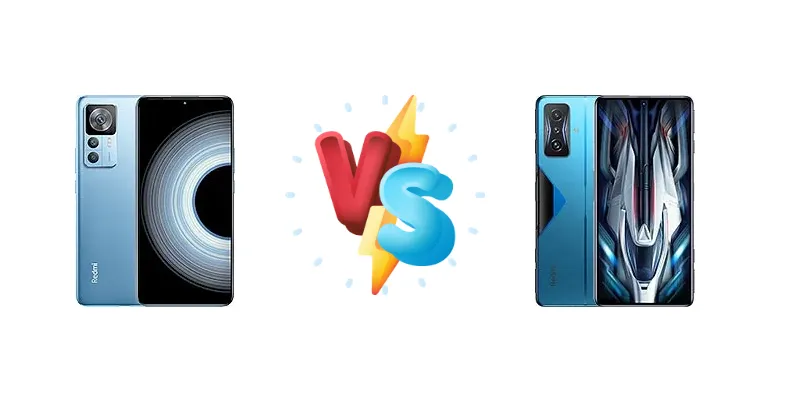
|
🏆 Quick Verdict
The Redmi K50 Ultra takes the crown thanks to its superior Snapdragon 8+ Gen 1 chipset, offering better sustained performance and efficiency. While the K50 Gaming boasts slightly faster charging, the Ultra's overall package, including potentially better camera capabilities, makes it the more compelling choice for most users.
| PHONES | ||
|---|---|---|
| Phone Names | Xiaomi Redmi K50 Ultra | Xiaomi Redmi K50 Gaming |
| Network | ||
|---|---|---|
| 2G bands | GSM 850 / 900 / 1800 / 1900 | GSM 850 / 900 / 1800 / 1900 |
| 3G bands | HSDPA 850 / 900 / 1700(AWS) / 1900 / 2100 | HSDPA 850 / 900 / 1700(AWS) / 1900 / 2100 |
| 4G bands | 1, 3, 4, 5, 8, 18, 19, 26, 34, 38, 39, 40, 41, 42 | 1, 2, 3, 4, 5, 7, 8, 18, 19, 26, 34, 38, 39, 40, 41, 42 |
| 5G bands | 1, 3, 5, 8, 28, 38, 40, 41, 77, 78 SA/NSA | 1, 3, 5, 8, 28, 38, 40, 41, 77, 78 SA/NSA/Sub6 |
| Speed | HSPA, LTE, 5G | HSPA, LTE, 5G |
| Technology | GSM / CDMA / HSPA / CDMA2000 / LTE / 5G | GSM / CDMA / HSPA / CDMA2000 / LTE / 5G |
| CDMA2000 1x | CDMA2000 1x | |
| Launch | ||
|---|---|---|
| Announced | 2022, August 11 | 2022, February 16 |
| Status | Available. Released 2022, August 25 | Available. Released 2022, February 18 |
| Body | ||
|---|---|---|
| Build | - | Glass front (Gorilla Glass Victus), glass back, aluminum frame |
| Dimensions | 163.1 x 75.9 x 8.6 mm (6.42 x 2.99 x 0.34 in) | 162.5 x 76.7 x 8.5 mm (6.40 x 3.02 x 0.33 in) |
| SIM | Nano-SIM + Nano-SIM | Nano-SIM + Nano-SIM |
| Weight | 202 g (7.13 oz) | 210 g (7.41 oz) |
| - | Physical magnetic pop-up gaming triggers | |
| Display | ||
|---|---|---|
| Protection | - | Corning Gorilla Glass Victus |
| Resolution | 1220 x 2712 pixels, 20:9 ratio (~446 ppi density) | 1080 x 2400 pixels, 20:9 ratio (~395 ppi density) |
| Size | 6.67 inches, 107.4 cm2 (~86.7% screen-to-body ratio) | 6.67 inches, 107.4 cm2 (~86.2% screen-to-body ratio) |
| Type | OLED, 68B colors, 144Hz, HDR10+, Dolby Vision | OLED, 1B colors, 120Hz, HDR10+, 800 nits (HBM) |
| Platform | ||
|---|---|---|
| CPU | Octa-core (1x3.19 GHz Cortex-X2 & 3x2.75 GHz Cortex-A710 & 4x1.80 GHz Cortex-A510) | Octa-core (1x3.00 GHz Cortex-X2 & 3x2.50 GHz Cortex-A710 & 4x1.80 GHz Cortex-A510) |
| Chipset | Qualcomm SM8475 Snapdragon 8+ Gen 1 (4 nm) | Qualcomm SM8450 Snapdragon 8 Gen 1 (4 nm) |
| GPU | Adreno 730 | Adreno 730 |
| OS | Android 12, MIUI 13 | Android 12, MIUI 13 |
| Memory | ||
|---|---|---|
| Card slot | No | No |
| Internal | 128GB 8GB RAM, 256GB 8GB RAM, 256GB 12GB RAM, 512GB 12GB RAM | 128GB 8GB RAM, 128GB 12GB RAM, 256GB 12GB RAM |
| UFS 3.1 | UFS 3.1 | |
| Main Camera | ||
|---|---|---|
| Features | Color spectrum sensor, LED flash, HDR, panorama | Color spectrum sensor, Dual-LED flash, HDR, panorama |
| Single | - | 20 MP, f/2.4, (wide), 1/2.0", 0.8µm |
| Triple | 108 MP, f/1.6, (wide), 1/1.67", PDAF, OIS 8 MP, f/2.2, 120˚, (ultrawide) 2 MP (macro) | 64 MP, f/1.9, 26mm (wide), 1/1.73", 0.8µm, PDAF 8 MP, f/2.2, 120˚ (ultrawide) 2 MP (macro) |
| Video | 4K@30/60fps, 1080p@30/60/120/240/960fps | 4K@30/60fps, 1080p@30/60/120fps, 720p@960fps, HDR |
| Selfie camera | ||
|---|---|---|
| Features | HDR | HDR |
| Single | 20 MP, (wide) | 20 MP, f/2.4, (wide), 1/2.0", 0.8µm |
| Video | 1080p@30/60fps, 720p@120fps | 1080p@30/60fps, 720p@120fps, HDR |
| Sound | ||
|---|---|---|
| 3.5mm jack | No | No |
| 35mm jack | No | No |
| Loudspeaker | Yes, with stereo speakers | Yes, with stereo speakers (4 speakers) |
| 24-bit/192kHz audio | 24-bit/192kHz audio Tuned by JBL | |
| Comms | ||
|---|---|---|
| Bluetooth | 5.2, A2DP, LE, aptX HD, aptX Adaptive | 5.2, A2DP, LE, aptX HD, aptX Adaptive |
| Infrared port | Yes | Yes |
| NFC | Yes | Yes |
| Positioning | GPS (L1+L5), GLONASS (L1), BDS (B1I+B1c+B2a), GALILEO (E1+E5a), QZSS (L1+L5), NavIC (L5) | GPS (L1+L5), GLONASS (L1), BDS (B1I+B1c+B2a), GALILEO (E1+E5a), QZSS (L1+L5), NavIC (L5) |
| Radio | No | No |
| USB | USB Type-C 2.0, OTG | USB Type-C 2.0, OTG |
| WLAN | Wi-Fi 802.11 a/b/g/n/ac/6e, dual-band, Wi-Fi Direct | Wi-Fi 802.11 a/b/g/n/ac/6e, dual-band, Wi-Fi Direct |
| Features | ||
|---|---|---|
| Sensors | Fingerprint (under display, optical), accelerometer, gyro, proximity, compass | Fingerprint (side-mounted), accelerometer, gyro, compass |
| - | Virtual proximity sensing | |
| Battery | ||
|---|---|---|
| Charging | 120W wired, PD3.0, 100% in 19 min | 120W wired, PD3.0, QC3, 100% in 17 min |
| Type | Li-Po 5000 mAh | Li-Po 4700 mAh |
| Misc | ||
|---|---|---|
| Colors | Black, Gray, Blue, Mercedes AMG | Black, Gray, Blue, AMG |
| Models | 22081212C | 21121210C |
| Price | About 430 EUR | About 460 EUR |
Xiaomi Redmi K50 Ultra
- Superior Snapdragon 8+ Gen 1 chipset
- Potentially better camera system
- Fast 120W charging
- Vibrant AMOLED display
- Excellent value for money
- Design might be less 'gaming' focused
- Availability may vary by region
Xiaomi Redmi K50 Gaming
- Dedicated gaming features (shoulder triggers)
- Slightly faster charging (marginally)
- Excellent performance for gaming
- Aggressive gaming design
- Competitive price
- Snapdragon 8 Gen 1 is less efficient than 8+ Gen 1
- Camera system is less impressive
- May lack some features found in the Ultra
Display Comparison
Both phones feature a 6.67-inch AMOLED display with a 120Hz refresh rate, offering vibrant colors and smooth scrolling. However, the K50 Ultra may have slightly better color accuracy and brightness due to potential panel variations. The K50 Gaming's display is optimized for gaming with features like adaptive refresh rate and touch sampling rate.
Camera Comparison
The K50 Ultra is expected to have a more advanced camera system, potentially including a higher resolution main sensor (likely 200MP) and improved image processing. The K50 Gaming features a triple camera setup, but its sensors are generally less impressive than those found in the Ultra. Expect better low-light performance and overall image quality from the Ultra.
Performance
The K50 Ultra's Snapdragon 8+ Gen 1 is a significant upgrade over the K50 Gaming's Snapdragon 8 Gen 1. The 8+ Gen 1 offers improved CPU and GPU performance, especially under sustained load, resulting in smoother multitasking and better gaming experiences. The K50 Gaming still delivers excellent performance, but the Ultra has a clear edge.
Battery Life
Both phones have a 5000mAh battery and support 120W fast charging. The K50 Gaming charges slightly faster (17 minutes vs 19 minutes), but the difference is minimal. Battery life is comparable between the two devices, offering all-day usage for most users.
Buying Guide
The Xiaomi Redmi K50 Ultra is ideal for users seeking a flagship-level experience with a focus on performance, camera quality, and fast charging without breaking the bank. The Redmi K50 Gaming is best suited for hardcore mobile gamers who prioritize raw gaming power and appreciate the dedicated gaming features, though it may compromise slightly on other aspects.