
Xiaomi Redmi K50 Gaming vs Redmi K50: The Ultimate Showdown
| Phones Images | |||||
|---|---|---|---|---|---|
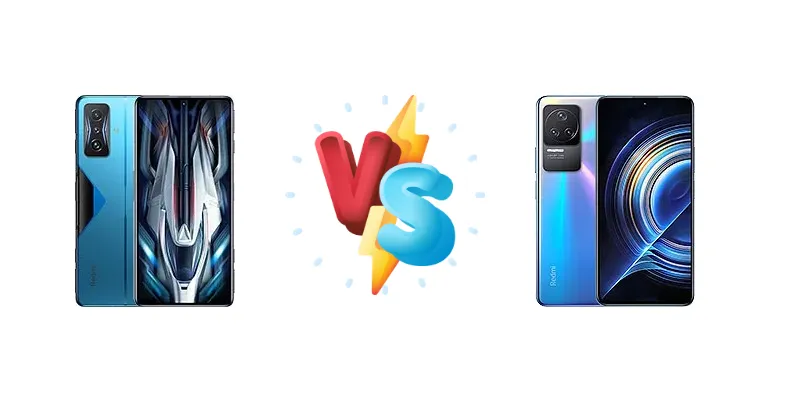
|
🏆 Quick Verdict
The Redmi K50 Gaming takes the performance crown thanks to the Snapdragon 8 Gen 1 and faster charging. However, the standard Redmi K50 offers a more balanced package with a potentially better display and slightly improved efficiency, making it a strong contender for everyday users.
| PHONES | ||
|---|---|---|
| Phone Names | Xiaomi Redmi K50 Gaming | Xiaomi Redmi K50 |
| Network | ||
|---|---|---|
| 2G bands | GSM 850 / 900 / 1800 / 1900 | GSM 850 / 900 / 1800 / 1900 |
| 3G bands | HSDPA 850 / 900 / 1700(AWS) / 1900 / 2100 | HSDPA 850 / 900 / 1700(AWS) / 1900 / 2100 |
| 4G bands | 1, 2, 3, 4, 5, 7, 8, 18, 19, 26, 34, 38, 39, 40, 41, 42 | 1, 2, 3, 4, 5, 8, 18, 19, 26, 34, 38, 39, 40, 41, 42 |
| 5G bands | 1, 3, 5, 8, 28, 38, 40, 41, 77, 78 SA/NSA/Sub6 | 1, 3, 5, 8, 28, 38, 40, 41, 77, 78 SA/NSA |
| Speed | HSPA, LTE, 5G | HSPA, LTE, 5G |
| Technology | GSM / CDMA / HSPA / CDMA2000 / LTE / 5G | GSM / CDMA / HSPA / CDMA2000 / LTE / 5G |
| CDMA2000 1x | CDMA2000 1x | |
| Launch | ||
|---|---|---|
| Announced | 2022, February 16 | 2022, March 17 |
| Status | Available. Released 2022, February 18 | Available. Released 2022, March 22 |
| Body | ||
|---|---|---|
| Build | Glass front (Gorilla Glass Victus), glass back, aluminum frame | Glass front (Gorilla Glass Victus), glass back |
| Dimensions | 162.5 x 76.7 x 8.5 mm (6.40 x 3.02 x 0.33 in) | 163.1 x 76.2 x 8.5 mm (6.42 x 3.00 x 0.33 in) |
| SIM | Nano-SIM + Nano-SIM | Nano-SIM + Nano-SIM |
| Weight | 210 g (7.41 oz) | 201 g (7.09 oz) |
| Physical magnetic pop-up gaming triggers | IP53, dust and splash resistant | |
| Display | ||
|---|---|---|
| Protection | Corning Gorilla Glass Victus | Corning Gorilla Glass Victus |
| Resolution | 1080 x 2400 pixels, 20:9 ratio (~395 ppi density) | 1440 x 3200 pixels, 20:9 ratio (~526 ppi density) |
| Size | 6.67 inches, 107.4 cm2 (~86.2% screen-to-body ratio) | 6.67 inches, 107.4 cm2 (~86.4% screen-to-body ratio) |
| Type | OLED, 1B colors, 120Hz, HDR10+, 800 nits (HBM) | OLED, 120Hz, Dolby Vision, HDR10+, 1200 nits (peak) |
| Platform | ||
|---|---|---|
| CPU | Octa-core (1x3.00 GHz Cortex-X2 & 3x2.50 GHz Cortex-A710 & 4x1.80 GHz Cortex-A510) | Octa-core (4x2.85 GHz Cortex-A78 & 4x2.0 GHz Cortex-A55) |
| Chipset | Qualcomm SM8450 Snapdragon 8 Gen 1 (4 nm) | Mediatek Dimensity 8100 (5 nm) |
| GPU | Adreno 730 | Mali-G610 |
| OS | Android 12, MIUI 13 | Android 12, MIUI 13 |
| Memory | ||
|---|---|---|
| Card slot | No | No |
| Internal | 128GB 8GB RAM, 128GB 12GB RAM, 256GB 12GB RAM | 128GB 8GB RAM, 256GB 8GB RAM, 256GB 12GB RAM, 512GB 12GB RAM |
| UFS 3.1 | UFS 3.1 | |
| Main Camera | ||
|---|---|---|
| Features | Color spectrum sensor, Dual-LED flash, HDR, panorama | Color spectrum sensor, Dual-LED dual-tone flash, HDR, panorama |
| Single | 20 MP, f/2.4, (wide), 1/2.0", 0.8µm | 20 MP, (wide) |
| Triple | 64 MP, f/1.9, 26mm (wide), 1/1.73", 0.8µm, PDAF 8 MP, f/2.2, 120˚ (ultrawide) 2 MP (macro) | 48 MP, (wide), 1/2.0", 0.8µm, PDAF, OIS 8 MP, 119˚ (ultrawide) 2 MP (macro) |
| Video | 4K@30/60fps, 1080p@30/60/120fps, 720p@960fps, HDR | 4K@30fps, 1080p@30/60/120fps, 720p@960fps; gyro-EIS |
| Selfie camera | ||
|---|---|---|
| Features | HDR | - |
| Single | 20 MP, f/2.4, (wide), 1/2.0", 0.8µm | 20 MP, (wide) |
| Video | 1080p@30/60fps, 720p@120fps, HDR | 1080p@30/120fps |
| Sound | ||
|---|---|---|
| 3.5mm jack | No | No |
| 35mm jack | No | No |
| Loudspeaker | Yes, with stereo speakers (4 speakers) | Yes, with stereo speakers |
| 24-bit/192kHz audio Tuned by JBL | 24-bit/192kHz audio | |
| Comms | ||
|---|---|---|
| Bluetooth | 5.2, A2DP, LE, aptX HD, aptX Adaptive | 5.3, A2DP, LE |
| Infrared port | Yes | Yes |
| NFC | Yes | Yes |
| Positioning | GPS (L1+L5), GLONASS (L1), BDS (B1I+B1c+B2a), GALILEO (E1+E5a), QZSS (L1+L5), NavIC (L5) | GPS (L1+L5), GLONASS (L1), BDS (B1I+B1c+B2a), GALILEO (E1+E5a), QZSS (L1+L5), NavIC (L5) |
| Radio | No | No |
| USB | USB Type-C 2.0, OTG | USB Type-C 2.0, OTG |
| WLAN | Wi-Fi 802.11 a/b/g/n/ac/6e, dual-band, Wi-Fi Direct | Wi-Fi 802.11 a/b/g/n/ac/6, dual-band, Wi-Fi Direct |
| Features | ||
|---|---|---|
| Sensors | Fingerprint (side-mounted), accelerometer, gyro, compass | Fingerprint (side-mounted), accelerometer, gyro, proximity, compass |
| Virtual proximity sensing | - | |
| Battery | ||
|---|---|---|
| Charging | 120W wired, PD3.0, QC3, 100% in 17 min | 67W wired, PD3.0, QC3, 80% in 30 min |
| Type | Li-Po 4700 mAh | Li-Po 5500 mAh |
| Misc | ||
|---|---|---|
| Colors | Black, Gray, Blue, AMG | Black, Gray, Blue, Green |
| Models | 21121210C | 22041211AC |
| Price | About 460 EUR | About 480 EUR |
Xiaomi Redmi K50 Gaming
- Unmatched Performance (Snapdragon 8 Gen 1)
- Blazing-Fast 120W Charging
- Dedicated Gaming Features (shoulder buttons, advanced cooling)
- High Refresh Rate Display
- Potentially Higher Temperatures under Load
- Gaming-Focused Design (may not appeal to everyone)
- Slightly Less Efficient than Dimensity 8100
Xiaomi Redmi K50
- Excellent Value for Money
- Balanced Performance (Dimensity 8100)
- Potentially Better Display Color Accuracy
- More Refined Design
- Slower Charging Speed (67W)
- Less Powerful than K50 Gaming
- Fewer Gaming-Specific Features
Display Comparison
Both phones feature a 6.67-inch AMOLED display with a 120Hz refresh rate, offering smooth visuals. However, the standard K50 is rumored to have slightly better color accuracy and brightness, potentially making it a more enjoyable experience for media consumption. The Gaming model prioritizes responsiveness for gaming.
Camera Comparison
Both phones feature a triple-camera system, typically including a 64MP main sensor, an ultrawide lens, and a macro lens. While both offer decent image quality, the K50 Gaming might have slightly better image processing due to the more powerful chipset. Low-light performance is expected to be comparable.
Performance
The Snapdragon 8 Gen 1 in the K50 Gaming is undeniably more powerful than the Dimensity 8100 in the K50. Expect significantly faster processing speeds, smoother gameplay, and better performance in demanding applications. The Dimensity 8100 is still a very capable chip, but it doesn't match the raw power of the Snapdragon.
Battery Life
The K50 Gaming boasts a significantly faster 120W charging speed, allowing it to charge from 0% to 80% in just 17 minutes. The K50's 67W charging is still respectable, but it takes longer to reach a full charge. Battery capacity is likely similar (around 5000mAh), so the charging speed is the key differentiator.
Buying Guide
The Redmi K50 Gaming is ideal for hardcore gamers and power users who demand the absolute best performance and lightning-fast charging. The Redmi K50 is a great choice for those seeking a well-rounded smartphone with excellent performance, a vibrant display, and a more refined design, without the gaming-centric extras.