
Xiaomi Redmi K40S vs Redmi K40 Gaming: The Ultimate Showdown
| Phones Images | |||||
|---|---|---|---|---|---|
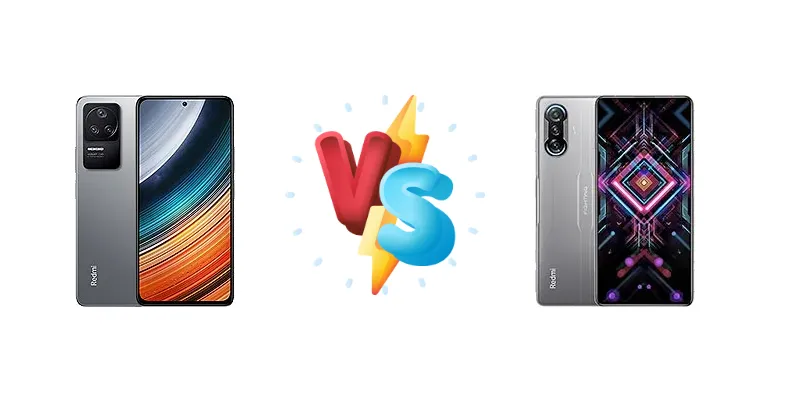
|
🏆 Quick Verdict
The Redmi K40S takes the crown thanks to its Snapdragon 870's superior performance and slightly faster charging. While the K40 Gaming boasts enhanced cooling and gaming-specific features, the K40S offers a more well-rounded experience for most users.
| PHONES | ||
|---|---|---|
| Phone Names | Xiaomi Redmi K40S | Xiaomi Redmi K40 Gaming |
| Network | ||
|---|---|---|
| 2G bands | GSM 850 / 900 / 1800 / 1900 | GSM 850 / 900 / 1800 / 1900 |
| 3G bands | HSDPA 850 / 900 / 1700(AWS) / 1900 / 2100 | HSDPA 850 / 900 / 1700(AWS) / 1900 / 2100 |
| 4G bands | 1, 2, 3, 4, 5, 8, 18, 19, 26, 34, 38, 39, 40, 41, 42 | 1, 2, 3, 4, 5, 7, 8, 18, 19, 26, 34, 38, 39, 40, 41, 42 |
| 5G bands | 1, 3, 5, 8, 28, 38, 40, 41, 77, 78 SA/NSA | 1, 3, 28, 41, 77, 78 SA/NSA/Sub6 |
| Speed | HSPA, LTE, 5G | HSPA, LTE, 5G |
| Technology | GSM / CDMA / HSPA / CDMA2000 / LTE / 5G | GSM / CDMA / HSPA / CDMA2000 / LTE / 5G |
| CDMA2000 1x | CDMA2000 1x | |
| Launch | ||
|---|---|---|
| Announced | 2022, March 17 | 2021, April 27 |
| Status | Available. Released 2022, March 17 | Available. Released 2021, April 30 |
| Body | ||
|---|---|---|
| Build | Glass front (Gorilla Glass 5), plastic back | Glass front (Gorilla Glass 5), glass back (Gorilla Glass 5) |
| Dimensions | 163.2 x 76 x 7.7 mm (6.43 x 2.99 x 0.30 in) | 161.9 x 76.9 x 8.3 mm (6.37 x 3.03 x 0.33 in) |
| SIM | Nano-SIM + Nano-SIM | Nano-SIM + Nano-SIM |
| Weight | 195 g (6.88 oz) | 205 g (7.23 oz) |
| Splash resistant | Physical pop-up gaming triggers IP53, dust and splash resistant | |
| Display | ||
|---|---|---|
| Protection | Corning Gorilla Glass 5 | Corning Gorilla Glass 5 |
| Resolution | 1080 x 2400 pixels, 20:9 ratio (~395 ppi density) | 1080 x 2400 pixels, 20:9 ratio (~395 ppi density) |
| Size | 6.67 inches, 107.4 cm2 (~86.6% screen-to-body ratio) | 6.67 inches, 107.4 cm2 (~86.3% screen-to-body ratio) |
| Type | AMOLED, 120Hz, HDR10+, 1300 nits (peak) | OLED, 1B colors, 120Hz, HDR10+, 500 nits (typ) |
| Platform | ||
|---|---|---|
| CPU | Octa-core (1x3.2 GHz Kryo 585 & 3x2.42 GHz Kryo 585 & 4x1.80 GHz Kryo 585) | Octa-core (1x3.0 GHz Cortex-A78 & 3x2.6 GHz Cortex-A78 & 4x2.0 GHz Cortex-A55) |
| Chipset | Qualcomm SM8250-AC Snapdragon 870 5G (7 nm) | Mediatek Dimensity 1200 (6 nm) |
| GPU | Adreno 650 | Mali-G77 MC9 |
| OS | Android 12, MIUI 13 | Android 11, MIUI 12.5 |
| Memory | ||
|---|---|---|
| Card slot | No | No |
| Internal | 128GB 6GB RAM, 128GB 8GB RAM, 256GB 8GB RAM, 256GB 12GB RAM | 128GB 6GB RAM, 128GB 8GB RAM, 128GB 12GB RAM, 256GB 8GB RAM, 256GB 12GB RAM |
| UFS 3.1 | UFS 3.1 | |
| Main Camera | ||
|---|---|---|
| Features | Color spectrum sensor, Dual-LED dual-tone flash, HDR, panorama | Color spectrum sensor, Dual-LED flash, HDR, panorama |
| Single | 20 MP, (wide) | 16 MP, f/2.5, (wide), 1/3.06" 1.0µm |
| Triple | 48 MP, f/1.8, (wide), 1/2.0", 0.8µm, PDAF, OIS 8 MP, 119˚ (ultrawide) 2 MP (macro) | 64 MP, f/1.7, 26mm (wide), 1/2.0", 0.7µm, PDAF 8 MP, f/2.2, 120˚ (ultrawide) 2 MP (macro) |
| Video | 4K@30fps, 1080p@30/60/120fps, 720p@960fps; gyro-EIS | 4K@30fps, 1080p@30/60/120fps, 720p@960fps, HDR |
| Selfie camera | ||
|---|---|---|
| Features | - | HDR |
| Single | 20 MP, (wide) | 16 MP, f/2.5, (wide), 1/3.06" 1.0µm |
| Video | 1080p@30/120fps | 1080p@30fps, 720p@120fps, HDR |
| Sound | ||
|---|---|---|
| 3.5mm jack | No | No |
| 35mm jack | No | No |
| Loudspeaker | Yes, with stereo speakers | Yes, with stereo speakers |
| 24-bit/192kHz audio | 24-bit/192kHz audio Tuned by JBL | |
| Comms | ||
|---|---|---|
| Bluetooth | 5.2, A2DP, LE | 5.2, A2DP, LE |
| Infrared port | - | Yes |
| NFC | Yes | Yes |
| Positioning | GPS (L1+L5), GLONASS (L1), BDS (B1I+B1c+B2a), GALILEO (E1+E5a), QZSS (L1+L5), NavIC (L5) | GPS (L1+L5), GLONASS (G1), BDS (B1I+B2a), GALILEO (E1+E5a), QZSS (L1+L5), NavIC |
| Radio | No | No |
| USB | USB Type-C 2.0, OTG | USB Type-C 2.0, OTG |
| WLAN | Wi-Fi 802.11 a/b/g/n/ac/6, dual-band, Wi-Fi Direct | Wi-Fi 802.11 a/b/g/n/ac/6, dual-band, Wi-Fi Direct |
| Features | ||
|---|---|---|
| Sensors | Fingerprint (side-mounted), accelerometer, gyro, proximity, compass | Fingerprint (side-mounted), accelerometer, gyro, compass, barometer |
| Battery | ||
|---|---|---|
| Charging | 67W wired, PD3.0, QC3, 100% in 38 min | 67W wired, PD3.0, QC3, 100% in 42 min |
| Type | Li-Po 4500 mAh | Li-Po 5065 mAh |
| Misc | ||
|---|---|---|
| Colors | Black, Gray, Blue, Green | Black, Gray, Silver, Bruce Lee Yellow |
| Models | - | M2012K10C, M2104K10AC |
| Price | About 260 EUR | About 260 EUR |
Xiaomi Redmi K40S
- Superior Performance (Snapdragon 870)
- Faster Charging (38 mins)
- Slightly Better Camera
- Well-Rounded Experience
- Gaming cooling not as advanced as K40 Gaming
- Design is less distinct than K40 Gaming
Xiaomi Redmi K40 Gaming
- Enhanced Gaming Cooling (Vapor Chamber)
- Gaming-Specific Features (shoulder triggers)
- Aggressive Gaming Design
- Slightly Slower Performance (Dimensity 1200)
- Slightly Slower Charging (42 mins)
- Camera slightly inferior to K40S
Display Comparison
Both phones feature a 6.67-inch AMOLED display with a 120Hz refresh rate and a 240Hz touch sampling rate, offering a smooth and vibrant viewing experience. The K40S might have slightly better color calibration, but the difference is minimal. Resolution is FHD+ on both.
Camera Comparison
The K40S generally offers a more versatile camera system. It typically features a 48MP Sony IMX586 main sensor, an 8MP ultrawide, and a 5MP macro lens. The K40 Gaming also has a 48MP main sensor, an 8MP ultrawide, and a 2MP macro lens. Image processing and overall quality are slightly better on the K40S.
Performance
The Snapdragon 870 in the K40S holds a clear advantage over the Dimensity 1200 in the K40 Gaming. While the Dimensity 1200 is capable, the 870 consistently delivers smoother performance in demanding tasks and games. The K40 Gaming does have a larger vapor chamber for improved thermal management during extended gaming sessions.
Battery Life
Both phones pack a 4500mAh battery and support 67W fast charging. The K40S charges slightly faster (38 minutes vs 42 minutes), but real-world battery life is comparable, typically lasting a full day with moderate usage.
Buying Guide
The Xiaomi Redmi K40S is ideal for users seeking a powerful all-around phone with excellent performance, a great camera, and fast charging. The Redmi K40 Gaming is best suited for dedicated mobile gamers who prioritize sustained performance and advanced cooling features, even if it means slightly compromising on other aspects.