
Xiaomi Redmi K40S vs Redmi K40: A Detailed Comparison
| Phones Images | |||||
|---|---|---|---|---|---|
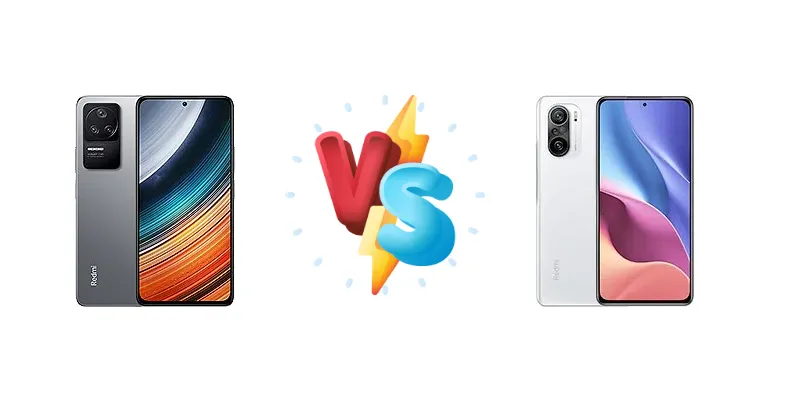
|
🏆 Quick Verdict
The Redmi K40S offers a significant advantage with its 67W fast charging, slashing charging times considerably. Both phones share the same powerful Snapdragon 870 processor, but the K40S's faster charging and potentially improved camera (based on general Redmi S series upgrades) make it the slightly better overall choice, especially if charging speed is a priority.
| PHONES | ||
|---|---|---|
| Phone Names | Xiaomi Redmi K40S | Xiaomi Redmi K40 |
| Network | ||
|---|---|---|
| 2G bands | GSM 850 / 900 / 1800 / 1900 | GSM 850 / 900 / 1800 / 1900 |
| 3G bands | HSDPA 850 / 900 / 1700(AWS) / 1900 / 2100 | HSDPA 850 / 900 / 1700(AWS) / 1900 / 2100 |
| 4G bands | 1, 2, 3, 4, 5, 8, 18, 19, 26, 34, 38, 39, 40, 41, 42 | 1, 2, 3, 4, 5, 7, 8, 18, 19, 26, 28, 34, 38, 39, 40, 41, 42 |
| 5G bands | 1, 3, 5, 8, 28, 38, 40, 41, 77, 78 SA/NSA | 1, 3, 28, 41, 77, 78 SA/NSA/Sub6 |
| Speed | HSPA, LTE, 5G | HSPA, LTE, 5G |
| Technology | GSM / CDMA / HSPA / CDMA2000 / LTE / 5G | GSM / CDMA / HSPA / CDMA2000 / LTE / 5G |
| CDMA2000 1x | CDMA2000 1x | |
| Launch | ||
|---|---|---|
| Announced | 2022, March 17 | 2021, February 25 |
| Status | Available. Released 2022, March 17 | Available. Released 2021, March 04 |
| Body | ||
|---|---|---|
| Build | Glass front (Gorilla Glass 5), plastic back | - |
| Dimensions | 163.2 x 76 x 7.7 mm (6.43 x 2.99 x 0.30 in) | 163.7 x 76.4 x 7.8 mm (6.44 x 3.01 x 0.31 in) |
| SIM | Nano-SIM + Nano-SIM | Nano-SIM + Nano-SIM |
| Weight | 195 g (6.88 oz) | 196 g (6.91 oz) |
| Splash resistant | - | |
| Display | ||
|---|---|---|
| Protection | Corning Gorilla Glass 5 | Corning Gorilla Glass 5 |
| Resolution | 1080 x 2400 pixels, 20:9 ratio (~395 ppi density) | 1080 x 2400 pixels, 20:9 ratio (~395 ppi density) |
| Size | 6.67 inches, 107.4 cm2 (~86.6% screen-to-body ratio) | 6.67 inches, 107.4 cm2 (~85.9% screen-to-body ratio) |
| Type | AMOLED, 120Hz, HDR10+, 1300 nits (peak) | Super AMOLED, 120Hz, HDR10+, 1300 nits (peak) |
| Platform | ||
|---|---|---|
| CPU | Octa-core (1x3.2 GHz Kryo 585 & 3x2.42 GHz Kryo 585 & 4x1.80 GHz Kryo 585) | Octa-core (1x3.2 GHz Kryo 585 & 3x2.42 GHz Kryo 585 & 4x1.80 GHz Kryo 585) |
| Chipset | Qualcomm SM8250-AC Snapdragon 870 5G (7 nm) | Qualcomm SM8250-AC Snapdragon 870 5G (7 nm) |
| GPU | Adreno 650 | Adreno 650 |
| OS | Android 12, MIUI 13 | Android 11, MIUI 12 |
| Memory | ||
|---|---|---|
| Card slot | No | No |
| Internal | 128GB 6GB RAM, 128GB 8GB RAM, 256GB 8GB RAM, 256GB 12GB RAM | 128GB 6GB RAM, 128GB 8GB RAM, 256GB 8GB RAM, 256GB 12GB RAM |
| UFS 3.1 | UFS 3.1 | |
| Main Camera | ||
|---|---|---|
| Features | Color spectrum sensor, Dual-LED dual-tone flash, HDR, panorama | Color spectrum sensor, LED flash, HDR, panorama |
| Single | 20 MP, (wide) | 20 MP, f/2.5, (wide), 1/3.4", 0.8µm |
| Triple | 48 MP, f/1.8, (wide), 1/2.0", 0.8µm, PDAF, OIS 8 MP, 119˚ (ultrawide) 2 MP (macro) | 48 MP, f/1.8, 26mm (wide), 1/2.0", 0.8µm, PDAF 8 MP, f/2.2, 119˚ (ultrawide) 5 MP, f/2.4, 50mm (macro) |
| Video | 4K@30fps, 1080p@30/60/120fps, 720p@960fps; gyro-EIS | 4K@30fps, 1080p@30/60/120/240/960fps, gyro-EIS |
| Selfie camera | ||
|---|---|---|
| Features | - | HDR |
| Single | 20 MP, (wide) | 20 MP, f/2.5, (wide), 1/3.4", 0.8µm |
| Video | 1080p@30/120fps | 1080p@30fps, 720p@120fps |
| Sound | ||
|---|---|---|
| 3.5mm jack | No | No |
| 35mm jack | No | No |
| Loudspeaker | Yes, with stereo speakers | Yes, with stereo speakers |
| 24-bit/192kHz audio | 24-bit/192kHz audio | |
| Comms | ||
|---|---|---|
| Bluetooth | 5.2, A2DP, LE | 5.1, A2DP, LE |
| Infrared port | - | Yes |
| NFC | Yes | Yes |
| Positioning | GPS (L1+L5), GLONASS (L1), BDS (B1I+B1c+B2a), GALILEO (E1+E5a), QZSS (L1+L5), NavIC (L5) | GPS (L1+L5), GLONASS (G1), BDS (B1I+B2a), GALILEO (E1+E5a), QZSS (L1+L5), NavIC |
| Radio | No | No |
| USB | USB Type-C 2.0, OTG | USB Type-C 2.0, OTG |
| WLAN | Wi-Fi 802.11 a/b/g/n/ac/6, dual-band, Wi-Fi Direct | Wi-Fi 802.11 a/b/g/n/ac/6, dual-band, Wi-Fi Direct |
| Features | ||
|---|---|---|
| Sensors | Fingerprint (side-mounted), accelerometer, gyro, proximity, compass | Fingerprint (side-mounted), accelerometer, gyro, proximity, compass |
| Battery | ||
|---|---|---|
| Charging | 67W wired, PD3.0, QC3, 100% in 38 min | 33W wired, PD3.0, QC3, 100% in 52 min |
| Type | Li-Po 4500 mAh | Li-Po 4520 mAh |
| Misc | ||
|---|---|---|
| Colors | Black, Gray, Blue, Green | Black, White, Aurora |
| Models | - | M2012K11AC |
| Price | About 260 EUR | About 280 EUR |
Xiaomi Redmi K40S
- Faster 67W Charging
- Potentially Improved Camera
- Same Powerful Snapdragon 870
- Excellent AMOLED Display
- Slightly Higher Price
- Minor Design Differences (subjective)
Xiaomi Redmi K40
- Lower Price
- Excellent AMOLED Display
- Same Powerful Snapdragon 870
- Capable Camera System
- Slower 33W Charging
- Potentially Slightly Inferior Camera
Display Comparison
Both phones feature a 6.67-inch AMOLED display with a 120Hz refresh rate and a Full HD+ resolution. While the panels are likely very similar, minor variations in color calibration or brightness might exist, but these are unlikely to be significant differences for most users. The K40S may have a slightly improved display calibration, but it's not a guaranteed upgrade.
Camera Comparison
The Redmi K40 boasts a 108MP main camera, an 8MP ultrawide, and a 2MP macro lens. The K40S is expected to have a slightly improved main sensor and potentially better image processing, though official details are scarce. Expect slightly better low-light performance and more refined image quality from the K40S, but the K40's camera is already very capable.
Performance
Performance is virtually identical. Both devices are powered by the Snapdragon 870 chipset, ensuring smooth performance for gaming, multitasking, and everyday use. You won't notice a difference in speed or responsiveness between the two.
Battery Life
The Redmi K40 has a 4500mAh battery and 33W charging. The Redmi K40S has the same 4500mAh battery but boasts a significantly faster 67W charging, capable of charging the phone from 0% to 100% in approximately 38 minutes, compared to the K40's 52 minutes. This is a major advantage for the K40S.
Buying Guide
The Xiaomi Redmi K40S is ideal for users who prioritize fast charging and potentially a slightly improved camera experience. The Redmi K40 remains a fantastic option for those seeking a powerful phone at a more budget-friendly price, especially if charging speed isn't a major concern.