
Xiaomi Redmi K40 vs Motorola Edge 20 Pro: A Deep Dive into the Snapdragon 870 Experience
| Phones Images | |||||
|---|---|---|---|---|---|
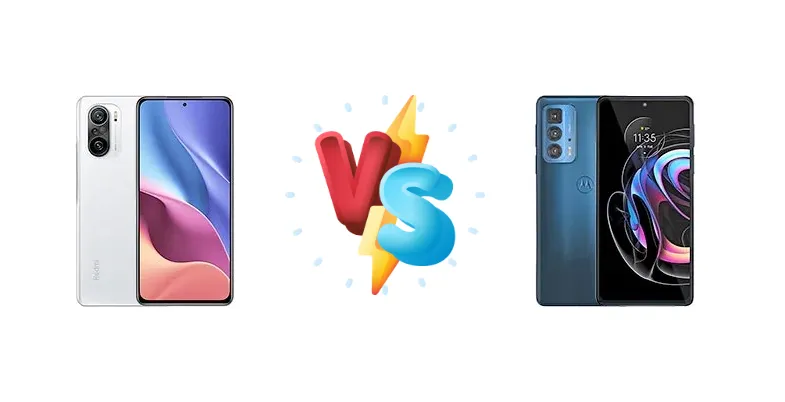
|
🏆 Quick Verdict
For the average user prioritizing value and faster charging, the Xiaomi Redmi K40 emerges as the winner. While the Motorola Edge 20 Pro boasts a slightly brighter display and comparable endurance, the K40’s 33W charging and often lower price make it a more practical choice.
| PHONES | ||
|---|---|---|
| Phone Names | Xiaomi Redmi K40 | Motorola Edge 20 Pro |
| Network | ||
|---|---|---|
| 2G bands | GSM 850 / 900 / 1800 / 1900 | GSM 850 / 900 / 1800 / 1900 |
| 3G bands | HSDPA 850 / 900 / 1700(AWS) / 1900 / 2100 | HSDPA 850 / 900 / 1700(AWS) / 1900 / 2100 |
| 4G bands | 1, 2, 3, 4, 5, 7, 8, 18, 19, 26, 28, 34, 38, 39, 40, 41, 42 | 1, 2, 3, 4, 5, 7, 8, 12, 13, 17, 20, 26, 28, 32, 34, 38, 39, 40, 41, 42, 43, 66 |
| 5G bands | 1, 3, 28, 41, 77, 78 SA/NSA/Sub6 | 1, 3, 5, 7, 8, 28, 38, 41, 66, 77, 78 SA/NSA/Sub6 |
| Speed | HSPA, LTE, 5G | HSPA 42.2/5.76 Mbps, LTE Cat18 1200/150 Mbps, 5G |
| Technology | GSM / CDMA / HSPA / CDMA2000 / LTE / 5G | GSM / HSPA / LTE / 5G |
| CDMA2000 1x | - | |
| Launch | ||
|---|---|---|
| Announced | 2021, February 25 | 2021, July 29 |
| Status | Available. Released 2021, March 04 | Available. Released 2021, August 16 |
| Body | ||
|---|---|---|
| Build | - | Glass front (Gorilla Glass 5), aluminum frame, glass back (Gorilla Glass 5) or eco leather back |
| Dimensions | 163.7 x 76.4 x 7.8 mm (6.44 x 3.01 x 0.31 in) | 163 x 76 x 8 mm (6.42 x 2.99 x 0.31 in) |
| SIM | Nano-SIM + Nano-SIM | Nano-SIM + Nano-SIM |
| Weight | 196 g (6.91 oz) | 185/190 g (depending on color) (6.53 oz) |
| - | Water-repellent design | |
| Display | ||
|---|---|---|
| Protection | Corning Gorilla Glass 5 | Corning Gorilla Glass 5 |
| Resolution | 1080 x 2400 pixels, 20:9 ratio (~395 ppi density) | 1080 x 2400 pixels, 19.5:9 ratio (~385 ppi density) |
| Size | 6.67 inches, 107.4 cm2 (~85.9% screen-to-body ratio) | 6.7 inches, 110.2 cm2 (~89.0% screen-to-body ratio) |
| Type | Super AMOLED, 120Hz, HDR10+, 1300 nits (peak) | OLED, 1B colors, 144Hz, HDR10+ |
| Platform | ||
|---|---|---|
| CPU | Octa-core (1x3.2 GHz Kryo 585 & 3x2.42 GHz Kryo 585 & 4x1.80 GHz Kryo 585) | Octa-core (1x3.2 GHz Kryo 585 & 3x2.42 GHz Kryo 585 & 4x1.80 GHz Kryo 585) |
| Chipset | Qualcomm SM8250-AC Snapdragon 870 5G (7 nm) | Qualcomm SM8250-AC Snapdragon 870 5G (7 nm) |
| GPU | Adreno 650 | Adreno 650 |
| OS | Android 11, MIUI 12 | Android 11, planned upgrade to Android 13 |
| Memory | ||
|---|---|---|
| Card slot | No | No |
| Internal | 128GB 6GB RAM, 128GB 8GB RAM, 256GB 8GB RAM, 256GB 12GB RAM | 128GB 6GB RAM, 128GB 8GB RAM, 256GB 8GB RAM, 256GB 12GB RAM |
| UFS 3.1 | UFS 3.1 | |
| Main Camera | ||
|---|---|---|
| Features | Color spectrum sensor, LED flash, HDR, panorama | Dual-LED flash, panorama, HDR |
| Single | 20 MP, f/2.5, (wide), 1/3.4", 0.8µm | - |
| Triple | 48 MP, f/1.8, 26mm (wide), 1/2.0", 0.8µm, PDAF 8 MP, f/2.2, 119˚ (ultrawide) 5 MP, f/2.4, 50mm (macro) | 108 MP, f/1.9, (wide), 1/1.52", 0.7µm, PDAF 8 MP, f/3.4, 126mm (periscope telephoto), 1.0µm, 5x optical zoom, PDAF, OIS 16 MP, f/2.2, 13mm, 119˚ (ultrawide), 1.0µm |
| Video | 4K@30fps, 1080p@30/60/120/240/960fps, gyro-EIS | 8K@24fps, 4K@30/60fps, 1080p@30/60/240/960fps, gyro-EIS |
| Selfie camera | ||
|---|---|---|
| Features | HDR | HDR |
| Single | 20 MP, f/2.5, (wide), 1/3.4", 0.8µm | 32 MP, f/2.3, (wide), 0.7µm |
| Video | 1080p@30fps, 720p@120fps | 4K@30fps, 1080p@30/120fps |
| Sound | ||
|---|---|---|
| 3.5mm jack | No | No |
| 35mm jack | No | No |
| Loudspeaker | Yes, with stereo speakers | Yes |
| 24-bit/192kHz audio | - | |
| Comms | ||
|---|---|---|
| Bluetooth | 5.1, A2DP, LE | 5.1, A2DP, LE |
| Infrared port | Yes | - |
| NFC | Yes | Yes |
| Positioning | GPS (L1+L5), GLONASS (G1), BDS (B1I+B2a), GALILEO (E1+E5a), QZSS (L1+L5), NavIC | GPS (L1+L5), GLONASS, BDS, GALILEO |
| Radio | No | No |
| USB | USB Type-C 2.0, OTG | USB Type-C 3.1, DisplayPort 1.4 |
| WLAN | Wi-Fi 802.11 a/b/g/n/ac/6, dual-band, Wi-Fi Direct | Wi-Fi 802.11 a/b/g/n/ac/6, dual-band, Wi-Fi Direct |
| Features | ||
|---|---|---|
| Sensors | Fingerprint (side-mounted), accelerometer, gyro, proximity, compass | Fingerprint (side-mounted), accelerometer, gyro, proximity, compass |
| Battery | ||
|---|---|---|
| Charging | 33W wired, PD3.0, QC3, 100% in 52 min | 30W wired |
| Type | Li-Po 4520 mAh | Li-Po 4500 mAh |
| Misc | ||
|---|---|---|
| Colors | Black, White, Aurora | Midnight Blue, Blue Vegan Leather, Iridescent Cloud |
| Models | M2012K11AC | XT2153-1 |
| Price | About 280 EUR | About 330 EUR |
| Tests | ||
|---|---|---|
| Battery life | - | Endurance rating 112h |
| Camera | - | Photo / Video |
| Display | - | Contrast ratio: Infinite (nominal) |
| Loudspeaker | - | -29.2 LUFS (Average) |
| Performance | - | AnTuTu: 711090 (v9) GeekBench: 3140 (v5.1) GFXBench: 49fps (ES 3.1 onscreen) |
Xiaomi Redmi K40
- Faster 33W charging with PD3.0/QC3 support
- Potentially lower price point
- Strong Snapdragon 870 performance
- Display specs are largely unknown
- Camera details are limited
Motorola Edge 20 Pro
- Brighter 673 nit display
- Excellent 112-hour endurance rating
- Potential for superior image stabilization
- Slower 30W charging
- May be more expensive than the Redmi K40
Display Comparison
Both phones feature displays capable of delivering a vibrant visual experience, but key differences exist. The Motorola Edge 20 Pro edges out the Redmi K40 with a measured peak brightness of 673 nits, providing better visibility under direct sunlight. While the Redmi K40’s display specs aren’t provided, the Edge 20 Pro’s ‘Infinite’ contrast ratio (nominal) suggests a strong performance in displaying deep blacks. The lack of information on the Redmi K40’s panel type (AMOLED vs IPS) and refresh rate makes a direct comparison difficult, but the Edge 20 Pro’s brightness advantage is a tangible benefit for outdoor users.
Camera Comparison
Both the Redmi K40 and Edge 20 Pro are advertised as having capable photo and video capabilities, but specific details are scarce. Without sensor size, aperture, or image processing details, a meaningful comparison is challenging. The inclusion of OIS (Optical Image Stabilization) on the Edge 20 Pro would be a significant advantage for video recording and low-light photography, but this isn’t confirmed. It’s safe to assume both phones will offer a versatile camera experience, but the Edge 20 Pro’s potential for superior image stabilization gives it a slight edge.
Performance
At the heart of both devices lies the Qualcomm SM8250-AC Snapdragon 870 5G (7 nm) chipset, paired with an identical Octa-core CPU configuration (1x3.2 GHz Kryo 585 & 3x2.42 GHz Kryo 585 & 4x1.80 GHz Kryo 585). This means raw processing power will be virtually indistinguishable between the two. Performance will largely depend on RAM management and software optimization, areas where Xiaomi and Motorola have different approaches. The absence of LPDDR5x RAM specifications for either device suggests they likely utilize LPDDR5, which is still a high-performance standard. Thermal management, however, remains an unknown factor without detailed testing.
Battery Life
The Motorola Edge 20 Pro boasts an endurance rating of 112 hours, suggesting excellent battery life. However, the Redmi K40’s battery capacity is unknown, making a direct comparison difficult. The Edge 20 Pro supports 30W wired charging, while the Redmi K40 offers slightly faster 33W wired charging with support for PD3.0 and QC3. This translates to a full charge in 52 minutes for the K40. While the Edge 20 Pro’s endurance is commendable, the K40’s faster charging is a practical advantage for users who need to quickly replenish their battery.
Buying Guide
Buy the Xiaomi Redmi K40 if you need a phone that charges quickly and offers excellent performance for gaming and everyday tasks without breaking the bank. It’s ideal for users who frequently top up their battery throughout the day. Buy the Motorola Edge 20 Pro if you prioritize a slightly brighter display for outdoor visibility and appreciate a clean, near-stock Android experience, and are less concerned about charging speed.