
Xiaomi Redmi K40 Pro+ vs Redmi Note 12 Pro 4G: The Ultimate Showdown
| Phones Images | |||||
|---|---|---|---|---|---|
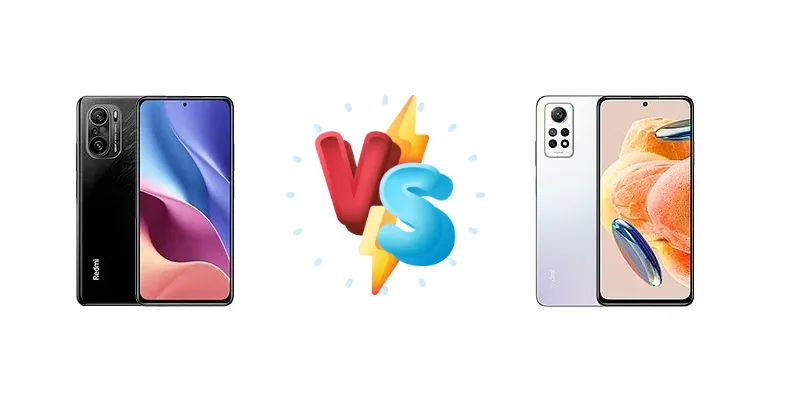
|
🏆 Quick Verdict
The Redmi K40 Pro+ is the clear performance winner thanks to its Snapdragon 888. However, the Note 12 Pro 4G boasts faster charging and a potentially more appealing price. If raw power is your priority, the K40 Pro+ wins; otherwise, the Note 12 Pro 4G offers excellent value.
| PHONES | ||
|---|---|---|
| Phone Names | Xiaomi Redmi K40 Pro+ | Xiaomi Redmi Note 12 Pro 4G |
| Network | ||
|---|---|---|
| 2G bands | GSM 850 / 900 / 1800 / 1900 - SIM 1 & SIM 2 | GSM 850 / 900 / 1800 / 1900 |
| 3G bands | HSDPA 850 / 900 / 1700(AWS) / 1900 / 2100 | HSDPA 850 / 900 / 1700(AWS) / 1900 / 2100 |
| 4G bands | 1, 2, 3, 4, 5, 7, 8, 12, 17, 18, 19, 20, 26, 28, 34, 38, 39, 40, 41, 42 | 1, 2, 3, 4, 5, 7, 8, 20, 28, 38, 40, 41, 66 |
| 5G bands | 1, 3, 28, 41, 77, 78 SA/NSA/Sub6 | - |
| Speed | HSPA, LTE-A, 5G | HSPA, LTE |
| Technology | GSM / CDMA / HSPA / CDMA2000 / LTE / 5G | GSM / HSPA / LTE |
| CDMA2000 1x | - | |
| Launch | ||
|---|---|---|
| Announced | 2021, February 25 | 2023, March 03 |
| Status | Available. Released 2021, March 04 | Available. Released 2023, April 11 |
| Body | ||
|---|---|---|
| Dimensions | 163.7 x 76.4 x 7.8 mm (6.44 x 3.01 x 0.31 in) | 164.2 x 76.1 x 8.1 mm (6.46 x 3.00 x 0.32 in) |
| SIM | Dual SIM (Nano-SIM, dual stand-by) | Nano-SIM + Nano-SIM |
| Weight | 196 g (6.91 oz) | 201.8 g (7.13 oz) |
| IP53, dust and splash resistant | - | |
| Display | ||
|---|---|---|
| Protection | Corning Gorilla Glass 5 | - |
| Resolution | 1080 x 2400 pixels, 20:9 ratio (~395 ppi density) | 1080 x 2400 pixels, 20:9 ratio (~395 ppi density) |
| Size | 6.67 inches, 107.4 cm2 (~85.9% screen-to-body ratio) | 6.67 inches, 107.4 cm2 (~86.0% screen-to-body ratio) |
| Type | Super AMOLED, 120Hz, HDR10+, 1300 nits (peak) | AMOLED, 120Hz, Dolby Vision, 700 nits (HBM), 1100 nits (peak) |
| Platform | ||
|---|---|---|
| CPU | Octa-core (1x2.84 GHz Cortex-X1 & 3x2.42 GHz Cortex-A78 & 4x1.80 GHz Cortex-A55) | Octa-core (2x2.2 GHz Kryo 470 Gold & 6x1.8 GHz Kryo 470 Silver) |
| Chipset | Qualcomm SM8350 Snapdragon 888 5G (5 nm) | Qualcomm SM7150 Snapdragon 732G (8 nm) |
| GPU | Adreno 660 | Adreno 618 |
| OS | Android 11, MIUI 12 | Android 11, MIUI 13 |
| Memory | ||
|---|---|---|
| Card slot | No | microSDXC (uses shared SIM slot) |
| Internal | 256GB 12GB RAM | 128GB 6GB RAM, 128GB 8GB RAM, 256GB 8GB RAM |
| UFS 3.1 | UFS 2.2 | |
| Main Camera | ||
|---|---|---|
| Features | LED flash, HDR, panorama | LED flash, HDR, panorama |
| Quad | - | 108 MP, f/1.9, (wide), 1/1.52", 0.7µm, PDAF 8 MP, 120˚, (ultrawide) 2 MP (macro) Auxiliary lens |
| Single | 20 MP, f/2.5, (wide), 1/3.4", 0.8µm | - |
| Triple | 108 MP, f/1.8, 26mm (wide), 1/1.52", 0.7µm, PDAF 8 MP, f/2.2, 119˚ (ultrawide) 5 MP, f/2.4, 50mm (macro), 1/5.0", 1.12µm | - |
| Video | 8K@30fps, 4K@30/60fps, 1080p@30/60/120/240/960fps, gyro-EIS, HDR10+ | 4K@30fps, 1080p@30/60fps |
| Selfie camera | ||
|---|---|---|
| Features | HDR | - |
| Single | 20 MP, f/2.5, (wide), 1/3.4", 0.8µm | 16 MP, f/2.4, (wide) |
| Video | 1080p@30fps, 720p@120fps | 1080p@30fps |
| Sound | ||
|---|---|---|
| 3.5mm jack | No | Yes |
| 35mm jack | - | Yes |
| Loudspeaker | Yes, with stereo speakers | Yes, with stereo speakers |
| 24-bit/192kHz audio | - | |
| Comms | ||
|---|---|---|
| Bluetooth | 5.2, A2DP, LE | 5.0, A2DP, LE |
| Infrared port | Yes | Yes |
| NFC | Yes | Yes (market/region dependent) |
| Positioning | GPS (L1+L5), GLONASS (G1), BDS (B1I+B1c+B2a), GALILEO (E1+E5a), QZSS (L1+L5), NavIC (L5) | GPS, GLONASS, GALILEO, BDS |
| Radio | No | Unspecified |
| USB | USB Type-C 2.0, OTG | USB Type-C 2.0, OTG |
| WLAN | Wi-Fi 802.11 a/b/g/n/ac/6e, dual-band, Wi-Fi Direct | Wi-Fi 802.11 a/b/g/n/ac, dual-band |
| Features | ||
|---|---|---|
| Sensors | Fingerprint (side-mounted), accelerometer, gyro, proximity, compass, color spectrum, barometer | Fingerprint (side-mounted), accelerometer, gyro, compass |
| Battery | ||
|---|---|---|
| Charging | 33W wired, PD3.0, QC3, 100% in 52 min (advertised) | 67W wired |
| Type | Li-Po 4520 mAh, non-removable | Li-Po 5000 mAh |
| Misc | ||
|---|---|---|
| Colors | Black, White, Aurora | Star Blue, Graphite Gray, Polar White, Ice blue |
| Models | - | 2209116AG, 2209116AG |
| Price | About 470 EUR | About 150 EUR |
Xiaomi Redmi K40 Pro+
- Superior Performance (Snapdragon 888)
- High Refresh Rate AMOLED Display
- Generally Better Camera System
- Premium Build Quality
- Slower Charging (33W)
- Potentially Higher Price
- May lack latest software updates compared to Note 12 Pro 4G
Xiaomi Redmi Note 12 Pro 4G
- Faster Charging (67W)
- More Affordable
- Vibrant AMOLED Display
- Potentially Longer Software Support
- Lower Performance (Snapdragon 732G)
- Less Powerful Camera
- May feel less premium in hand
Display Comparison
The Redmi K40 Pro+ typically features an AMOLED display with a high refresh rate (120Hz), offering vibrant colors and smooth scrolling. The Note 12 Pro 4G also has an AMOLED display, but the refresh rate might be lower (often 120Hz as well). Both offer excellent viewing experiences, but the K40 Pro+ may have slightly better color accuracy and brightness.
Camera Comparison
The K40 Pro+ generally has a more advanced camera system, often including a high-resolution primary sensor (typically 108MP) and improved image processing capabilities. The Note 12 Pro 4G also has a capable camera, but it won't match the K40 Pro+'s overall image quality, especially in low light. Both offer good video recording capabilities.
Performance
This is where the K40 Pro+ truly shines. The Snapdragon 888 is significantly more powerful than the Snapdragon 732G in the Note 12 Pro 4G. Expect smoother multitasking, faster app loading times, and significantly better gaming performance on the K40 Pro+. The Note 12 Pro 4G is still capable for everyday tasks, but it will struggle with demanding games.
Battery Life
While the K40 Pro+ has a decent battery capacity, the Note 12 Pro 4G's 67W fast charging is a major advantage. It can charge much faster than the K40 Pro+'s 33W charging, making it more convenient for users who need a quick top-up.
Buying Guide
The Xiaomi Redmi K40 Pro+ is ideal for gamers, power users, and anyone demanding top-tier performance. The Redmi Note 12 Pro 4G is a great choice for everyday users, those on a budget, and those who prioritize fast charging and a vibrant display.