
Xiaomi Redmi K40 Pro+ vs Redmi K60 Pro: The Ultimate Showdown
| Phones Images | |||||
|---|---|---|---|---|---|
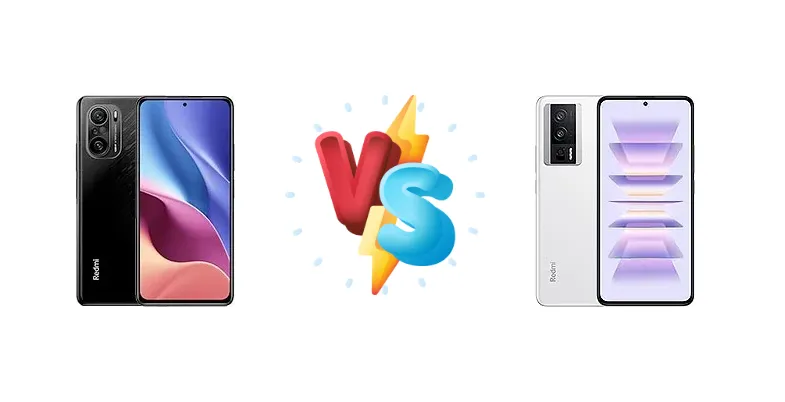
|
🏆 Quick Verdict
The Redmi K60 Pro is the clear winner, boasting a significantly faster Snapdragon 8 Gen 2 chipset, a vastly superior 120W charging speed, and improved camera capabilities. While the K40 Pro+ remains a capable device, the K60 Pro offers a substantial upgrade for a reasonable price.
| PHONES | ||
|---|---|---|
| Phone Names | Xiaomi Redmi K40 Pro+ | Xiaomi Redmi K60 Pro |
| Network | ||
|---|---|---|
| 2G bands | GSM 850 / 900 / 1800 / 1900 - SIM 1 & SIM 2 | GSM 850 / 900 / 1800 / 1900 |
| 3G bands | HSDPA 850 / 900 / 1700(AWS) / 1900 / 2100 | HSDPA 800 / 850 / 900 / 1700(AWS) / 2100 |
| 4G bands | 1, 2, 3, 4, 5, 7, 8, 12, 17, 18, 19, 20, 26, 28, 34, 38, 39, 40, 41, 42 | 1, 3, 4, 5, 8, 18, 19, 26, 34, 38, 39, 40, 41, 42 |
| 5G bands | 1, 3, 28, 41, 77, 78 SA/NSA/Sub6 | 1, 3, 5, 8, 28, 38, 41, 77, 78 SA/NSA |
| Speed | HSPA, LTE-A, 5G | HSPA, LTE, 5G |
| Technology | GSM / CDMA / HSPA / CDMA2000 / LTE / 5G | GSM / CDMA / HSPA / CDMA2000 / LTE / 5G |
| CDMA2000 1x | CDMA2000 1x | |
| Launch | ||
|---|---|---|
| Announced | 2021, February 25 | 2022, December 27 |
| Status | Available. Released 2021, March 04 | Available. Released 2023, January 01 |
| Body | ||
|---|---|---|
| Dimensions | 163.7 x 76.4 x 7.8 mm (6.44 x 3.01 x 0.31 in) | 162.8 x 75.4 x 8.6 mm or 8.9 mm |
| SIM | Dual SIM (Nano-SIM, dual stand-by) | Nano-SIM + Nano-SIM |
| Weight | 196 g (6.91 oz) | 201 g or 205 g (7.09 oz) |
| IP53, dust and splash resistant | - | |
| Display | ||
|---|---|---|
| Protection | Corning Gorilla Glass 5 | - |
| Resolution | 1080 x 2400 pixels, 20:9 ratio (~395 ppi density) | 1440 x 3200 pixels, 20:9 ratio (~526 ppi density) |
| Size | 6.67 inches, 107.4 cm2 (~85.9% screen-to-body ratio) | 6.67 inches, 107.4 cm2 (~87.5% screen-to-body ratio) |
| Type | Super AMOLED, 120Hz, HDR10+, 1300 nits (peak) | OLED, 68B colors, 120Hz, Dolby Vision, HDR10+, 1400 nits (peak) |
| Platform | ||
|---|---|---|
| CPU | Octa-core (1x2.84 GHz Cortex-X1 & 3x2.42 GHz Cortex-A78 & 4x1.80 GHz Cortex-A55) | Octa-core (1x3.2 GHz Cortex-X3 & 2x2.8 GHz Cortex-A715 & 2x2.8 GHz Cortex-A710 & 3x2.0 GHz Cortex-A510) |
| Chipset | Qualcomm SM8350 Snapdragon 888 5G (5 nm) | Qualcomm SM8550-AB Snapdragon 8 Gen 2 (4 nm) |
| GPU | Adreno 660 | Adreno 740 |
| OS | Android 11, MIUI 12 | Android 13, MIUI 14 |
| Memory | ||
|---|---|---|
| Card slot | No | No |
| Internal | 256GB 12GB RAM | 128GB 8GB RAM, 256GB 8GB RAM, 256GB 12GB RAM, 512GB 12GB RAM, 512GB 16GB RAM |
| UFS 3.1 | UFS 4.0 UFS 3.1 - 128GB only | |
| Main Camera | ||
|---|---|---|
| Features | LED flash, HDR, panorama | Color spectrum sensor, Dual-LED dual-tone flash, HDR, panorama |
| Single | 20 MP, f/2.5, (wide), 1/3.4", 0.8µm | - |
| Triple | 108 MP, f/1.8, 26mm (wide), 1/1.52", 0.7µm, PDAF 8 MP, f/2.2, 119˚ (ultrawide) 5 MP, f/2.4, 50mm (macro), 1/5.0", 1.12µm | 54 MP, f/1.9, (wide), 1/1.49", 1.0µm, PDAF, OIS 8 MP, 118˚ (ultrawide), 1/4.0", 1.12µm 2 MP (macro) |
| Video | 8K@30fps, 4K@30/60fps, 1080p@30/60/120/240/960fps, gyro-EIS, HDR10+ | 8K@24fps, 4K@30/60fps, 1080p@30/60/120/240/960fps, 720p@1920fps, gyro-EIS |
| Selfie camera | ||
|---|---|---|
| Features | HDR | HDR |
| Single | 20 MP, f/2.5, (wide), 1/3.4", 0.8µm | 16 MP, (wide), 1/3.06", 1.0µm |
| Video | 1080p@30fps, 720p@120fps | 1080p@30/60/120fps |
| Sound | ||
|---|---|---|
| 3.5mm jack | No | No |
| 35mm jack | - | No |
| Loudspeaker | Yes, with stereo speakers | Yes, with stereo speakers |
| 24-bit/192kHz audio | 24-bit/192kHz audio | |
| Comms | ||
|---|---|---|
| Bluetooth | 5.2, A2DP, LE | 5.3, A2DP, LE |
| Infrared port | Yes | Yes |
| NFC | Yes | Yes |
| Positioning | GPS (L1+L5), GLONASS (G1), BDS (B1I+B1c+B2a), GALILEO (E1+E5a), QZSS (L1+L5), NavIC (L5) | GPS (L1+L5), GLONASS (G1), BDS (B1I+B2a+Bc), GALILEO (E1+E5a), QZSS (L1+L5), NavIC |
| Radio | No | Unspecified |
| USB | USB Type-C 2.0, OTG | USB Type-C 2.0, OTG |
| WLAN | Wi-Fi 802.11 a/b/g/n/ac/6e, dual-band, Wi-Fi Direct | Wi-Fi 802.11 a/b/g/n/ac/6e, dual-band, Wi-Fi Direct |
| Features | ||
|---|---|---|
| Sensors | Fingerprint (side-mounted), accelerometer, gyro, proximity, compass, color spectrum, barometer | Fingerprint (under display, optical), accelerometer, gyro, proximity, compass |
| Battery | ||
|---|---|---|
| Charging | 33W wired, PD3.0, QC3, 100% in 52 min (advertised) | 120W wired, PD3.0, QC3+, 100% in 19 min 30W wireless |
| Type | Li-Po 4520 mAh, non-removable | Li-Po 5000 mAh |
| Misc | ||
|---|---|---|
| Colors | Black, White, Aurora | Black, White, Mint, Champion Black |
| Models | - | 22127RK46C |
| Price | About 470 EUR | About 460 EUR |
Xiaomi Redmi K40 Pro+
- Excellent value for money
- Flagship Snapdragon 888 performance
- Vibrant AMOLED display
- Good camera system
- Slower charging speed
- Older chipset compared to competitors
- May lack some of the latest features
Xiaomi Redmi K60 Pro
- Blazing-fast 120W charging
- Cutting-edge Snapdragon 8 Gen 2 chipset
- Improved camera system
- Modern design and features
- Wireless Charging
- Slightly higher price
- Potential for overheating under extreme load (common with high-end chipsets)
Display Comparison
Both phones feature excellent AMOLED displays with 120Hz refresh rates. The K60 Pro likely has slightly improved brightness and color accuracy due to newer panel technology, but the difference is subtle. Both offer smooth scrolling and vibrant visuals.
Camera Comparison
The K60 Pro's camera system is a noticeable upgrade. While both offer capable main sensors, the K60 Pro benefits from improved image processing, better low-light performance, and potentially enhanced video recording capabilities. Expect more detailed and vibrant photos from the K60 Pro.
Performance
The Snapdragon 8 Gen 2 in the K60 Pro is a generational leap over the Snapdragon 888 in the K40 Pro+. Expect significantly faster app loading times, smoother multitasking, and superior gaming performance on the K60 Pro. The K40 Pro+ still performs well, but it shows its age under heavy load.
Battery Life
The K60 Pro's 120W charging is a game-changer, allowing for incredibly fast top-ups. The K40 Pro+'s 33W charging is still decent, but it takes considerably longer to reach a full charge. Both phones offer adequate battery life for a full day of moderate use.
Buying Guide
The Redmi K40 Pro+ is a good choice for budget-conscious buyers who still want a flagship-level experience from a previous generation. The Redmi K60 Pro is ideal for users prioritizing performance, fast charging, and the latest camera technology, and are willing to spend a bit more.