
Xiaomi Redmi K40 Pro+ vs Xiaomi 11T Pro: A Detailed Comparison
| Phones Images | |||||
|---|---|---|---|---|---|
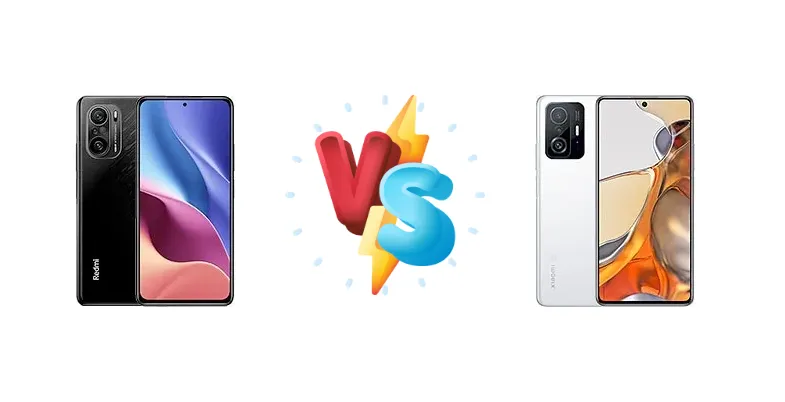
|
🏆 Quick Verdict
The Xiaomi 11T Pro takes the crown thanks to its significantly faster 120W charging and potentially improved display brightness. While the K40 Pro+ is a solid performer, the 11T Pro's charging speed and display edge make it the more compelling choice for most users.
| PHONES | ||
|---|---|---|
| Phone Names | Xiaomi Redmi K40 Pro+ | Xiaomi 11T Pro |
| Network | ||
|---|---|---|
| 2G bands | GSM 850 / 900 / 1800 / 1900 - SIM 1 & SIM 2 | GSM 850 / 900 / 1800 / 1900 |
| 3G bands | HSDPA 850 / 900 / 1700(AWS) / 1900 / 2100 | HSDPA 850 / 900 / 1700(AWS) / 1900 / 2100 |
| 4G bands | 1, 2, 3, 4, 5, 7, 8, 12, 17, 18, 19, 20, 26, 28, 34, 38, 39, 40, 41, 42 | 1, 2, 3, 4, 5, 7, 8, 12, 13, 17, 18, 19, 20, 26, 28, 32, 38, 40, 41, 42, 66 |
| 5G bands | 1, 3, 28, 41, 77, 78 SA/NSA/Sub6 | 1, 3, 5, 7, 8, 20, 28, 38, 40, 41, 66, 77, 78 SA/NSA |
| Speed | HSPA, LTE-A, 5G | HSPA, LTE, 5G |
| Technology | GSM / CDMA / HSPA / CDMA2000 / LTE / 5G | GSM / HSPA / LTE / 5G |
| CDMA2000 1x | - | |
| Launch | ||
|---|---|---|
| Announced | 2021, February 25 | 2021, September 15 |
| Status | Available. Released 2021, March 04 | Available. Released 2021, October 05 |
| Body | ||
|---|---|---|
| Build | - | Glass front (Gorilla Glass Victus), aluminum frame, glass back |
| Dimensions | 163.7 x 76.4 x 7.8 mm (6.44 x 3.01 x 0.31 in) | 164.1 x 76.9 x 8.8 mm (6.46 x 3.03 x 0.35 in) |
| SIM | Dual SIM (Nano-SIM, dual stand-by) | Nano-SIM + Nano-SIM |
| Weight | 196 g (6.91 oz) | 204 g (7.20 oz) |
| IP53, dust and splash resistant | IP53, dust and splash resistant | |
| Display | ||
|---|---|---|
| Protection | Corning Gorilla Glass 5 | Corning Gorilla Glass Victus |
| Resolution | 1080 x 2400 pixels, 20:9 ratio (~395 ppi density) | 1080 x 2400 pixels, 20:9 ratio (~395 ppi density) |
| Size | 6.67 inches, 107.4 cm2 (~85.9% screen-to-body ratio) | 6.67 inches, 107.4 cm2 (~85.1% screen-to-body ratio) |
| Type | Super AMOLED, 120Hz, HDR10+, 1300 nits (peak) | AMOLED, Dolby Vision, 1B colors, 120Hz, HDR10+, 800 nits (typ), 1000 nits (peak) |
| Platform | ||
|---|---|---|
| CPU | Octa-core (1x2.84 GHz Cortex-X1 & 3x2.42 GHz Cortex-A78 & 4x1.80 GHz Cortex-A55) | Octa-core (1x2.84 GHz Cortex-X1 & 3x2.42 GHz Cortex-A78 & 4x1.80 GHz Cortex-A55) |
| Chipset | Qualcomm SM8350 Snapdragon 888 5G (5 nm) | Qualcomm SM8350 Snapdragon 888 5G (5 nm) |
| GPU | Adreno 660 | Adreno 660 |
| OS | Android 11, MIUI 12 | Android 11, upgradable to Android 13, MIUI 14 |
| Memory | ||
|---|---|---|
| Card slot | No | No |
| Internal | 256GB 12GB RAM | 128GB 8GB RAM, 256GB 8GB RAM, 256GB 12GB RAM |
| UFS 3.1 | UFS 3.1 | |
| Main Camera | ||
|---|---|---|
| Features | LED flash, HDR, panorama | Dual-LED dual-tone flash, HDR, panorama |
| Single | 20 MP, f/2.5, (wide), 1/3.4", 0.8µm | 16 MP, f/2.5, (wide), 1/3.06", 1.0µm |
| Triple | 108 MP, f/1.8, 26mm (wide), 1/1.52", 0.7µm, PDAF 8 MP, f/2.2, 119˚ (ultrawide) 5 MP, f/2.4, 50mm (macro), 1/5.0", 1.12µm | 108 MP, f/1.8, 26mm (wide), 1/1.52", 0.7µm, PDAF 8 MP, f/2.2, 120˚ (ultrawide), 1/4.0", 1.12µm 5 MP, f/2.4, 50mm (telephoto macro), 1/5.0", 1.12µm, AF |
| Video | 8K@30fps, 4K@30/60fps, 1080p@30/60/120/240/960fps, gyro-EIS, HDR10+ | 8K@30fps, 4K@30/60fps, 1080p@30/60/120/240/960, HDR10+, gyro-EIS |
| Selfie camera | ||
|---|---|---|
| Features | HDR | - |
| Single | 20 MP, f/2.5, (wide), 1/3.4", 0.8µm | 16 MP, f/2.5, (wide), 1/3.06", 1.0µm |
| Video | 1080p@30fps, 720p@120fps | 1080p@30/60fps |
| Sound | ||
|---|---|---|
| 3.5mm jack | No | No |
| 35mm jack | - | No |
| Loudspeaker | Yes, with stereo speakers | Yes, with stereo speakers |
| 24-bit/192kHz audio | Tuned by Harman Kardon 24-bit/192kHz audio | |
| Comms | ||
|---|---|---|
| Bluetooth | 5.2, A2DP, LE | 5.2, A2DP, LE, aptX HD, aptX Adaptive |
| Infrared port | Yes | Yes |
| NFC | Yes | Yes |
| Positioning | GPS (L1+L5), GLONASS (G1), BDS (B1I+B1c+B2a), GALILEO (E1+E5a), QZSS (L1+L5), NavIC (L5) | GPS (L1+L5), GLONASS (G1), BDS (B1), GALILEO (E1+E5a), QZSS (L1+L5), NavIC |
| Radio | No | No |
| USB | USB Type-C 2.0, OTG | USB Type-C 2.0, OTG |
| WLAN | Wi-Fi 802.11 a/b/g/n/ac/6e, dual-band, Wi-Fi Direct | Wi-Fi 802.11 a/b/g/n/ac/6, dual-band, Wi-Fi Direct |
| Features | ||
|---|---|---|
| Sensors | Fingerprint (side-mounted), accelerometer, gyro, proximity, compass, color spectrum, barometer | Fingerprint (side-mounted), accelerometer, gyro, compass, barometer |
| Battery | ||
|---|---|---|
| Charging | 33W wired, PD3.0, QC3, 100% in 52 min (advertised) | 120W wired, PD3.0, QC3, 72% in 10 min, 100% in 17 min |
| Type | Li-Po 4520 mAh, non-removable | Li-Po 5000 mAh |
| Misc | ||
|---|---|---|
| Colors | Black, White, Aurora | Meteorite Gray, Moonlight White, Celestial Blue |
| Models | - | 2107113SG, 2107113SI, 2107113SR |
| Price | About 470 EUR | € 139.00 / $ 185.21 / £ 189.99 / ₹ 39,999 |
| SAR | - | 0.78 W/kg (head) 0.49 W/kg (body) |
| Tests | ||
|---|---|---|
| Battery life | - | Endurance rating 92h |
| Camera | - | Photo / Video |
| Display | - | Contrast ratio: Infinite (nominal) |
| Loudspeaker | - | -26.3 LUFS (Good) |
Xiaomi Redmi K40 Pro+
- Potentially lower price
- Compact design
- Excellent performance
- Good camera
- Slower charging speed
- Potentially less bright display
- Older design
Xiaomi 11T Pro
- Incredibly fast 120W charging
- Potentially brighter display
- Modern design
- Improved camera processing
- Potentially higher price
- Larger size
Display Comparison
Both phones feature AMOLED displays with a 120Hz refresh rate, offering smooth scrolling and vibrant colors. However, the Xiaomi 11T Pro boasts a measured peak brightness of 837 nits, potentially offering better visibility in direct sunlight. The K40 Pro+ display is excellent, but the 11T Pro likely has a slight edge in brightness and potentially color accuracy.
Camera Comparison
Camera performance is a key area. While both offer capable camera systems, the 11T Pro is expected to have slightly improved image processing and potentially better low-light performance due to software enhancements. The K40 Pro+ has a strong main sensor, but the 11T Pro's overall camera system might be more versatile.
Performance
Both devices are powered by the Snapdragon 888, ensuring flagship-level performance. Expect smooth multitasking, responsive gaming, and effortless handling of demanding apps. Real-world performance differences will likely be minimal, though the 11T Pro's software optimization might offer a slight advantage.
Battery Life
The Xiaomi 11T Pro's 120W charging is a game-changer, allowing for incredibly fast top-ups. The K40 Pro+'s 33W charging is still respectable, but significantly slower. Both phones have a similar battery capacity, and the 11T Pro's endurance rating of 92h suggests excellent battery life, potentially exceeding the K40 Pro+.
Buying Guide
The Xiaomi Redmi K40 Pro+ is ideal for users prioritizing a slightly more compact design and potentially a better price point (depending on current deals). The Xiaomi 11T Pro is best suited for those who value incredibly fast charging, a potentially brighter display, and a more modern design aesthetic.