
Xiaomi Redmi K40 Pro+ vs K40 Gaming: A Deep Dive into Performance and Value
| Phones Images | |||||
|---|---|---|---|---|---|
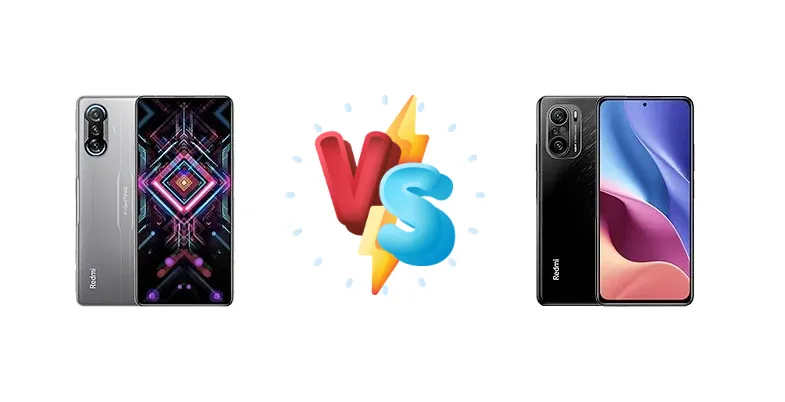
|
🏆 Quick Verdict
For most users, the Xiaomi Redmi K40 Pro+ emerges as the superior choice. While the K40 Gaming offers a dedicated gaming experience, the Snapdragon 888’s overall processing power and efficiency, coupled with its slightly better camera capabilities, provide a more balanced and future-proof experience. However, the K40 Gaming remains a strong contender for budget-conscious gamers.
| PHONES | ||
|---|---|---|
| Phone Names | Xiaomi Redmi K40 Gaming | Xiaomi Redmi K40 Pro+ |
| Network | ||
|---|---|---|
| 2G bands | GSM 850 / 900 / 1800 / 1900 | GSM 850 / 900 / 1800 / 1900 - SIM 1 & SIM 2 |
| 3G bands | HSDPA 850 / 900 / 1700(AWS) / 1900 / 2100 | HSDPA 850 / 900 / 1700(AWS) / 1900 / 2100 |
| 4G bands | 1, 2, 3, 4, 5, 7, 8, 18, 19, 26, 34, 38, 39, 40, 41, 42 | 1, 2, 3, 4, 5, 7, 8, 12, 17, 18, 19, 20, 26, 28, 34, 38, 39, 40, 41, 42 |
| 5G bands | 1, 3, 28, 41, 77, 78 SA/NSA/Sub6 | 1, 3, 28, 41, 77, 78 SA/NSA/Sub6 |
| Speed | HSPA, LTE, 5G | HSPA, LTE-A, 5G |
| Technology | GSM / CDMA / HSPA / CDMA2000 / LTE / 5G | GSM / CDMA / HSPA / CDMA2000 / LTE / 5G |
| CDMA2000 1x | CDMA2000 1x | |
| Launch | ||
|---|---|---|
| Announced | 2021, April 27 | 2021, February 25 |
| Status | Available. Released 2021, April 30 | Available. Released 2021, March 04 |
| Body | ||
|---|---|---|
| Build | Glass front (Gorilla Glass 5), glass back (Gorilla Glass 5) | - |
| Dimensions | 161.9 x 76.9 x 8.3 mm (6.37 x 3.03 x 0.33 in) | 163.7 x 76.4 x 7.8 mm (6.44 x 3.01 x 0.31 in) |
| SIM | Nano-SIM + Nano-SIM | Dual SIM (Nano-SIM, dual stand-by) |
| Weight | 205 g (7.23 oz) | 196 g (6.91 oz) |
| Physical pop-up gaming triggers IP53, dust and splash resistant | IP53, dust and splash resistant | |
| Display | ||
|---|---|---|
| Protection | Corning Gorilla Glass 5 | Corning Gorilla Glass 5 |
| Resolution | 1080 x 2400 pixels, 20:9 ratio (~395 ppi density) | 1080 x 2400 pixels, 20:9 ratio (~395 ppi density) |
| Size | 6.67 inches, 107.4 cm2 (~86.3% screen-to-body ratio) | 6.67 inches, 107.4 cm2 (~85.9% screen-to-body ratio) |
| Type | OLED, 1B colors, 120Hz, HDR10+, 500 nits (typ) | Super AMOLED, 120Hz, HDR10+, 1300 nits (peak) |
| Platform | ||
|---|---|---|
| CPU | Octa-core (1x3.0 GHz Cortex-A78 & 3x2.6 GHz Cortex-A78 & 4x2.0 GHz Cortex-A55) | Octa-core (1x2.84 GHz Cortex-X1 & 3x2.42 GHz Cortex-A78 & 4x1.80 GHz Cortex-A55) |
| Chipset | Mediatek Dimensity 1200 (6 nm) | Qualcomm SM8350 Snapdragon 888 5G (5 nm) |
| GPU | Mali-G77 MC9 | Adreno 660 |
| OS | Android 11, MIUI 12.5 | Android 11, MIUI 12 |
| Memory | ||
|---|---|---|
| Card slot | No | No |
| Internal | 128GB 6GB RAM, 128GB 8GB RAM, 128GB 12GB RAM, 256GB 8GB RAM, 256GB 12GB RAM | 256GB 12GB RAM |
| UFS 3.1 | UFS 3.1 | |
| Main Camera | ||
|---|---|---|
| Features | Color spectrum sensor, Dual-LED flash, HDR, panorama | LED flash, HDR, panorama |
| Single | 16 MP, f/2.5, (wide), 1/3.06" 1.0µm | 20 MP, f/2.5, (wide), 1/3.4", 0.8µm |
| Triple | 64 MP, f/1.7, 26mm (wide), 1/2.0", 0.7µm, PDAF 8 MP, f/2.2, 120˚ (ultrawide) 2 MP (macro) | 108 MP, f/1.8, 26mm (wide), 1/1.52", 0.7µm, PDAF 8 MP, f/2.2, 119˚ (ultrawide) 5 MP, f/2.4, 50mm (macro), 1/5.0", 1.12µm |
| Video | 4K@30fps, 1080p@30/60/120fps, 720p@960fps, HDR | 8K@30fps, 4K@30/60fps, 1080p@30/60/120/240/960fps, gyro-EIS, HDR10+ |
| Selfie camera | ||
|---|---|---|
| Features | HDR | HDR |
| Single | 16 MP, f/2.5, (wide), 1/3.06" 1.0µm | 20 MP, f/2.5, (wide), 1/3.4", 0.8µm |
| Video | 1080p@30fps, 720p@120fps, HDR | 1080p@30fps, 720p@120fps |
| Sound | ||
|---|---|---|
| 3.5mm jack | No | No |
| 35mm jack | No | - |
| Loudspeaker | Yes, with stereo speakers | Yes, with stereo speakers |
| 24-bit/192kHz audio Tuned by JBL | 24-bit/192kHz audio | |
| Comms | ||
|---|---|---|
| Bluetooth | 5.2, A2DP, LE | 5.2, A2DP, LE |
| Infrared port | Yes | Yes |
| NFC | Yes | Yes |
| Positioning | GPS (L1+L5), GLONASS (G1), BDS (B1I+B2a), GALILEO (E1+E5a), QZSS (L1+L5), NavIC | GPS (L1+L5), GLONASS (G1), BDS (B1I+B1c+B2a), GALILEO (E1+E5a), QZSS (L1+L5), NavIC (L5) |
| Radio | No | No |
| USB | USB Type-C 2.0, OTG | USB Type-C 2.0, OTG |
| WLAN | Wi-Fi 802.11 a/b/g/n/ac/6, dual-band, Wi-Fi Direct | Wi-Fi 802.11 a/b/g/n/ac/6e, dual-band, Wi-Fi Direct |
| Features | ||
|---|---|---|
| Sensors | Fingerprint (side-mounted), accelerometer, gyro, compass, barometer | Fingerprint (side-mounted), accelerometer, gyro, proximity, compass, color spectrum, barometer |
| Battery | ||
|---|---|---|
| Charging | 67W wired, PD3.0, QC3, 100% in 42 min | 33W wired, PD3.0, QC3, 100% in 52 min (advertised) |
| Type | Li-Po 5065 mAh | Li-Po 4520 mAh, non-removable |
| Misc | ||
|---|---|---|
| Colors | Black, Gray, Silver, Bruce Lee Yellow | Black, White, Aurora |
| Models | M2012K10C, M2104K10AC | - |
| Price | About 260 EUR | About 470 EUR |
Xiaomi Redmi K40 Gaming
- Faster 67W charging for quicker top-ups.
- Dedicated gaming features (likely optimized software).
- Potentially lower price point.
- Dimensity 1200 chipset is less powerful than Snapdragon 888.
- Potentially more thermal throttling under sustained load.
Xiaomi Redmi K40 Pro+
- More powerful Snapdragon 888 processor.
- Superior GPU performance for demanding games.
- Potentially better camera image quality.
- Slower 33W charging.
- Higher price compared to the K40 Gaming.
Display Comparison
Both devices likely feature similar AMOLED panels, but detailed specs like peak brightness and color gamut coverage are missing. However, the focus on gaming with the K40 Gaming suggests a potentially higher refresh rate or lower touch latency. The absence of LTPO technology in either model means refresh rate adjustments won't be as power-efficient as newer flagships. Bezels are expected to be minimal on both, reflecting the design trends of the time.
Camera Comparison
Without detailed camera specs, a direct comparison is difficult. However, the K40 Pro+’s flagship positioning suggests a more sophisticated camera system. The Snapdragon 888’s ISP (Image Signal Processor) is generally considered superior to the Dimensity 1200’s, resulting in better image processing, dynamic range, and low-light performance. While both likely feature a primary wide-angle lens, the K40 Pro+ may include additional features like optical image stabilization (OIS) or a higher-resolution sensor. The inclusion of a 2MP macro lens on either device is largely inconsequential.
Performance
The core difference lies in the chipset: the K40 Pro+ boasts the Qualcomm Snapdragon 888 (5nm) while the K40 Gaming utilizes the Mediatek Dimensity 1200 (6nm). The Snapdragon 888’s Cortex-X1 prime core (2.84 GHz) offers a performance advantage over the K40 Gaming’s Cortex-A78 (3.0 GHz), despite the higher clock speed. The 5nm process of the Snapdragon 888 also contributes to better thermal efficiency, potentially mitigating throttling during extended gaming sessions. While the Dimensity 1200 is no slouch, the Snapdragon 888’s Adreno 660 GPU provides a more substantial graphics performance uplift. Both devices utilize LPDDR5 RAM, but the Snapdragon’s superior architecture will likely yield better overall responsiveness.
Battery Life
The K40 Gaming’s 67W wired charging is a significant advantage, achieving a full charge in just 42 minutes. The K40 Pro+’s 33W charging, taking 52 minutes, feels comparatively slow. However, the Snapdragon 888’s 5nm efficiency could offset the K40 Gaming’s faster charging, potentially resulting in comparable real-world battery life despite a likely similar battery capacity. The presence of PD3.0 and QC3 support on both devices offers compatibility with a wider range of chargers.
Buying Guide
Buy the Xiaomi Redmi K40 Gaming if you prioritize a dedicated gaming experience with fast charging and don't mind potentially slightly lower sustained performance in demanding tasks. Buy the Xiaomi Redmi K40 Pro+ if you prefer a more versatile flagship experience with a more powerful processor, potentially better camera performance, and are willing to accept slower charging speeds.