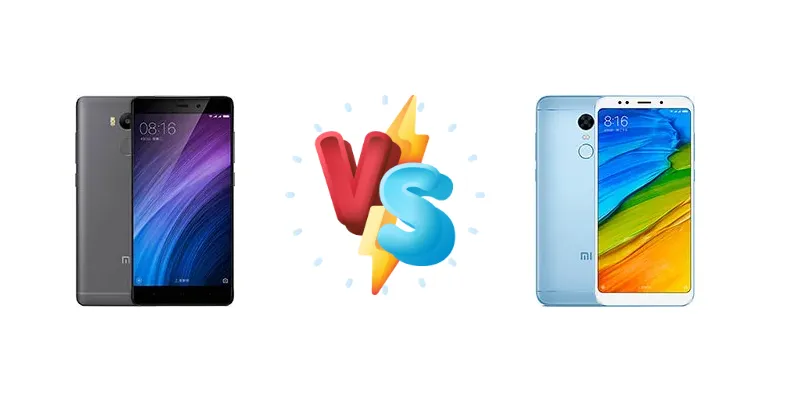
The Xiaomi Redmi series has consistently delivered excellent value for money. Two popular contenders in this lineup are the Redmi 4 Prime and the Redmi 5 Plus (also known as Redmi Note 5 in some regions). But which one reigns supreme? Let's dive into a detailed comparison to help you decide.
🏆 Quick Verdict
The Redmi 5 Plus edges out the Redmi 4 Prime thanks to its superior display contrast and slightly longer battery life. Both phones share the same capable Snapdragon 625 chipset, making the display and battery the key differentiators for most users. It's a close call, but the 5 Plus offers a bit more polish.
| Network |
|---|
| 2G bands | GSM 850 / 900 / 1800 / 1900 - SIM 1 & SIM 2 | GSM 850 / 900 / 1800 / 1900 - SIM 1 & SIM 2 |
| 3G bands | HSDPA 850 / 900 / 1900 / 2100 | HSDPA 850 / 900 / 1900 / 2100 |
| 4G bands | 1, 3, 7, 38, 39, 40, 41 | 1, 3, 4, 5, 7, 8, 20, 38, 40 - Global |
| Speed | HSPA 42.2/5.76 Mbps, LTE (2CA) Cat6 300/50 Mbps | HSPA 42.2/5.76 Mbps, LTE (2CA) Cat6 300/50 Mbps |
| Technology | GSM / CDMA / HSPA / EVDO / LTE | GSM / HSPA / LTE |
| | CDMA2000 1xEV-DO & TD-SCDMA | 1, 3, 5, 7, 8, 34, 38, 39, 40, 41 - China |
| Launch |
|---|
| Announced | 2016, November. Released 2016, November | 2018, February. Released 2018, February |
| Status | Discontinued | Discontinued |
| Body |
|---|
| Build | Glass front, aluminum back, aluminum frame | Glass front, aluminum/plastic back, aluminum frame |
| Dimensions | 141.3 x 69.6 x 8.9 mm (5.56 x 2.74 x 0.35 in) | 158.5 x 75.5 x 8.1 mm (6.24 x 2.97 x 0.32 in) |
| SIM | Hybrid Dual SIM | Nano-SIM + Nano-SIM |
| Weight | 156 g (5.50 oz) | 180 g (6.35 oz) |
| Display |
|---|
| Resolution | 1080 x 1920 pixels, 16:9 ratio (~441 ppi density) | 1080 x 2160 pixels, 18:9 ratio (~403 ppi density) |
| Size | 5.0 inches, 68.9 cm2 (~70.1% screen-to-body ratio) | 5.99 inches, 92.6 cm2 (~77.4% screen-to-body ratio) |
| Type | IPS LCD | IPS LCD |
| Platform |
|---|
| CPU | Octa-core 2.0 GHz Cortex-A53 | Octa-core 2.0 GHz Cortex-A53 |
| Chipset | Qualcomm MSM8953 Snapdragon 625 (14 nm) | Qualcomm MSM8953 Snapdragon 625 (14 nm) |
| GPU | Adreno 506 | Adreno 506 |
| OS | Android 6.0.1 (Marshmallow), MIUI 8 | Android 7.1.2 (Nougat), planned upgrade to Android 10, MIUI 12 |
| Memory |
|---|
| Card slot | microSDXC (uses shared SIM slot) | microSDXC (uses shared SIM slot) |
| Internal | 32GB 3GB RAM | 32GB 3GB RAM, 64GB 3GB RAM, 64GB 4GB RAM |
| | eMMC 5.1 | eMMC 5.1 |
| Main Camera |
|---|
| Features | Dual-LED dual-tone flash, HDR, panorama | Dual-LED dual-tone flash, HDR, panorama |
| Single | 13 MP, f/2.2, PDAF | 12 MP, f/2.2, 1.25 μm, dual pixel PDAF |
| Video | 1080p@30fps | 4K@30fps, 1080p@30/60fps |
| Selfie camera |
|---|
| Single | 5 MP, f/2.2 | 5 MP |
| Video | 1080p@30fps | 1080p@30fps |
| Sound |
|---|
| 3.5mm jack | Yes | Yes |
| 35mm jack | Yes | Yes |
| Loudspeaker | Yes | Yes |
| Comms |
|---|
| Bluetooth | 4.2, A2DP, LE | 4.2, A2DP, LE |
| Infrared port | Yes | Yes |
| NFC | No | No |
| Positioning | GPS, GLONASS, BDS | GPS, GLONASS, BDS |
| Radio | FM radio | FM radio |
| USB | microUSB 2.0, OTG | microUSB 2.0 |
| WLAN | Wi-Fi 802.11 a/b/g/n, dual-band, Wi-Fi Direct | Wi-Fi 802.11 a/b/g/n, Wi-Fi Direct |
| Features |
|---|
| Sensors | Fingerprint (rear-mounted), accelerometer, gyro, proximity, compass | Fingerprint (rear-mounted), accelerometer, gyro, proximity, compass |
| Battery |
|---|
| Charging | 10W wired | 10W wired |
| Type | Li-Po 4100 mAh, non-removable | Li-Po 4000 mAh, non-removable |
| Misc |
|---|
| Colors | Gold, Dark Gray, Silver | Black, Gold, Blue, Rose Gold |
| Models | - | MEG7, MEI7 |
| Price | About 160 EUR | About 180 EUR |
| SAR | - | 1.01 W/kg (head) 1.47 W/kg (body) |
| Tests |
|---|
| Audio quality | - |
Noise -29.7dB / Crosstalk -91.8dB |
| Battery life |
Endurance rating 91h
|
Endurance rating 104h
|
| Camera |
Photo / Video |
Photo / Video |
| Display | - |
Contrast ratio: 1431:1 (nominal), 2.913 (sunlight) |
| Loudspeaker | - |
Voice 71dB / Noise 72dB / Ring 87dB
|
| Performance | - |
GeekBench: 4309 (v4.4)
GFXBench: 3.4fps (ES 3.1 onscreen) |
Xiaomi Redmi 4 Prime
- Excellent battery life
- Affordable price
- Reliable Snapdragon 625 chipset
- Compact size
- Average camera
- Less vibrant display
- Slower charging
Xiaomi Redmi 5 Plus (Redmi Note 5)
- Better display contrast
- Slightly longer battery life
- Good performance
- Stylish design
- Still average camera
- Slower charging
- Can be slightly more expensive
Display Comparison
The Redmi 5 Plus boasts a significantly better display. Its contrast ratio of 1431:1 (nominal) and 2.913 (sunlight) is a noticeable improvement over the Redmi 4 Prime, offering richer colors and better visibility in bright conditions. While both have similar resolutions, the 5 Plus's display is simply more enjoyable to use.
Camera Comparison
Camera performance is comparable. Both phones offer decent photo and video capabilities for their price range. Image quality in good lighting is acceptable, but low-light performance is where both struggle. The Redmi 5 Plus might have a slight edge in color reproduction due to its better display, making photos appear more vibrant.
Performance
Performance-wise, both phones are very similar. They share the same Qualcomm Snapdragon 625 chipset and Octa-core 2.0 GHz Cortex-A53 CPU. Everyday tasks like browsing, social media, and light gaming will run smoothly on both devices. You won't notice a significant performance difference in typical usage.
Battery Life
The Redmi 5 Plus has a slight advantage in battery life, with an endurance rating of 104 hours compared to the Redmi 4 Prime's 91 hours. While both offer excellent battery life, the 5 Plus will likely last a bit longer on a single charge, especially with moderate usage.
Buying Guide
The Xiaomi Redmi 4 Prime is a good choice for users on a very tight budget who prioritize battery life above all else. The Redmi 5 Plus (Redmi Note 5) is ideal for those who want a better viewing experience with improved contrast and a slightly longer battery, without breaking the bank.
Frequently Asked Questions
❓ Is the Redmi 5 Plus worth the extra money compared to the Redmi 4 Prime?
Yes, the slightly improved display and battery life of the Redmi 5 Plus generally justify the price difference, especially if you value a better viewing experience.
❓ Which phone is better for gaming?
Both phones offer decent gaming performance thanks to the Snapdragon 625. However, the Redmi 5 Plus's better display will make games look slightly more appealing.