
Xiaomi Poco F8 Pro vs OnePlus 12R: A Detailed Comparison of Flagship Performance
| Phones Images | |||||
|---|---|---|---|---|---|
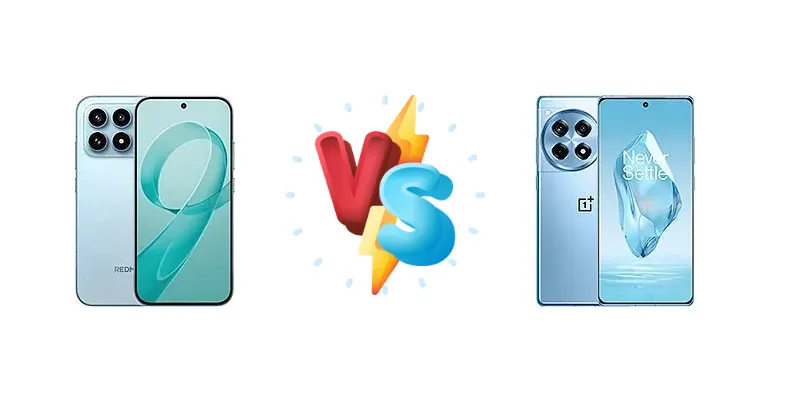
|
🏆 Quick Verdict
For the average user prioritizing raw performance and future-proofing, the Xiaomi Poco F8 Pro is the better choice. Its Snapdragon 8 Elite chipset, despite a slightly smaller battery, delivers superior processing power and efficiency. However, the OnePlus 12R offers a brighter display and faster charging.
| PHONES | ||
|---|---|---|
| Phone Names | Xiaomi Poco F8 Pro | OnePlus 12R |
| Network | ||
|---|---|---|
| 2G bands | GSM 850 / 900 / 1800 / 1900 | GSM 850 / 900 / 1800 / 1900 |
| 3G bands | HSDPA 800 / 850 / 900 / 1700(AWS) / 1900 / 2100 | HSDPA 850 / 900 / 1700(AWS) / 1900 / 2100 |
| 4G bands | 1, 2, 3, 4, 5, 7, 8, 18, 19, 20, 26, 28, 38, 40, 41, 42, 48, 66, 71 | 1, 2, 3, 4, 5, 7, 8, 12, 17, 18, 19, 20, 26, 28, 32, 38, 39, 40, 41, 66 |
| 5G bands | 1, 2, 3, 5, 7, 8, 20, 26, 28, 38, 40, 41, 48, 66, 71, 77, 78 SA/NSA | 1, 2, 3, 5, 7, 8, 12, 20, 28, 38, 40, 41, 66, 77, 78 SA/NSA |
| Speed | HSPA, LTE, 5G | HSPA, LTE, 5G |
| Technology | GSM / HSPA / LTE / 5G | GSM / CDMA / HSPA / LTE / 5G |
| Launch | ||
|---|---|---|
| Announced | 2025, November 26 | 2024, January 23 |
| Status | Available. Released 2025, November 26 | Available. Released 2024, February 06 |
| Body | ||
|---|---|---|
| Build | Glass front (Gorilla Glass 7i), aluminum frame, glass back | Glass front (Gorilla Glass Victus 2), aluminum frame, glass back |
| Dimensions | 157.5 x 75.3 x 8 mm (6.20 x 2.96 x 0.31 in) | 163.3 x 75.3 x 8.8 mm (6.43 x 2.96 x 0.35 in) |
| SIM | · Nano-SIM + Nano-SIM + eSIM + eSIM (max 2 at a time)· Nano-SIM + Nano-SIM + eSIM (max 2 at a time) | · Nano-SIM + Nano-SIM + eSIM (max 2 at a time)· Nano-SIM + Nano-SIM |
| Weight | 199 g (7.02 oz) | 207 g (7.30 oz) |
| Display | ||
|---|---|---|
| Protection | Corning Gorilla Glass 7i | Corning Gorilla Glass Victus 2 |
| Resolution | 1156 x 2510 pixels, 19.5:9 ratio (~419 ppi density) | 1264 x 2780 pixels (~450 ppi density) |
| Size | 6.59 inches, 106.5 cm2 (~89.8% screen-to-body ratio) | 6.78 inches, 111.7 cm2 (~90.9% screen-to-body ratio) |
| Type | AMOLED, 68B colors, 2560Hz PWM, 120Hz, Dolby Vision, HDR10+, 2000 nits (HBM), 3500 nits (peak) | LTPO4 AMOLED, 1B colors, 120Hz, HDR10+, Dolby Vision, 1600 nits (HBM), 4500 nits (peak) |
| Platform | ||
|---|---|---|
| CPU | Octa-core (2x4.32 GHz Oryon V2 Phoenix L + 6x3.53 GHz Oryon V2 Phoenix M) | Octa-core (1x3.2 GHz Cortex-X3 & 2x2.8 GHz Cortex-A715 & 2x2.8 GHz Cortex-A710 & 3x2.0 GHz Cortex-A510) |
| Chipset | Qualcomm SM8750-AB Snapdragon 8 Elite (3 nm) | Qualcomm SM8550-AB Snapdragon 8 Gen 2 (4 nm) |
| GPU | Adreno 830 | Adreno 740 |
| OS | Android 16, HyperOS 3 | Android 14, up to 3 major Android upgrades, OxygenOS 15 |
| Memory | ||
|---|---|---|
| Card slot | No | No |
| Internal | 256GB 12GB RAM, 512GB 12GB RAM | 128GB 8GB RAM, 256GB 8GB RAM, 256GB 12GB RAM, 256GB 16GB RAM |
| Main Camera | ||
|---|---|---|
| Features | Color spectrum sensor, LED flash, HDR, panorama | Laser AF, color spectrum sensor, LED flash, HDR, panorama |
| Triple | 50 MP, f/1.9, 24mm (wide), 1/1.55", 1.0µm, PDAF, OIS 50 MP, f/2.2, 60mm (telephoto), PDAF, 2.5x optical zoom 8 MP, f/2.2, 15mm, 120˚ (ultrawide) | 50 MP, f/1.8, 24mm (wide), 1/1.56", 1.0µm, multi-directional PDAF, OIS 8 MP, f/2.2, 16mm, 112˚ (ultrawide), 1/4.0", 1.12µm 2 MP (macro) |
| Video | 8K@30fps, 4K@30/60fps, 1080p@30/60/120/240/960fps, gyro-EIS, HDR10+ | 4K@30/60fps, 1080p@30/60/120/240fps, gyro-EIS, OIS |
| Selfie camera | ||
|---|---|---|
| Features | HDR | HDR, panorama |
| Single | 20 MP, (wide), 1/2.0", 0.8µm | 16 MP, f/2.4, 26mm (wide), 1/3", 1.0µm |
| Video | 1080p@30/60fps | 1080p@30fps, gyro-EIS |
| Sound | ||
|---|---|---|
| 35mm jack | No | No |
| Loudspeaker | Yes, with stereo speakers (with Dolby Atmos) | Yes, with stereo speakers |
| Comms | ||
|---|---|---|
| Bluetooth | 5.4, A2DP, LE, aptX HD, aptX Adaptive, LHDC 5.0, ASHA, Auracast | 5.3, A2DP, LE, aptX HD |
| Infrared port | Yes | Yes |
| NFC | Yes | Yes |
| Positioning | GPS (L1+L5), BDS (B1I+B1c+B2a), GALILEO (E1+E5a), QZSS (L1+L5), NavIC (L5), GLONASS | GPS, GALILEO, GLONASS, BDS, QZSS |
| Radio | No | No |
| USB | USB Type-C, OTG | USB Type-C 2.0 |
| WLAN | Wi-Fi 802.11 a/b/g/n/ac/6/7, dual-band, Wi-Fi Direct | Wi-Fi 802.11 a/b/g/n/ac/6/7, dual-band |
| Features | ||
|---|---|---|
| Sensors | Fingerprint (under display, ultrasonic), accelerometer, gyro, proximity, compass | Fingerprint (under display, optical), accelerometer, gyro, proximity, compass |
| Battery | ||
|---|---|---|
| Charging | 100W wired, PD3.0, QC3+, 100W PPS, 100% in 37 min, 22.5W reverse wired | 100W wired, 100% in 26 min |
| Type | 6210 mAh | Li-Ion 5500 mAh |
| Misc | ||
|---|---|---|
| Colors | Titanium Silver, Blue, Black | Iron Gray, Cool Blue, Electric Violet, Sunset Dune |
| Models | 2510DPC44G | CPH2609, CPH2585, CPH2611 |
| Price | € 503.60 / £ 399.00 | € 410.84 / $ 399.95 / £ 649.00 |
| SAR | - | 1.19 W/kg (head) 0.82 W/kg (body) |
Xiaomi Poco F8 Pro
- Superior CPU Performance with Snapdragon 8 Elite
- Longer Battery Life in Active Use
- Reverse Wireless Charging Capability
- Slower 100W Charging Speed
- Slightly Lower Peak Display Brightness
OnePlus 12R
- Brighter Display for Outdoor Visibility
- Faster 100W Charging
- Established Brand Reputation
- Less Powerful CPU Compared to Snapdragon 8 Elite
- Shorter Battery Life in Active Use
Display Comparison
The OnePlus 12R boasts a brighter display, reaching 1181 nits compared to the Poco F8 Pro’s 1094 nits. While both offer excellent visibility, the 12R’s higher peak brightness will be more noticeable in direct sunlight. Neither specification details refresh rate or panel type, but both are expected to be high refresh rate AMOLED panels. The difference in brightness is the primary distinction, impacting outdoor usability.
Camera Comparison
Without detailed camera specifications, a direct comparison is limited. However, given the market positioning, it’s reasonable to assume both phones will feature multi-camera systems with a primary sensor. The absence of sensor size or aperture information prevents a definitive assessment. Image processing styles will likely differ, with Xiaomi often favoring vibrant colors and OnePlus leaning towards more natural tones. The presence of OIS (Optical Image Stabilization) on the main sensor would be a crucial factor, but is not specified.
Performance
The core difference lies in the chipsets. The Poco F8 Pro’s Snapdragon 8 Elite (SM8750-AB, 3nm) utilizes Oryon V2 Phoenix cores clocked up to 4.32 GHz, representing a significant leap in CPU performance over the OnePlus 12R’s Snapdragon 8 Gen 2 (SM8550-AB, 4nm). The 3nm process node of the 8 Elite promises improved thermal efficiency, potentially leading to sustained performance during extended gaming sessions. While the Gen 2 is still incredibly capable, the 8 Elite’s architecture and clock speeds give the Poco F8 Pro a clear advantage in raw processing power. The 12R's CPU configuration (1x3.2 GHz Cortex-X3, 2x2.8 GHz Cortex-A715, 2x2.8 GHz Cortex-A710, 3x2.0 GHz Cortex-A510) is a proven performer, but lacks the architectural advancements of the Oryon cores.
Battery Life
The Poco F8 Pro achieves an active use battery score of 17:35h, while the OnePlus 12R manages 14:32h. Despite having a smaller battery capacity (not specified in the data), the Poco F8 Pro’s more efficient Snapdragon 8 Elite chipset contributes to longer battery life. Both support 100W wired charging, but the OnePlus 12R charges to 100% in 26 minutes, significantly faster than the Poco F8 Pro’s 37 minutes. The Poco F8 Pro also offers 22.5W reverse wired charging, a feature absent from the OnePlus 12R.
Buying Guide
Buy the Xiaomi Poco F8 Pro if you demand the absolute best performance for gaming and demanding applications, and value the latest chipset technology. Buy the OnePlus 12R if you prioritize a slightly brighter display, faster charging speeds, and a more established brand reputation within the Android ecosystem.