
Xiaomi Poco F4 vs Xiaomi 12 Lite: The Ultimate Showdown
| Phones Images | |||||
|---|---|---|---|---|---|
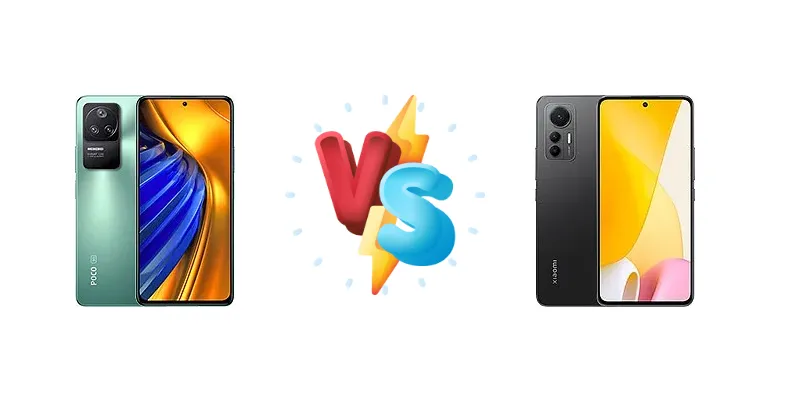
|
🏆 Quick Verdict
The Poco F4 takes the crown for raw performance thanks to its Snapdragon 870 chipset. However, the Xiaomi 12 Lite boasts a more refined design and potentially better selfie camera. Ultimately, the choice depends on whether you prioritize power or aesthetics.
| PHONES | ||
|---|---|---|
| Phone Names | Xiaomi Poco F4 | Xiaomi 12 Lite |
| Network | ||
|---|---|---|
| 2G bands | GSM 850 / 900 / 1800 / 1900 | GSM 850 / 900 / 1800 / 1900 |
| 3G bands | HSDPA 850 / 900 / 1700(AWS) / 1900 / 2100 | HSDPA 850 / 900 / 1700(AWS) / 1900 / 2100 |
| 4G bands | 1, 2, 3, 4, 5, 7, 8, 12, 17, 18, 19, 20, 26, 28, 38, 40, 41 | 1, 2, 3, 4, 5, 7, 8, 12, 13, 17, 18, 19, 20, 26, 28, 32, 38, 40, 41, 42, 48, 66 |
| 5G bands | 1, 3, 5, 7, 8, 20, 28, 38, 40, 41, 77, 78 SA/NSA | 1, 3, 5, 7, 8, 20, 28, 38, 40, 41, 66, 77, 78 SA/NSA |
| Speed | HSPA, LTE, 5G | HSPA, LTE, 5G |
| Technology | GSM / HSPA / LTE / 5G | GSM / HSPA / LTE / 5G |
| Launch | ||
|---|---|---|
| Announced | 2022, June 23 | 2022, July 09 |
| Status | Available. Released 2022, June 27 | Available. Released 2022, July 11 |
| Body | ||
|---|---|---|
| Build | Glass front (Gorilla Glass 5), glass back | Glass front (Gorilla Glass 5), glass back, plastic frame |
| Dimensions | 163.2 x 76 x 7.7 mm (6.43 x 2.99 x 0.30 in) | 159.3 x 73.7 x 7.3 mm (6.27 x 2.90 x 0.29 in) |
| SIM | Nano-SIM + Nano-SIM | Nano-SIM + Nano-SIM |
| Weight | 195 g (6.88 oz) | 173 g (6.10 oz) |
| IP53, dust and splash resistant | - | |
| Display | ||
|---|---|---|
| Protection | Corning Gorilla Glass 5 | Corning Gorilla Glass 5 |
| Resolution | 1080 x 2400 pixels, 20:9 ratio (~395 ppi density) | 1080 x 2400 pixels, 20:9 ratio (~402 ppi density) |
| Size | 6.67 inches, 107.4 cm2 (~86.6% screen-to-body ratio) | 6.55 inches, 103.6 cm2 (~88.2% screen-to-body ratio) |
| Type | AMOLED, 120Hz, HDR10+, Dolby Vision, 900 nits (HBM), 1300 nits (peak) | AMOLED, 68B colors, 120Hz, Dolby Vision, HDR10+, 950 nits (peak) |
| Platform | ||
|---|---|---|
| CPU | Octa-core (1x3.2 GHz Kryo 585 & 3x2.42 GHz Kryo 585 & 4x1.80 GHz Kryo 585) | Octa-core (1x2.4 GHz Cortex-A78 & 3x2.2 GHz Cortex-A78 & 4x1.9 GHz Cortex-A55) |
| Chipset | Qualcomm SM8250-AC Snapdragon 870 5G (7 nm) | Qualcomm SM7325 Snapdragon 778G 5G (6 nm) |
| GPU | Adreno 650 | Adreno 642L |
| OS | Android 12, upgradable to Android 13, MIUI 14.2 for POCO | Android 12, upgradable to Android 14, HyperOS |
| Memory | ||
|---|---|---|
| Card slot | No | No |
| Internal | 128GB 6GB RAM, 128GB 8GB RAM, 256GB 8GB RAM, 256GB 12GB RAM | 128GB 6GB RAM, 128GB 8GB RAM, 256GB 8GB RAM |
| UFS 3.1 | UFS 2.2 | |
| Main Camera | ||
|---|---|---|
| Features | LED flash, HDR, panorama | Dual-LED dual-tone flash, HDR, panorama |
| Single | - | 32 MP, f/2.5, (wide), 1/2.8", 0.8µm, AF |
| Triple | 64 MP, f/1.8, (wide) 1/2.0", 0.7µm, PDAF, OIS 8 MP, f/2.2, 119˚ (ultrawide), 1/4.0", 1.12µm 2 MP (macro) | 108 MP, f/1.9, 26mm (wide), 1/1.52", 0.7µm, PDAF 8 MP, f/2.2, 120˚ (ultrawide), 1/4.0", 1.12µm 2 MP (macro) |
| Video | 4K@30/60fps, 1080p@30/60fps | 4K@30fps, 1080p@30/60/120fps; gyro-EIS |
| Selfie camera | ||
|---|---|---|
| Features | - | HDR, panorama |
| Single | 20 MP, f/2.5, (wide), 1/3.06", 1.0µm | 32 MP, f/2.5, (wide), 1/2.8", 0.8µm, AF |
| Video | 1080p@30fps | 1080p@30/60fps, 720p@120fps |
| Sound | ||
|---|---|---|
| 3.5mm jack | No | No |
| 35mm jack | No | No |
| Loudspeaker | Yes, with stereo speakers | Yes, with dual speakers |
| 24-bit/192kHz audio | 24-bit/192kHz audio | |
| Comms | ||
|---|---|---|
| Bluetooth | 5.2, A2DP, LE | 5.2, A2DP, LE, aptX HD, aptX Adaptive |
| Infrared port | Yes | Yes |
| NFC | Yes (market/region dependent) | Yes (market/region dependent) |
| Positioning | GPS (L1+L5), GLONASS (L1), BDS (B1I+B2a), GALILEO (E1+E5a), QZSS (L1+L5), NavIC (L5) | GPS (L1), GLONASS (G1), BDS (B1I+B1c), GALILEO (E1), QZSS (L1) |
| Radio | No | No |
| USB | USB Type-C 2.0, OTG | USB Type-C 2.0, OTG |
| WLAN | Wi-Fi 802.11 a/b/g/n/ac/6, dual-band, Wi-Fi Direct | Wi-Fi 802.11 a/b/g/n/ac/6, dual-band, Wi-Fi Direct |
| Features | ||
|---|---|---|
| Sensors | Fingerprint (side-mounted), accelerometer, gyro, proximity, compass | Fingerprint (under display, optical), accelerometer, gyro, compass |
| - | Virtual proximity sensing | |
| Battery | ||
|---|---|---|
| Charging | 67W wired, PD3.0, QC3, 100% in 38 min | 67W wired, PD3.0, QC4, 50% in 13 min |
| Type | Li-Po 4500 mAh | Li-Po 4300 mAh |
| Misc | ||
|---|---|---|
| Colors | Moonlight Silver, Night Black, Nebula Green | Black, Lite Green, Lite Pink |
| Models | 22021211RG, 22021211RI | 2203129G |
| Price | ₹ 16,999 | € 119.80 / $ 269.00 / £ 121.15 |
| SAR | - | 1.09 W/kg (head) 0.73 W/kg (body) |
| SAR EU | - | 0.60 W/kg (head) 1.00 W/kg (body) |
| Tests | ||
|---|---|---|
| Battery life | Endurance rating 101h | Endurance rating 100h |
| Camera | Photo / Video | Photo / Video |
| Display | Contrast ratio: Infinite (nominal) | Contrast ratio: Infinite (nominal) |
| Loudspeaker | -26.1 LUFS (Good) | -25.2 LUFS (Very good) |
| Performance | AnTuTu: 590961 (v8), 698586 (v9) GeekBench: 3190 (v5.1) GFXBench: 49fps (ES 3.1 onscreen) | AnTuTu: 528905 (v9) GeekBench: 2943 (v5.1) GFXBench: 29fps (ES 3.1 onscreen) |
Xiaomi Poco F4
- Superior Performance (Snapdragon 870)
- Higher Peak Brightness Display
- Faster Charging (38 min to 100%)
- Excellent Value for Money
- Less Refined Design
- Potentially Less Impressive Selfie Camera
Xiaomi 12 Lite
- Stylish Design
- Potentially Better Selfie Camera
- Slightly More Compact
- Good Fast Charging (50% in 13 min)
- Lower Performance (Snapdragon 778G)
- Lower Peak Brightness Display
- Less Value for Money
Display Comparison
The Poco F4's display shines with a higher peak brightness of 1003 nits compared to the 12 Lite's 824 nits, offering better visibility in direct sunlight. Both feature an 'Infinite' contrast ratio (likely a marketing term), suggesting deep blacks. The Poco F4 might offer slightly more vibrant colors due to its higher brightness capabilities, but both are AMOLED panels providing excellent viewing angles and color accuracy.
Camera Comparison
Both phones offer capable camera systems. The Poco F4 likely has a slight edge in video recording due to the Snapdragon 870's better image signal processor. The Xiaomi 12 Lite is often praised for its improved selfie camera, potentially offering better detail and more natural skin tones. Low-light performance is likely comparable, but the 12 Lite's processing might be more pleasing to some.
Performance
Here's where the Poco F4 truly excels. The Snapdragon 870 is a significantly more powerful chipset than the 778G in the 12 Lite. Expect smoother multitasking, faster app loading times, and significantly better gaming performance on the Poco F4. The 12 Lite is still capable for everyday tasks, but it won't handle demanding games as well.
Battery Life
Both phones offer similar endurance ratings (101h vs 100h), suggesting comparable battery life in typical usage. The Poco F4's 67W charging is slightly faster, reaching 100% in 38 minutes, while the 12 Lite charges to 50% in 13 minutes (a good indicator of fast charging capabilities). Both support PD3.0 and QC standards.
Buying Guide
The Xiaomi Poco F4 is ideal for gamers and power users who demand high performance for demanding tasks. The Xiaomi 12 Lite is a great choice for those prioritizing a stylish design, a good selfie camera, and a more mainstream experience.