
Xiaomi Mix 4 vs Mi Mix Fold: The Ultimate Showdown
| Phones Images | |||||
|---|---|---|---|---|---|
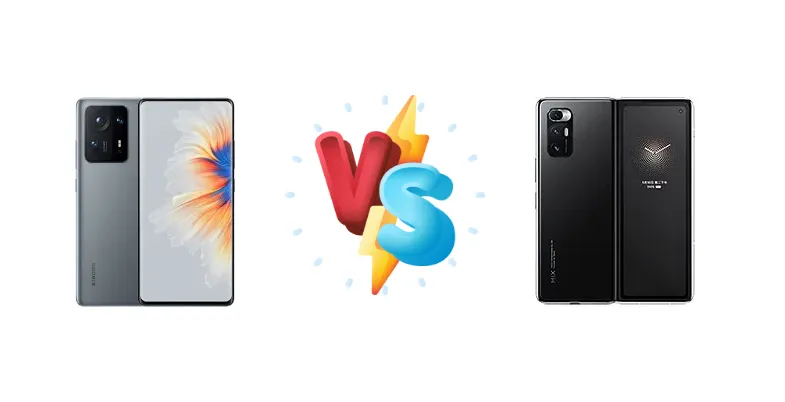
|
🏆 Quick Verdict
The Xiaomi Mix 4 wins on raw performance and charging speed. However, the Mi Mix Fold's foldable display offers a unique versatility and larger screen real estate. It depends on your priorities: speed and power vs. a foldable form factor.
| PHONES | ||
|---|---|---|
| Phone Names | Xiaomi Mix 4 | Xiaomi Mi Mix Fold |
| Network | ||
|---|---|---|
| 2G bands | GSM 850 / 900 / 1800 / 1900 | GSM 850 / 900 / 1800 / 1900 |
| 3G bands | HSDPA 850 / 900 / 1700(AWS) / 1900 / 2100 | HSDPA 850 / 900 / 1700(AWS) / 1900 / 2100 |
| 4G bands | 1, 2, 3, 4, 5, 7, 8, 12, 17, 18, 19, 20, 26, 28, 34, 38, 39, 40, 41, 42 | 1, 2, 3, 4, 5, 7, 8, 12, 17, 18, 19, 20, 26, 28, 34, 38, 39, 40, 41, 42 |
| 5G bands | 1, 3, 5, 8, 28, 41, 77, 78, 79 SA/NSA/Sub6 | 1, 3, 28, 41, 77, 78, 79 SA/NSA |
| Speed | HSPA, LTE, 5G | HSPA, LTE, 5G |
| Technology | GSM / CDMA / HSPA / EVDO / LTE / 5G | GSM / CDMA / HSPA / EVDO / LTE / 5G |
| CDMA2000 1xEV-DO | CDMA2000 1xEV-DO | |
| Launch | ||
|---|---|---|
| Announced | 2021, August 10 | 2021, March |
| Status | Available. Released 2021, August 16 | Available. Released 2021, April 16 |
| Body | ||
|---|---|---|
| Build | Glass front (Gorilla Glass Victus), ceramic back, aluminum frame | Glass front (folded), plastic front (unfolded), glass back (Gorilla Glass 5) or ceramic back, aluminum frame |
| Dimensions | 162.6 x 75.4 x 8 mm (6.40 x 2.97 x 0.31 in) | Unfolded: 173.3 x 133.4 x 7.6 mm Folded: 173.3 x 69.8 x 17.2 mm |
| SIM | Nano-SIM + Nano-SIM | Nano-SIM + Nano-SIM |
| Weight | 225 g (7.94 oz) | 317 g (Glass)332 g (Ceramic) (11.18 oz) |
| IP53, dust and splash resistant | - | |
| Display | ||
|---|---|---|
| Protection | Corning Gorilla Glass Victus | - |
| Resolution | 1080 x 2400 pixels, 20:9 ratio (~395 ppi density) | 1860 x 2480 pixels, 4:3 ratio (~387 ppi density) |
| Size | 6.67 inches, 107.4 cm2 (~87.6% screen-to-body ratio) | 8.01 inches, 198.7 cm2 (~85.9% screen-to-body ratio) |
| Type | AMOLED, 1B colors, 120Hz, HDR10+, Dolby Vision, 800 nits (HBM) | Foldable AMOLED, 1B colors, HDR10+, Dolby Vision, 600 nits (typ), 900 nits (peak) |
| - | Cover display: AMOLED, 90Hz, HDR10+, Dolby Vision, 650 nits (typ), 900 nits (peak) 6.52 inches, 840 x 2520 pixels, 27:9 ratio | |
| Platform | ||
|---|---|---|
| CPU | Octa-core (1x2.99 GHz Cortex-X1 & 3x2.42 GHz Cortex-A78 & 4x1.80 GHz Cortex-A55) | Octa-core (1x2.84 GHz Cortex-X1 & 3x2.42 GHz Cortex-A78 & 4x1.80 GHz Cortex-A55) |
| Chipset | Qualcomm SM8350 Snapdragon 888+ 5G (5 nm) | Qualcomm SM8350 Snapdragon 888 5G (5 nm) |
| GPU | Adreno 660 | Adreno 660 |
| OS | Android 11, MIUI 12.5 | Android 10, MIUI 12 |
| Memory | ||
|---|---|---|
| Card slot | No | No |
| Internal | 128GB 8GB RAM, 256GB 8GB RAM, 256GB 12GB RAM, 512GB 12GB RAM | 256GB 12GB RAM, 512GB 12GB RAM, 512GB 16GB RAM |
| UFS 3.1 | UFS 3.1 | |
| Main Camera | ||
|---|---|---|
| Features | Laser AF, color spectrum sensor, Dual-LED flash, HDR, panorama | Color spectrum sensor, Dual-LED flash, HDR, panorama |
| Single | 20 MP, 27mm (wide), 1/3.4", 0.8µm, under display | 20 MP, 27mm (wide), 1/3.4", 0.8µm |
| Triple | 108 MP, f/1.9, 24mm (wide), 1/1.33", 0.8µm, PDAF, OIS 8 MP, f/4.1, 120mm (periscope telephoto), PDAF, OIS, 5x optical zoom 13 MP, f/2.2, 12mm, 123˚ (ultrawide), 1/3.06", 1.12µm | 108 MP, f/1.8, (wide), 1/1.52", 0.7µm, PDAF 8 MP, 80mm (telephoto/macro), liquid lens, PDAF, 3x optical zoom 13 MP, f/2.4, 123˚ (ultrawide), 1.12µm |
| Video | 8K@24fps, 4K@30/60fps, 1080p@30/60/120/480fps; gyro-EIS, HDR10+ | 8K@24/30fps, 4K@30/60fps, 1080p@30/60fps, gyro-EIS |
| Selfie camera | ||
|---|---|---|
| Features | HDR | HDR, panorama |
| Single | 20 MP, 27mm (wide), 1/3.4", 0.8µm, under display | 20 MP, (wide) |
| Video | 1080p@30fps | 1080p@30/60fps, 720p@120fps |
| Sound | ||
|---|---|---|
| 3.5mm jack | No | No |
| 35mm jack | No | No |
| Loudspeaker | Yes, with stereo speakers | Yes, with stereo speakers (4 speakers) |
| 24-bit/192kHz audio Tuned by Harman Kardon | 24-bit/192kHz audio Tuned by Harman Kardon | |
| Comms | ||
|---|---|---|
| Bluetooth | 5.2, A2DP, LE, aptX HD | 5.2, A2DP, LE, aptX HD, aptX Adaptive |
| Infrared port | Yes | Yes |
| NFC | Yes | Yes |
| Positioning | GPS (L1+L5), GLONASS (G1), BDS (B1I+B1c+B2a), GALILEO (E1+E5a), QZSS (L1+L5), NavIC (L5) | GPS (L1+L5), GLONASS (L1), BDS (B1I+B1c+B2a), GALILEO (E1+E5a), QZSS (L1+L5), NavIC (L5) |
| Radio | No | No |
| USB | USB Type-C 2.0 | USB Type-C |
| WLAN | Wi-Fi 802.11 a/b/g/n/ac/6e, dual-band, Wi-Fi Direct | Wi-Fi 802.11 a/b/g/n/ac/6e, dual-band, Wi-Fi Direct |
| Features | ||
|---|---|---|
| Sensors | Fingerprint (under display, optical), accelerometer, gyro, proximity, compass | Fingerprint (side-mounted), accelerometer, gyro, proximity, compass, barometer |
| Ultra Wideband (UWB) support | - | |
| Battery | ||
|---|---|---|
| Charging | 120W wired, PD3.0, QC4, 100% in 15 min 50W wireless, 100% in 28 min | 67W wired, PD3.0, QC4, 100% in 37 min |
| Type | Li-Po 4500 mAh | Li-Po 5020 mAh |
| Misc | ||
|---|---|---|
| Colors | Ceramic Black, Ceramic White, Shadow Gray | Black, Ceramic |
| Models | 2106118C | M2011J18C |
| Price | About 660 EUR | About 1300 EUR |
Xiaomi Mix 4
- Blazing-fast 120W charging
- Slightly better performance (Snapdragon 888+)
- Excellent 108MP main camera
- Compact and sleek design
- No IP rating for water/dust resistance
- No microSD card slot
- No telephoto lens
Xiaomi Mi Mix Fold
- Innovative foldable display
- Large screen for multitasking and media
- Versatile quad-camera system
- Premium design and build quality
- Slightly slower performance (Snapdragon 888)
- Slower charging speed
- More expensive
- Foldable screen durability concerns
Display Comparison
The Mi Mix Fold boasts a massive 7.9-inch foldable AMOLED display with a 120Hz refresh rate, offering a tablet-like experience. The Mix 4 features a 6.67-inch AMOLED display, also with a 120Hz refresh rate, providing vibrant colors and smooth scrolling. The Fold's external display is 6.5 inches. The Fold's larger screen is a significant advantage for productivity and entertainment.
Camera Comparison
The Mix 4 features a 108MP main camera, offering excellent detail and dynamic range. The Mi Mix Fold has a quad-camera system (108MP main, 13MP ultrawide, 8MP telephoto, and 20MP depth sensor). While the Fold offers more versatility with its telephoto lens, the Mix 4's main sensor arguably captures slightly better still images in ideal conditions. Video recording is excellent on both.
Performance
The Mix 4 edges out the Mi Mix Fold slightly in performance due to the Snapdragon 888+ chipset versus the 888. While both are powerful, the '+' variant offers a modest but noticeable boost in CPU and GPU speeds, resulting in smoother gaming and faster app loading times. Both phones handle everyday tasks with ease.
Battery Life
The Mix 4's 120W wired charging is a game-changer, fully charging the phone in just 15 minutes. Its 4800mAh battery provides all-day battery life. The Mi Mix Fold has a 4200mAh battery and 67W wired charging, taking around 37 minutes to fully charge. While the Fold's battery is decent, the Mix 4's charging speed is significantly faster.
Buying Guide
The Xiaomi Mix 4 is ideal for users prioritizing top-tier performance, fast charging, and a traditional smartphone experience. The Mi Mix Fold is perfect for those seeking a large, foldable display for multitasking, media consumption, and a unique mobile experience, even with a slight performance trade-off.