
Xiaomi Mix 4 vs Sony Xperia 1 III: A Deep Dive into Flagship Differences
| Phones Images | |||||
|---|---|---|---|---|---|
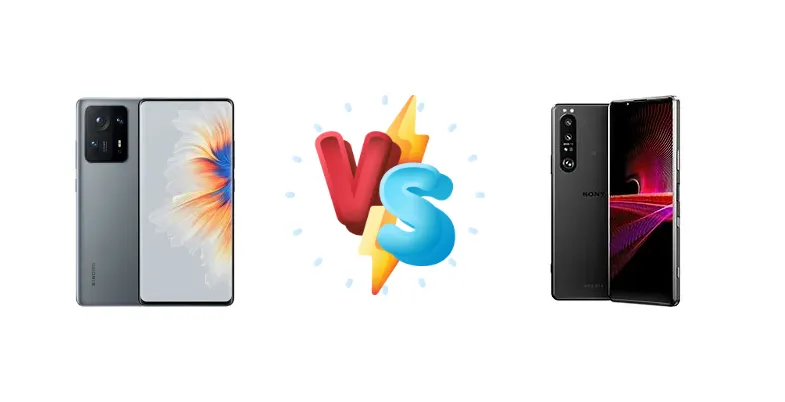
|
🏆 Quick Verdict
For the average user prioritizing speed and convenience, the Xiaomi Mix 4 is the clear winner. Its 120W charging is unmatched, and the Snapdragon 888+ offers a slight performance edge. However, the Sony Xperia 1 III excels for photographers and videographers who value color accuracy and manual control.
| PHONES | ||
|---|---|---|
| Phone Names | Xiaomi Mix 4 | Sony Xperia 1 III |
| Network | ||
|---|---|---|
| 2G bands | GSM 850 / 900 / 1800 / 1900 | GSM 850 / 900 / 1800 / 1900 |
| 3G bands | HSDPA 850 / 900 / 1700(AWS) / 1900 / 2100 | HSDPA 800 / 850 / 900 / 1700(AWS) / 1900 / 2100 |
| 4G bands | 1, 2, 3, 4, 5, 7, 8, 12, 17, 18, 19, 20, 26, 28, 34, 38, 39, 40, 41, 42 | 1, 2, 3, 4, 5, 7, 8, 12, 13, 17, 19, 20, 25, 26, 28, 29, 32, 34, 38, 39, 40, 41, 46, 66 - Europe |
| 5G bands | 1, 3, 5, 8, 28, 41, 77, 78, 79 SA/NSA/Sub6 | 1, 3, 5, 7, 8, 20, 28, 38, 40, 41, 77, 78 SA/NSA/Sub6 - Europe |
| Speed | HSPA, LTE, 5G | HSPA, LTE, 5G |
| Technology | GSM / CDMA / HSPA / EVDO / LTE / 5G | GSM / HSPA / LTE / 5G |
| CDMA2000 1xEV-DO | SA/NSA/Sub6/mmWave - USA (specific) | |
| Launch | ||
|---|---|---|
| Announced | 2021, August 10 | 2021, April 14 |
| Status | Available. Released 2021, August 16 | Available. Released 2021, August 25 |
| Body | ||
|---|---|---|
| Build | Glass front (Gorilla Glass Victus), ceramic back, aluminum frame | Glass front (Gorilla Glass Victus), glass back (Gorilla Glass 6), aluminum frame |
| Dimensions | 162.6 x 75.4 x 8 mm (6.40 x 2.97 x 0.31 in) | 165 x 71 x 8.2 mm (6.50 x 2.80 x 0.32 in) |
| SIM | Nano-SIM + Nano-SIM | Nano-SIM + Nano-SIM |
| Weight | 225 g (7.94 oz) | 186 g / 187.1 g (mmWave) (6.56 oz) |
| IP53, dust and splash resistant | IP65/IP68 dust/water resistant (up to 1.5m for 30 min) | |
| Display | ||
|---|---|---|
| Protection | Corning Gorilla Glass Victus | Corning Gorilla Glass Victus |
| Resolution | 1080 x 2400 pixels, 20:9 ratio (~395 ppi density) | 1644 x 3840 pixels, 21:9 ratio (~643 ppi density) |
| Size | 6.67 inches, 107.4 cm2 (~87.6% screen-to-body ratio) | 6.5 inches, 98.6 cm2 (~84.2% screen-to-body ratio) |
| Type | AMOLED, 1B colors, 120Hz, HDR10+, Dolby Vision, 800 nits (HBM) | OLED, 1B colors, 120Hz, HDR BT.2020 |
| - | Runs at 1096 x 2560 pixels except for select use cases | |
| Platform | ||
|---|---|---|
| CPU | Octa-core (1x2.99 GHz Cortex-X1 & 3x2.42 GHz Cortex-A78 & 4x1.80 GHz Cortex-A55) | Octa-core (1x2.84 GHz Cortex-X1 & 3x2.42 GHz Cortex-A78 & 4x1.80 GHz Cortex-A55) |
| Chipset | Qualcomm SM8350 Snapdragon 888+ 5G (5 nm) | Qualcomm SM8350 Snapdragon 888 5G (5 nm) |
| GPU | Adreno 660 | Adreno 660 |
| OS | Android 11, MIUI 12.5 | Android 11, upgradable to Android 13 |
| Memory | ||
|---|---|---|
| Card slot | No | microSDXC (uses shared SIM slot) |
| Internal | 128GB 8GB RAM, 256GB 8GB RAM, 256GB 12GB RAM, 512GB 12GB RAM | 256GB 12GB RAM, 512GB 12GB RAM |
| UFS 3.1 | UFS 3.X | |
| Main Camera | ||
|---|---|---|
| Features | Laser AF, color spectrum sensor, Dual-LED flash, HDR, panorama | Zeiss optics, Zeiss T* lens coating, color spectrum sensor, LED flash, panorama, HDR, eye tracking |
| Single | 20 MP, 27mm (wide), 1/3.4", 0.8µm, under display | 8 MP, f/2.0, 24mm (wide), 1/4", 1.12µm |
| Triple | 108 MP, f/1.9, 24mm (wide), 1/1.33", 0.8µm, PDAF, OIS 8 MP, f/4.1, 120mm (periscope telephoto), PDAF, OIS, 5x optical zoom 13 MP, f/2.2, 12mm, 123˚ (ultrawide), 1/3.06", 1.12µm | 12 MP, f/1.7, 24mm (wide), 1/1.7", 1.8µm, dual pixel PDAF, OIS 12 MP, f/2.3, 70mm (telephoto), f/2.8, 105mm (telephoto), 1/2.9", dual pixel PDAF, 3x/4.4x optical zoom, OIS 12 MP, f/2.2, 124˚, 16mm (ultrawide), 1/2.6", dual pixel PDAF 0.3 MP, TOF 3D, (depth) |
| Video | 8K@24fps, 4K@30/60fps, 1080p@30/60/120/480fps; gyro-EIS, HDR10+ | 4K@24/25/30/60/120fps HDR, 1080p@30/60/120fps; 5-axis gyro-EIS, OIS |
| Selfie camera | ||
|---|---|---|
| Features | HDR | HDR |
| Single | 20 MP, 27mm (wide), 1/3.4", 0.8µm, under display | 8 MP, f/2.0, 24mm (wide), 1/4.0", 1.12µm |
| Video | 1080p@30fps | 1080p@30fps, 5-axis gyro-EIS |
| Sound | ||
|---|---|---|
| 3.5mm jack | No | Yes |
| 35mm jack | No | Yes |
| Loudspeaker | Yes, with stereo speakers | Yes, with stereo speakers |
| 24-bit/192kHz audio Tuned by Harman Kardon | 24-bit/192kHz audio Dynamic vibration system | |
| Comms | ||
|---|---|---|
| Bluetooth | 5.2, A2DP, LE, aptX HD | 5.2, A2DP, LE, aptX HD, aptX Adaptive |
| Infrared port | Yes | - |
| NFC | Yes | Yes |
| Positioning | GPS (L1+L5), GLONASS (G1), BDS (B1I+B1c+B2a), GALILEO (E1+E5a), QZSS (L1+L5), NavIC (L5) | GPS, GLONASS, BDS, GALILEO, QZSS |
| Radio | No | No |
| USB | USB Type-C 2.0 | USB Type-C 3.1, OTG, video output |
| WLAN | Wi-Fi 802.11 a/b/g/n/ac/6e, dual-band, Wi-Fi Direct | Wi-Fi 802.11 a/b/g/n/ac/6, dual-band, Wi-Fi Direct, DLNA |
| Features | ||
|---|---|---|
| Sensors | Fingerprint (under display, optical), accelerometer, gyro, proximity, compass | Fingerprint (side-mounted), accelerometer, gyro, proximity, barometer, compass |
| Ultra Wideband (UWB) support | Native Sony Alpha camera support | |
| Battery | ||
|---|---|---|
| Charging | 120W wired, PD3.0, QC4, 100% in 15 min 50W wireless, 100% in 28 min | 30W wired, PD, 50% in 30 min Wireless Reverse wireless |
| Type | Li-Po 4500 mAh | Li-Po 4500 mAh |
| Misc | ||
|---|---|---|
| Colors | Ceramic Black, Ceramic White, Shadow Gray | Frosted Black, Frosted Gray, Frosted Purple |
| Models | 2106118C | XQBC62/V, XQBC52V.UKCX, SO-51B, SOG03, A101SO, XQ-BC62, XQ-BC72, XQ-BC52, XQ-BC01, XQ-BC11, XQ-BC21, XQ-BC72 |
| Price | About 660 EUR | € 505.26 / $ 903.43 |
| Tests | ||
|---|---|---|
| Battery life | - | Endurance rating 82h |
| Camera | - | Photo / Video |
| Display | - | Contrast ratio: Infinite (nominal) |
| Loudspeaker | - | -26.5 LUFS (Good) |
| Performance | - | AnTuTu: 607423 (v8) GeekBench: 3515 (v5.1) GFXBench: 54fps (ES 3.1 onscreen) |
Xiaomi Mix 4
- Blazing-fast 120W charging
- Under-display camera for a truly full-screen experience
- Slightly more powerful Snapdragon 888+ chipset
- Battery capacity not specified
- Under-display camera image quality potentially compromised
Sony Xperia 1 III
- Excellent 82-hour battery endurance
- Professional-grade camera system with manual controls
- High brightness display with accurate colors
- Slower 30W charging
- Standard Snapdragon 888 chipset
Display Comparison
The Sony Xperia 1 III boasts a 620 nit peak brightness, a respectable figure, but the Mix 4’s display specifications are not provided, suggesting it likely aims for similar or higher output. The Xperia 1 III’s ‘Infinite’ contrast ratio (nominal) indicates a high-quality OLED panel. However, without knowing the Mix 4’s panel technology (LTPO or not), it’s difficult to assess efficiency. The Mix 4’s under-display camera is a key differentiator, offering a truly full-screen experience, though image quality from that camera is a separate concern. The Xperia 1 III’s focus on color accuracy will appeal to professionals, while the Mix 4 likely prioritizes vibrancy.
Camera Comparison
The Xperia 1 III is explicitly positioned as a ‘Photo / Video’ device, implying a sophisticated camera system. Details on sensor sizes and apertures are missing, but Sony’s expertise in camera technology suggests a focus on image quality and manual controls. The Mix 4’s under-display camera is a novelty, but its image quality is likely compromised compared to traditional front-facing cameras. The absence of detail regarding the Mix 4’s rear camera system makes a direct comparison difficult, but it likely focuses on versatility rather than professional-grade features. The Xperia 1 III’s video capabilities are likely a strong point, given Sony’s history in professional video equipment.
Performance
Both devices utilize the Qualcomm Snapdragon 888 series, but the Mix 4 features the 888+ 5G (5nm) while the Xperia 1 III uses the standard 888 (5nm). The 888+ offers a modest clock speed increase (2.99 GHz Cortex-X1 vs 2.84 GHz) which translates to slightly better sustained performance. Both share the same CPU core configuration (1x Cortex-X1, 3x Cortex-A78, 4x Cortex-A55). While both likely utilize LPDDR5 RAM, the speed isn’t specified. Thermal management will be crucial; the 888 series is known to throttle under sustained load, and the Mix 4’s faster clock speeds could exacerbate this issue. The Xperia 1 III’s larger chassis might offer better thermal dissipation.
Battery Life
The Xperia 1 III boasts an endurance rating of 82 hours, a strong indicator of battery life. The Mix 4’s battery capacity is not specified, but its 120W wired charging (100% in 15 minutes) and 50W wireless charging (100% in 28 minutes) are significantly faster than the Xperia 1 III’s 30W wired charging (50% in 30 minutes). This means the Mix 4 can quickly top up its battery, mitigating the impact of a potentially smaller capacity. The Xperia 1 III also offers reverse wireless charging, a feature absent from the Mix 4’s specifications.
Buying Guide
Buy the Xiaomi Mix 4 if you need the fastest possible charging, a nearly bezel-less display, and don't mind a potentially less refined software experience. Buy the Sony Xperia 1 III if you prioritize a professional-grade camera system, a high-quality display with accurate colors, and a more traditional Android experience geared towards content creation.