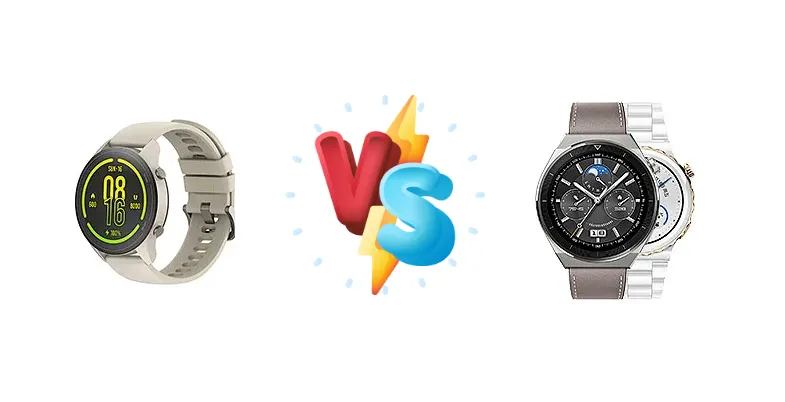
The smartwatch market is increasingly competitive, with both Xiaomi and Huawei offering compelling options. While both the Xiaomi Mi Watch and the Huawei Watch GT 3 Pro feature convenient wireless charging, their approaches to features, design, and overall user experience diverge significantly. This comparison dissects these differences to help you choose the right smartwatch for your needs.
🏆 Quick Verdict
For the average user prioritizing comprehensive health tracking and a potentially wider app ecosystem, the Huawei Watch GT 3 Pro emerges as the stronger choice. Its refined design and focus on accurate data collection outweigh the Xiaomi Mi Watch's simpler approach, despite both offering wireless charging.
| Network |
|---|
| 2G bands | N/A | N/A |
| 3G bands | N/A | N/A |
| 4G bands | N/A | N/A |
| EDGE | No | No |
| GPRS | No | No |
| Speed | No | No |
| Technology | No cellular connectivity | No cellular connectivity |
| Launch |
|---|
| Announced | 2020, September 30. Released 2020, October 13 | 2022, April 28 |
| Status | Discontinued | Available. Released 2022, May 05 |
| Body |
|---|
| Build | - | Sapphire crystal front, titanium frame or ceramic frame, ceramic back |
| Dimensions | 53.3 x 45.9 x 11.8 mm (2.10 x 1.81 x 0.46 in) | 46.6 x 46.6 x 10.9 mm (1.83 x 1.83 x 0.43 in) |
| SIM | No | No |
| Weight | 32 g (1.13 oz) | 50 g (43mm) / 54 g (46mm) (1.76 oz) |
| | Waterproof (5ATM)
Up to 50 meters depth for 10 mins
Compatible with standard 22mm straps | 30m water resistant
5 ATM
IP68
Compatible with standard 22mm straps (46mm model), 20mm straps (43mm model)
ECG certified |
| Display |
|---|
| Resolution | 454 x 454 pixels (~326 ppi density) | 466 x 466 pixels (~326 ppi density) |
| Size | 1.39 inches | 1.43 inches |
| Type | AMOLED, 450 nits (peak) | AMOLED |
| Platform |
|---|
| OS | Proprietary OS | HarmonyOS 2.0, upgradable to 3.0 |
| Memory |
|---|
| Card slot | No | No |
| Internal | - | 32GB |
| | eMMC | - |
| Sound |
|---|
| 3.5mm jack | No | No |
| 35mm jack | No | No |
| Loudspeaker | Yes | Yes |
| Comms |
|---|
| Bluetooth | 5.0, A2DP, LE | 5.2, A2DP, LE |
| NFC | Yes | Yes |
| Positioning | GPS, GLONASS | GPS (L1+L5), GLONASS, BDS, GALILEO, QZSS |
| Radio | No | No |
| USB | No | No |
| WLAN | No | No |
| Features |
|---|
| Sensors | Accelerometer, gyro, heart rate, barometer, compass, SpO2 | Accelerometer, gyro, heart rate, barometer, compass, SpO2, thermometer (body temperature) |
| Battery |
|---|
| Charging | Wireless | Wireless |
| Type | Li-Ion 420 mAh | Li-Po 530 mAh |
| Misc |
|---|
| Colors | Elegant Black, Fashion Silver, Navy Blue, Beige | Silver |
| Models | XMWT06 | ODN-B19, FRG-B19 |
| Price | About 100 EUR | About 200 EUR |
Xiaomi Mi Watch
- Potentially more affordable price point
- Simpler user interface for beginners
- Wireless charging convenience
- Likely less advanced health tracking features
- Potentially lower-quality display
- Less refined operating system
Huawei Watch GT 3 Pro
- Premium design and build quality
- Advanced health monitoring (ECG, SpO2)
- Efficient HarmonyOS for optimized battery life
- Higher price point
- HarmonyOS app ecosystem may be limited
- Potentially larger size and weight
Display Comparison
Both devices utilize wireless charging, but details regarding display technology are absent. Given Huawei's history with AMOLED panels in their watch series, the GT 3 Pro likely features a vibrant AMOLED display with potentially higher peak brightness compared to the Xiaomi Mi Watch, which may employ an LCD or lower-tier AMOLED. This impacts outdoor visibility and color accuracy. The GT 3 Pro’s premium positioning suggests a more refined display with narrower bezels.
Camera Comparison
Neither device features a camera, focusing instead on health and fitness tracking. This absence simplifies the design and prioritizes battery life, a common trade-off in the smartwatch category.
Performance
Without chipset specifics, performance analysis is limited. However, Huawei’s HarmonyOS is generally optimized for efficiency, potentially leading to smoother operation and better battery life on the GT 3 Pro. The Xiaomi Mi Watch, depending on its internal components, might prioritize responsiveness over sustained performance. RAM capacity, not provided, would also influence multitasking capabilities.
Battery Life
Both devices support wireless charging, but the actual battery capacity and charging wattage are crucial. Without these details, it’s difficult to determine which offers faster charging speeds. However, Huawei often prioritizes battery life in its wearables, suggesting the GT 3 Pro might offer longer usage between charges, even with similar charging speeds. The efficiency of the underlying operating system (HarmonyOS vs. Xiaomi’s proprietary OS) will also play a significant role in real-world battery performance.
Buying Guide
Buy the Xiaomi Mi Watch if you need a more affordable entry point into the smartwatch world and prioritize simplicity. It's ideal for users new to wearables or those who primarily want basic fitness tracking and notifications. Buy the Huawei Watch GT 3 Pro if you prefer a premium design, advanced health monitoring features like ECG and SpO2, and a more robust operating system with potential for future feature updates, even if it comes at a higher price point.
Frequently Asked Questions
❓ Does the wireless charging work with any Qi-compatible charger for both devices?
While both watches support wireless charging, compatibility with all Qi chargers isn't guaranteed. It's best to use the charger provided with the watch or a charger specifically certified for wearables to ensure optimal charging speeds and prevent potential damage. Some Qi chargers may not deliver the correct power profile.
❓ How does the health data collected by each watch integrate with smartphone ecosystems (iOS/Android)?
The Huawei Watch GT 3 Pro utilizes the Huawei Health app, which offers good Android integration but may have limited functionality on iOS due to Apple's restrictions. The Xiaomi Mi Watch likely integrates with the Mi Fitness app (or similar), offering broader compatibility across both Android and iOS, though feature parity may vary.
❓ Is the data from the Huawei Watch GT 3 Pro's ECG feature medically certified, and can it be used for diagnostic purposes?
The Huawei Watch GT 3 Pro's ECG feature is not intended for diagnostic purposes and should not replace a professional medical examination. While it can provide valuable insights into heart health, it's crucial to consult a doctor for any concerns. Certification status varies by region.