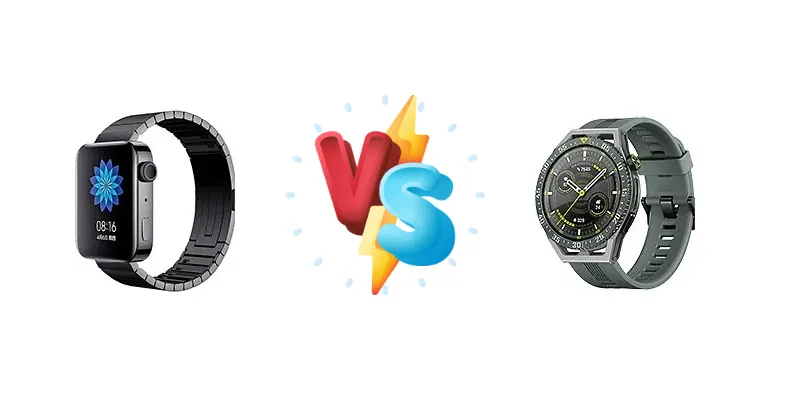
The smartwatch market offers a spectrum of choices, from feature-rich flagships to more affordable, streamlined options. The Xiaomi Mi Watch (China) and Huawei Watch GT 3 SE represent compelling choices in the latter category, but they take distinctly different approaches. The Mi Watch leverages Qualcomm's Snapdragon Wear 3100 platform, while the GT 3 SE focuses on Huawei’s proprietary optimizations. This comparison dissects these differences to determine which watch best suits your needs.
🏆 Quick Verdict
For users prioritizing app compatibility and a more open ecosystem, the Xiaomi Mi Watch (China) offers a clear advantage thanks to its Snapdragon Wear 3100 chipset. However, the Huawei Watch GT 3 SE’s focus on efficiency and potentially longer battery life (though unconfirmed in provided data) makes it a strong contender for those seeking a reliable, no-fuss wearable.
| Network |
|---|
| 2G bands | GSM 850 / 900 / 1800 / 1900 | N/A |
| 3G bands | HSDPA 850 / 900 / 2100 | N/A |
| 4G bands | 1, 3, 5, 7, 8, 18, 19, 20, 26, 39, 40, 41 | N/A |
| EDGE | - | No |
| GPRS | - | No |
| Speed | HSPA, LTE | No |
| Technology | GSM / HSPA / LTE | No cellular connectivity |
| Launch |
|---|
| Announced | 2019, November. Released 2019, November | 2022, November 10 |
| Status | Discontinued | Available. Released 2022, November 10 |
| Body |
|---|
| Build | - | Glass front, plastic back, plastic frame |
| Dimensions | 44.7 x 36.9 x 12.3 mm (1.76 x 1.45 x 0.48 in) | 46.4 x 46.4 x 11 mm (1.83 x 1.83 x 0.43 in) |
| SIM | eSIM | No |
| Weight | 44 g / 56 g (1.55 oz) | 35.6 g (1.27 oz) |
| | - | 50m water resistant
5 ATM
Compatible with standard 22mm straps (46mm model) |
| Display |
|---|
| Protection | Corning Gorilla Glass 3 or Sapphire crystal glass | - |
| Resolution | 368 x 448 pixels (~326 ppi density) | 466 x 466 pixels (~326 ppi density) |
| Size | 1.78 inches | 1.43 inches |
| Type | Super AMOLED | AMOLED |
| Platform |
|---|
| CPU | Quad-core 1.2 GHz Cortex-A7 | - |
| Chipset | Qualcomm Snapdragon Wear 3100 (28 nm) | - |
| GPU | Adreno 304 | - |
| OS | Proprietary OS | HarmonyOS 2.0 |
| Memory |
|---|
| Card slot | No | No |
| Internal | 8GB 1GB RAM | 4GB |
| | eMMC 4.5 | - |
| Sound |
|---|
| 3.5mm jack | No | No |
| 35mm jack | No | No |
| Loudspeaker | Yes | Yes |
| Comms |
|---|
| Bluetooth | 4.2, A2DP, LE | Yes |
| NFC | Yes | No |
| Positioning | GPS, GLONASS, BDS | GPS |
| Radio | No | No |
| USB | No | No |
| WLAN | Wi-Fi 802.11 b/g/n | No |
| Features |
|---|
| Sensors | Accelerometer, gyro, heart rate, barometer | Accelerometer, gyro, heart rate, barometer, compass, SpO2 |
| Battery |
|---|
| Charging | Wireless | Wireless |
| Type | Li-Ion 570/590 mAh, non-removable | 455 mAh |
| Misc |
|---|
| Colors | Black, Silver | Graphite Black, Wilderness Green |
| Models | - | RUNE-B29 |
| Price | About 150 EUR | About 200 EUR |
Xiaomi Mi Watch (China)
- Powerful Snapdragon Wear 3100 processor for smooth performance
- Access to the Google Play Store and a wider app ecosystem
- Wireless charging convenience
- Snapdragon Wear 3100 is less power-efficient than some alternatives
- Battery life may be shorter compared to the Huawei Watch GT 3 SE
Huawei Watch GT 3 SE
- Potentially longer battery life due to optimized chipset
- Simpler, streamlined user experience within Huawei’s ecosystem
- Wireless charging convenience
- Less powerful processor compared to the Snapdragon Wear 3100
- Limited app ecosystem compared to Wear OS
Display Comparison
Display specifications are absent from the provided data, making a direct comparison impossible. However, given the market positioning, we can infer that both watches likely utilize LCD or AMOLED panels with resolutions suitable for their respective screen sizes. The absence of LTPO technology suggests neither watch will offer adaptive refresh rates for significant power savings. Bezels are likely to be present on both, typical of this price segment. Color accuracy will likely be adequate for everyday use, but not geared towards professional color work.
Camera Comparison
Neither device is marketed for its camera capabilities, and no camera specifications are provided. Therefore, a comparison is not possible. Smartwatches in this segment typically lack cameras or feature very low-resolution sensors primarily for video calls, not photography.
Performance
The Xiaomi Mi Watch (China) is powered by the Qualcomm Snapdragon Wear 3100, a 28nm chipset featuring a quad-core 1.2 GHz Cortex-A7 CPU. This represents a significant advantage in raw processing power compared to the Huawei Watch GT 3 SE, which lacks publicly available chipset details. The Snapdragon Wear 3100 allows for a more responsive user interface, smoother app transitions, and the ability to run more complex applications. While the 28nm node isn’t the most efficient, it provides a balance between performance and power consumption. The GT 3 SE likely relies on a more power-efficient, but less capable, proprietary chipset. This difference will be most noticeable when running multiple apps or utilizing features like voice assistants.
Battery Life
Battery capacity and charging speeds are not specified for either device beyond both supporting wireless charging. The Snapdragon Wear 3100 in the Xiaomi Mi Watch, while powerful, is known to be less power-efficient than the chipsets typically found in Huawei’s watches. However, without knowing the battery capacity of each device, it’s impossible to definitively state which offers better battery life. The GT 3 SE’s potential for optimized power management could offset a smaller battery capacity, while the Mi Watch may require more frequent charging due to the demands of the Snapdragon chipset.
Buying Guide
Buy the Xiaomi Mi Watch (China) if you need access to the Google Play Store and a wider range of apps, and value the processing power of a dedicated smartwatch chipset for smoother operation. Buy the Huawei Watch GT 3 SE if you prioritize a potentially simpler user experience, and are comfortable within Huawei’s ecosystem, potentially benefiting from optimized battery performance and a focus on core fitness tracking features.
Frequently Asked Questions
❓ Will the Xiaomi Mi Watch (China) receive software updates and security patches?
Given Xiaomi’s track record with Wear OS devices, software updates are likely, but their frequency and duration of support are uncertain. The Snapdragon Wear 3100 is an older chipset, so long-term support may be limited. Users should expect updates for critical security vulnerabilities, but major feature additions are less guaranteed.
❓ Does the Huawei Watch GT 3 SE require a Huawei smartphone for full functionality?
While the Huawei Watch GT 3 SE can connect to Android and iOS devices via Bluetooth, full functionality, including certain app integrations and data synchronization, is optimized when paired with a Huawei smartphone. Users with non-Huawei phones may experience limitations in certain features.
❓ Can I use Google Assistant or other third-party voice assistants on the Xiaomi Mi Watch (China)?
Yes, the Xiaomi Mi Watch (China), running Wear OS, supports Google Assistant. Compatibility with other third-party voice assistants depends on their availability on the Google Play Store and Wear OS support.