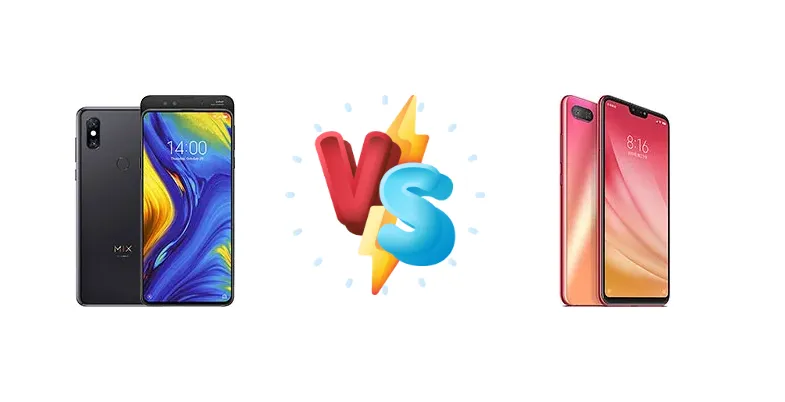
Xiaomi has consistently delivered impressive smartphones at competitive prices. The Mi Mix 3 5G and Mi 8 Lite, while separated by a generation, both offer compelling features. But which one is the better choice for you? This comprehensive comparison will break down their strengths and weaknesses.
🏆 Quick Verdict
The Mi Mix 3 5G is the clear winner thanks to its significantly more powerful Snapdragon 855 chipset and 5G connectivity. However, the Mi 8 Lite remains a strong contender for budget-conscious buyers prioritizing excellent battery life and a surprisingly good display.
| Network |
|---|
| 2G bands | GSM 850 / 900 / 1800 / 1900 | GSM 850 / 900 / 1800 / 1900 |
| 3G bands | HSDPA 850 / 900 / 1700(AWS) / 1900 / 2100 | HSDPA 850 / 900 / 1700(AWS) / 1900 / 2100 - Global |
| 4G bands | 1, 2, 3, 4, 5, 7, 8, 20, 28, 34, 38, 39, 40, 41 | 1, 2, 3, 4, 5, 7, 8, 20, 28, 38, 40 - Global |
| 5G bands | 78 NSA/Sub6 | - |
| Speed | HSPA 42.2/5.76 Mbps, LTE (5CA) Cat18 1200/150 Mbps, 5G (2+ Gbps DL) | HSPA 42.2/5.76 Mbps, LTE (2CA) Cat6 300/50 Mbps |
| Technology | GSM / CDMA / HSPA / EVDO / LTE / 5G | GSM / CDMA / HSPA / LTE |
| | CDMA2000 1xEV-DO | 1, 3, 5, 7, 8, 34, 38, 39, 40, 41 - China |
| Launch |
|---|
| Announced | 2019, February. Released 2019, May | 2018, September. Released 2018, September |
| Status | Discontinued | Discontinued |
| Body |
|---|
| Build | Glass front (Gorilla Glass 5), ceramic back, aluminum frame (7000 series) | Glass front, glass back, aluminum frame |
| Dimensions | 157.9 x 74.7 x 9.4 mm (6.22 x 2.94 x 0.37 in) | 156.4 x 75.8 x 7.5 mm (6.16 x 2.98 x 0.30 in) |
| SIM | Nano-SIM | Nano-SIM + Nano-SIM |
| Weight | 225 g (7.94 oz) | 169 g (5.96 oz) |
| Display |
|---|
| Protection | Corning Gorilla Glass 5 | - |
| Resolution | 1080 x 2340 pixels, 19.5:9 ratio (~403 ppi density) | 1080 x 2280 pixels, 19:9 ratio (~403 ppi density) |
| Size | 6.39 inches, 100.2 cm2 (~85.0% screen-to-body ratio) | 6.26 inches, 97.8 cm2 (~82.5% screen-to-body ratio) |
| Type | Super AMOLED, HDR | IPS LCD |
| Platform |
|---|
| CPU | Octa-core (1x2.84 GHz Kryo 485 & 3x2.42 GHz Kryo 485 & 4x1.78 GHz Kryo 485) | Octa-core (4x2.2 GHz Kryo 260 Gold & 4x1.8 GHz Kryo 260 Silver) |
| Chipset | Qualcomm SM8150 Snapdragon 855 (7 nm) | Qualcomm SDM660 Snapdragon 660 (14 nm) |
| GPU | Adreno 640 | Adreno 512 |
| OS | Android 9.0 (Pie), MIUI 12 | Android 8.1 (Oreo), upgradable to Android 10, MIUI 11 |
| Memory |
|---|
| Card slot | No | microSDXC (uses shared SIM slot) |
| Internal | 64GB 6GB RAM, 128GB 6GB RAM | 64GB 4GB RAM, 64GB 6GB RAM, 128GB 4GB RAM, 128GB 6GB RAM |
| | UFS 2.1 | eMMC 5.1 |
| Main Camera |
|---|
| Dual | 12 MP (wide), f/1.8, 1/2.55", 1.4µm, dual pixel PDAF, 4-axis OIS
12 MP (telephoto), 1/3.4", 1.0µm | 12 MP, f/1.9, 1/2.55", 1.4µm, dual pixel PDAF
Auxiliary lens |
| Features | LED flash, HDR, panorama | LED flash, HDR, panorama |
| Video | 4K@30/60fps, 1080p@30/60/240fps, 1080p@960fps; gyro-EIS | 4K@30fps, 1080p@60/120fps, 1080p@30fps (gyro-EIS) |
| Selfie camera |
|---|
| Dual | Manual pop-up 24 MP, f/2.0, 26mm (wide), 1/2.8", 0.9µm
Manual pop-up 2 MP, depth sensor | - |
| Features | LED flash, HDR | Auto HDR |
| Single | - | 24 MP, f/2.0, 26mm (wide), 1/2.8", 0.9µm |
| Video | 1080p@30fps | 1080p@30fps |
| Sound |
|---|
| 3.5mm jack | No | No |
| 35mm jack | No | No |
| Loudspeaker | Yes | Yes |
| Comms |
|---|
| Bluetooth | 5.0, A2DP, LE, aptX HD | 5.0, A2DP, LE |
| NFC | Yes | No |
| Positioning | GPS (L1+L5), GLONASS (L1), BDS (B1), GALILEO (E1+E5a), QZSS (L1+L5) | GPS, GLONASS, BDS |
| Radio | No | No |
| USB | USB Type-C | USB Type-C |
| WLAN | Wi-Fi 802.11 a/b/g/n/ac, dual-band, Wi-Fi Direct | Wi-Fi 802.11 a/b/g/n/ac, dual-band, Wi-Fi Direct |
| Features |
|---|
| Sensors | Fingerprint (rear-mounted), accelerometer, gyro, compass | Fingerprint (rear-mounted), accelerometer, gyro, proximity, compass |
| | Virtual proximity sensing | - |
| Battery |
|---|
| Charging | 18W wired, QC4 | 18W wired, QC3 |
| Type | Li-Po 3800 mAh, non-removable | Li-Po 3350 mAh, non-removable |
| Misc |
|---|
| Colors | Sapphire Blue | Midnight Black, Aurora Blue, Twilight Gold |
| Models | M1810E5GG | M1808D2TG |
| Price | About 410 EUR | About 360 EUR |
| SAR | 1.56 W/kg (head) 1.58 W/kg (body) | 0.75 W/kg (head) 1.58 W/kg (body) |
| Tests |
|---|
| Audio quality | - |
Noise -93.5dB / Crosstalk -35.4dB |
| Battery life | - |
Endurance rating 77h
|
| Camera | - |
Photo / Video |
| Display | - |
Contrast ratio: 1453 (nominal), 2.862 (sunlight) |
| Loudspeaker | - |
Voice 67dB / Noise 77dB / Ring 77dB
|
| Performance | - |
AnTuTu: 143257 (v7)
GeekBench: 5894 (v4.4)
GFXBench: 8fps (ES 3.1 onscreen) |
Xiaomi Mi Mix 3 5G
- Powerful Snapdragon 855 chipset
- 5G Connectivity
- Versatile Camera System
- Sleek Sliding Design
- Good Display
- Higher Price
- Battery life not as exceptional as Mi 8 Lite
- Can get warm under heavy load
Xiaomi Mi 8 Lite
- Excellent Battery Life (77h Endurance Rating)
- Vibrant Display with Great Sunlight Readability
- Affordable Price
- Compact and Lightweight
- Less Powerful Chipset
- No 5G Support
- Camera performance lags behind Mi Mix 3 5G
- Older Model
Display Comparison
Both phones feature a 6.26-inch AMOLED display with a resolution of 2280 x 1080. The Mi 8 Lite boasts an impressive contrast ratio of 1453 (nominal) and 2.862 (sunlight), indicating excellent visibility even in bright conditions. While the Mi Mix 3 5G's display is also good, the Mi 8 Lite's sunlight readability is a slight edge. The Mi Mix 3 5G does offer a slightly higher screen-to-body ratio due to its sliding design.
Camera Comparison
The Mi Mix 3 5G generally offers a more versatile camera system, often featuring a higher resolution main sensor and additional lenses for improved zoom capabilities. While specific camera specs are missing, the Snapdragon 855 typically pairs with better image processing. The Mi 8 Lite's camera is still competent, producing decent photos in good lighting conditions, but lacks the advanced features and low-light performance of the Mi Mix 3 5G.
Performance
This is where the Mi Mix 3 5G truly shines. Its Snapdragon 855 chipset is a significant upgrade over the Mi 8 Lite's Snapdragon 660. Expect noticeably faster app loading times, smoother multitasking, and better performance in demanding games. The Mi 8 Lite is still capable for everyday tasks, but struggles with more intensive workloads.
Battery Life
The Mi 8 Lite holds a slight advantage here. Both phones have a similar battery capacity, but the Mi 8 Lite's more efficient Snapdragon 660 chipset and optimized software contribute to its exceptional endurance rating of 77 hours. The Mi Mix 3 5G, with its more power-hungry Snapdragon 855, will still provide a full day of use, but not quite to the same extent.
Buying Guide
The Xiaomi Mi Mix 3 5G is ideal for users who demand top-tier performance, 5G speeds, and are willing to spend a bit more. The Xiaomi Mi 8 Lite is perfect for those on a tighter budget who prioritize long battery life, a vibrant display, and a reliable camera experience.
Frequently Asked Questions
❓ Is the Mi Mix 3 5G worth the extra cost?
If you prioritize performance and 5G connectivity, then yes. The Snapdragon 855 is a significant upgrade. However, if you're on a budget and battery life is your top priority, the Mi 8 Lite is a compelling alternative.
❓ Which phone has better software support?
The Mi Mix 3 5G, being a newer model, likely has better and more frequent software updates. However, Xiaomi generally provides good support for both devices.