
Xiaomi Mi Mix 2S vs Mi 8 Lite: A Detailed Comparison
| Phones Images | |||||
|---|---|---|---|---|---|
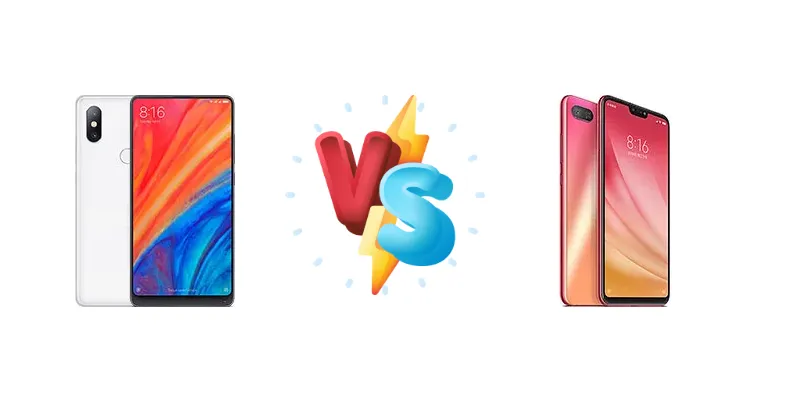
|
🏆 Quick Verdict
The Mi 8 Lite boasts superior battery life and a brighter display, making it ideal for everyday use. However, the Mi Mix 2S’s Snapdragon 845 provides significantly better performance for gaming and demanding tasks. Ultimately, it depends on your priorities: battery and display versus raw power.
| PHONES | ||
|---|---|---|
| Phone Names | Xiaomi Mi Mix 2S | Xiaomi Mi 8 Lite |
| Network | ||
|---|---|---|
| 2G bands | GSM 850 / 900 / 1800 / 1900 | GSM 850 / 900 / 1800 / 1900 |
| 3G bands | HSDPA 800 / 850 / 900 / 1700(AWS) / 1800 / 1900 / 2100 | HSDPA 850 / 900 / 1700(AWS) / 1900 / 2100 - Global |
| 4G bands | 1, 2, 3, 4, 5, 7, 8, 12, 13, 17, 18, 19, 20, 25, 26, 27, 28, 29, 30, 34, 38, 39, 40, 41 | 1, 2, 3, 4, 5, 7, 8, 20, 28, 38, 40 - Global |
| Speed | HSPA 42.2/5.76 Mbps, LTE (3CA) Cat18 1200/100 Mbps | HSPA 42.2/5.76 Mbps, LTE (2CA) Cat6 300/50 Mbps |
| Technology | GSM / CDMA / HSPA / EVDO / LTE | GSM / CDMA / HSPA / LTE |
| CDMA2000 1xEV-DO | 1, 3, 5, 7, 8, 34, 38, 39, 40, 41 - China | |
| Launch | ||
|---|---|---|
| Announced | 2018, March. Released 2018, April | 2018, September. Released 2018, September |
| Status | Discontinued | Discontinued |
| Body | ||
|---|---|---|
| Build | Glass front (Gorilla Glass 4), ceramic back, aluminum frame | Glass front, glass back, aluminum frame |
| Dimensions | 150.9 x 74.9 x 8.1 mm (5.94 x 2.95 x 0.32 in) | 156.4 x 75.8 x 7.5 mm (6.16 x 2.98 x 0.30 in) |
| SIM | Nano-SIM + Nano-SIM | Nano-SIM + Nano-SIM |
| Weight | 191 g (6.74 oz) | 169 g (5.96 oz) |
| Display | ||
|---|---|---|
| Protection | Corning Gorilla Glass 4 | - |
| Resolution | 1080 x 2160 pixels, 18:9 ratio (~403 ppi density) | 1080 x 2280 pixels, 19:9 ratio (~403 ppi density) |
| Size | 5.99 inches, 92.6 cm2 (~81.9% screen-to-body ratio) | 6.26 inches, 97.8 cm2 (~82.5% screen-to-body ratio) |
| Type | IPS LCD | IPS LCD |
| Platform | ||
|---|---|---|
| CPU | Octa-core (4x2.8 GHz Kryo 385 Gold & 4x1.8 GHz Kryo 385 Silver) | Octa-core (4x2.2 GHz Kryo 260 Gold & 4x1.8 GHz Kryo 260 Silver) |
| Chipset | Qualcomm SDM845 Snapdragon 845 (10 nm) | Qualcomm SDM660 Snapdragon 660 (14 nm) |
| GPU | Adreno 630 | Adreno 512 |
| OS | Android 8.0 (Oreo), upgradable to Android 10, MIUI 12 | Android 8.1 (Oreo), upgradable to Android 10, MIUI 11 |
| Memory | ||
|---|---|---|
| Card slot | No | microSDXC (uses shared SIM slot) |
| Internal | 64GB 6GB RAM, 128GB 6GB RAM, 256GB 8GB RAM | 64GB 4GB RAM, 64GB 6GB RAM, 128GB 4GB RAM, 128GB 6GB RAM |
| UFS 2.1 | eMMC 5.1 | |
| Main Camera | ||
|---|---|---|
| Dual | 12 MP, f/1.8, (wide), 1/2.55", 1.4µm, dual pixel PDAF, 4-axis OIS 12 MP, f/2.4, (telephoto), 1/3.4", 1.0µm, AF, 2x optical zoom | 12 MP, f/1.9, 1/2.55", 1.4µm, dual pixel PDAF Auxiliary lens |
| Features | Dual-LED dual-tone flash, HDR, panorama | LED flash, HDR, panorama |
| Video | 4K@30fps, 1080p@30/120fps, 720p@240fps | 4K@30fps, 1080p@60/120fps, 1080p@30fps (gyro-EIS) |
| Selfie camera | ||
|---|---|---|
| Features | - | Auto HDR |
| Single | 5 MP, f/2.0, (wide), 1/4.0", 1.4µm | 24 MP, f/2.0, 26mm (wide), 1/2.8", 0.9µm |
| Video | 1080p@30fps | 1080p@30fps |
| Sound | ||
|---|---|---|
| 3.5mm jack | No | No |
| 35mm jack | No | No |
| Loudspeaker | Yes | Yes |
| Comms | ||
|---|---|---|
| Bluetooth | 5.0, A2DP, LE | 5.0, A2DP, LE |
| NFC | Yes | No |
| Positioning | GPS, GLONASS, BDS | GPS, GLONASS, BDS |
| Radio | No | No |
| USB | USB Type-C 2.0 | USB Type-C |
| WLAN | Wi-Fi 802.11 a/b/g/n/ac, dual-band, Wi-Fi Direct | Wi-Fi 802.11 a/b/g/n/ac, dual-band, Wi-Fi Direct |
| Features | ||
|---|---|---|
| Sensors | Fingerprint (rear-mounted), accelerometer, gyro, compass | Fingerprint (rear-mounted), accelerometer, gyro, proximity, compass |
| Virtual proximity sensing | - | |
| Battery | ||
|---|---|---|
| Charging | 18W wired, QC3 7.5W wireless (Qi) | 18W wired, QC3 |
| Type | Li-Ion 3400 mAh, non-removable | Li-Po 3350 mAh, non-removable |
| Misc | ||
|---|---|---|
| Colors | Black, White | Midnight Black, Aurora Blue, Twilight Gold |
| Models | M1803D5XA | M1808D2TG |
| Price | About 270 EUR | About 360 EUR |
| SAR | 0.54 W/kg (head) 1.59 W/kg (body) | 0.75 W/kg (head) 1.58 W/kg (body) |
| Tests | ||
|---|---|---|
| Audio quality | Noise -93.0dB / Crosstalk -92.5dB | Noise -93.5dB / Crosstalk -35.4dB |
| Battery life | Endurance rating 59h | Endurance rating 77h |
| Camera | - | Photo / Video |
| Display | - | Contrast ratio: 1453 (nominal), 2.862 (sunlight) |
| Loudspeaker | Voice 68dB / Noise 70dB / Ring 81dB | Voice 67dB / Noise 77dB / Ring 77dB |
| Performance | AnTuTu: 270814 (v7) GeekBench: 9158 (v4.4) GFXBench: 34fps (ES 3.1 onscreen) | AnTuTu: 143257 (v7) GeekBench: 5894 (v4.4) GFXBench: 8fps (ES 3.1 onscreen) |
Xiaomi Mi Mix 2S
- Superior Performance (Snapdragon 845)
- Wireless Charging
- Slightly Better Camera Quality
- Premium Design (Ceramic Body)
- Shorter Battery Life
- Older Design
- Potentially Higher Price (at release)
Xiaomi Mi 8 Lite
- Excellent Battery Life
- Brighter and More Vibrant Display
- More Affordable
- Stylish Design
- Lower Performance (Snapdragon 660)
- No Wireless Charging
- Less Premium Build
Display Comparison
The Mi 8 Lite takes the display crown with a reported contrast ratio of 1453 (nominal) and 2.862 (sunlight), indicating excellent visibility even in bright conditions. The Mi Mix 2S had a good display, but lacked the same level of brightness and contrast. The Mi 8 Lite's display is generally considered more visually appealing for media consumption.
Camera Comparison
Both phones offer capable cameras, but the Mi Mix 2S generally produces slightly better image quality, particularly in low light. The Mi 8 Lite's camera is still very good and offers a pleasing color profile. Video recording capabilities are comparable on both devices.
Performance
Here, the Mi Mix 2S shines. Its Snapdragon 845 chipset is significantly more powerful than the Mi 8 Lite's Snapdragon 660. This translates to faster app loading times, smoother multitasking, and a better gaming experience. The Mi Mix 2S handles demanding games with ease, while the Mi 8 Lite might struggle with higher settings.
Battery Life
The Mi 8 Lite clearly wins in the battery department. Its endurance rating of 77h significantly surpasses the Mi Mix 2S's 59h. This means the Mi 8 Lite will comfortably last a full day, even with heavy usage, while the Mi Mix 2S might require a top-up.
Buying Guide
Who should buy the Xiaomi Mi Mix 2S? Users prioritizing performance, especially gamers or those running demanding apps. Who should buy the Xiaomi Mi 8 Lite? Those seeking excellent battery life, a vibrant display, and a more budget-friendly option for everyday tasks.