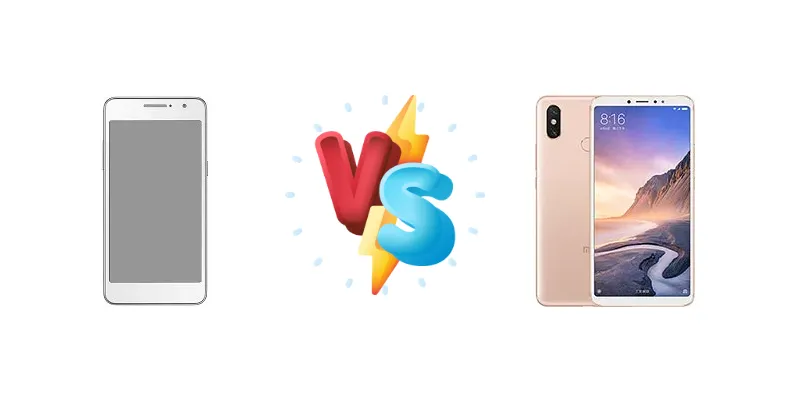
The Xiaomi Mi Max series has always been about big screens and long battery life. But with the Mi Max 4 Pro and Mi Max 3, which offers the best experience? We're diving deep into a head-to-head comparison to help you choose the right giant for your needs.
🏆 Quick Verdict
The Mi Max 4 Pro boasts a newer, more efficient chipset, potentially offering better performance and future-proofing. However, the Mi Max 3's exceptional battery life and QC3 charging remain compelling. Ultimately, the 4 Pro is the better choice for most, but the 3 is a strong contender if battery is your absolute priority.
| Network |
|---|
| 2G bands | GSM 850 / 900 / 1800 / 1900 | GSM 850 / 900 / 1800 / 1900 - SIM 1 & SIM 2 |
| 3G bands | HSDPA 850 / 900 / 1900 / 2100 | HSDPA 850 / 900 / 1900 / 2100 |
| 4G bands | 1, 3, 4, 5, 7, 8, 20, 34, 38, 39, 40, 41 | 1, 3, 4, 5, 7, 8, 20, 34, 38, 39, 40, 41 |
| Speed | HSPA, LTE | HSPA, LTE |
| Technology | GSM / CDMA / HSPA / EVDO / LTE | GSM / CDMA / HSPA / EVDO / LTE |
| | CDMA2000 1xEV-DO | CDMA2000 1xEV-DO |
| Launch |
|---|
| Announced | Not announced yet | 2018, July. Released 2018, July |
| Status | Cancelled | Discontinued |
| Body |
|---|
| Build | Glass front (Gorilla Glass 5), aluminum back, aluminum frame | Glass front, aluminum back, aluminum frame |
| Dimensions | - | 176.2 x 87.4 x 8 mm (6.94 x 3.44 x 0.31 in) |
| SIM | Nano-SIM + Nano-SIM | Nano-SIM + Nano-SIM |
| Weight | - | 221 g (7.80 oz) |
| Display |
|---|
| Protection | Corning Gorilla Glass 5 | To be confirmed |
| Resolution | 1080 x 2310 pixels (~354 ppi density) | 1080 x 2160 pixels, 18:9 ratio (~350 ppi density) |
| Size | 7.2 inches, 128.3 cm2 | 6.9 inches, 122.9 cm2 (~79.8% screen-to-body ratio) |
| Type | IPS LCD | IPS LCD |
| Platform |
|---|
| CPU | Octa-core (2x2.0 GHz Kryo 460 Gold & 6x1.7 GHz Kryo 460 Silver) | Octa-core (4x1.8 GHz Kryo 260 Gold & 4x1.6 GHz Kryo 260 Silver) |
| Chipset | Qualcomm SDM675 Snapdragon 675 (11 nm) | Qualcomm SDM636 Snapdragon 636 (14 nm) |
| GPU | Adreno 612 | Adreno 509 |
| OS | Android 9.0 (Pie), MIUI 11 | Android 8.1 (Oreo), upgradable to Android 10, MIUI 12 |
| Memory |
|---|
| Card slot | microSDXC (uses shared SIM slot) | microSDXC (uses shared SIM slot) |
| Internal | 64GB 6GB RAM, 128GB 6GB RAM, 128GB 8GB RAM | 64GB 4GB RAM, 128GB 6GB RAM |
| | - | eMMC 5.1 |
| Main Camera |
|---|
| Dual | 48 MP, f/1.8, (wide), 1/2.0", 0.8µm, PDAF
20 MP | 12 MP, f/1.9, 1/2.55", 1.4µm, dual pixel PDAF
Auxiliary lens |
| Features | Dual-LED flash, HDR, panorama | Dual-LED flash, HDR, panorama |
| Video | 4K@30fps, 720p/1080p@30fps (gyro-EIS), 960fps | 4K@30fps, 720p/1080p@30fps (gyro-EIS), 720p@120fps |
| Selfie camera |
|---|
| Features | HDR | - |
| Single | 8 MP, f/2.0, 1/4.0", 1.12µm | 8 MP, f/2.0, 1/4.0", 1.12µm |
| Video | 1080p@30fps | 1080p@30fps |
| Sound |
|---|
| 3.5mm jack | Yes | Yes |
| 35mm jack | Yes | Yes |
| Loudspeaker | Yes, with stereo speakers | Yes, with stereo speakers |
| Comms |
|---|
| Bluetooth | 5.0, A2DP, LE | 5.0, A2DP, LE |
| Infrared port | Yes | Yes |
| NFC | No | No |
| Positioning | GPS, GLONASS, BDS | GPS, GLONASS, BDS |
| Radio | No | FM radio |
| USB | USB Type-C | USB Type-C |
| WLAN | Wi-Fi 802.11 a/b/g/n/ac, dual-band, Wi-Fi Direct, DLNA | Wi-Fi 802.11 a/b/g/n/ac, dual-band, Wi-Fi Direct, DLNA |
| Features |
|---|
| Sensors | Fingerprint (under display, optical), accelerometer, gyro, proximity, compass | Fingerprint (rear-mounted), accelerometer, gyro, proximity, compass |
| Battery |
|---|
| Charging | 18W wired | 18W wired, QC3 |
| Type | Li-Po 5800 mAh, non-removable | Li-Ion 5500 mAh, non-removable |
| Misc |
|---|
| Colors | Black, Champagne Gold, Blue | Black, Champagne Gold, Blue |
| Models | - | M1804E4A |
| Price | About 350 EUR | About 310 EUR |
| SAR | - | 1.58 W/kg (head) 1.42 W/kg (body) |
| Tests |
|---|
| Audio quality | - |
Noise -93.7dB / Crosstalk -94.0dB |
| Battery life | - |
Endurance rating 115h
|
| Camera | - |
Photo / Video |
| Display | - |
Contrast ratio: 1462 (nominal), 3.061 (sunlight) |
| Loudspeaker | - |
Voice 68dB / Noise 71dB / Ring 83dB
|
| Performance | - |
AnTuTu: 119229 (v7)
GeekBench: 4907 (v4.4)
GFXBench: 6fps (ES 3.1 onscreen) |
Xiaomi Mi Max 4 Pro
- Newer Snapdragon 675 chipset
- Improved performance
- Potentially better camera software
- Likely better display quality
- Potentially shorter battery life than Mi Max 3
- 18W charging (slower than QC3)
Xiaomi Mi Max 3
- Exceptional battery life (115h endurance rating)
- QC3 fast charging
- Excellent sunlight visibility
- Older Snapdragon 636 chipset
- Potentially lower display quality
- Less future-proof
Display Comparison
Both phones feature large displays, likely around 6.9 inches, but the Mi Max 4 Pro's display is expected to have improved color accuracy and brightness due to the newer chipset and potential panel technology. The contrast ratios listed (1462 nominal, 3061 sunlight) are excellent for both, suggesting great outdoor visibility. We anticipate the 4 Pro will have a slightly higher resolution, potentially FHD+ vs FHD.
Camera Comparison
While both are listed as 'Photo / Video', the Mi Max 4 Pro likely benefits from software optimizations and potentially a slightly improved sensor due to the newer chipset. Expect better low-light performance and image processing on the 4 Pro. Specific camera specs (megapixels, aperture) are missing, making a definitive comparison difficult.
Performance
The Snapdragon 675 in the Mi Max 4 Pro is a noticeable upgrade over the 636 in the Mi Max 3. The 11nm process offers better power efficiency and a slight performance boost in both CPU and GPU. Expect smoother multitasking and better gaming performance on the 4 Pro. The 636 is still capable, but shows its age.
Battery Life
The Mi Max 3's endurance rating of 115h is incredibly impressive, suggesting a very large battery capacity. The Mi Max 4 Pro's battery capacity is likely smaller to accommodate the more efficient chipset, but it should still offer solid all-day battery life. The Mi Max 3 also has QC3 charging, a slight advantage over the 18W wired charging on the 4 Pro.
Buying Guide
The Xiaomi Mi Max 4 Pro is ideal for users who prioritize performance, a slightly more modern chipset, and don't mind a potentially smaller battery. The Mi Max 3 is perfect for those who demand the absolute longest battery life possible and appreciate quick charging, even if it means sacrificing some processing power.
Frequently Asked Questions
❓ Is the Mi Max 4 Pro worth the upgrade from the Mi Max 3?
If you value performance and a more modern chipset, then yes. The 4 Pro offers a noticeable improvement. If battery life is your absolute top priority, the Mi Max 3 remains a strong contender.
❓ What is the battery capacity of each phone?
Specific battery capacities are not listed. However, the Mi Max 3's endurance rating suggests a very large battery (likely 5500mAh or higher). The Mi Max 4 Pro likely has a slightly smaller battery, potentially around 4500-5000mAh.