
Xiaomi Mi 9T vs Redmi K20 Pro Premium: Which Xiaomi Phone Reigns Supreme?
| Phones Images | |||||
|---|---|---|---|---|---|
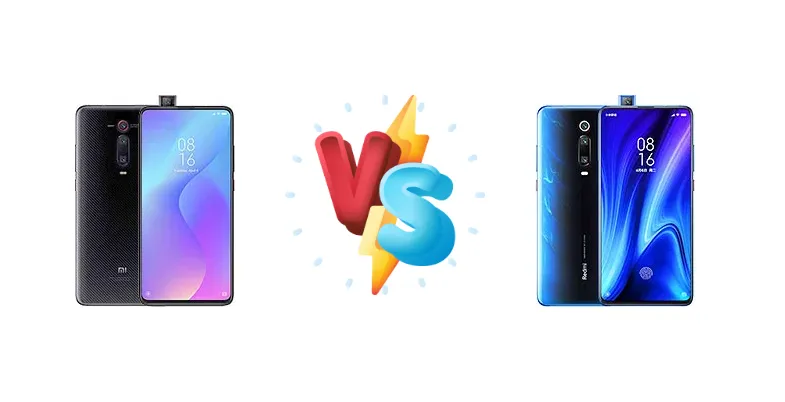
|
🏆 Quick Verdict
For most users, the Redmi K20 Pro Premium is the superior choice. Its Snapdragon 855+ chipset delivers significantly faster performance, making it ideal for gaming and demanding applications. While the Mi 9T offers respectable battery life, the K20 Pro Premium’s faster 27W charging mitigates any battery capacity concerns.
| PHONES | ||
|---|---|---|
| Phone Names | Xiaomi Mi 9T | Xiaomi Redmi K20 Pro Premium |
| Network | ||
|---|---|---|
| 2G bands | GSM 850 / 900 / 1800 / 1900 | GSM 850 / 900 / 1800 / 1900 |
| 3G bands | HSDPA 850 / 900 / 1700(AWS) / 1900 / 2100 | HSDPA 850 / 900 / 1900 / 2100 |
| 4G bands | 1, 2, 3, 4, 5, 7, 8, 20, 28, 38, 40 | 1, 3, 5, 7, 8, 34, 38, 39, 40, 41 |
| Speed | HSPA, LTE | HSPA, LTE |
| Technology | GSM / HSPA / LTE | GSM / CDMA / HSPA / LTE |
| - | CDMA 800 & TD-SCDMA | |
| Launch | ||
|---|---|---|
| Announced | 2019, June 12. Released 2019, June 12 | 2019, September. Released 2019, September |
| Status | Discontinued | Discontinued |
| Body | ||
|---|---|---|
| Build | Glass front (Gorilla Glass 5), glass back, aluminum frame | Glass front (Gorilla Glass 5), glass back (Gorilla Glass 5), aluminum frame |
| Dimensions | 156.7 x 74.3 x 8.8 mm (6.17 x 2.93 x 0.35 in) | 156.7 x 74.3 x 8.8 mm (6.17 x 2.93 x 0.35 in) |
| SIM | Nano-SIM + Nano-SIM | Nano-SIM + Nano-SIM |
| Weight | 191 g (6.74 oz) | 191 g (6.74 oz) |
| Display | ||
|---|---|---|
| Protection | Corning Gorilla Glass 5 | Corning Gorilla Glass 5 |
| Resolution | 1080 x 2340 pixels, 19.5:9 ratio (~403 ppi density) | 1080 x 2340 pixels, 19.5:9 ratio (~403 ppi density) |
| Size | 6.39 inches, 100.2 cm2 (~86.1% screen-to-body ratio) | 6.39 inches, 100.2 cm2 (~86.1% screen-to-body ratio) |
| Type | AMOLED, HDR | Super AMOLED, HDR10 |
| Platform | ||
|---|---|---|
| CPU | Octa-core (2x2.2 GHz Kryo 470 Gold & 6x1.8 GHz Kryo 470 Silver) | Octa-core (1x2.96 GHz Kryo 485 & 3x2.42 GHz Kryo 485 & 4x1.8 GHz Kryo 485) |
| Chipset | Qualcomm SDM730 Snapdragon 730 (8 nm) | Qualcomm SM8150 Snapdragon 855+ (7 nm) |
| GPU | Adreno 618 | Adreno 640 (700 MHz) |
| OS | Android 9.0 (Pie), upgradable to Android 11, MIUI 12.1 | Android 10, MIUI 11 |
| Memory | ||
|---|---|---|
| Card slot | No | No |
| Internal | 64GB 6GB RAM, 128GB 6GB RAM, 256GB 8GB RAM | 128GB 8GB RAM, 512GB 8GB RAM, 512GB 12GB RAM |
| UFS 2.0 | UFS 2.1 | |
| Main Camera | ||
|---|---|---|
| Features | Dual-LED flash, HDR, panorama | Laser AF, Dual-LED flash, HDR, panorama |
| Triple | 48 MP, f/1.8, 26mm (wide), 1/2.0", 0.8µm, PDAF 8 MP, f/2.4, 53mm (telephoto), 1/4.0", 1.12µm, PDAF, 2x optical zoom 13 MP, f/2.4, 12mm (ultrawide), 1/3.1", 1.12µm | 48 MP, f/1.8, 26mm (wide), 1/2.0", 0.8µm, PDAF 8 MP, f/2.4, 53mm (telephoto), 1/4.0", 1.12µm, PDAF, 2x optical zoom 13 MP, f/2.4, 12mm (ultrawide), 1/3.1", 1.12µm |
| Video | 4K@30fps, 1080p@30/120/240fps, 1080p@960fps | 4K@30/60fps, 1080p@30/120/240fps, 1080p@960fps |
| Selfie camera | ||
|---|---|---|
| Features | HDR | HDR |
| Single | Motorized pop-up 20 MP, f/2.2, (wide), 1/3.4", 0.8µm | Motorized pop-up 20 MP, f/2.2, (wide), 1/3.4", 0.8µm |
| Video | 1080p@30fps | 1080p@30fps |
| Sound | ||
|---|---|---|
| 3.5mm jack | Yes | Yes |
| 35mm jack | Yes | Yes |
| Loudspeaker | Yes | Yes |
| 24-bit/192kHz audio | 24-bit/192kHz audio | |
| Comms | ||
|---|---|---|
| Bluetooth | 5.0, A2DP, LE, aptX HD | 5.0, A2DP, LE, aptX HD |
| NFC | Yes | Yes |
| Positioning | GPS, GLONASS, GALILEO, BDS | GPS (L1+L5), GLONASS (G1), BDS (B1), GALILEO (E1+E5a) |
| Radio | FM radio | Yes |
| USB | USB Type-C 2.0, OTG | USB Type-C 2.0, OTG |
| WLAN | Wi-Fi 802.11 a/b/g/n/ac, dual-band, Wi-Fi Direct | Wi-Fi 802.11 a/b/g/n/ac, dual-band, Wi-Fi Direct |
| Features | ||
|---|---|---|
| Sensors | Fingerprint (under display, optical), accelerometer, gyro, proximity, compass | Fingerprint (under display, optical), accelerometer, gyro, proximity, compass |
| Battery | ||
|---|---|---|
| Charging | 18W wired | 27W wired, QC4 |
| Type | Li-Po 4000 mAh, non-removable | Li-Po 4000 mAh, non-removable |
| Misc | ||
|---|---|---|
| Colors | Carbon black, Red flame, Glacier blue | Carbon black, Flame red, Glacier blue, Summer Honey, Pearl White |
| Models | M1903F10G | - |
| Price | About 460 EUR | About 450 EUR |
| SAR | 1.19 W/kg (head) 1.18 W/kg (body) | - |
| SAR EU | 1.34 W/kg (head) 1.51 W/kg (body) | - |
| Tests | ||
|---|---|---|
| Audio quality | Noise -93.5dB / Crosstalk -93.8dB | - |
| Battery life | Endurance rating 100h | - |
| Camera | Photo / Video | - |
| Display | Contrast ratio: Infinite (nominal) | - |
| Loudspeaker | -25.3 LUFS (Very good) | - |
| Performance | AnTuTu: 211915 (v7), 257146 (v8) GeekBench: 6863 (v4.4), 1703 (v5.1) GFXBench: 13fps (ES 3.1 onscreen) | - |
Xiaomi Mi 9T
- Longer battery endurance (100h rating)
- More affordable price point
- Sufficient performance for everyday tasks
- Significantly slower processor than the K20 Pro Premium
- Slower 18W charging
Xiaomi Redmi K20 Pro Premium
- Flagship-level Snapdragon 855+ performance
- Faster 27W charging with QC4
- Better suited for gaming and demanding apps
- Potentially shorter battery life (unspecified capacity)
- Higher price compared to the Mi 9T
Display Comparison
Both phones feature displays with an 'Infinite' contrast ratio, typical for AMOLED panels. However, the Mi 9T boasts a measured peak brightness of 646 nits, which is respectable but doesn't stand out. Details regarding the K20 Pro Premium’s display brightness are absent, but given its positioning, it likely offers comparable or slightly better brightness. The lack of high refresh rate panels on either device is noticeable in today’s market, but both would have benefitted from a smoother visual experience.
Camera Comparison
Both devices are listed as having 'Photo / Video' capabilities, lacking specific details. However, the K20 Pro Premium’s higher processing power likely allows for more sophisticated image processing algorithms. Without sensor size or aperture information, it’s difficult to make a definitive camera comparison. The absence of details suggests the camera isn't a primary differentiator, and image quality will likely depend more on software optimization than raw hardware.
Performance
The core difference lies in the chipsets. The Mi 9T utilizes the Qualcomm Snapdragon 730 (8nm), featuring an octa-core CPU with Kryo 470 cores. This is a capable mid-range processor. In contrast, the K20 Pro Premium is powered by the Snapdragon 855+ (7nm), a flagship-level chipset with a more powerful Kryo 485 CPU configuration (1x2.96 GHz, 3x2.42 GHz, 4x1.8 GHz). The 7nm process node of the 855+ also contributes to better thermal efficiency, potentially reducing throttling during sustained workloads. This translates to a substantial performance advantage for the K20 Pro Premium in gaming and demanding applications.
Battery Life
The Mi 9T boasts an endurance rating of 100 hours, indicating solid battery life. It supports 18W wired charging. The K20 Pro Premium, while lacking a specified battery capacity, compensates with 27W wired charging and Quick Charge 4 (QC4) support. This faster charging speed significantly reduces downtime, potentially offsetting any difference in battery capacity. A full charge on the K20 Pro Premium will be considerably quicker than on the Mi 9T.
Buying Guide
Buy the Xiaomi Mi 9T if you prioritize long battery life and a more affordable price point, and your primary use case revolves around everyday tasks like social media, browsing, and light multimedia consumption. Buy the Xiaomi Redmi K20 Pro Premium if you demand top-tier performance for gaming, video editing, or multitasking, and are willing to spend a bit more for a noticeably smoother and faster experience.