
Xiaomi Mi 9T vs OnePlus 7T Pro 5G McLaren: A Detailed Performance and Value Comparison
| Phones Images | |||||
|---|---|---|---|---|---|
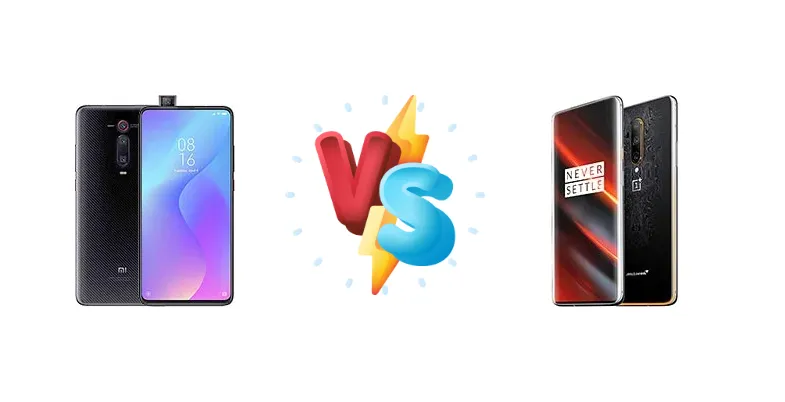
|
🏆 Quick Verdict
For the average user prioritizing raw performance and 5G capabilities, the OnePlus 7T Pro 5G McLaren is the clear winner. However, the Xiaomi Mi 9T delivers exceptional battery endurance and represents a significantly more budget-friendly option, making it ideal for users who value longevity over peak speed.
| PHONES | ||
|---|---|---|
| Phone Names | Xiaomi Mi 9T | OnePlus 7T Pro 5G McLaren |
| Network | ||
|---|---|---|
| 2G bands | GSM 850 / 900 / 1800 / 1900 | GSM 850 / 900 / 1800 / 1900 |
| 3G bands | HSDPA 850 / 900 / 1700(AWS) / 1900 / 2100 | HSDPA 850 / 900 / 1700(AWS) / 1900 / 2100 |
| 4G bands | 1, 2, 3, 4, 5, 7, 8, 20, 28, 38, 40 | 1, 2, 3, 4, 5, 1, 2, 3, 4, 5, 7, 8, 12, 13, 17, 18, 19, 20, 25, 26, 28, 29, 30, 34, 38, 39, 40, 41, 46, 48, 66, 71 |
| 5G bands | - | 71 SA |
| Speed | HSPA, LTE | HSPA 42.2/5.76 Mbps, LTE (5CA) Cat18 1200/150 Mbps, 5G (2+ Gbps DL) |
| Technology | GSM / HSPA / LTE | GSM / CDMA / HSPA / LTE / 5G |
| - | CDMA 800 / 1900 & TD-SCDMA | |
| Launch | ||
|---|---|---|
| Announced | 2019, June 12. Released 2019, June 12 | 2019, October 23. Released 2019, November 05 |
| Status | Discontinued | Discontinued |
| Body | ||
|---|---|---|
| Build | Glass front (Gorilla Glass 5), glass back, aluminum frame | Glass front (Gorilla Glass 6), glass back (Gorilla Glass 5), aluminum frame |
| Dimensions | 156.7 x 74.3 x 8.8 mm (6.17 x 2.93 x 0.35 in) | 162.6 x 75.9 x 8.8 mm (6.40 x 2.99 x 0.35 in) |
| SIM | Nano-SIM + Nano-SIM | Nano-SIM + Nano-SIM |
| Weight | 191 g (6.74 oz) | 206 g (7.27 oz) |
| Display | ||
|---|---|---|
| Protection | Corning Gorilla Glass 5 | Corning Gorilla Glass 6 |
| Resolution | 1080 x 2340 pixels, 19.5:9 ratio (~403 ppi density) | 1440 x 3120 pixels, 19.5:9 ratio (~516 ppi density) |
| Size | 6.39 inches, 100.2 cm2 (~86.1% screen-to-body ratio) | 6.67 inches, 108.8 cm2 (~88.1% screen-to-body ratio) |
| Type | AMOLED, HDR | Fluid AMOLED, 90Hz, HDR10+ |
| Platform | ||
|---|---|---|
| CPU | Octa-core (2x2.2 GHz Kryo 470 Gold & 6x1.8 GHz Kryo 470 Silver) | Octa-core (1x2.96 GHz Kryo 485 & 3x2.42 GHz Kryo 485 & 4x1.78 GHz Kryo 485) |
| Chipset | Qualcomm SDM730 Snapdragon 730 (8 nm) | Qualcomm SM8150 Snapdragon 855+ (7 nm) |
| GPU | Adreno 618 | Adreno 640 (700 MHz) |
| OS | Android 9.0 (Pie), upgradable to Android 11, MIUI 12.1 | Android 10, OxygenOS 10.0 |
| Memory | ||
|---|---|---|
| Card slot | No | No |
| Internal | 64GB 6GB RAM, 128GB 6GB RAM, 256GB 8GB RAM | 256GB 12GB RAM |
| UFS 2.0 | UFS 3.0 | |
| Main Camera | ||
|---|---|---|
| Features | Dual-LED flash, HDR, panorama | Laser AF, Dual-LED flash, HDR, panorama |
| Triple | 48 MP, f/1.8, 26mm (wide), 1/2.0", 0.8µm, PDAF 8 MP, f/2.4, 53mm (telephoto), 1/4.0", 1.12µm, PDAF, 2x optical zoom 13 MP, f/2.4, 12mm (ultrawide), 1/3.1", 1.12µm | 48 MP, f/1.6, (wide), 1/2.0", 0.8µm, PDAF, OIS 8 MP, f/2.4, (telephoto), 1.0µm, PDAF, OIS, 3x optical zoom 16 MP, f/2.2, 13mm (ultrawide), AF |
| Video | 4K@30fps, 1080p@30/120/240fps, 1080p@960fps | 4K@30/60fps, 1080p@30/60/240fps, 720p@960fps, Auto HDR, gyro-EIS |
| Selfie camera | ||
|---|---|---|
| Features | HDR | HDR |
| Single | Motorized pop-up 20 MP, f/2.2, (wide), 1/3.4", 0.8µm | Motorized pop-up 16 MP, f/2.0, 25mm (wide), 1/3.06", 1.0µm |
| Video | 1080p@30fps | 1080p@30fps, gyro-EIS |
| Sound | ||
|---|---|---|
| 3.5mm jack | Yes | No |
| 35mm jack | Yes | No |
| Loudspeaker | Yes | Yes, with stereo speakers |
| 24-bit/192kHz audio | - | |
| Comms | ||
|---|---|---|
| Bluetooth | 5.0, A2DP, LE, aptX HD | 5.1, A2DP, LE, aptX HD |
| NFC | Yes | Yes |
| Positioning | GPS, GLONASS, GALILEO, BDS | GPS (L1+L5), GLONASS (G1), BDS (B1), GALILEO (E1+E5a) |
| Radio | FM radio | No |
| USB | USB Type-C 2.0, OTG | USB Type-C 3.1, OTG |
| WLAN | Wi-Fi 802.11 a/b/g/n/ac, dual-band, Wi-Fi Direct | Wi-Fi 802.11 a/b/g/n/ac, dual-band, Wi-Fi Direct, DLNA |
| Features | ||
|---|---|---|
| Sensors | Fingerprint (under display, optical), accelerometer, gyro, proximity, compass | Fingerprint (under display, optical), accelerometer, gyro, compass |
| - | Virtual proximity sensing | |
| Battery | ||
|---|---|---|
| Charging | 18W wired | 30W wired |
| Type | Li-Po 4000 mAh, non-removable | Li-Po 4085 mAh, non-removable |
| Misc | ||
|---|---|---|
| Colors | Carbon black, Red flame, Glacier blue | Papaya Orange |
| Models | M1903F10G | HD1925 |
| Price | About 460 EUR | About 800 EUR |
| SAR | 1.19 W/kg (head) 1.18 W/kg (body) | - |
| SAR EU | 1.34 W/kg (head) 1.51 W/kg (body) | - |
| Tests | ||
|---|---|---|
| Audio quality | Noise -93.5dB / Crosstalk -93.8dB | - |
| Battery life | Endurance rating 100h | - |
| Camera | Photo / Video | - |
| Display | Contrast ratio: Infinite (nominal) | - |
| Loudspeaker | -25.3 LUFS (Very good) | - |
| Performance | AnTuTu: 211915 (v7), 257146 (v8) GeekBench: 6863 (v4.4), 1703 (v5.1) GFXBench: 13fps (ES 3.1 onscreen) | - |
Xiaomi Mi 9T
- Exceptional battery life (100h endurance)
- More affordable price point
- Decent display brightness (646 nits)
- Less powerful Snapdragon 730 chipset
- Slower 18W charging
- Limited camera details suggest a less advanced system
OnePlus 7T Pro 5G McLaren
- Powerful Snapdragon 855+ processor
- Faster 30W charging
- 5G connectivity for future-proofed speeds
- Shorter battery life compared to Mi 9T
- Higher price tag
- Battery capacity not specified
Display Comparison
The Xiaomi Mi 9T boasts a respectable 646 nits of peak brightness, ensuring visibility in most outdoor conditions. While the 7T Pro 5G McLaren’s display brightness isn’t specified, OnePlus typically prioritizes color accuracy and smoothness. The Mi 9T’s ‘infinite’ contrast ratio (nominal) suggests a standard AMOLED panel, while the 7T Pro 5G McLaren likely features a Fluid AMOLED display with a higher refresh rate (based on OnePlus’s typical implementation), contributing to a smoother user experience. The absence of LTPO technology in either device means they won't achieve the variable refresh rates of newer flagships, but the 7T Pro's likely higher refresh rate will still be noticeable.
Camera Comparison
Both devices feature photo and video capabilities, but detailed sensor information is lacking for the Mi 9T. Given the market positioning, the 7T Pro 5G McLaren likely features a more sophisticated camera system with a larger main sensor and optical image stabilization (OIS). While the Mi 9T may offer competitive image quality in good lighting, the 855+’s image signal processor (ISP) in the OnePlus provides superior image processing capabilities, particularly in low-light conditions. The absence of details on the Mi 9T’s camera suggests a focus on affordability over cutting-edge imaging technology.
Performance
The core difference lies in the chipsets: the Xiaomi Mi 9T utilizes the Qualcomm Snapdragon 730 (8nm), while the OnePlus 7T Pro 5G McLaren packs the Snapdragon 855+ (7nm). The 855+’s Kryo 485 cores, with a peak clock speed of 2.96 GHz, significantly outperform the 730’s 2.2 GHz Kryo 470 Gold cores. This translates to faster app loading times, smoother multitasking, and superior gaming performance on the OnePlus. The 7nm process node of the 855+ also contributes to better thermal efficiency, potentially reducing throttling during sustained workloads. The Mi 9T’s 730 is still capable for everyday tasks, but will struggle with graphically intensive games at higher settings.
Battery Life
The Xiaomi Mi 9T shines with an impressive endurance rating of 100 hours, indicating excellent battery life. While the 7T Pro 5G McLaren’s battery capacity isn’t specified, its more powerful processor and 5G connectivity will inevitably consume more power. The Mi 9T’s 18W wired charging is relatively slow compared to the OnePlus’s 30W wired charging. However, the Mi 9T’s superior battery life may offset the slower charging speed for many users. The OnePlus will offer quicker top-ups, but will likely require more frequent charging.
Buying Guide
Buy the Xiaomi Mi 9T if you need a phone that lasts all day and beyond on a single charge, and you're willing to trade some processing power for extended battery life and a lower price point. Buy the OnePlus 7T Pro 5G McLaren if you prioritize fast performance for gaming and demanding applications, require 5G connectivity, and are willing to accept shorter battery life and a higher cost.