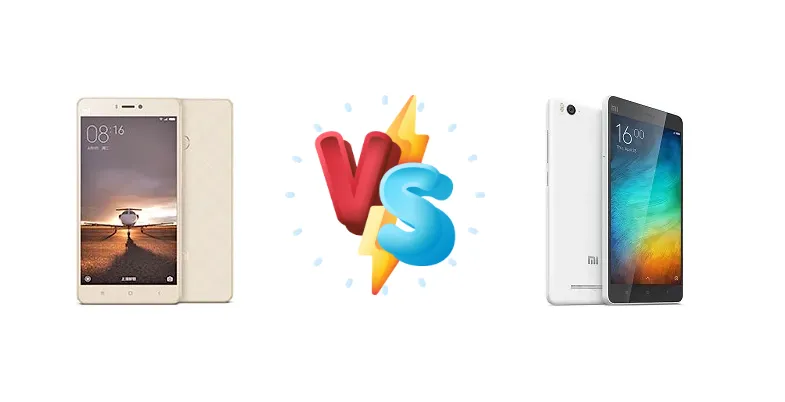
The Xiaomi Mi 4s and Mi 4i were popular mid-range smartphones, offering impressive specs for their time. But which one truly delivers a better experience? This comprehensive comparison dives deep into their features, performance, and overall value to help you decide which phone is right for you.
🏆 Quick Verdict
The Xiaomi Mi 4s edges out the Mi 4i thanks to its superior Snapdragon 808 chipset, faster charging, and slightly better endurance. While the Mi 4i boasts a slightly better display contrast, the Mi 4s's overall performance and charging capabilities make it the more compelling choice.
| Network |
|---|
| 2G bands | GSM 850 / 900 / 1800 / 1900 - SIM 1 & SIM 2 | GSM 850 / 900 / 1800 / 1900 - SIM 1 & SIM 2 |
| 3G bands | HSDPA 850 / 1900 / 2100 | HSDPA 850 / 1900 / 2100 |
| 4G bands | 1, 3, 7, 38, 39, 40, 41 | 3, 7, 38, 39, 40, 41 |
| Speed | HSPA, LTE Cat4 150/50 Mbps | HSPA, LTE Cat4 150/50 Mbps |
| Technology | GSM / CDMA / HSPA / LTE | GSM / HSPA / LTE |
| | TD-SCDMA | TD-SCDMA |
| Launch |
|---|
| Announced | 2016, February. Released 2016, March | 2015, April. Released 2015, April |
| Status | Discontinued | Discontinued |
| Body |
|---|
| Build | - | Glass front (Gorilla Glass), plastic back, plastic frame |
| Dimensions | 139.3 x 70.8 x 7.8 mm (5.48 x 2.79 x 0.31 in) | 138.1 x 69.6 x 7.8 mm (5.44 x 2.74 x 0.31 in) |
| SIM | Nano-SIM + Micro-SIM | Dual SIM (Micro-SIM, dual stand-by) |
| Weight | 133 g (4.69 oz) | 130 g (4.59 oz) |
| Display |
|---|
| Protection | - | Corning scratch-resistant glass |
| Resolution | 1080 x 1920 pixels, 16:9 ratio (~441 ppi density) | 1080 x 1920 pixels, 16:9 ratio (~441 ppi density) |
| Size | 5.0 inches, 68.9 cm2 (~69.9% screen-to-body ratio) | 5.0 inches, 68.9 cm2 (~71.7% screen-to-body ratio) |
| Type | IPS LCD | IPS LCD |
| Platform |
|---|
| CPU | Hexa-core (4x1.4 GHz Cortex-A53 & 2x1.8 GHz Cortex-A57) | Octa-core (4x1.7 GHz Cortex-A53 & 4x1.0 GHz Cortex-A53) |
| Chipset | Qualcomm MSM8992 Snapdragon 808 (20 nm) | Qualcomm MSM8939 Snapdragon 615 (28 nm) |
| GPU | Adreno 418 | Adreno 405 |
| OS | Android 5.1 (Lollipop), upgradable to 7.0 (Nougat), MIUI 10 | Android 5.0.2 (Lollipop), MIUI 8.2 |
| Memory |
|---|
| Card slot | microSDXC (uses shared SIM slot) | No |
| Internal | 64GB 3GB RAM | 16GB 2GB RAM, 32GB 2GB RAM |
| | eMMC 5.0 | eMMC 4.5 |
| Main Camera |
|---|
| Features | Dual-LED dual-tone flash, panorama, HDR | Dual-LED dual-tone flash, panorama, HDR |
| Single | 13 MP, f/2.0, PDAF | 13 MP, f/2.0, AF |
| Video | 1080p@30fps, 720p@120fps | 1080p@30fps, 480p@120fps |
| Selfie camera |
|---|
| Single | 5 MP, f/2.0 | 5 MP, f/1.8 |
| Video | 1080p@30fps | - |
| Sound |
|---|
| 3.5mm jack | Yes | Yes |
| 35mm jack | Yes | Yes |
| Loudspeaker | Yes | Yes |
| Comms |
|---|
| Bluetooth | 4.1, A2DP | 4.1, A2DP |
| Infrared port | Yes | - |
| NFC | No | No |
| Positioning | GPS, GLONASS, BDS | GPS, GLONASS, BDS |
| Radio | No | Stereo FM radio |
| USB | USB Type-C | microUSB 2.0, OTG |
| WLAN | Wi-Fi 802.11 a/b/g/n/ac, dual-band, Wi-Fi Direct, hotspot | Wi-Fi 802.11 a/b/g/n/ac, dual-band, Wi-Fi Direct, hotspot |
| Features |
|---|
| Sensors | Fingerprint (rear-mounted), accelerometer, gyro, proximity, compass | Accelerometer, gyro, proximity, compass |
| Battery |
|---|
| Charging | 18W wired, QC2, 40% in 60 min | 10W wired, QC1 |
| Talk time | - | Up to 35 h (3G) |
| Type | Li-Ion 3260 mAh, non-removable | Li-Ion 3120 mAh, non-removable |
| Misc |
|---|
| Colors | Black, White, Gold, Pink | Dark Gray, Black, White, Yellow, Blue, Pink |
| Models | - | 2015015 |
| Price | About 220 EUR | About 260 EUR |
| SAR | - | 0.51 W/kg (head) 0.60 W/kg (body) |
| Tests |
|---|
| Audio quality |
Noise -94.9dB / Crosstalk -82.6dB | - |
| Battery life |
Endurance rating 75h
|
Endurance rating 67h
|
| Camera |
Photo / Video |
Photo / Video |
| Display |
Contrast ratio: 975:1 (nominal), 2.095 (sunlight) |
Contrast ratio: 1055:1 (nominal), 2.641 (sunlight) |
| Loudspeaker |
Voice 73dB / Noise 68dB / Ring 82dB
|
Voice 63dB / Noise 65dB / Ring 68dB
|
| Performance |
Basemark OS II 2.0: 1545Basemark X: 12990 |
Basemark X: 4875 |
Xiaomi Mi 4s
- Faster Performance (Snapdragon 808)
- Faster Charging (18W)
- Slightly Better Battery Life
- Good Sunlight Readability
- Slightly lower contrast ratio than Mi 4i
- Older Model
Xiaomi Mi 4i
- Slightly Better Display Contrast
- Good Value for Money (if found used)
- Compact Size
- Slower Performance (Snapdragon 615)
- Slow Charging (10W)
- Shorter Battery Life
Display Comparison
Both phones feature IPS LCD displays, but the Mi 4i takes a slight lead with a nominal contrast ratio of 1055:1 compared to the Mi 4s's 975:1. Sunlight readability is also better on the Mi 4i (2.641 vs 2.095). However, resolution and size are similar, making the difference subtle in everyday use. Both offer vibrant colors and decent viewing angles.
Camera Comparison
Camera performance is generally comparable between the two phones, both offering decent image quality in good lighting conditions. Low-light performance is average on both. The Mi 4s might have a slight edge in video recording due to the more powerful processor, but overall, camera differences are minimal. Both feature standard camera features for their time.
Performance
The Mi 4s's Snapdragon 808 chipset is significantly more powerful than the Mi 4i's Snapdragon 615. The 808's octa-core architecture with two faster cores provides a noticeable boost in performance, resulting in smoother multitasking and faster app loading times. Gaming performance is also considerably better on the Mi 4s.
Battery Life
The Mi 4s offers a slightly better endurance rating (75h) compared to the Mi 4i (67h). However, the Mi 4s's 18W fast charging is a major advantage, allowing it to charge 40% in just 60 minutes, while the Mi 4i's 10W charging is considerably slower.
Buying Guide
The Xiaomi Mi 4s is ideal for users who prioritize performance and faster charging. It's a good option for those who want a smoother experience with demanding apps and games. The Xiaomi Mi 4i is a decent choice for budget-conscious users who value a slightly better display and don't mind slower charging, but its performance is noticeably weaker.
Frequently Asked Questions
❓ Is the Xiaomi Mi 4s still worth buying?
While both phones are older, the Mi 4s remains a slightly better option due to its performance advantage. However, finding either in good condition might be challenging.
❓ Which phone has better gaming performance?
The Xiaomi Mi 4s, thanks to its Snapdragon 808 chipset, offers significantly better gaming performance than the Mi 4i.