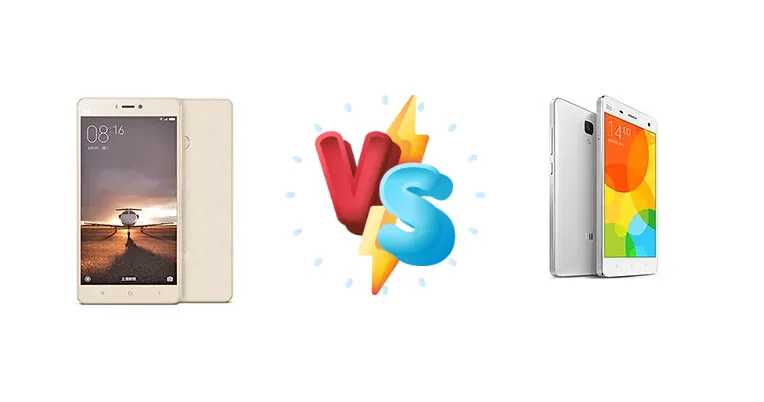
The Xiaomi Mi 4 and Mi 4s were popular mid-range phones that offered impressive specs for their price. But which one is the better choice today? We're diving deep into a comparison of the Mi 4s and Mi 4 LTE to help you decide.
🏆 Quick Verdict
The Xiaomi Mi 4s generally wins due to its superior chipset (Snapdragon 808), improved charging speed, and better sunlight display performance. While the Mi 4 LTE boasts a slightly faster CPU, the Mi 4s's overall package makes it the more compelling option for most users.
| Network |
|---|
| 2G bands | GSM 850 / 900 / 1800 / 1900 - SIM 1 & SIM 2 | GSM 850 / 900 / 1800 / 1900 |
| 3G bands | HSDPA 850 / 1900 / 2100 | HSDPA 850 / 900 / 1900 / 2100 |
| 4G bands | 1, 3, 7, 38, 39, 40, 41 | LTE - international model |
| Speed | HSPA, LTE Cat4 150/50 Mbps | HSPA 42.2/5.76 Mbps, LTE Cat4 150/50 Mbps |
| Technology | GSM / CDMA / HSPA / LTE | GSM / HSPA / LTE |
| | TD-SCDMA | - |
| Launch |
|---|
| Announced | 2016, February. Released 2016, March | 2014, December. Released 2014, December |
| Status | Discontinued | Discontinued |
| Body |
|---|
| Dimensions | 139.3 x 70.8 x 7.8 mm (5.48 x 2.79 x 0.31 in) | 139.2 x 68.5 x 8.9 mm (5.48 x 2.70 x 0.35 in) |
| SIM | Nano-SIM + Micro-SIM | Micro-SIM |
| Weight | 133 g (4.69 oz) | 149 g (5.26 oz) |
| Display |
|---|
| Resolution | 1080 x 1920 pixels, 16:9 ratio (~441 ppi density) | 1080 x 1920 pixels, 16:9 ratio (~441 ppi density) |
| Size | 5.0 inches, 68.9 cm2 (~69.9% screen-to-body ratio) | 5.0 inches, 68.9 cm2 (~72.3% screen-to-body ratio) |
| Type | IPS LCD | IPS LCD |
| Platform |
|---|
| CPU | Hexa-core (4x1.4 GHz Cortex-A53 & 2x1.8 GHz Cortex-A57) | Quad-core 2.5 GHz Krait 400 |
| Chipset | Qualcomm MSM8992 Snapdragon 808 (20 nm) | Qualcomm MSM8974AC Snapdragon 801 (28 nm) |
| GPU | Adreno 418 | Adreno 330 |
| OS | Android 5.1 (Lollipop), upgradable to 7.0 (Nougat), MIUI 10 | Android 4.4.3 (KitKat), MIUI 5 |
| Memory |
|---|
| Card slot | microSDXC (uses shared SIM slot) | No |
| Internal | 64GB 3GB RAM | 16GB 3GB RAM |
| | eMMC 5.0 | eMMC 5.0 |
| Main Camera |
|---|
| Features | Dual-LED dual-tone flash, panorama, HDR | LED flash, panorama, HDR |
| Single | 13 MP, f/2.0, PDAF | 13 MP, f/1.8, 1/3.1", 1.12µm, AF |
| Video | 1080p@30fps, 720p@120fps | 4K@30fps, 1080p@30fps, 720p@120fps, HDR |
| Selfie camera |
|---|
| Single | 5 MP, f/2.0 | 8 MP, f/1.8 |
| Video | 1080p@30fps | 1080p@30fps |
| Sound |
|---|
| 3.5mm jack | Yes | Yes |
| 35mm jack | Yes | Yes |
| Loudspeaker | Yes | Yes |
| Comms |
|---|
| Bluetooth | 4.1, A2DP | 4.0, A2DP |
| Infrared port | Yes | Yes |
| NFC | No | No |
| Positioning | GPS, GLONASS, BDS | GPS, GLONASS, BDS |
| Radio | No | FM radio |
| USB | USB Type-C | microUSB 2.0, OTG |
| WLAN | Wi-Fi 802.11 a/b/g/n/ac, dual-band, Wi-Fi Direct, hotspot | Wi-Fi 802.11 a/b/g/n/ac, dual-band, Wi-Fi Direct, DLNA, hotspot |
| Features |
|---|
| Sensors | Fingerprint (rear-mounted), accelerometer, gyro, proximity, compass | Accelerometer, gyro, proximity, compass, barometer |
| Battery |
|---|
| Charging | 18W wired, QC2, 40% in 60 min | 18W wired, QC2 |
| Type | Li-Ion 3260 mAh, non-removable | Li-Ion 3080 mAh, non-removable |
| Misc |
|---|
| Colors | Black, White, Gold, Pink | White |
| Price | About 220 EUR | About 230 EUR |
| Tests |
|---|
| Audio quality |
Noise -94.9dB / Crosstalk -82.6dB | - |
| Battery life |
Endurance rating 75h
| - |
| Camera |
Photo / Video | - |
| Display |
Contrast ratio: 975:1 (nominal), 2.095 (sunlight) | - |
| Loudspeaker |
Voice 73dB / Noise 68dB / Ring 82dB
| - |
| Performance |
Basemark OS II 2.0: 1545Basemark X: 12990 | - |
Xiaomi Mi 4s
- Better Chipset (Snapdragon 808)
- Faster Charging (18W QC2)
- Superior Sunlight Display
- Longer Battery Life (75h Endurance)
- Older Device - Software Updates May Be Limited
Xiaomi Mi 4 LTE
- Slightly Faster CPU (2.5 GHz Krait 400)
- Potentially Lower Price (if found)
- Older Chipset (Snapdragon 801)
- Slower Charging
- Less Sunlight Readability
- Shorter Battery Life
Display Comparison
The Mi 4s features a contrast ratio of 975:1 (nominal) and an impressive 2.095 in sunlight, indicating excellent outdoor visibility. The Mi 4 LTE's display, while decent, lacks the same sunlight readability. The Mi 4s's display is noticeably better.
Camera Comparison
Camera details are limited in the provided data. However, generally, the Mi 4s is expected to have slightly improved camera performance due to the newer chipset and potential software optimizations. Both phones likely offer decent photo and video capabilities for their time.
Performance
The Mi 4s packs a Snapdragon 808 with a hexa-core CPU (4x1.4 GHz Cortex-A53 & 2x1.8 GHz Cortex-A57), offering a more balanced and efficient performance. The Mi 4 LTE has a Snapdragon 801 with a quad-core 2.5 GHz Krait 400. While the Mi 4 LTE's CPU is faster on paper, the 808's architecture and 20nm process generally provide smoother multitasking and better power efficiency.
Battery Life
The Mi 4s boasts an endurance rating of 75h, significantly higher than what's typically expected from the Mi 4 LTE. This suggests the Mi 4s has better battery optimization and potentially a slightly larger battery capacity, resulting in longer battery life.
Buying Guide
The Xiaomi Mi 4s is ideal for users seeking a slightly more modern experience with faster charging and a better display. The Mi 4 LTE might appeal to those prioritizing a slightly faster CPU and are on a tighter budget, but finding one in good condition could be challenging.
Frequently Asked Questions
❓ Are software updates still available for these phones?
Software updates for both phones are likely discontinued. However, custom ROMs may be available for advanced users.
❓ Where can I find these phones?
Due to their age, these phones are primarily available on the used market (eBay, Swappa, etc.). Exercise caution and check seller ratings before purchasing.