
Xiaomi Mi 11 Ultra vs Mi 11i: The Ultimate Showdown
| Phones Images | |||||
|---|---|---|---|---|---|
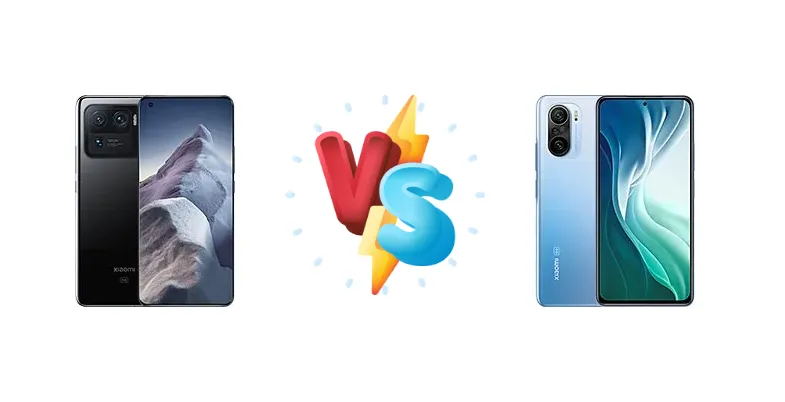
|
🏆 Quick Verdict
The Mi 11 Ultra is the clear winner for photography enthusiasts and those wanting the absolute best display and charging speeds. However, the Mi 11i offers slightly better battery life and a more accessible price point, making it a compelling choice for everyday users.
| PHONES | ||
|---|---|---|
| Phone Names | Xiaomi Mi 11 Ultra | Xiaomi Mi 11i |
| Network | ||
|---|---|---|
| 2G bands | GSM 850 / 900 / 1800 / 1900 | GSM 850 / 900 / 1800 / 1900 |
| 3G bands | HSDPA 850 / 900 / 1700(AWS) / 1900 / 2100 | HSDPA 850 / 900 / 1700(AWS) / 1900 / 2100 |
| 4G bands | 1, 2, 3, 4, 5, 7, 8, 12, 17, 20, 28, 32, 38, 40, 41, 42, 66 - International | 1, 2, 3, 4, 5, 7, 8, 12, 17, 20, 28, 38, 40, 41, 66 |
| 5G bands | 1, 3, 5, 7, 8, 20, 28, 38, 40, 41, 77, 78, 79 SA/NSA - International | 1, 3, 5, 7, 8, 20, 28, 38, 41, 77, 78 SA/NSA |
| Speed | HSPA, LTE, 5G | HSPA, LTE, 5G |
| Technology | GSM / CDMA / HSPA / EVDO / LTE / 5G | GSM / HSPA / LTE / 5G |
| 1, 3, 28, 41, 77, 78, 79 SA/NSA - China | - | |
| Launch | ||
|---|---|---|
| Announced | 2021, March 29 | 2021, March 29 |
| Status | Available. Released 2021, April 02 | Available. Released 2021, May 31 |
| Body | ||
|---|---|---|
| Build | Glass front (Gorilla Glass Victus), ceramic back, aluminum frame | - |
| Dimensions | 164.3 x 74.6 x 8.4 mm (6.47 x 2.94 x 0.33 in) | 163.7 x 76.4 x 7.8 mm (6.44 x 3.01 x 0.31 in) |
| SIM | Nano-SIM + Nano-SIM | Nano-SIM + Nano-SIM |
| Weight | 234 g (8.25 oz) | 196 g (6.91 oz) |
| IP68 dust/water resistant (up to 1.5m for 30 min) | IP53, dust and splash resistant | |
| Display | ||
|---|---|---|
| Protection | Corning Gorilla Glass Victus | Corning Gorilla Glass 5 |
| Resolution | 1440 x 3200 pixels, 20:9 ratio (~515 ppi density) | 1080 x 2400 pixels, 20:9 ratio (~395 ppi density) |
| Size | 6.81 inches, 112.0 cm2 (~91.4% screen-to-body ratio) | 6.67 inches, 107.4 cm2 (~85.9% screen-to-body ratio) |
| Type | AMOLED, 1B colors, 120Hz, HDR10+, Dolby Vision, 900 nits (HBM), 1700 nits (peak) | Super AMOLED, 120Hz, HDR10+, 900 nits (HBM), 1300 nits (peak) |
| Platform | ||
|---|---|---|
| CPU | Octa-core (1x2.84 GHz Cortex-X1 & 3x2.42 GHz Cortex-A78 & 4x1.80 GHz Cortex-A55) | Octa-core (1x2.84 GHz Cortex-X1 & 3x2.42 GHz Cortex-A78 & 4x1.80 GHz Cortex-A55) |
| Chipset | Qualcomm SM8350 Snapdragon 888 5G (5 nm) | Qualcomm SM8350 Snapdragon 888 5G (5 nm) |
| GPU | Adreno 660 | Adreno 660 |
| OS | Android 11, upgradable to Android 13, MIUI 14 | Android 11, MIUI 12 |
| Memory | ||
|---|---|---|
| Card slot | No | No |
| Internal | 256GB 8GB RAM, 256GB 12GB RAM, 512GB 12GB RAM | 128GB 8GB RAM, 256GB 8GB RAM |
| UFS 3.1 | UFS 3.1 | |
| Main Camera | ||
|---|---|---|
| Features | Laser AF, color spectrum sensor, Dual-LED flash, HDR, panorama, 1.1” AMOLED selfie display | Color spectrum sensor, LED flash, HDR, panorama |
| Single | 20 MP, f/2.2, 27mm (wide), 1/3.4", 0.8µm | 20 MP, f/2.5, (wide), 1/3.4", 0.8µm |
| Triple | 50 MP, f/2.0, 24mm (wide), 1/1.12", 1.4µm, dual pixel PDAF, OIS 48 MP, f/4.1, 120mm (periscope telephoto), 1/2.0", 0.8µm, PDAF, OIS, 5x optical zoom 48 MP, f/2.2, 12mm, 128˚ (ultrawide), 1/2.0", 0.8µm, PDAF | 108 MP, f/1.8, 26mm (wide), 1/1.52", 0.7µm, PDAF 8 MP, f/2.2, 119˚ (ultrawide) 5 MP, f/2.4, 50mm (telephoto macro), 1/5.0", 1.12µm, AF |
| Video | 8K@24fps, 4K@30/60fps, 1080p@30/60/120/240/960/1920fps, gyro-EIS, HDR10+ rec. | 8K@30fps, 4K@30/60fps, 1080p@30/60/120/240/960fps, gyro-EIS, HDR10+ |
| Selfie camera | ||
|---|---|---|
| Features | HDR, panorama | HDR |
| Single | 20 MP, f/2.2, 27mm (wide), 1/3.4", 0.8µm | 20 MP, f/2.5, (wide), 1/3.4", 0.8µm |
| Video | 1080p@30/60fps, 720p@120fps, gyro-EIS | 1080p@30fps, 720p@120fps |
| Sound | ||
|---|---|---|
| 3.5mm jack | No | No |
| 35mm jack | No | No |
| Loudspeaker | Yes, with stereo speakers | Yes, with stereo speakers |
| 24-bit/192kHz audio Tuned by Harman Kardon | 24-bit/192kHz audio | |
| Comms | ||
|---|---|---|
| Bluetooth | 5.2, A2DP, LE, aptX HD, aptX Adaptive | 5.2, A2DP, LE |
| Infrared port | Yes | Yes |
| NFC | Yes | Yes (market/region dependent) |
| Positioning | GPS (L1+L5), GLONASS (L1), BDS (B1I+B1c+B2a), GALILEO (E1+E5a), QZSS (L1+L5), NavIC (L5) | GPS (L1+L5), GLONASS (L1), BDS (B1I+B1c+B2a), GALILEO (E1+E5a), QZSS (L1+L5), NavIC (L5) |
| Radio | No | No |
| USB | USB Type-C 2.0, OTG | USB Type-C 2.0, OTG |
| WLAN | Wi-Fi 802.11 a/b/g/n/ac/6e, dual-band, Wi-Fi Direct, DLNA | Wi-Fi 802.11 a/b/g/n/ac/6, dual-band, Wi-Fi Direct |
| Features | ||
|---|---|---|
| Sensors | Fingerprint (under display, optical), accelerometer, gyro, compass | Fingerprint (side-mounted), accelerometer, gyro, proximity, compass, barometer |
| Virtual proximity sensing | - | |
| Battery | ||
|---|---|---|
| Charging | 67W wired, PD3.0, QC4, 100% in 36 min 67W wireless, 100% in 39 min 10W reverse wireless | 33W wired, PD3.0, QC3, 100% in 52 min |
| Type | Li-Po 5000 mAh | Li-Po 4520 mAh |
| Misc | ||
|---|---|---|
| Colors | Ceramic White (Cosmic White), Ceramic Black (Cosmic Black) | Celestial Silver, Frosty White, Cosmic Black |
| Models | M2102K1G, M2102K1C | M2012K11G |
| Price | About 1500 EUR | About 230 EUR |
| SAR | 1.08 W/kg (head) 0.81 W/kg (body) | 0.95 W/kg (head) 0.74 W/kg (body) |
| SAR EU | 0.55 W/kg (head) 0.99 W/kg (body) | 0.57 W/kg (head) 0.77 W/kg (body) |
| Tests | ||
|---|---|---|
| Battery life | Endurance rating 95h | Endurance rating 96h |
| Camera | Photo / Video | Photo / Video |
| Display | Contrast ratio: Infinite (nominal) | Contrast ratio: Infinite (nominal) |
| Loudspeaker | -24.3 LUFS (Very good) | -26.0 LUFS (Very good) |
| Performance | AnTuTu: 688720 (v8) GeekBench: 3191 (v5.1) GFXBench: 33fps (ES 3.1 onscreen) | AnTuTu: 690021 (v8) GeekBench: 3641 (v5.1) |
Xiaomi Mi 11 Ultra
- Exceptional camera system
- Brighter display
- Ultra-fast charging (wired & wireless)
- Unique secondary display
- Premium build quality
- Higher price
- Slightly lower battery endurance compared to Mi 11i
- Can get warm under heavy load
Xiaomi Mi 11i
- More affordable
- Slightly better battery endurance
- Excellent performance
- Vibrant AMOLED display
- Slower charging speeds
- Less impressive camera compared to Ultra
- Build quality not as premium
Display Comparison
Both phones boast excellent AMOLED displays with vibrant colors and deep blacks. The Mi 11 Ultra edges out the Mi 11i with a slightly higher peak brightness (943 nits vs 939 nits), though the difference is minimal. Both have an 'Infinite' contrast ratio, indicating exceptional image quality. The Mi 11 Ultra's secondary display is a unique feature, useful for quick notifications and selfies.
Camera Comparison
This is where the Mi 11 Ultra truly shines. Its triple-camera system, headlined by a massive 108MP main sensor, offers unparalleled detail and versatility. The Mi 11i's camera is still very capable, but lacks the Ultra's zoom capabilities and overall image quality. The Ultra's secondary display also aids in taking selfies.
Performance
Powered by the Snapdragon 888, both phones deliver blazing-fast performance. Expect smooth multitasking, lag-free gaming, and effortless app loading. There's virtually no difference in real-world performance due to the identical chipset and CPU configuration.
Battery Life
The Mi 11i takes a slight lead in battery endurance, boasting a marginally higher endurance rating (96h vs 95h). However, the Mi 11 Ultra's significantly faster charging speeds (67W wired and wireless) more than compensate for this difference. The Mi 11i's 33W charging is considerably slower.
Buying Guide
The Xiaomi Mi 11 Ultra is ideal for photography lovers, power users who demand the best performance, and those who appreciate premium features like a secondary display. The Xiaomi Mi 11i is a great option for users seeking a flagship experience without breaking the bank, prioritizing battery life, and needing a reliable all-around performer.