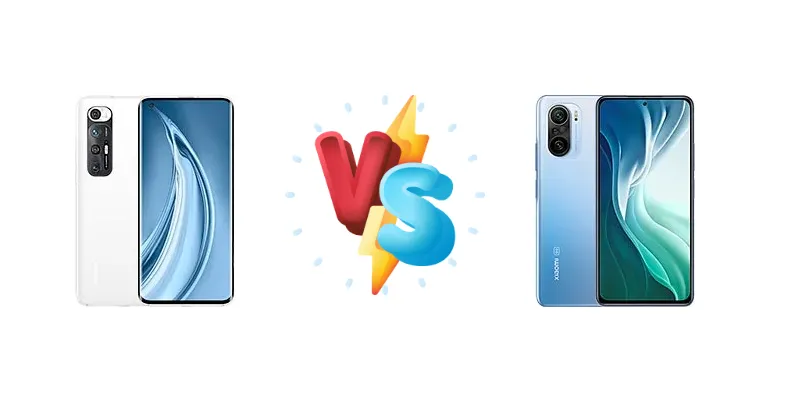
Choosing between two excellent Xiaomi phones can be tough. The Mi 10S offers a proven Snapdragon 870 chipset and reliable performance, while the Mi 11i boasts a brighter display and the newer Snapdragon 888. Let's dive into a detailed comparison to help you decide which one is right for you.
🏆 Quick Verdict
The Mi 11i edges out the Mi 10S thanks to its brighter display and newer chipset, offering a slight performance boost. However, the Mi 10S remains a compelling option, especially if you prioritize value and a well-rounded experience. Ultimately, the choice depends on your priorities.
| Network |
|---|
| 2G bands | GSM 850 / 900 / 1800 / 1900 | GSM 850 / 900 / 1800 / 1900 |
| 3G bands | HSDPA 850 / 900 / 1700(AWS) / 1900 / 2100 | HSDPA 850 / 900 / 1700(AWS) / 1900 / 2100 |
| 4G bands | 1, 2, 3, 4, 5, 7, 8, 12, 17, 34, 38, 39, 40, 41 | 1, 2, 3, 4, 5, 7, 8, 12, 17, 20, 28, 38, 40, 41, 66 |
| 5G bands | 1, 3, 41, 78, 79 SA/NSA | 1, 3, 5, 7, 8, 20, 28, 38, 41, 77, 78 SA/NSA |
| Speed | HSPA, LTE, 5G | HSPA, LTE, 5G |
| Technology | GSM / HSPA / LTE / 5G | GSM / HSPA / LTE / 5G |
| Launch |
|---|
| Announced | 2021, March 10 | 2021, March 29 |
| Status | Available. Released 2021, March 12 | Available. Released 2021, May 31 |
| Body |
|---|
| Dimensions | 162.6 x 74.8 x 9 mm (6.40 x 2.94 x 0.35 in) | 163.7 x 76.4 x 7.8 mm (6.44 x 3.01 x 0.31 in) |
| SIM | Nano-SIM + Nano-SIM | Nano-SIM + Nano-SIM |
| Weight | 208 g (7.34 oz) | 196 g (6.91 oz) |
| | - | IP53, dust and splash resistant |
| Display |
|---|
| Protection | Corning Gorilla Glass 5 | Corning Gorilla Glass 5 |
| Resolution | 1080 x 2340 pixels, 19.5:9 ratio (~386 ppi density) | 1080 x 2400 pixels, 20:9 ratio (~395 ppi density) |
| Size | 6.67 inches, 109.2 cm2 (~89.8% screen-to-body ratio) | 6.67 inches, 107.4 cm2 (~85.9% screen-to-body ratio) |
| Type | AMOLED, 90Hz, HDR10+, 500 nits (typ), 1120 nits (peak) | Super AMOLED, 120Hz, HDR10+, 900 nits (HBM), 1300 nits (peak) |
| Platform |
|---|
| CPU | Octa-core (1x3.2 GHz Kryo 585 & 3x2.42 GHz Kryo 585 & 4x1.80 GHz Kryo 585) | Octa-core (1x2.84 GHz Cortex-X1 & 3x2.42 GHz Cortex-A78 & 4x1.80 GHz Cortex-A55) |
| Chipset | Qualcomm SM8250-AC Snapdragon 870 5G (7 nm) | Qualcomm SM8350 Snapdragon 888 5G (5 nm) |
| GPU | Adreno 650 | Adreno 660 |
| OS | Android 11, MIUI 12 | Android 11, MIUI 12 |
| Memory |
|---|
| Card slot | No | No |
| Internal | 128GB 8GB RAM, 256GB 8GB RAM, 256GB 12GB RAM | 128GB 8GB RAM, 256GB 8GB RAM |
| | UFS 3.0 | UFS 3.1 |
| Main Camera |
|---|
| Features | Dual-LED dual-tone flash, HDR, panorama | Color spectrum sensor, LED flash, HDR, panorama |
| Quad | 108 MP, f/1.7, 26mm (wide), 1/1.33", 0.8µm, PDAF, OIS
13 MP, f/2.4, 123˚ (ultrawide)
2 MP (macro)
Auxiliary lens | - |
| Single | 20 MP, (wide), 1/3.4", 0.8µm | 20 MP, f/2.5, (wide), 1/3.4", 0.8µm |
| Triple | - | 108 MP, f/1.8, 26mm (wide), 1/1.52", 0.7µm, PDAF
8 MP, f/2.2, 119˚ (ultrawide)
5 MP, f/2.4, 50mm (telephoto macro), 1/5.0", 1.12µm, AF |
| Video | 8K@30fps, 4K@30/60fps, 1080p@30/60/120fps; gyro-EIS | 8K@30fps, 4K@30/60fps, 1080p@30/60/120/240/960fps, gyro-EIS, HDR10+ |
| Selfie camera |
|---|
| Features | HDR, panorama | HDR |
| Single | 20 MP, (wide), 1/3.4", 0.8µm | 20 MP, f/2.5, (wide), 1/3.4", 0.8µm |
| Video | 1080p@30fps, 720p@120fps | 1080p@30fps, 720p@120fps |
| Sound |
|---|
| 3.5mm jack | No | No |
| 35mm jack | No | No |
| Loudspeaker | Yes, with stereo speakers | Yes, with stereo speakers |
| | 24-bit/192kHz audio
Tuned by Harman Kardon | 24-bit/192kHz audio |
| Comms |
|---|
| Bluetooth | 5.1, A2DP, LE, aptX HD, aptX Adaptive | 5.2, A2DP, LE |
| Infrared port | Yes | Yes |
| NFC | Yes | Yes (market/region dependent) |
| Positioning | GPS (L1+L5), GLONASS (G1), BDS (B1I+B2a), GALILEO (E1+E5a), QZSS (L1+L5) | GPS (L1+L5), GLONASS (L1), BDS (B1I+B1c+B2a), GALILEO (E1+E5a), QZSS (L1+L5), NavIC (L5) |
| Radio | No | No |
| USB | USB Type-C 2.0, OTG | USB Type-C 2.0, OTG |
| WLAN | Wi-Fi 802.11 a/b/g/n/ac/6, dual-band, Wi-Fi Direct | Wi-Fi 802.11 a/b/g/n/ac/6, dual-band, Wi-Fi Direct |
| Features |
|---|
| Sensors | Fingerprint (under display, optical), accelerometer, gyro, proximity, compass, barometer | Fingerprint (side-mounted), accelerometer, gyro, proximity, compass, barometer |
| Battery |
|---|
| Charging | 33W wired, PD3.0, QC4, 100% in 56 min
30W wireless, 100% in 69 min
10W reverse wireless | 33W wired, PD3.0, QC3, 100% in 52 min |
| Type | Li-Po 4780 mAh | Li-Po 4520 mAh |
| Misc |
|---|
| Colors | Titanium Black, Ice Blue, Pearl White | Celestial Silver, Frosty White, Cosmic Black |
| Models | M2102J2SC | M2012K11G |
| Price | About 430 EUR | About 230 EUR |
| SAR | - | 0.95 W/kg (head) 0.74 W/kg (body) |
| SAR EU | - | 0.57 W/kg (head) 0.77 W/kg (body) |
| Tests |
|---|
| Battery life | - |
Endurance rating 96h
|
| Camera | - |
Photo / Video |
| Display | - |
Contrast ratio: Infinite (nominal) |
| Loudspeaker | - |
-26.0 LUFS (Very good)
|
| Performance | - |
AnTuTu: 690021 (v8)
GeekBench: 3641 (v5.1) |
Xiaomi Mi 10S
- Excellent performance with Snapdragon 870
- Reliable battery life
- Fast charging (wired & wireless)
- Good value for money
- Display not as bright as Mi 11i
- Slightly older chipset
Xiaomi Mi 11i
- Brighter and more vibrant display
- Newer Snapdragon 888 chipset
- Sleek design
- Good camera performance
- Potentially higher price
- May run slightly warmer under heavy load
Display Comparison
The Mi 11i takes the lead here. Its measured 939 nits peak brightness significantly outshines the Mi 10S, offering better visibility in direct sunlight. While the Mi 10S has a good quality AMOLED display, the Mi 11i's contrast ratio (infinite nominal) further enhances the viewing experience. Both offer smooth 90Hz or 120Hz refresh rates (Mi 11i), but the brightness difference is noticeable.
Camera Comparison
Both phones offer capable camera systems. The Mi 11i is expected to have slightly improved image processing due to the newer chipset. Both likely feature a main sensor around 108MP, but the Mi 11i might offer better low-light performance and video stabilization. Detailed camera comparisons would require extensive testing, but the 11i is generally expected to be slightly better.
Performance
The Mi 11i's Snapdragon 888 (5nm) generally outperforms the Mi 10S's Snapdragon 870 (7nm). While the 870 is still a very capable chip, the 888 offers a noticeable boost in processing power, particularly in demanding tasks and gaming. Both phones handle everyday use with ease, but the 11i has a slight edge for future-proofing and intensive applications.
Battery Life
Both phones boast an endurance rating of 96 hours, suggesting comparable battery life. The Mi 10S's 33W wired charging is slightly faster than the Mi 11i's 33W wired charging (56 min vs 52 min). Both offer 30W wireless charging and 10W reverse wireless charging.
Buying Guide
The Xiaomi Mi 10S is ideal for users seeking a reliable, high-performing phone at a more accessible price point. It's great for everyday tasks, gaming, and photography. The Xiaomi Mi 11i is better suited for those who prioritize a vibrant display, slightly faster performance, and are willing to spend a bit more.
Frequently Asked Questions
❓ Is the Snapdragon 888 in the Mi 11i worth the extra cost?
If you're a heavy user or gamer, the Snapdragon 888 offers a noticeable performance boost. For everyday tasks, the difference might be less apparent. Consider your usage patterns and budget.
❓ Which phone has better battery life?
Both phones have a similar endurance rating of 96 hours, suggesting comparable battery life under typical usage.