
Xiaomi Mi 10S vs Mi 10 Ultra: A Clash of Flagship Titans
| Phones Images | |||||
|---|---|---|---|---|---|
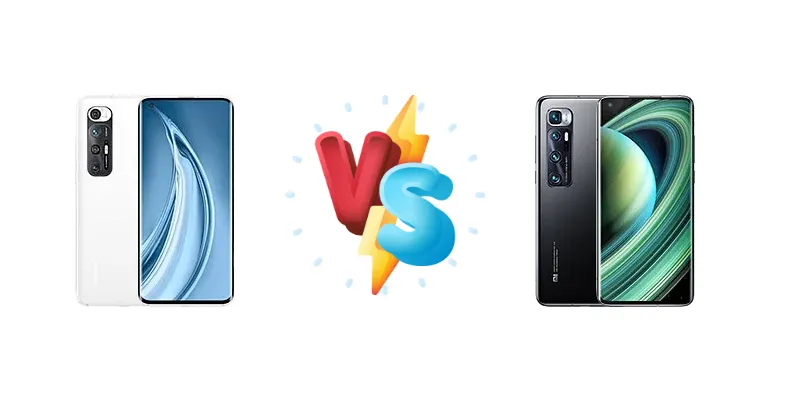
|
🏆 Quick Verdict
The Mi 10 Ultra is the clear performance and charging champion, boasting a significantly faster charging speed and the Snapdragon 865. However, the Mi 10S offers a more balanced experience with a slightly more efficient chipset and a competitive price, making it a strong contender for value-conscious buyers.
| PHONES | ||
|---|---|---|
| Phone Names | Xiaomi Mi 10S | Xiaomi Mi 10 Ultra |
| Network | ||
|---|---|---|
| 2G bands | GSM 850 / 900 / 1800 / 1900 | GSM 850 / 900 / 1800 / 1900 |
| 3G bands | HSDPA 850 / 900 / 1700(AWS) / 1900 / 2100 | HSDPA 850 / 900 / 1700(AWS) / 1900 / 2100 |
| 4G bands | 1, 2, 3, 4, 5, 7, 8, 12, 17, 34, 38, 39, 40, 41 | 1, 2, 3, 4, 5, 7, 8, 12, 17, 34, 38, 39, 40, 41 |
| 5G bands | 1, 3, 41, 78, 79 SA/NSA | 1, 3, 41, 78, 79 SA/NSA |
| Speed | HSPA, LTE, 5G | HSPA, LTE, 5G |
| Technology | GSM / HSPA / LTE / 5G | GSM / CDMA / HSPA / EVDO / LTE / 5G |
| - | CDMA2000 1xEV-DO | |
| Launch | ||
|---|---|---|
| Announced | 2021, March 10 | 2020, August 11. Released 2020, August 16 |
| Status | Available. Released 2021, March 12 | Discontinued |
| Body | ||
|---|---|---|
| Build | - | Glass front (Gorilla Glass 5), glass back (Gorilla Glass 6), aluminum frame |
| Dimensions | 162.6 x 74.8 x 9 mm (6.40 x 2.94 x 0.35 in) | 162.4 x 75.1 x 9.5 mm (6.39 x 2.96 x 0.37 in) |
| SIM | Nano-SIM + Nano-SIM | Nano-SIM + Nano-SIM |
| Weight | 208 g (7.34 oz) | 221.8 g (7.83 oz) |
| Display | ||
|---|---|---|
| Protection | Corning Gorilla Glass 5 | Corning Gorilla Glass 5 |
| Resolution | 1080 x 2340 pixels, 19.5:9 ratio (~386 ppi density) | 1080 x 2340 pixels, 19.5:9 ratio (~386 ppi density) |
| Size | 6.67 inches, 109.2 cm2 (~89.8% screen-to-body ratio) | 6.67 inches, 109.2 cm2 (~89.5% screen-to-body ratio) |
| Type | AMOLED, 90Hz, HDR10+, 500 nits (typ), 1120 nits (peak) | OLED, 1B colors, 120Hz, HDR10+, 800 nits (HBM), 1120 nits (peak) |
| Platform | ||
|---|---|---|
| CPU | Octa-core (1x3.2 GHz Kryo 585 & 3x2.42 GHz Kryo 585 & 4x1.80 GHz Kryo 585) | Octa-core (1x2.84 GHz Cortex-A77 & 3x2.42 GHz Cortex-A77 & 4x1.80 GHz Cortex-A55) |
| Chipset | Qualcomm SM8250-AC Snapdragon 870 5G (7 nm) | Qualcomm SM8250 Snapdragon 865 5G (7 nm+) |
| GPU | Adreno 650 | Adreno 650 |
| OS | Android 11, MIUI 12 | Android 10, MIUI 12.5 |
| Memory | ||
|---|---|---|
| Card slot | No | No |
| Internal | 128GB 8GB RAM, 256GB 8GB RAM, 256GB 12GB RAM | 128GB 8GB RAM, 256GB 8GB RAM, 256GB 12GB RAM, 512GB 16GB RAM |
| UFS 3.0 | UFS 3.1 | |
| Main Camera | ||
|---|---|---|
| Features | Dual-LED dual-tone flash, HDR, panorama | Laser AF, color spectrum sensor, Dual-LED flash, HDR, panorama |
| Quad | 108 MP, f/1.7, 26mm (wide), 1/1.33", 0.8µm, PDAF, OIS 13 MP, f/2.4, 123˚ (ultrawide) 2 MP (macro) Auxiliary lens | 48 MP, f/1.9, 25mm (wide), 1/1.32", 1.2µm, PDAF, OIS 48 MP, f/4.1, 120mm (periscope telephoto), 1/2.0", 0.8µm, PDAF, OIS, 5x optical zoom 12 MP, f/2.0, 50mm (telephoto), 1/2.55", 1.4µm, dual pixel PDAF, 2x optical zoom 20 MP, f/2.2, 128˚, 12mm (ultrawide), 1/2.8", 1.0µm, PDAF |
| Single | 20 MP, (wide), 1/3.4", 0.8µm | - |
| Video | 8K@30fps, 4K@30/60fps, 1080p@30/60/120fps; gyro-EIS | 8K@24fps, 4K@30/60fps, 1080p@30/60/120/240/960fps, gyro-EIS, HDR10 rec. |
| Selfie camera | ||
|---|---|---|
| Features | HDR, panorama | HDR |
| Single | 20 MP, (wide), 1/3.4", 0.8µm | 20 MP, f/2.3, (wide), 1/3.4", 0.8µm |
| Video | 1080p@30fps, 720p@120fps | 1080p@30fps, 720p@120fps, gyro-EIS |
| Sound | ||
|---|---|---|
| 3.5mm jack | No | No |
| 35mm jack | No | No |
| Loudspeaker | Yes, with stereo speakers | Yes, with stereo speakers |
| 24-bit/192kHz audio Tuned by Harman Kardon | 24-bit/192kHz audio | |
| Comms | ||
|---|---|---|
| Bluetooth | 5.1, A2DP, LE, aptX HD, aptX Adaptive | 5.1, A2DP, LE, aptX HD |
| Infrared port | Yes | Yes |
| NFC | Yes | Yes |
| Positioning | GPS (L1+L5), GLONASS (G1), BDS (B1I+B2a), GALILEO (E1+E5a), QZSS (L1+L5) | GPS (L1+L5), GLONASS (G1), BDS (B1I+B2a), GALILEO (E1+E5a), QZSS (L1+L5) |
| Radio | No | No |
| USB | USB Type-C 2.0, OTG | USB Type-C 2.0, OTG |
| WLAN | Wi-Fi 802.11 a/b/g/n/ac/6, dual-band, Wi-Fi Direct | Wi-Fi 802.11 a/b/g/n/ac/6, dual-band, Wi-Fi Direct, DLNA |
| Features | ||
|---|---|---|
| Sensors | Fingerprint (under display, optical), accelerometer, gyro, proximity, compass, barometer | Fingerprint (under display, optical), accelerometer, gyro, proximity, compass, barometer |
| Battery | ||
|---|---|---|
| Charging | 33W wired, PD3.0, QC4, 100% in 56 min 30W wireless, 100% in 69 min 10W reverse wireless | 120W wired, PD3.0, QC5, 41% in 5 min, 100% in 23 min 50W wireless, 100% in 40 min 10W reverse wireless |
| Type | Li-Po 4780 mAh | Li-Ion 4500 mAh, graphene-enhanced |
| Misc | ||
|---|---|---|
| Colors | Titanium Black, Ice Blue, Pearl White | Obsidian Black, Mercury Silver, Transparent Edition |
| Models | M2102J2SC | M2007J1SC |
| Price | About 430 EUR | About 650 EUR |
| Tests | ||
|---|---|---|
| Battery life | - | Endurance rating 85h |
| Camera | - | Photo / Video |
| Display | - | Contrast ratio: Infinite (nominal) |
| Loudspeaker | - | -24.6 LUFS (Very good) |
| Performance | - | AnTuTu: 638497 (v8) GeekBench: 3248 (v5.1) GFXBench: 46fps (ES 3.1 onscreen) |
Xiaomi Mi 10S
- Excellent performance with Snapdragon 870
- Fast 33W wired charging
- Smooth 90Hz display
- Competitive price
- Camera lacks the zoom capabilities of the Ultra
- Slower charging compared to the Ultra
- Design is somewhat understated
Xiaomi Mi 10 Ultra
- Exceptional camera system with incredible zoom
- Blazing-fast 120W wired charging
- Bright and color-accurate display
- Premium design
- Higher price
- Snapdragon 865 slightly less efficient than 870
- Battery life, while good, isn't dramatically better than the Mi 10S
Display Comparison
Both phones feature excellent AMOLED displays with vibrant colors and deep blacks. While both are listed as having an 'infinite' contrast ratio (a marketing term), the Mi 10 Ultra's display is generally considered slightly brighter and more color-accurate. The Mi 10S's display is still fantastic, offering a smooth 90Hz refresh rate for fluid scrolling and animations.
Camera Comparison
The Mi 10 Ultra's camera system is its standout feature. It boasts a massive 108MP primary sensor, a 12MP ultrawide, a 20MP telephoto with 5x optical zoom, and a 5MP periscope telephoto with 10x optical zoom. The Mi 10S still has a very capable camera setup with a 108MP main sensor, an 8MP ultrawide, a 5MP macro, and a 2MP depth sensor, but it lacks the Ultra's zoom capabilities.
Performance
The Mi 10 Ultra edges out the Mi 10S thanks to the Snapdragon 865, which generally offers slightly better raw performance than the Snapdragon 870. However, the 870 is incredibly efficient, and in day-to-day use, the difference is often negligible. Both phones handle demanding games and multitasking with ease.
Battery Life
The Mi 10 Ultra's endurance rating of 85h suggests excellent battery life, though real-world usage can vary. The Mi 10S also offers good battery life, but the Ultra's significantly faster charging (120W vs 33W) is a major advantage. The 50W wireless charging on the Ultra is also a significant upgrade.
Buying Guide
The Xiaomi Mi 10S is ideal for users who prioritize a smooth, reliable experience with excellent performance and fast charging without breaking the bank. The Mi 10 Ultra is for photography enthusiasts and power users who demand the absolute best camera capabilities, blazing-fast charging, and top-tier performance, regardless of cost.