
Xiaomi Civi 2 vs Xiaomi Mi 11 Lite: A Head-to-Head Showdown
| Phones Images | |||||
|---|---|---|---|---|---|
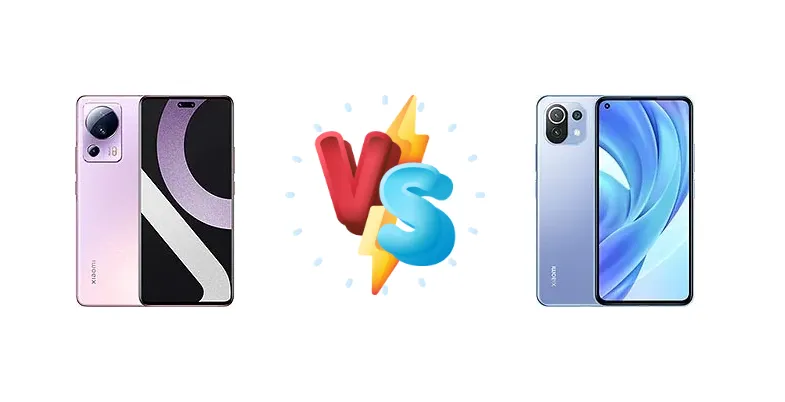
|
🏆 Quick Verdict
The Xiaomi Civi 2 takes the lead with its significantly faster Snapdragon 7 Gen 1 chipset and blazing-fast 67W charging. While the Mi 11 Lite offers excellent battery life and a vibrant display, the Civi 2's performance and charging speed make it the more appealing option for most users.
| PHONES | ||
|---|---|---|
| Phone Names | Xiaomi Civi 2 | Xiaomi Mi 11 Lite |
| Network | ||
|---|---|---|
| 2G bands | GSM 850 / 900 / 1800 / 1900 | GSM 850 / 900 / 1800 / 1900 |
| 3G bands | HSDPA 800 / 850 / 900 / 1700(AWS) / 1900 / 2100 | HSDPA 850 / 900 / 1700(AWS) / 1900 / 2100 |
| 4G bands | 1, 2, 3, 4, 5, 7, 8, 18, 19, 26, 34, 38, 39, 40, 41, 42 | 1, 2, 3, 4, 5, 7, 8, 12, 17, 20, 28, 32, 38, 40, 41, 66 |
| 5G bands | 1, 3, 5, 8, 28, 38, 41, 77, 78 SA/NSA | - |
| Speed | HSPA, LTE, 5G | HSPA, LTE |
| Technology | GSM / CDMA / HSPA / CDMA2000 / LTE / 5G | GSM / HSPA / LTE |
| CDMA2000 1x | - | |
| Launch | ||
|---|---|---|
| Announced | 2022, September 27 | 2021, March 29 |
| Status | Available. Released 2022, September 27 | Available. Released 2021, April 16 |
| Body | ||
|---|---|---|
| Build | Glass front (Gorilla Glass 5), glass back, aluminum frame | - |
| Dimensions | 159.2 x 72.7 x 7.2 mm (6.27 x 2.86 x 0.28 in) | 160.5 x 75.7 x 6.8 mm (6.32 x 2.98 x 0.27 in) |
| SIM | Nano-SIM + Nano-SIM | Nano-SIM + Nano-SIM |
| Weight | 171.8 g (6.07 oz) | 157 g (5.54 oz) |
| - | IP53, dust and splash resistant | |
| Display | ||
|---|---|---|
| Protection | Corning Gorilla Glass 5 | Corning Gorilla Glass 5 |
| Resolution | 1080 x 2400 pixels, 20:9 ratio (~402 ppi density) | 1080 x 2400 pixels, 20:9 ratio (~402 ppi density) |
| Size | 6.55 inches, 103.6 cm2 (~89.5% screen-to-body ratio) | 6.55 inches, 103.6 cm2 (~85.3% screen-to-body ratio) |
| Type | AMOLED, 1B colors, Dolby Vision, HDR10+, 120Hz, 1000 nits (peak) | AMOLED, 1B colors, HDR10, 90Hz, 500 nits (typ), 800 nits |
| Platform | ||
|---|---|---|
| CPU | Octa-core (1x2.4 GHz Cortex-A710 & 3x2.36 GHz Cortex-A710 & 4x1.8 GHz Cortex-A510) | Octa-core (2x2.3 GHz Kryo 470 Gold & 6x1.8 GHz Kryo 470 Silver) |
| Chipset | Qualcomm SM7450-AB Snapdragon 7 Gen 1 (4 nm) | Qualcomm SM7150 Snapdragon 732G (8 nm) |
| GPU | Adreno 644 | Adreno 618 |
| OS | Android 12, MIUI 13 | Android 11, MIUI 12 |
| Memory | ||
|---|---|---|
| Card slot | No | microSDXC (uses shared SIM slot) |
| Internal | 128GB 8GB RAM, 256GB 8GB RAM, 256GB 12GB RAM | 64GB 4GB RAM, 64GB 6GB RAM, 128GB 6GB RAM, 128GB 8GB RAM |
| UFS 2.2 | UFS 2.2 | |
| Main Camera | ||
|---|---|---|
| Features | Color spectrum sensor, Dual-LED dual-tone flash, HDR, panorama | Dual-LED dual-tone flash, HDR, panorama |
| Triple | 50 MP, f/1.8, (wide), 1/1.56", 1.0µm, PDAF 20 MP, f/2.2, 115˚ (ultrawide), 1/2.78", 1.0µm 2 MP (macro) | 64 MP, f/1.8, 26mm (wide), 1/1.97", 0.7µm, PDAF 8 MP, f/2.2, 119˚ (ultrawide), 1/4.0", 1.12µm 5 MP (macro), AF |
| Video | 4K@30fps, 1080p@30/60/120fps, 720p@960fps; gyro-EIS | 4K@30fps, 1080p@30/60/120fps; gyro-EIS |
| Selfie camera | ||
|---|---|---|
| Dual | 32 MP, f/2.0, (wide), 1/2.8", 0.8µm, AF 32 MP, 100˚ (ultrawide), 1/2.8", 0.8µm | - |
| Features | 2 Dual-LED dual-tone flash, HDR, panorama | HDR, panorama |
| Single | - | 16 MP, f/2.5, (wide), 1/3.06" 1.0µm |
| Video | 1080p@30/60fps | 1080p@30fps, 720p@120fps |
| Sound | ||
|---|---|---|
| 3.5mm jack | No | No |
| 35mm jack | No | No |
| Loudspeaker | Yes | Yes, with dual speakers |
| 24-bit/192kHz audio | 24-bit/192kHz audio | |
| Comms | ||
|---|---|---|
| Bluetooth | 5.2, A2DP, LE | 5.1, A2DP, LE |
| Infrared port | Yes | Yes |
| NFC | Yes | Yes (market/region dependent) |
| Positioning | GPS (L1), GLONASS (G1), BDS (B1I+B1c), GALILEO (E1), QZSS (L1) | GPS, GLONASS, BDS, GALILEO |
| Radio | No | No |
| USB | USB Type-C 2.0, OTG | USB Type-C 2.0, OTG |
| WLAN | Wi-Fi 802.11 a/b/g/n/ac/6, dual-band, Wi-Fi Direct | Wi-Fi 802.11 a/b/g/n/ac, dual-band, Wi-Fi Direct |
| Features | ||
|---|---|---|
| Sensors | Fingerprint (under display, optical), accelerometer, gyro, proximity, compass | Fingerprint (side-mounted), accelerometer, gyro, compass |
| - | Virtual proximity sensing | |
| Battery | ||
|---|---|---|
| Charging | 67W wired, PD3.0, 100% in 40 min | 33W wired |
| Type | Li-Po 4500 mAh | Li-Po 4250 mAh |
| Misc | ||
|---|---|---|
| Colors | Black, Blue, Violet, Silver, Hello Kitty | Boba Black (Vinyl Black), Peach Pink (Tuscany Coral), Bubblegum Blue (Jazz Blue) |
| Models | 2209129SC | M2101K9AG, M2101K9AI |
| Price | About 350 EUR | £ 221.40 / € 106.34 |
| SAR | - | 1.07 W/kg (head) 0.82 W/kg (body) |
| SAR EU | - | 0.60 W/kg (head) 0.95 W/kg (body) |
| Tests | ||
|---|---|---|
| Battery life | - | Endurance rating 100h |
| Camera | - | Photo / Video |
| Display | - | Contrast ratio: Infinite (nominal) |
| Loudspeaker | - | -24.2 LUFS (Very good) |
| Performance | - | AnTuTu: 290172 (v8), 294251 (v9) GeekBench: 1796 (v5.1) GFXBench: 17fps (ES 3.1 onscreen) |
Xiaomi Civi 2
- Faster Processor (Snapdragon 7 Gen 1)
- 67W Fast Charging
- Modern Design
- Improved Image Processing
- Potentially shorter battery life than Mi 11 Lite
- No expandable storage
Xiaomi Mi 11 Lite
- Exceptional Battery Life (100h endurance)
- Slim and Lightweight Design
- Vibrant Display (826 nits)
- Good Camera Performance
- Slower Processor (Snapdragon 732G)
- 33W Charging
- Older Chipset
Display Comparison
The Xiaomi Mi 11 Lite boasts a measured peak brightness of 826 nits, offering excellent visibility even in direct sunlight. While the Civi 2's display is also good, the Mi 11 Lite's contrast ratio (nominally infinite) suggests deeper blacks and potentially better overall image quality. Both offer AMOLED panels, ensuring vibrant colors and deep blacks.
Camera Comparison
Both phones offer capable camera systems, but the Civi 2 likely has a slight edge due to its newer image processing capabilities. The Mi 11 Lite's camera is known for producing pleasing, natural-looking photos. Specific camera specs (megapixels, aperture) would be needed for a more precise comparison, but the Civi 2's newer chipset should provide better low-light performance and image stabilization.
Performance
Here, the Civi 2 shines. Its Snapdragon 7 Gen 1 chipset (4nm) is a substantial upgrade over the Mi 11 Lite's Snapdragon 732G (8nm). Expect noticeably faster app loading times, smoother multitasking, and better gaming performance on the Civi 2. The Civi 2's newer architecture and fabrication process contribute to improved efficiency as well.
Battery Life
The Mi 11 Lite's endurance rating of 100h is impressive, suggesting exceptional battery life. The Civi 2, while having a smaller battery capacity, benefits from more efficient charging (67W vs 33W), allowing it to top up much faster. While the Mi 11 Lite will likely last longer on a single charge, the Civi 2's charging speed is a significant advantage.
Buying Guide
The Xiaomi Civi 2 is ideal for users prioritizing performance, fast charging, and a modern design. It's great for gaming and multitasking. The Xiaomi Mi 11 Lite is a better choice for those who value exceptional battery life and a slim, lightweight design, and are less concerned about raw processing power.