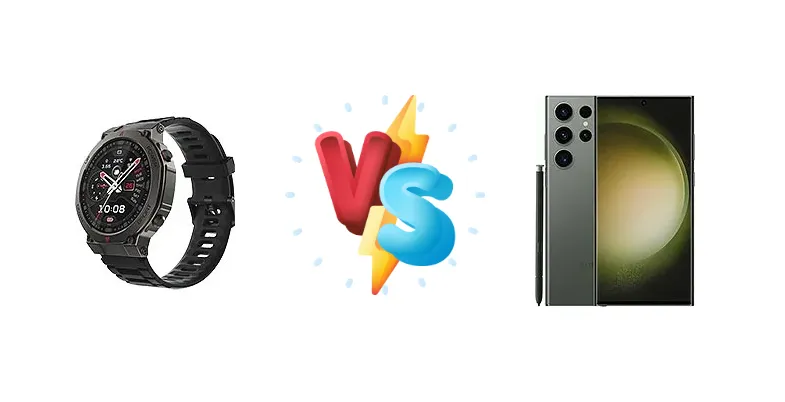
The Xiaomi Black Shark GS3 Ultra enters the arena as a dedicated gaming powerhouse, challenging the established dominance of the Samsung Galaxy S23 Ultra – a phone renowned for its all-around excellence. This comparison isn't just about specs; it's about understanding which device best caters to distinct user needs, from hardcore gamers to everyday power users.
🏆 Quick Verdict
For the average user prioritizing a balanced experience, the Samsung Galaxy S23 Ultra emerges as the winner. Its superior camera system, refined software, and consistently strong performance across all tasks outweigh the Black Shark GS3 Ultra’s potential gaming advantages, especially given the lack of detailed GS3 Ultra specs.
| Network |
|---|
| 2G bands | N/A | GSM 850 / 900 / 1800 / 1900 |
| 3G bands | N/A | HSDPA 850 / 900 / 1700(AWS) / 1900 / 2100 |
| 4G bands | N/A | 1, 2, 3, 4, 5, 7, 8, 12, 13, 17, 18, 19, 20, 25, 26, 28, 32, 38, 39, 40, 41, 66 - International |
| 5G bands | - | 1, 2, 3, 5, 7, 8, 12, 20, 25, 28, 38, 40, 41, 66, 75, 77, 78 SA/NSA/Sub6 - International |
| EDGE | No | - |
| GPRS | No | - |
| Speed | - | HSPA, LTE (up to 7CA), 5G |
| Technology | No cellular connectivity | GSM / CDMA / HSPA / EVDO / LTE / 5G |
| | - | 1, 7, 28, 41, 66, 71, 78, 258, 260, 261 SA/NSA/Sub6/mmWave - USA |
| Launch |
|---|
| Announced | 2025, November 21 | 2023, February 01 |
| Status | Coming soon. Exp. release 2025, December | Available. Released 2023, February 17 |
| Body |
|---|
| Build | Glass front (Gorilla Glass), aluminum frame | Glass front (Gorilla Glass Victus 2), glass back (Gorilla Glass Victus 2), aluminum frame |
| Dimensions | - | 163.4 x 78.1 x 8.9 mm (6.43 x 3.07 x 0.35 in) |
| SIM | No | · Nano-SIM + eSIM· Nano-SIM + Nano-SIM + eSIM (max 2 at a time) |
| Weight | - | 234 g (8.25 oz) |
| | - | IP68 dust/water resistant (up to 1.5m for 30 min)
Armor aluminum frame with tougher drop and scratch resistance (advertised)
Stylus (Bluetooth integration, accelerometer, gyro) |
| Display |
|---|
| Protection | Corning Gorilla Glass | Corning Gorilla Glass Victus 2 |
| Resolution | 466 x 466 pixels (~326 ppi density) | 1440 x 3088 pixels, 19.3:9 ratio (~500 ppi density) |
| Size | 1.43 inches | 6.8 inches, 114.7 cm2 (~89.9% screen-to-body ratio) |
| Type | AMOLED, 1000 nits | Dynamic AMOLED 2X, 120Hz, HDR10+, 1200 nits (HBM), 1750 nits (peak) |
| | - | Always-on display |
| Platform |
|---|
| CPU | - | Octa-core (1x3.36 GHz Cortex-X3 & 2x2.8 GHz Cortex-A715 & 2x2.8 GHz Cortex-A710 & 3x2.0 GHz Cortex-A510) |
| Chipset | - | Qualcomm SM8550-AC Snapdragon 8 Gen 2 (4 nm) |
| GPU | - | Adreno 740 |
| OS | - | Android 13, up to 4 major Android upgrades, One UI 8 |
| Memory |
|---|
| Call records | Yes | - |
| Card slot | No | No |
| Internal | - | 256GB 8GB RAM, 256GB 12GB RAM, 512GB 12GB RAM, 1TB 12GB RAM |
| Phonebook | No | - |
| | - | UFS 4.0 |
| Main Camera |
|---|
| Features | - | Laser AF, LED flash, auto-HDR, panorama |
| Quad | - | 200 MP, f/1.7, 24mm (wide), 1/1.3", 0.6µm, multi-directional PDAF, OIS
10 MP, f/2.4, 70mm (telephoto), 1/3.52", 1.12µm, PDAF, OIS, 3x optical zoom
10 MP, f/4.9, 230mm (periscope telephoto), 1/3.52", 1.12µm, PDAF, OIS, 10x optical zoom
12 MP, f/2.2, 13mm, 120˚ (ultrawide), 1/2.55", 1.4µm, dual pixel PDAF, Super Steady video |
| Single | - | 12 MP, f/2.2, 26mm (wide), Dual Pixel PDAF |
| Video | - | 8K@24/30fps, 4K@30/60fps, 1080p@30/60/120/240fps, HDR10+, stereo sound rec., gyro-EIS |
| Selfie camera |
|---|
| Features | - | HDR, HDR10+ |
| Single | - | 12 MP, f/2.2, 26mm (wide), 1/3.2", 1.12µm, dual pixel PDAF |
| Video | - | 4K@30/60fps, 1080p@30fps |
| Sound |
|---|
| 3.5mm jack | - | No |
| 35mm jack | No | No |
| Loudspeaker | Yes | Yes, with stereo speakers |
| | - | 32-bit/384kHz audio
Tuned by AKG |
| Comms |
|---|
| Bluetooth | Yes | 5.3, A2DP, LE |
| NFC | Unspecified | Yes |
| Positioning | GPS (L1+L5), GLONASS, GALILEO, BDS, QZSS | GPS, GALILEO, GLONASS, BDS, QZSS |
| Radio | No | No |
| USB | No | USB Type-C 3.2, OTG |
| WLAN | No | Wi-Fi 802.11 a/b/g/n/ac/6e, tri-band, Wi-Fi Direct |
| Features |
|---|
| Games | No | - |
| Java | No | - |
| Messaging | SMS(threaded view), Email, IM | - |
| Sensors | Accelerometer, gyro, compass, barometer, heart rate, SpO2 | Fingerprint (under display, ultrasonic), accelerometer, gyro, proximity, compass, barometer |
| | - | Samsung DeX, Samsung Wireless DeX (desktop experience support)
Bixby natural language commands and dictation
Samsung Pay (Visa, MasterCard certified)
Ultra Wideband (UWB) support |
| Battery |
|---|
| Charging | - | 45W wired, PD3.0, 65% in 30 min
15W wireless (Qi)
4.5W reverse wireless |
| Type | - | Li-Ion 5000 mAh |
| Misc |
|---|
| Colors | Black, Silver | Phantom Black, Green, Cream, Lavender, Graphite, Sky Blue, Lime, Red, BMW M Edition |
| Models | - | SM-S918B, SM-S918B/DS, SM-S918U, SM-S918U1, SM-S918W, SM-S918N, SM-S9180, SM-S918E, SM-S918E/DS |
| Price | - | € 549.90 / $ 454.99 / £ 433.00 |
| SAR | - | 1.12 W/kg (head) 0.92 W/kg (body) |
| SAR EU | - | 0.96 W/kg (head) 1.40 W/kg (body) |
| Tests |
|---|
| Battery life | - |
Endurance rating 126h
|
| Camera | - |
Photo / Video |
| Display | - |
Contrast ratio: Infinite (nominal) |
| Loudspeaker | - |
-25.6 LUFS (Very good)
|
| Performance | - |
AnTuTu: 1241531 (v9)
GeekBench: 4927 (v5.1)
GFXBench: 67fps (ES 3.1 onscreen) |
Xiaomi Black Shark GS3 Ultra
- Likely superior cooling for sustained gaming
- Potential for physical gaming triggers
- Potentially larger battery capacity
- Unknown camera performance
- Potentially less refined software experience
- Limited information available
Samsung Galaxy S23 Ultra
- Excellent camera system
- Refined software and user experience
- Strong all-around performance
- May throttle under extreme sustained gaming loads
- Less focused on dedicated gaming features
- 45W charging isn't the fastest available
Display Comparison
The Samsung Galaxy S23 Ultra boasts a measured peak brightness of 1274 nits, ensuring excellent visibility even in direct sunlight. While the Black Shark GS3 Ultra’s display specs are currently unknown, its gaming focus suggests a high refresh rate panel is likely. However, the S23 Ultra’s infinite contrast ratio (nominal) and likely LTPO technology for adaptive refresh rates contribute to a smoother, more power-efficient viewing experience. The S23 Ultra’s display is a known quantity; the GS3 Ultra remains an unknown.
Camera Comparison
The Samsung Galaxy S23 Ultra excels in photography and videography, though specific details are limited to 'Photo / Video' in the provided data. Its reputation centers around a versatile camera system with advanced image processing. The Black Shark GS3 Ultra, prioritizing gaming, likely features a less sophisticated camera setup. Without specific sensor details for the GS3 Ultra, it’s reasonable to assume the S23 Ultra will deliver superior image quality, especially in challenging lighting conditions. The S23 Ultra’s OIS and lens apertures will contribute to sharper, more stable images and videos.
Performance
Both devices are powered by the Qualcomm Snapdragon 8 Gen 2 (4nm), but thermal management will be key. The 4nm process node inherently offers better efficiency than older nodes, reducing throttling during sustained workloads. The Black Shark GS3 Ultra, with its gaming focus, likely incorporates a more aggressive cooling solution – potentially including vapor chamber cooling or even active fans – to maintain peak performance for longer. The S23 Ultra relies on Samsung’s cooling system, which is effective but may not match the Black Shark’s dedicated approach. The S23 Ultra’s CPU configuration (1x3.36 GHz Cortex-X3, 2x2.8 GHz Cortex-A715, 2x2.8 GHz Cortex-A710, 3x2.0 GHz Cortex-A510) is optimized for a balance of performance and efficiency.
Battery Life
The Samsung Galaxy S23 Ultra achieves an impressive 13:24 hours of active use and an endurance rating of 126 hours. It supports 45W wired charging, reaching 65% in 30 minutes, alongside 15W wireless and 4.5W reverse wireless charging. The Black Shark GS3 Ultra’s battery capacity and charging speeds are currently unknown. However, given its gaming focus, it likely prioritizes a large battery capacity to support extended gaming sessions. Faster charging speeds would also be beneficial, but the S23 Ultra already offers a competitive charging experience.
Buying Guide
Buy the Xiaomi Black Shark GS3 Ultra if you absolutely prioritize raw gaming performance, demand features like physical triggers, and are willing to potentially compromise on camera quality and software polish. Buy the Samsung Galaxy S23 Ultra if you prefer a premium, versatile smartphone experience with a class-leading camera, long-term software support, and a more refined user interface.
Frequently Asked Questions
❓ Does the Snapdragon 8 Gen 2 in the S23 Ultra experience thermal throttling during extended gaming sessions?
While the Snapdragon 8 Gen 2 is a powerful chip, prolonged, demanding gaming can lead to some thermal throttling in the S23 Ultra. Samsung’s cooling system is effective, but it may not be as aggressive as the solutions found in dedicated gaming phones like the Black Shark GS3 Ultra, which likely prioritizes maintaining peak performance for longer durations.
❓ How does the S23 Ultra's camera perform in low-light conditions?
The Samsung Galaxy S23 Ultra excels in low-light photography, thanks to its large sensor, wide aperture, and advanced image processing algorithms. It captures detailed, bright, and relatively noise-free images even in challenging lighting scenarios. The S23 Ultra’s Night Mode further enhances low-light performance.
❓ Is the 45W charging speed on the S23 Ultra fast enough compared to competitors?
While 45W charging isn't the absolute fastest available (some phones now offer 65W or even 120W charging), it's still a respectable charging speed. The S23 Ultra can reach 65% charge in 30 minutes, which is sufficient for most users. The convenience of 15W wireless charging is also a significant benefit.