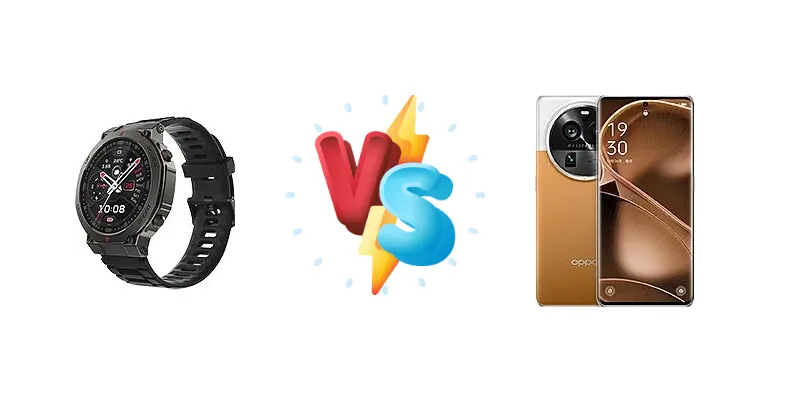
The Xiaomi Black Shark GS3 Ultra and Oppo Find X6 Pro represent distinct approaches to the high-end smartphone market. The Black Shark, true to its lineage, prioritizes gaming performance, while the Oppo Find X6 Pro aims for a more holistic experience with a focus on camera capabilities and refined design. This comparison dissects their strengths and weaknesses to determine which device best suits your needs.
🏆 Quick Verdict
For the average user seeking a balanced flagship experience, the Oppo Find X6 Pro is the stronger choice. Its excellent 1318 nit display, coupled with the Snapdragon 8 Gen 2 and robust 100W charging, provides a compelling package. While the Black Shark GS3 Ultra likely excels in sustained gaming, the Oppo offers broader appeal.
| Network |
|---|
| 2G bands | N/A | GSM 850 / 900 / 1800 / 1900 |
| 3G bands | N/A | HSDPA 800 / 850 / 900 / 1700(AWS) / 1900 / 2100 |
| 4G bands | N/A | 1, 2, 3, 4, 5, 7, 8, 12, 17, 18, 19, 20, 26, 28, 34, 38, 39, 40, 41, 66 |
| 5G bands | - | 1, 3, 5, 7, 8, 20, 28, 38, 40, 41, 66, 77, 78, 79 SA/NSA |
| EDGE | No | - |
| GPRS | No | - |
| Speed | - | HSPA, LTE, 5G |
| Technology | No cellular connectivity | GSM / CDMA / HSPA / CDMA2000 / LTE / 5G |
| | - | CDMA2000 1x |
| Launch |
|---|
| Announced | 2025, November 21 | 2023, March 21 |
| Status | Coming soon. Exp. release 2025, December | Available. Released 2023, March 24 |
| Body |
|---|
| Build | Glass front (Gorilla Glass), aluminum frame | Glass front (Gorilla Glass Victus 2), glass back (Gorilla Glass 5) or eco leather back, aluminum frame |
| Dimensions | - | 164.8 x 76.2 x 9.1 mm or 9.5 mm |
| SIM | No | Nano-SIM + Nano-SIM |
| Weight | - | 216 g or 218 g (7.62 oz) |
| | - | IP68 dust/water resistant (up to 1.5m for 30 min) |
| Display |
|---|
| Protection | Corning Gorilla Glass | Corning Gorilla Glass Victus 2 |
| Resolution | 466 x 466 pixels (~326 ppi density) | 1440 x 3168 pixels (~510 ppi density) |
| Size | 1.43 inches | 6.82 inches, 113.0 cm2 (~90.0% screen-to-body ratio) |
| Type | AMOLED, 1000 nits | LTPO3 AMOLED, 1B colors, 120Hz, Dolby Vision, HDR10+, 800 nits (typ), 1500 nits (HBM), 2500 nits (peak) |
| Platform |
|---|
| CPU | - | Octa-core (1x3.2 GHz Cortex-X3 & 2x2.8 GHz Cortex-A715 & 2x2.8 GHz Cortex-A710 & 3x2.0 GHz Cortex-A510) |
| Chipset | - | Qualcomm SM8550-AB Snapdragon 8 Gen 2 (4 nm) |
| GPU | - | Adreno 740 |
| OS | - | Android 13, up to 4 major Android upgrades, ColorOS 14 |
| Memory |
|---|
| Call records | Yes | - |
| Card slot | No | No |
| Internal | - | 256GB 12GB RAM, 256GB 16GB RAM, 512GB 16GB RAM |
| Phonebook | No | - |
| | - | UFS 4.0 |
| Main Camera |
|---|
| Features | - | Laser AF, color spectrum sensor, Hasselblad Color Calibration, LED flash, HDR, panorama |
| Triple | - | 50 MP, f/1.8, 23mm (wide), 1.0"-type, 1.6µm, dual pixel PDAF, OIS
50 MP, f/2.6, 65mm (periscope telephoto), 1/1.56", 1.0µm, 2.8x optical zoom, multi-directional PDAF, OIS
50 MP, f/2.2, 15mm, 110˚ (ultrawide), 1/1.56", 1.0µm, multi-directional PDAF |
| Video | - | 4K@30/60fps, 1080p@30/60/240fps; gyro-EIS; HDR, 10‑bit video, Dolby Vision |
| Selfie camera |
|---|
| Features | - | Panorama |
| Single | - | 32 MP, f/2.4, 21mm (wide), 1/2.74", 0.8µm, PDAF |
| Video | - | 4K@30fps, gyro-EIS |
| Sound |
|---|
| 3.5mm jack | - | No |
| 35mm jack | No | No |
| Loudspeaker | Yes | Yes, with stereo speakers |
| Comms |
|---|
| Bluetooth | Yes | 5.3, A2DP, LE, aptX HD |
| Infrared port | - | Yes |
| NFC | Unspecified | Yes |
| Positioning | GPS (L1+L5), GLONASS, GALILEO, BDS, QZSS | GPS (L1+L5), GLONASS (G1), BDS (B1I+B1c+B2a), GALILEO (E1+E5a), QZSS (L1+L5) |
| Radio | No | No |
| USB | No | USB Type-C 3.1, OTG |
| WLAN | No | Wi-Fi 802.11 a/b/g/n/ac/6e/7, tri-band, Wi-Fi Direct |
| Features |
|---|
| Games | No | - |
| Java | No | - |
| Messaging | SMS(threaded view), Email, IM | - |
| Sensors | Accelerometer, gyro, compass, barometer, heart rate, SpO2 | Fingerprint (under display, optical), accelerometer, gyro, proximity, compass |
| Battery |
|---|
| Charging | - | 100W wired, PD, 45% in 10 min, 100% in 30 min
50W wireless, 50% in 22 min, 100% in 51 min
10W reverse wireless |
| Type | - | Li-Po 5000 mAh |
| Misc |
|---|
| Colors | Black, Silver | Black, Green, Brown |
| Models | - | PGEM110, PGEM10 |
| Price | - | About 820 EUR |
| Tests |
|---|
| Battery life | - |
Endurance rating 114h
|
| Camera | - |
Photo / Video |
| Display | - |
Contrast ratio: Infinite (nominal) |
| Loudspeaker | - |
-25.1 LUFS (Very good)
|
| Performance | - |
AnTuTu: 1294797 (v9)
GeekBench: 4791 (v5.1), 5226 (v6)
GFXBench: 60fps (ES 3.1 onscreen) |
Xiaomi Black Shark GS3 Ultra
- Likely superior sustained gaming performance due to advanced cooling.
- Potential for gaming-specific features like customizable triggers.
- Aggressive design catering to gamers.
- Camera system likely less advanced than the Oppo.
- Display specs currently unknown, potentially inferior to Oppo.
- May lack the refined design and all-around features of the Oppo.
Oppo Find X6 Pro
- Excellent 1318 nit display for outdoor visibility.
- Fast 100W wired and 50W wireless charging.
- Strong camera system (anticipated).
- May experience more thermal throttling during extended gaming.
- Less focused on gaming-specific features.
- Potentially higher price point.
Display Comparison
The Oppo Find X6 Pro boasts a measured peak brightness of 1318 nits, ensuring excellent visibility even in direct sunlight. While the Black Shark GS3 Ultra’s display specs are currently unknown, its gaming focus suggests a high refresh rate panel is likely. However, without knowing its peak brightness or panel technology (LTPO for variable refresh rate), the Oppo currently holds a clear advantage in display quality. The Oppo’s infinite contrast ratio further enhances visual fidelity, providing deeper blacks and more vibrant colors.
Camera Comparison
The Oppo Find X6 Pro is positioned as a camera-centric device, though specific sensor details are limited to 'Photo / Video' in the provided data. The absence of detailed camera specs for the Black Shark GS3 Ultra makes a direct comparison difficult. However, given its gaming focus, it’s reasonable to assume the camera system will be less prioritized than on the Oppo. The Oppo’s likely inclusion of advanced features like OIS and a large main sensor will translate to superior image quality, particularly in low-light conditions. We can expect the Oppo to excel in both still photography and video recording.
Performance
Both devices are powered by the Qualcomm SM8550-AB Snapdragon 8 Gen 2 (4 nm) chipset, featuring an Octa-core CPU configuration (1x3.2 GHz Cortex-X3, 2x2.8 GHz Cortex-A715, 2x2.8 GHz Cortex-A710, 3x2.0 GHz Cortex-A510). This ensures comparable raw processing power. However, the Black Shark GS3 Ultra is expected to incorporate a more aggressive cooling solution – a hallmark of the brand – to sustain peak performance for longer durations during demanding gaming sessions. The Oppo Find X6 Pro, while capable, may experience more thermal throttling under prolonged heavy load. RAM configurations and storage speeds (UFS 4.0 likely on both) will also play a role, but are currently unknown for the Black Shark.
Battery Life
Both phones share an endurance rating of 114 hours, suggesting comparable battery life despite potentially different capacities. The Oppo Find X6 Pro offers a versatile charging solution with 100W wired charging (0-100% in 30 minutes), 50W wireless charging (0-100% in 51 minutes), and 10W reverse wireless charging. The Black Shark GS3 Ultra’s battery capacity and charging speeds are unknown, but a focus on gaming often necessitates a larger battery to accommodate power-hungry gaming sessions. The Oppo’s faster wired charging provides a quicker top-up when time is limited.
Buying Guide
Buy the Xiaomi Black Shark GS3 Ultra if you are a dedicated mobile gamer who prioritizes raw performance, active cooling, and gaming-specific features like triggers. You'll benefit from a device engineered for extended gaming sessions. Buy the Oppo Find X6 Pro if you value a premium camera system, a vibrant and bright display, and fast charging, all within a more polished and versatile package. It's the better all-rounder for everyday use and content creation.
Frequently Asked Questions
❓ Will the Snapdragon 8 Gen 2 in the Black Shark GS3 Ultra overheat during prolonged gaming sessions?
While the Snapdragon 8 Gen 2 is a powerful chip, it can generate significant heat under sustained load. The Black Shark GS3 Ultra is expected to feature an advanced cooling system to mitigate this, but the effectiveness will depend on the specific implementation. The Oppo Find X6 Pro may experience more throttling without a comparable cooling solution.
❓ How does the Oppo Find X6 Pro's 100W charging compare to other fast charging solutions?
The Oppo Find X6 Pro's 100W SuperVOOC charging is among the fastest available, fully charging the device in approximately 30 minutes. This is significantly faster than standard fast charging solutions and provides a convenient way to quickly replenish the battery.
❓ Is the lack of detailed camera specs for the Black Shark GS3 Ultra a major drawback?
For users prioritizing camera quality, the lack of detailed specs is concerning. Given the Black Shark's gaming focus, it's likely the camera system is less advanced than the Oppo Find X6 Pro. If photography is a key requirement, the Oppo is the clear choice.