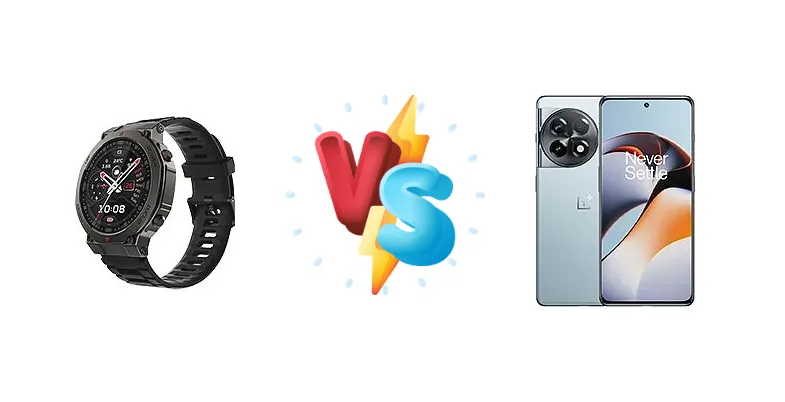
The Xiaomi Black Shark GS3 Ultra aims to deliver an uncompromising gaming experience, while the OnePlus 11R offers a more balanced approach with flagship-level performance at a competitive price. This comparison dissects their strengths and weaknesses to determine which phone best suits your needs, particularly focusing on the implications of the Black Shark's gaming-centric design versus the OnePlus's broader appeal.
🏆 Quick Verdict
For dedicated mobile gamers prioritizing raw performance and specialized features, the Xiaomi Black Shark GS3 Ultra is the clear winner, assuming its price aligns with its feature set. However, the OnePlus 11R provides excellent value with its Snapdragon 8+ Gen 1, 100W charging, and refined software experience, making it the better choice for everyday users.
| Network |
|---|
| 2G bands | N/A | GSM 850 / 900 / 1800 / 1900 |
| 3G bands | N/A | HSDPA 850 / 900 / 1700(AWS) / 2100 |
| 4G bands | N/A | 1, 3, 4, 5, 8, 28, 34, 38, 39, 40, 41 |
| 5G bands | - | 1, 3, 5, 8, 28, 40, 41, 77, 78 SA/NSA |
| EDGE | No | - |
| GPRS | No | - |
| Speed | - | HSPA, LTE (3CA), 5G |
| Technology | No cellular connectivity | GSM / CDMA / HSPA / LTE / 5G |
| | - | CDMA 800 |
| Launch |
|---|
| Announced | 2025, November 21 | 2023, February 07 |
| Status | Coming soon. Exp. release 2025, December | Available. Released 2023, February 21 |
| Body |
|---|
| Build | Glass front (Gorilla Glass), aluminum frame | Glass front, glass back (Gorilla Glass 5), plastic frame |
| Dimensions | - | 163.4 x 74.3 x 8.7 mm (6.43 x 2.93 x 0.34 in) |
| SIM | No | Nano-SIM + Nano-SIM |
| Weight | - | 204 g (7.20 oz) |
| Display |
|---|
| Protection | Corning Gorilla Glass | - |
| Resolution | 466 x 466 pixels (~326 ppi density) | 1240 x 2772 pixels, 20:9 ratio (~451 ppi density) |
| Size | 1.43 inches | 6.74 inches, 109.2 cm2 (~90.0% screen-to-body ratio) |
| Type | AMOLED, 1000 nits | Fluid AMOLED, 1B colors, 120Hz, HDR10+, 1450 nits (peak) |
| Platform |
|---|
| CPU | - | Octa-core (1x3.0 GHz Cortex-X2 & 3x2.5 GHz Cortex-A710 & 4x1.80 GHz Cortex-A510) |
| Chipset | - | Qualcomm SM8475 Snapdragon 8+ Gen 1 (4 nm) |
| GPU | - | Adreno 730 |
| OS | - | Android 13, upgradable to Android 15, OxygenOS 15 |
| Memory |
|---|
| Call records | Yes | - |
| Card slot | No | No |
| Internal | - | 128GB 8GB RAM, 256GB 16GB RAM, 512GB 18GB RAM |
| Phonebook | No | - |
| | - | UFS 3.1 |
| Main Camera |
|---|
| Features | - | Color spectrum sensor, LED flash, HDR, panorama |
| Single | - | 16 MP, f/2.4, 24mm (wide), 1/3.09", 1.0µm |
| Triple | - | 50 MP, f/1.8, 24mm (wide), 1/1.56", 1.0µm, multi-directional PDAF, OIS
8 MP, f/2.2, 120˚ (ultrawide), 1/4.0", 1.12µm
2 MP (macro) |
| Video | - | 4K@30/60fps, 1080p@30/60/240fps, gyro-EIS |
| Selfie camera |
|---|
| Features | - | HDR |
| Single | - | 16 MP, f/2.4, 24mm (wide), 1/3.09", 1.0µm |
| Video | - | 1080p@30fps |
| Sound |
|---|
| 3.5mm jack | - | No |
| 35mm jack | No | No |
| Loudspeaker | Yes | Yes, with stereo speakers |
| | - | 24-bit/192kHz audio |
| Comms |
|---|
| Bluetooth | Yes | 5.3, A2DP, LE, aptX HD |
| Infrared port | - | Yes |
| NFC | Unspecified | Yes |
| Positioning | GPS (L1+L5), GLONASS, GALILEO, BDS, QZSS | GPS (L1+L5), GLONASS (G1), BDS (B1I+B1c+B2a), GALILEO (E1+E5a), QZSS (L1+L5) |
| Radio | No | No |
| USB | No | USB Type-C 2.0 |
| WLAN | No | Wi-Fi 802.11 a/b/g/n/ac/6, dual-band |
| Features |
|---|
| Games | No | - |
| Java | No | - |
| Messaging | SMS(threaded view), Email, IM | - |
| Sensors | Accelerometer, gyro, compass, barometer, heart rate, SpO2 | Fingerprint (under display, optical), accelerometer, gyro, proximity, compass |
| Battery |
|---|
| Charging | - | 100W wired |
| Type | - | Li-Po 5000 mAh |
| Misc |
|---|
| Colors | Black, Silver | Galactic Silver, Sonic Black, Solar Red |
| Models | - | CPH2487 |
| Price | - | About 600 EUR |
| SAR | - | 1.16 W/kg (head) 0.61 W/kg (body) |
Xiaomi Black Shark GS3 Ultra
- Dedicated gaming features (triggers, cooling)
- Potentially higher peak performance (depending on chipset)
- Optimized software for gaming
- Potentially lower battery life due to aggressive performance
- Camera may be secondary to gaming features
- Price may be higher than OnePlus 11R
OnePlus 11R
- Excellent value for money
- Fast 100W charging
- Balanced performance and battery life
- Lacks dedicated gaming features
- May throttle under sustained heavy load
- Software not as gaming-focused
Display Comparison
Without specific display specs for the Black Shark GS3 Ultra, we can infer a high refresh rate panel geared towards gaming. The OnePlus 11R features a 6.78-inch 120Hz AMOLED display. The Snapdragon 8+ Gen 1 in the OnePlus 11R can easily drive this display at its maximum refresh rate, providing smooth visuals. The Black Shark likely prioritizes responsiveness (low touch latency) over absolute color accuracy, while the OnePlus 11R aims for a more balanced presentation. The absence of LTPO in the OnePlus 11R means it won't dynamically adjust refresh rates as efficiently as some flagships, potentially impacting battery life during less demanding tasks.
Camera Comparison
Given the Black Shark’s gaming focus, its camera system is likely optimized for social media sharing rather than professional photography. The OnePlus 11R features a 50MP main camera with OIS, a 8MP ultrawide, and a 2MP macro lens. While the 2MP macro lens is largely a marketing feature, the 50MP main sensor and OIS provide excellent image quality in various lighting conditions. Without specific camera specs for the Black Shark GS3 Ultra, it’s reasonable to assume a similar configuration, but potentially with a different image processing style geared towards vibrant colors and quick capture. The OnePlus 11R’s image processing prioritizes natural colors and detail.
Performance
The OnePlus 11R is powered by the Qualcomm SM8475 Snapdragon 8+ Gen 1 (4nm). This chipset’s 1x3.0 GHz Cortex-X2 prime core, 3x2.5 GHz Cortex-A710 performance cores, and 4x1.80 GHz Cortex-A510 efficiency cores deliver substantial processing power. The Black Shark GS3 Ultra, being a gaming phone, likely utilizes a comparable or newer chipset, potentially a Snapdragon 8 Gen 2 or 8 Gen 3, but this is unconfirmed. The 4nm process node of the Snapdragon 8+ Gen 1 in the OnePlus 11R offers a good balance of performance and thermal efficiency, minimizing throttling during prolonged gaming. The Black Shark’s cooling system will be crucial to maintain peak performance, and its potential for higher clock speeds will only be realized if it can effectively dissipate heat. The OnePlus 11R’s LPDDR5X RAM further enhances performance, ensuring quick app loading and multitasking.
Battery Life
The OnePlus 11R boasts a 5000mAh battery coupled with 100W wired charging, enabling a full charge in approximately 25 minutes. The Black Shark GS3 Ultra’s battery capacity is unknown, but gaming phones often prioritize battery life to support extended play sessions. However, the aggressive performance of a gaming phone can negate a larger battery capacity. The OnePlus 11R’s 100W charging is a significant advantage, allowing users to quickly top up their battery between gaming sessions or during short breaks. The Black Shark will need to match or exceed this charging speed to remain competitive.
Buying Guide
Buy the Xiaomi Black Shark GS3 Ultra if you demand the highest possible frame rates in demanding games, require physical gaming triggers, and prioritize a phone designed specifically for extended gaming sessions. Buy the OnePlus 11R if you prefer a versatile flagship experience with excellent performance, fast charging, and a more polished software experience for daily use, without the gaming-specific compromises.
Frequently Asked Questions
❓ Does the OnePlus 11R's Snapdragon 8+ Gen 1 overheat during extended gaming sessions?
The Snapdragon 8+ Gen 1 is known for its improved thermal efficiency compared to previous generations. While some throttling is possible during prolonged, demanding gaming, the OnePlus 11R's cooling system is generally effective at mitigating heat buildup, allowing for sustained performance. However, it won't match the cooling capabilities of a dedicated gaming phone like the Black Shark GS3 Ultra.
❓ Are the physical gaming triggers on the Black Shark GS3 Ultra worth the extra cost?
For serious mobile gamers, the physical gaming triggers can significantly enhance the gaming experience, providing a more tactile and responsive control scheme. They offer a competitive advantage in certain games and improve overall immersion. However, if you're a casual gamer, the benefits may not justify the additional expense.
❓ How does the OnePlus 11R's software compare to the Black Shark GS3 Ultra's gaming-focused UI?
The OnePlus 11R runs OxygenOS, known for its clean interface, smooth performance, and useful features. The Black Shark GS3 Ultra likely features a heavily customized UI with gaming-specific optimizations and features. While this can enhance the gaming experience, it may come at the cost of bloatware and a less refined overall user experience.