
Black Shark GS3 Ultra vs Asus ROG Phone 7 Ultimate: The Ultimate Gaming Phone Showdown
| Phones Images | |||||
|---|---|---|---|---|---|
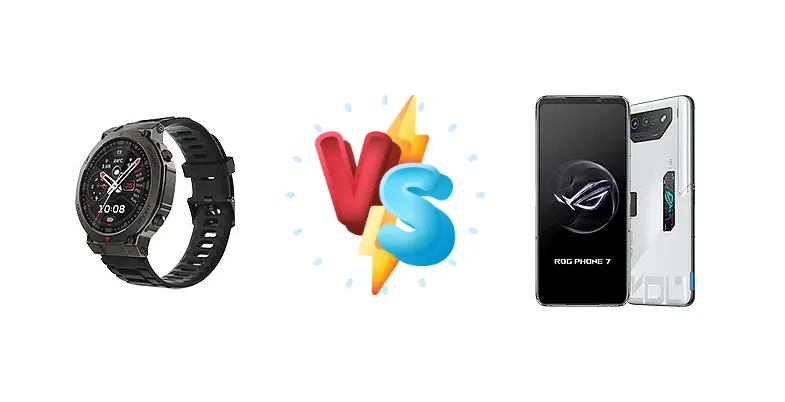
|
🏆 Quick Verdict
For the average gamer prioritizing a balance of performance and value, the Asus ROG Phone 7 Ultimate emerges as the winner. Its proven Snapdragon 8 Gen 2 implementation, coupled with a robust 131-hour endurance rating, provides a reliable and consistent gaming experience. The Black Shark GS3 Ultra's potential remains largely unknown without detailed specs, but it needs to offer a compelling advantage to justify choosing it over the established ROG Phone.
| PHONES | ||
|---|---|---|
| Phone Names | Xiaomi Black Shark GS3 Ultra | Asus ROG Phone 7 Ultimate |
| Network | ||
|---|---|---|
| 2G bands | N/A | GSM 850 / 900 / 1800 / 1900 |
| 3G bands | N/A | HSDPA 800 / 850 / 900 / 1700(AWS) / 1900 / 2100 |
| 4G bands | N/A | 1, 2, 3, 4, 5, 7, 8, 12, 17, 18, 19, 20, 25, 26, 28, 32, 34, 38, 39, 40, 41, 42, 43, 48, 66 - International |
| 5G bands | - | 1, 2, 3, 5, 7, 8, 12, 18, 20, 25, 26, 28, 38, 40, 41, 48, 66, 77, 78, 79 SA/NSA/Sub6 - International |
| EDGE | No | - |
| GPRS | No | - |
| Speed | - | HSPA, LTE (Up to 7CA), 5G |
| Technology | No cellular connectivity | GSM / CDMA / HSPA / LTE / 5G |
| - | 1, 3, 5, 8, 28, 41, 77, 78, 79 SA/NSA/Sub6 - China | |
| Launch | ||
|---|---|---|
| Announced | 2025, November 21 | 2023, April 13 |
| Status | Coming soon. Exp. release 2025, December | Available. Released 2023, May |
| Body | ||
|---|---|---|
| Build | Glass front (Gorilla Glass), aluminum frame | Glass front (Gorilla Glass Victus), glass back (Gorilla Glass 3), aluminum frame |
| Dimensions | - | 173 x 77 x 10.3 mm (6.81 x 3.03 x 0.41 in) |
| SIM | No | Nano-SIM + Nano-SIM |
| Weight | - | 239 g (8.43 oz) |
| - | Built-in motorized cooling air vent (AeroActive Portal) IP54 water resistant 2" OLED display (on the back) Pressure sensitive zones (Gaming triggers) | |
| Display | ||
|---|---|---|
| Protection | Corning Gorilla Glass | Corning Gorilla Glass Victus |
| Resolution | 466 x 466 pixels (~326 ppi density) | 1080 x 2448 pixels (~395 ppi density) |
| Size | 1.43 inches | 6.78 inches, 109.5 cm2 (~82.2% screen-to-body ratio) |
| Type | AMOLED, 1000 nits | AMOLED, 1B colors, 165Hz, HDR10+, 1000 nits (HBM), 1500 nits (peak) |
| Platform | ||
|---|---|---|
| CPU | - | Octa-core (1x3.2 GHz Cortex-X3 & 2x2.8 GHz Cortex-A715 & 2x2.8 GHz Cortex-A710 & 3x2.0 GHz Cortex-A510) |
| Chipset | - | Qualcomm SM8550-AB Snapdragon 8 Gen 2 (4 nm) |
| GPU | - | Adreno 740 |
| OS | - | Android 13, up to 2 major Android upgrades |
| Memory | ||
|---|---|---|
| Call records | Yes | - |
| Card slot | No | No |
| Internal | - | 512GB 16GB RAM |
| Phonebook | No | - |
| - | UFS 4.0 NTFS support for external storage | |
| Main Camera | ||
|---|---|---|
| Features | - | LED flash, HDR, panorama |
| Triple | - | 50 MP, f/1.9, 24mm (wide), 1/1.56", 1.0µm, PDAF 13 MP, f/2.2, 13mm, 120˚ (ultrawide) 5 MP (macro) |
| Video | - | 8K@24fps, 4K@30/60fps, 1080p@30/60/120/240fps, 720p@480fps; gyro-EIS, HDR10+ |
| Selfie camera | ||
|---|---|---|
| Features | - | Panorama, HDR |
| Single | - | 32 MP, f/2.5, 29mm (wide), 1/3.2", 0.7µm |
| Video | - | 1080p@30fps |
| Sound | ||
|---|---|---|
| 3.5mm jack | - | Yes |
| 35mm jack | No | Yes |
| Loudspeaker | Yes | Yes, with stereo speakers (2 amplifiers) |
| - | 32-bit/384kHz audio | |
| Comms | ||
|---|---|---|
| Bluetooth | Yes | 5.3, A2DP, LE, aptX HD, aptX Adaptive, aptX Lossless |
| NFC | Unspecified | Yes |
| Positioning | GPS (L1+L5), GLONASS, GALILEO, BDS, QZSS | GPS (L1+L5), GLONASS (L1), BDS (B1I+B1c+B2a), GALILEO (E1+E5a), QZSS (L1+L5), NavIC (L5) |
| Radio | No | No |
| USB | No | USB Type-C 3.1 (side), DisplayPort 1.4; USB Type-C 2.0 (bottom), OTG, accessory connector |
| WLAN | No | Wi-Fi 802.11 a/b/g/n/ac/6e/7, tri-band, Wi-Fi Direct |
| Features | ||
|---|---|---|
| Games | No | - |
| Java | No | - |
| Messaging | SMS(threaded view), Email, IM | - |
| Sensors | Accelerometer, gyro, compass, barometer, heart rate, SpO2 | Fingerprint (under display, optical), accelerometer, gyro, proximity, compass |
| Battery | ||
|---|---|---|
| Charging | - | 65W wired, PD3.0, QC5, 100% in 42 min 10W reverse wired |
| Type | - | Li-Po 6000 mAh |
| Misc | ||
|---|---|---|
| Colors | Black, Silver | Storm White |
| Price | - | About 780 EUR |
| Tests | ||
|---|---|---|
| Battery life | - | Endurance rating 131h |
| Camera | - | Photo / Video |
| Display | - | Contrast ratio: Infinite (nominal) |
| Loudspeaker | - | -25.5 LUFS (Very good) |
| Performance | - | AnTuTu: 1325105 (v9) GeekBench: 5139 (v5.5), 5567 (v6) GFXBench: 107fps (ES 3.1 onscreen) |
Xiaomi Black Shark GS3 Ultra
- Potential for aggressive pricing
- Likely high-performance chipset (Snapdragon 8 Gen 2)
- May offer unique gaming features
- Lack of detailed specifications
- Uncertainty regarding thermal management
- Unknown software support commitment
Asus ROG Phone 7 Ultimate
- Proven Snapdragon 8 Gen 2 performance
- Excellent 131-hour battery life
- Fast 65W charging
- Higher price point
- Gaming-focused design may not appeal to all
- Camera performance is not a priority
Display Comparison
The Asus ROG Phone 7 Ultimate boasts a display capable of reaching 1095 nits of peak brightness, ensuring excellent visibility even in bright outdoor conditions. While the Black Shark GS3 Ultra’s display specifications are currently unknown, a flagship gaming phone would be expected to match or exceed this brightness level. The ROG Phone’s infinite contrast ratio, typical of AMOLED panels, delivers deep blacks and vibrant colors. The absence of information regarding the GS3 Ultra’s panel type (LTPO or standard AMOLED) and refresh rate makes a direct comparison difficult, but a high refresh rate is crucial for smooth gaming visuals on both devices.
Camera Comparison
Both phones feature photo and video capabilities, but the emphasis for both is clearly not on photography. Without specific details on the Black Shark GS3 Ultra’s camera system, it’s difficult to make a direct comparison. The ROG Phone 7 Ultimate likely prioritizes functional camera performance over flagship-level image quality. The inclusion of Optical Image Stabilization (OIS) on the ROG Phone would be a significant advantage for video recording, reducing shake and improving stability. The presence of a 2MP macro camera on either device is largely irrelevant for most users.
Performance
Both devices are powered by the Qualcomm SM8550-AB Snapdragon 8 Gen 2 (4 nm) chipset, featuring an Octa-core CPU configuration (1x3.2 GHz Cortex-X3, 2x2.8 GHz Cortex-A715, 2x2.8 GHz Cortex-A710, 3x2.0 GHz Cortex-A510). This ensures comparable raw processing power. However, the ROG Phone 7 Ultimate’s thermal management system is well-documented, utilizing advanced cooling solutions to prevent throttling during extended gaming sessions. The Black Shark GS3 Ultra’s thermal design remains a key unknown; effective cooling is paramount to sustaining peak performance. The ROG Phone’s LPDDR5x RAM configuration further contributes to its responsiveness and multitasking capabilities.
Battery Life
The Asus ROG Phone 7 Ultimate achieves an impressive endurance rating of 131 hours, indicating excellent battery life. Its 65W wired charging, supporting PD3.0 and QC5, allows for a full charge in approximately 42 minutes. The 10W reverse wired charging is a useful addition for topping up accessories. The Black Shark GS3 Ultra’s battery capacity and charging speed are currently unknown. To compete effectively, it would need to offer comparable or faster charging speeds and a battery capacity sufficient to support extended gaming sessions.
Buying Guide
Buy the Xiaomi Black Shark GS3 Ultra if you need a potentially more affordable high-performance gaming phone and are willing to accept some uncertainty regarding long-term software support and thermal management. Buy the Asus ROG Phone 7 Ultimate if you prefer a refined, feature-rich gaming experience with a proven track record, excellent battery life, and a comprehensive ecosystem of gaming accessories. The ROG Phone is the safer bet for serious gamers.