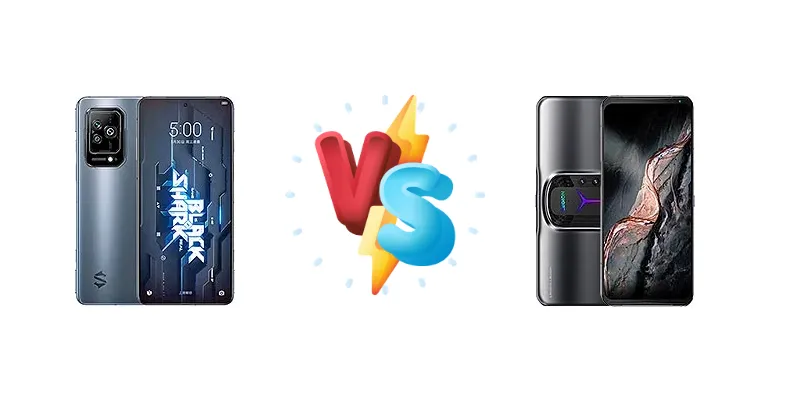
The mobile gaming landscape is fiercely competitive, and Xiaomi and Lenovo are key players. The Black Shark 5, leveraging the Snapdragon 870, offers a compelling balance of performance and price. The Lenovo Legion Y90, however, throws down the gauntlet with the flagship Snapdragon 8 Gen 1. This comparison dissects their strengths and weaknesses to determine which device reigns supreme for serious mobile gamers.
🏆 Quick Verdict
For most gamers, the Lenovo Legion Y90 emerges as the superior choice. While the Black Shark 5 provides excellent value, the Snapdragon 8 Gen 1’s raw processing power and, crucially, Lenovo’s advanced cooling solution, translate to sustained higher frame rates and a smoother overall gaming experience. The faster processor justifies the price premium for performance-focused users.
| Network |
|---|
| 2G bands | GSM 850 / 900 / 1800 / 1900 | GSM 850 / 900 / 1800 / 1900 |
| 3G bands | HSDPA 800 / 850 / 900 / 1700(AWS) / 1900 / 2100 | HSDPA 800 / 850 / 900 / 1900 / 2100 |
| 4G bands | 1, 2, 3, 4, 5, 8, 18, 19, 26, 28, 34, 38, 39, 40, 41 | LTE |
| 5G bands | 1, 3, 5, 8, 28, 41, 77, 78 SA/NSA | SA/NSA/Sub6 |
| Speed | HSPA, LTE, 5G | HSPA, LTE, 5G |
| Technology | GSM / CDMA / HSPA / LTE / 5G | GSM / CDMA / HSPA / CDMA2000 / LTE / 5G |
| | CDMA 800 & TD-SCDMA | CDMA2000 1x |
| Launch |
|---|
| Announced | 2022, March 30 | 2022, March 01 |
| Status | Available. Released 2022, April 04 | Available. Released 2022, March 10 |
| Body |
|---|
| Dimensions | 163.8 x 76.3 x 10 mm (6.45 x 3.00 x 0.39 in) | 177 x 78.4 x 10.1 mm (6.97 x 3.09 x 0.40 in) |
| SIM | Nano-SIM + Nano-SIM | Nano-SIM + Nano-SIM |
| Weight | 218 g (7.69 oz) | 252 g (8.89 oz) |
| | Physical pop-up gaming triggers | Built-in two cooling fans
RGB light panel (on the back)
4 ultrasonic buttons (Gaming triggers) |
| Display |
|---|
| Resolution | 1080 x 2400 pixels, 20:9 ratio (~395 ppi density) | 1080 x 2460 pixels (~388 ppi density) |
| Size | 6.67 inches, 107.4 cm2 (~85.9% screen-to-body ratio) | 6.92 inches, 113.7 cm2 (~81.9% screen-to-body ratio) |
| Type | AMOLED, 144Hz, 1300 nits (peak) | AMOLED, 144Hz, HDR10+, 1300 nits (peak) |
| | Always-on display | - |
| Platform |
|---|
| CPU | Octa-core (1x3.2 GHz Kryo 585 & 3x2.42 GHz Kryo 585 & 4x1.80 GHz Kryo 585) | Octa-core (1x3.00 GHz Cortex-X2 & 3x2.50 GHz Cortex-A710 & 4x1.80 GHz Cortex-A510) |
| Chipset | Qualcomm SM8250-AC Snapdragon 870 5G (7 nm) | Qualcomm SM8450 Snapdragon 8 Gen 1 (4 nm) |
| GPU | Adreno 650 | Adreno 730 |
| OS | Android 12, Joy UI 13 | Android 12, ZUI 13 |
| Memory |
|---|
| Card slot | No | No |
| Internal | 128GB 8GB RAM, 128GB 12GB RAM, 256GB 12GB RAM | 256GB 12GB RAM, 256GB 16GB RAM, 640GB 18GB RAM |
| | UFS 3.1 | UFS 3.1
640GB (512GB UFS + 128GB SSD) |
| Main Camera |
|---|
| Dual | - | 64 MP, f/1.9, 25mm (wide), 1/1.32", 1.0µm, PDAF
13 MP, 120˚ (ultrawide) |
| Features | LED flash, HDR, panorama | Dual-LED flash, panorama, HDR |
| Triple | 64 MP, f/1.8, (wide), PDAF
13 MP, f/2.4, 120˚ (ultrawide)
2 MP (macro) | - |
| Video | 4K@30/60fps, 1080p@30/60/240fps, 1080p@960fps | 8K@24fps, 4K@30/60fps, 1080p@30/60/240fps, gyro-EIS, HDR10+ rec. |
| Selfie camera |
|---|
| Features | HDR | HDR |
| Single | 16 MP, (wide) | 16 MP |
| Video | 1080p@30fps | 4K@30/60fps, 1080p@30/60/120fps |
| Sound |
|---|
| 3.5mm jack | No | No |
| 35mm jack | No | No |
| Loudspeaker | Yes, with stereo speakers | Yes, with stereo speakers |
| | 24-bit/192kHz audio | - |
| Comms |
|---|
| Bluetooth | 5.2, A2DP, LE, aptX HD, aptX Adaptive | 5.2, A2DP, LE |
| NFC | Yes | Yes |
| Positioning | GPS, GLONASS, GALILEO, QZSS, BDS | GPS (L1+L5), GLONASS, GALILEO, BDS, QZSS |
| Radio | No | No |
| USB | USB Type-C 2.0 | USB Type-C 3.1 Gen2, USB Type-C 2.0, OTG |
| WLAN | Wi-Fi 802.11 a/b/g/n/ac/6, dual-band, Wi-Fi Direct | Wi-Fi 802.11 a/b/g/n/ac/6, dual-band, Wi-Fi Direct |
| Features |
|---|
| Sensors | Fingerprint (side-mounted), accelerometer, gyro, proximity, compass, barometer | Fingerprint (under display, optical), accelerometer, gyro, proximity, compass |
| Battery |
|---|
| Charging | 120W wired, 100% in 15 min | 68W wired, 100% in 35 min |
| Type | Li-Po 4650 mAh | Li-Po 5600 mAh |
| Misc |
|---|
| Colors | Black, White, Gray | Gray |
| Models | SHARK PAR-A0 | L71061 |
| Price | About 600 EUR | About 570 EUR |
Xiaomi Black Shark 5
- Blazing-fast 120W charging
- More affordable price point
- Solid Snapdragon 870 performance for most games
- Snapdragon 870 can throttle under sustained load
- Potentially less advanced camera system
Lenovo Legion Y90
- Superior Snapdragon 8 Gen 1 performance
- Advanced cooling system for sustained performance
- Likely better camera capabilities
- Slower 68W charging
- Higher price tag
Display Comparison
While specific display specs aren't provided, both phones target gamers, suggesting high refresh rates. However, the core difference lies in the underlying chipsets impacting graphical fidelity. The Snapdragon 8 Gen 1 in the Legion Y90 can push higher resolutions and refresh rates consistently. The Black Shark 5’s Snapdragon 870, while capable, will likely require more graphical compromises in demanding titles. Bezels are likely minimized on both, but the Legion Y90, being a newer device, may benefit from slightly slimmer borders. Color accuracy is expected to be good on both, optimized for vibrant gaming visuals.
Camera Comparison
Given the gaming focus, camera performance isn’t the primary concern. However, the Legion Y90, being a newer flagship, likely incorporates a more advanced camera system with a larger main sensor and improved image processing. While specific sensor details are missing, the Legion Y90 likely benefits from better low-light performance and dynamic range. The Black Shark 5’s camera is likely adequate for casual photography but won’t compete with dedicated camera phones.
Performance
The Lenovo Legion Y90’s Snapdragon 8 Gen 1 (4nm) represents a significant leap over the Black Shark 5’s Snapdragon 870 (7nm). The 8 Gen 1’s Cortex-X2 prime core clocked at 3.00 GHz provides a substantial single-core performance advantage. The 870’s Kryo 585 cores, while efficient, can’t match the Gen 1’s raw power. Crucially, the 4nm process node of the Gen 1 offers superior thermal efficiency, mitigating throttling during prolonged gaming sessions – a common issue with the 8 Gen 1 in less well-cooled devices. Lenovo’s cooling system is a key differentiator here, likely employing vapor chamber technology to maintain peak performance. The Legion Y90 also benefits from faster LPDDR5x RAM, further enhancing responsiveness.
Battery Life
The Black Shark 5 boasts a remarkable 120W wired charging, achieving a full charge in just 15 minutes. This is a significant advantage over the Legion Y90’s 68W charging, which takes 35 minutes to reach 100%. However, battery capacity isn’t specified. The faster charging of the Black Shark 5 is particularly beneficial for gamers who need to quickly top up their battery between sessions. The Snapdragon 8 Gen 1 in the Legion Y90 is more power-hungry, potentially offsetting any capacity advantage the Black Shark 5 might have. The Legion Y90’s superior thermal management may also contribute to more efficient power usage during gaming.
Buying Guide
Buy the Xiaomi Black Shark 5 if you prioritize affordability and a respectable gaming experience without breaking the bank. It’s ideal for casual gamers or those new to the mobile gaming scene. Buy the Lenovo Legion Y90 if you demand the absolute best performance, are willing to pay a premium, and require a device capable of handling the most demanding games at maximum settings for extended periods. It’s geared towards competitive gamers and enthusiasts.
Frequently Asked Questions
❓ Will the Snapdragon 8 Gen 1 in the Legion Y90 overheat during long gaming sessions?
The Snapdragon 8 Gen 1 is known to generate heat. However, Lenovo has implemented a robust cooling system, likely including a vapor chamber and multiple heat pipes, specifically designed to mitigate thermal throttling and maintain peak performance during extended gaming. This is a key advantage over devices with less sophisticated cooling solutions.
❓ Is the Snapdragon 870 in the Black Shark 5 still capable of playing demanding games like Genshin Impact?
Yes, the Snapdragon 870 is still a very capable chipset and can run Genshin Impact and other demanding games. However, you may need to lower graphical settings to maintain a stable frame rate, especially during intense combat scenarios. The Legion Y90 will offer a smoother experience at higher settings.
❓ Does the Black Shark 5's 120W charging degrade the battery health faster?
While extremely fast charging is convenient, there's a common concern about battery degradation. Xiaomi likely employs battery health management software to mitigate this, such as limiting charging to 80% overnight. However, long-term effects are still being studied. The Legion Y90's slower 68W charging may contribute to slightly slower degradation over the lifespan of the device.