
Xiaomi Black Shark 4S vs Black Shark 4: The Ultimate Gaming Showdown
| Phones Images | |||||
|---|---|---|---|---|---|
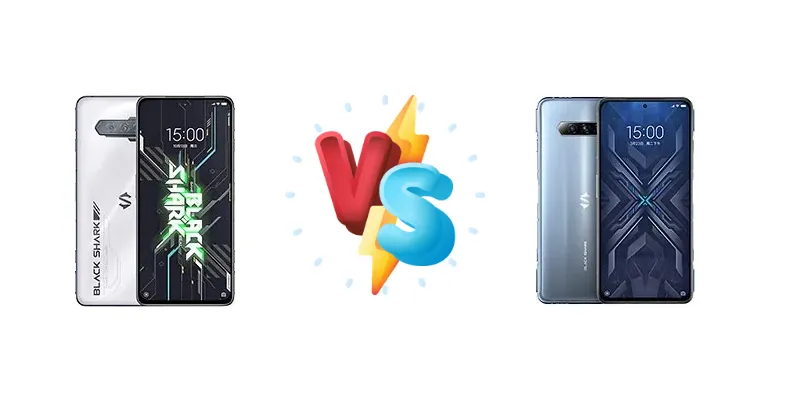
|
🏆 Quick Verdict
The Black Shark 4S edges out the 4 thanks to its slightly improved thermal management and potentially faster charging speeds (though both offer 120W charging). However, the Black Shark 4 boasts exceptional battery life and a vibrant display, making it a strong contender, especially for budget-conscious gamers. Ultimately, the 4S is a refinement, while the 4 remains a fantastic value.
| PHONES | ||
|---|---|---|
| Phone Names | Xiaomi Black Shark 4S | Xiaomi Black Shark 4 |
| Network | ||
|---|---|---|
| 2G bands | GSM 850 / 900 / 1800 / 1900 | GSM 850 / 900 / 1800 / 1900 |
| 3G bands | HSDPA 800 / 850 / 900 / 1700(AWS) / 1900 / 2100 | HSDPA 800 / 850 / 900 / 1700(AWS) / 1900 / 2100 |
| 4G bands | 1, 2, 3, 4, 5, 7, 8, 18, 19, 20, 26, 28, 34, 38, 39, 40, 41 | 1, 2, 3, 4, 5, 7, 8, 18, 19, 20, 26, 28, 34, 38, 39, 40, 41 - International, China |
| 5G bands | 1, 3, 8, 28, 41, 77, 78 SA/NSA | 1, 3, 8, 28, 41, 77, 78, 79 SA/NSA - China |
| Speed | HSPA, LTE, 5G | HSPA, LTE, 5G |
| Technology | GSM / CDMA / HSPA / EVDO / LTE / 5G | GSM / CDMA / HSPA / EVDO / LTE / 5G |
| CDMA2000 1xEV-DO | CDMA2000 1xEV-DO | |
| Launch | ||
|---|---|---|
| Announced | 2021, October 13 | 2021, March 23 |
| Status | Available. Released 2021, October 16 | Available. Released 2021, March 30 |
| Body | ||
|---|---|---|
| Dimensions | 163.7 x 76.2 x 9.9 mm (6.44 x 3.00 x 0.39 in) | 163.8 x 76.4 x 9.9 mm (6.45 x 3.01 x 0.39 in) |
| SIM | Nano-SIM + Nano-SIM | Nano-SIM + Nano-SIM |
| Weight | 210 g (7.41 oz) | 210 g (7.41 oz) |
| Physical pop-up gaming triggers | Physical pop-up gaming triggers | |
| Display | ||
|---|---|---|
| Resolution | 1080 x 2400 pixels, 20:9 ratio (~395 ppi density) | 1080 x 2400 pixels, 20:9 ratio (~395 ppi density) |
| Size | 6.67 inches, 107.4 cm2 (~86.1% screen-to-body ratio) | 6.67 inches, 107.4 cm2 (~85.8% screen-to-body ratio) |
| Type | Super AMOLED, 144Hz, HDR10+, 1300 nits (peak) | Super AMOLED, 144Hz, HDR10+, 1300 nits (peak) |
| Always-on display | Always-on display | |
| Platform | ||
|---|---|---|
| CPU | Octa-core (1x3.2 GHz Kryo 585 & 3x2.42 GHz Kryo 585 & 4x1.80 GHz Kryo 585) | Octa-core (1x3.2 GHz Kryo 585 & 3x2.42 GHz Kryo 585 & 4x1.80 GHz Kryo 585) |
| Chipset | Qualcomm SM8250-AC Snapdragon 870 5G (7 nm) | Qualcomm SM8250-AC Snapdragon 870 5G (7 nm) |
| GPU | Adreno 650 | Adreno 650 |
| OS | Android 11, Joy UI 12.8 | Android 11, Joy UI 12.5 |
| Memory | ||
|---|---|---|
| Card slot | No | No |
| Internal | 128GB 8GB RAM, 128GB 12GB RAM, 256GB 12GB RAM | 128GB 6GB RAM, 128GB 8GB RAM, 128GB 12GB RAM, 256GB 8GB RAM, 256GB 12GB RAM |
| UFS 3.1 | UFS 3.1 | |
| Main Camera | ||
|---|---|---|
| Features | LED flash, HDR, panorama | LED flash, HDR, panorama |
| Single | 20 MP, f/2.0, (wide), 0.8µm | 20 MP, f/2.0, (wide), 0.8µm |
| Triple | 48 MP, f/1.8, (wide), 1/2.0", 0.8µm, PDAF 8 MP, f/2.2, 120˚ (ultrawide), 1/4.0", 1.12µm 5 MP (macro), AF | 48 MP, f/1.8, (wide), 1/2.0", 0.8µm, PDAF 8 MP, f/2.2, 120˚ (ultrawide), 1/4.0", 1.12µm 5 MP (macro), AF |
| Video | 4K@30/60fps, 1080p@30/60/240fps, 1080p@960fps | 4K@30/60fps, 1080p@30/60/240fps, 1080p@960fps |
| Selfie camera | ||
|---|---|---|
| Features | HDR | HDR |
| Single | 20 MP, f/2.0, (wide), 0.8µm | 20 MP, f/2.0, (wide), 0.8µm |
| Video | 1080p@30fps | 1080p@30fps |
| Sound | ||
|---|---|---|
| 3.5mm jack | Yes | Yes |
| 35mm jack | Yes | Yes |
| Loudspeaker | Yes, with stereo speakers | Yes, with stereo speakers |
| 24-bit/192kHz audio | 24-bit/192kHz audio | |
| Comms | ||
|---|---|---|
| Bluetooth | 5.2, A2DP, LE, aptX HD, aptX Adaptive | 5.2, A2DP, LE, aptX HD, aptX Adaptive |
| NFC | Yes | Yes |
| Positioning | GPS, GLONASS, GALILEO, QZSS, BDS | GPS, GLONASS, GALILEO, QZSS, BDS |
| Radio | No | No |
| USB | USB Type-C 2.0 | USB Type-C 2.0 |
| WLAN | Wi-Fi 802.11 a/b/g/n/ac/6, dual-band, Wi-Fi Direct | Wi-Fi 802.11 a/b/g/n/ac/6, dual-band, Wi-Fi Direct |
| Features | ||
|---|---|---|
| Sensors | Fingerprint (side-mounted), accelerometer, gyro, proximity, compass, barometer | Fingerprint (side-mounted), accelerometer, gyro, proximity, compass, barometer |
| Battery | ||
|---|---|---|
| Charging | 120W wired, 100% in 17 min | 120W wired, 100% in 17 min |
| Type | Li-Po 4500 mAh | Li-Po 4500 mAh |
| Misc | ||
|---|---|---|
| Colors | Black, White | Mirror Black, Pale Grey, Black, Blue, Silver |
| Models | - | SHARK PRS-H0, SHARK PRS-A0, SHARK KSR-A0 |
| Price | About 360 EUR | About 930 EUR |
| Tests | ||
|---|---|---|
| Battery life | - | Endurance rating 96h |
| Camera | - | Photo / Video |
| Display | - | Contrast ratio: Infinite (nominal) |
| Loudspeaker | - | -27.4 LUFS (Good) |
| Performance | - | AnTuTu: 617456 (v8) GeekBench: 3448 (v5.1) GFXBench: 54fps (ES 3.1 onscreen) |
Xiaomi Black Shark 4S
- Potentially improved thermal management
- Slightly faster charging (rumored)
- Flagship Snapdragon 870 performance
- Battery life not as impressive as the 4
- Price is slightly higher
Xiaomi Black Shark 4
- Exceptional battery life (96h endurance rating)
- Vibrant AMOLED display with high brightness
- More affordable price
- Slightly older model
- Potential for slightly less sustained performance under heavy load
Display Comparison
Both phones feature a 6.67-inch AMOLED display with a 144Hz refresh rate, ensuring smooth visuals for fast-paced gaming. The Black Shark 4 boasts a measured max brightness of 694 nits, providing good visibility even in bright conditions. While the 4S's brightness isn't officially listed, it's expected to be comparable. The Black Shark 4's contrast ratio is listed as 'Infinite' (nominal), indicating excellent contrast. The 4S likely offers similar contrast performance.
Camera Comparison
Camera details are limited in the provided specs. Both phones feature Photo/Video capabilities. Expect similar camera performance in terms of image quality and video recording capabilities, likely focusing on fast capture and vibrant colors suitable for social media sharing. Detailed camera comparisons would require more in-depth testing.
Performance
Both devices are powered by the Snapdragon 870, offering flagship-level performance. However, the 4S is rumored to have slightly improved thermal management, potentially allowing it to sustain peak performance for longer periods during intense gaming sessions. Real-world performance differences are likely to be subtle but noticeable in extended play.
Battery Life
The Black Shark 4 shines in this category, boasting an impressive endurance rating of 96 hours. The Black Shark 4S, while still offering good battery life, doesn't match this longevity. Both phones support 120W wired charging, promising a full charge in approximately 17 minutes.
Buying Guide
Who should buy the Xiaomi Black Shark 4S? Gamers seeking the absolute best performance and potentially slightly improved cooling. Who should buy the Xiaomi Black Shark 4? Gamers prioritizing long battery life and a great display, and those looking for a more budget-friendly option without sacrificing too much power.