
Xiaomi Black Shark 4S vs Huawei Mate 20 Pro: A Detailed Showdown
| Phones Images | |||||
|---|---|---|---|---|---|
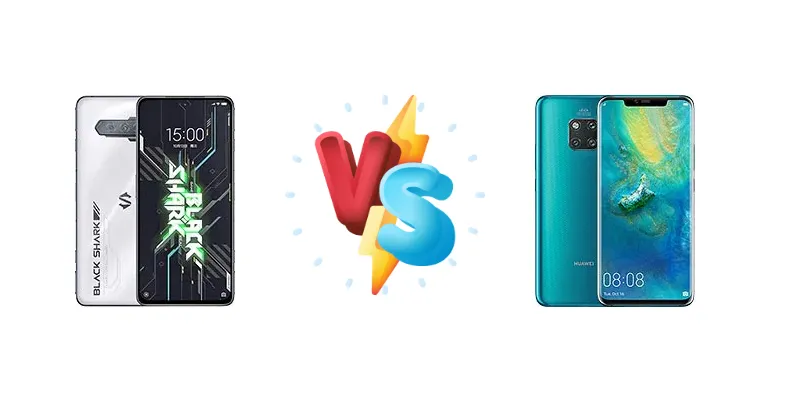
|
🏆 Quick Verdict
The Black Shark 4S wins on raw power and charging speed, making it ideal for gamers. However, the Mate 20 Pro offers exceptional battery life and a brilliant display, providing excellent value for those prioritizing longevity and visual quality. It's a trade-off between performance and endurance.
| PHONES | ||
|---|---|---|
| Phone Names | Xiaomi Black Shark 4S | Huawei Mate 20 Pro |
| Network | ||
|---|---|---|
| 2G bands | GSM 850 / 900 / 1800 / 1900 | GSM 850 / 900 / 1800 / 1900 |
| 3G bands | HSDPA 800 / 850 / 900 / 1700(AWS) / 1900 / 2100 | HSDPA 800 / 850 / 900 / 1700(AWS) / 1900 / 2100 |
| 4G bands | 1, 2, 3, 4, 5, 7, 8, 18, 19, 20, 26, 28, 34, 38, 39, 40, 41 | 1, 2, 3, 4, 5, 6, 7, 8, 9, 12, 17, 18, 19, 20, 26, 28, 32, 34, 38, 39, 40 |
| 5G bands | 1, 3, 8, 28, 41, 77, 78 SA/NSA | - |
| Speed | HSPA, LTE, 5G | HSPA 42.2/5.76 Mbps, LTE Cat21 1400/200 Mbps |
| Technology | GSM / CDMA / HSPA / EVDO / LTE / 5G | GSM / HSPA / LTE |
| CDMA2000 1xEV-DO | - | |
| Launch | ||
|---|---|---|
| Announced | 2021, October 13 | 2018, October 16. Released 2018, October 31 |
| Status | Available. Released 2021, October 16 | Discontinued |
| Body | ||
|---|---|---|
| Build | - | Glass front (Gorilla Glass 5), glass back (Gorilla Glass 5), aluminum frame |
| Dimensions | 163.7 x 76.2 x 9.9 mm (6.44 x 3.00 x 0.39 in) | 157.8 x 72.3 x 8.6 mm (6.21 x 2.85 x 0.34 in) |
| SIM | Nano-SIM + Nano-SIM | · Nano-SIM· Nano-SIM + Nano-SIM |
| Weight | 210 g (7.41 oz) | 189 g (6.67 oz) |
| Physical pop-up gaming triggers | IP68 dust/water resistant (up to 2m for 30 mins) | |
| Display | ||
|---|---|---|
| Protection | - | Corning Gorilla Glass 5 |
| Resolution | 1080 x 2400 pixels, 20:9 ratio (~395 ppi density) | 1440 x 3120 pixels, 19.5:9 ratio (~538 ppi density) |
| Size | 6.67 inches, 107.4 cm2 (~86.1% screen-to-body ratio) | 6.39 inches, 100.2 cm2 (~87.9% screen-to-body ratio) |
| Type | Super AMOLED, 144Hz, HDR10+, 1300 nits (peak) | OLED, HDR10 |
| Always-on display | - | |
| Platform | ||
|---|---|---|
| CPU | Octa-core (1x3.2 GHz Kryo 585 & 3x2.42 GHz Kryo 585 & 4x1.80 GHz Kryo 585) | Octa-core (2x2.6 GHz Cortex-A76 & 2x1.92 GHz Cortex-A76 & 4x1.8 GHz Cortex-A55) |
| Chipset | Qualcomm SM8250-AC Snapdragon 870 5G (7 nm) | Kirin 980 (7 nm) |
| GPU | Adreno 650 | Mali-G76 MP10 |
| OS | Android 11, Joy UI 12.8 | Android 9.0 (Pie), EMUI 9.1 |
| Memory | ||
|---|---|---|
| Card slot | No | Nano Memory (uses shared SIM slot) |
| Internal | 128GB 8GB RAM, 128GB 12GB RAM, 256GB 12GB RAM | 128GB 6GB RAM, 128GB 8GB RAM, 256GB 8GB RAM |
| UFS 3.1 | UFS 2.1 | |
| Main Camera | ||
|---|---|---|
| Features | LED flash, HDR, panorama | Laser AF, Leica optics, dual-LED dual-tone flash, panorama, HDR |
| Single | 20 MP, f/2.0, (wide), 0.8µm | - |
| Triple | 48 MP, f/1.8, (wide), 1/2.0", 0.8µm, PDAF 8 MP, f/2.2, 120˚ (ultrawide), 1/4.0", 1.12µm 5 MP (macro), AF | 40 MP, f/1.8, 27mm (wide), 1/1.7", PDAF 8 MP, f/2.4, 80mm (telephoto), 1/4.0", PDAF, OIS, 3x optical zoom 20 MP, f/2.2, 16mm (ultrawide), 1/2.7", PDAF |
| Video | 4K@30/60fps, 1080p@30/60/240fps, 1080p@960fps | 4K@30fps, 1080p@60fps, 1080p@30fps (gyro-EIS), 720p@960fps |
| Selfie camera | ||
|---|---|---|
| Features | HDR | HDR |
| Single | 20 MP, f/2.0, (wide), 0.8µm | 24 MP, f/2.0, 26mm (wide), 1/2.8", 0.9µm |
| Video | 1080p@30fps | 1080p@30fps |
| Sound | ||
|---|---|---|
| 3.5mm jack | Yes | No |
| 35mm jack | Yes | No |
| Loudspeaker | Yes, with stereo speakers | Yes, with stereo speakers |
| 24-bit/192kHz audio | 32-bit/384kHz audio | |
| Comms | ||
|---|---|---|
| Bluetooth | 5.2, A2DP, LE, aptX HD, aptX Adaptive | 5.0, A2DP, aptX HD, LE |
| Infrared port | - | Yes |
| NFC | Yes | Yes |
| Positioning | GPS, GLONASS, GALILEO, QZSS, BDS | GPS (L1+L5), GLONASS (L1), BDS (B1), GALILEO (E1+E5a), QZSS (L1+L5) |
| Radio | No | No |
| USB | USB Type-C 2.0 | USB Type-C 3.1, OTG |
| WLAN | Wi-Fi 802.11 a/b/g/n/ac/6, dual-band, Wi-Fi Direct | Wi-Fi 802.11 a/b/g/n/ac, dual-band, DLNA, Wi-Fi Direct |
| Features | ||
|---|---|---|
| Sensors | Fingerprint (side-mounted), accelerometer, gyro, proximity, compass, barometer | Face ID, fingerprint (under display, optical), accelerometer, gyro, proximity, barometer, compass |
| Battery | ||
|---|---|---|
| Charging | 120W wired, 100% in 17 min | 40W wired, 70% in 30 min 15W wireless 2.5W reverse wireless |
| Type | Li-Po 4500 mAh | Li-Po 4200 mAh, non-removable |
| Misc | ||
|---|---|---|
| Colors | Black, White | Emerald Green, Midnight Blue, Twilight, Pink Gold, Black |
| Models | - | LYA-L09, LYA-L29, LYA-AL00, LYA-AL10, LYA-TL00, LYA-L0C |
| Price | About 360 EUR | About 800 EUR |
| Tests | ||
|---|---|---|
| Audio quality | - | Noise -87.7dB / Crosstalk -87.8dB |
| Battery life | - | Endurance rating 85h |
| Camera | - | Photo / Video |
| Display | - | Contrast ratio: 254000:1 (nominal), 4.965 (sunlight) |
| Loudspeaker | - | -28.9 LUFS (Average) |
| Performance | - | AnTuTu: 273913 (v7), 391046 (v8) GeekBench: 9712 (v4.4) GFXBench: 17fps (ES 3.1 onscreen) |
Xiaomi Black Shark 4S
- Blazing-fast Snapdragon 870 performance
- Incredibly fast 120W charging
- High refresh rate display for smooth gaming
- Dedicated gaming features (shoulder triggers)
- Competitive price for the performance
- Camera performance not as strong as flagship competitors
- Design may not appeal to everyone
- Software can be a bit aggressive with gaming optimizations
Huawei Mate 20 Pro
- Exceptional battery life (85h endurance rating)
- Stunning display with high contrast ratio
- Excellent camera system
- Premium build quality
- Reverse wireless charging
- Older chipset (Kirin 980) lags behind current flagships
- Slower charging speeds (40W wired)
- Software support may be limited due to Huawei's situation
Display Comparison
The Mate 20 Pro's display is a standout feature, boasting an incredible 254000:1 contrast ratio and excellent sunlight readability (4.965). While the Black Shark 4S has a high refresh rate (likely 120Hz or 144Hz, based on typical Black Shark models) for smoother gaming, the Mate 20 Pro's overall picture quality is arguably superior due to its contrast and color accuracy. The Black Shark prioritizes responsiveness, the Mate 20 Pro prioritizes visual fidelity.
Camera Comparison
The Mate 20 Pro's camera system was highly regarded upon release, offering excellent image quality and versatile features. While the Black Shark 4S likely has a decent camera, it's not its primary focus. The Mate 20 Pro likely holds an edge in overall camera performance, especially in low-light conditions, due to its more mature camera hardware and software optimization.
Performance
Here, the Black Shark 4S absolutely dominates. The Snapdragon 870 is significantly faster and more efficient than the Kirin 980. Expect smoother gameplay, quicker app loading times, and better multitasking on the Black Shark 4S. The Kirin 980 was a flagship chip in its time, but it's simply outmatched by the 870's processing power.
Battery Life
The Mate 20 Pro shines in this category. Its endurance rating of 85h is exceptional. While the Black Shark 4S has incredibly fast 120W charging, the Mate 20 Pro's larger battery capacity and efficient chipset allow it to last significantly longer on a single charge.
Buying Guide
Who should buy the Xiaomi Black Shark 4S? Gamers and power users who demand the absolute best performance and lightning-fast charging. Who should buy the Huawei Mate 20 Pro? Users seeking a reliable flagship with outstanding battery life, a gorgeous display, and a more budget-friendly price point.