
Xiaomi Black Shark 4S Pro vs Redmi Note 12 Pro+: The Ultimate Showdown
| Phones Images | |||||
|---|---|---|---|---|---|
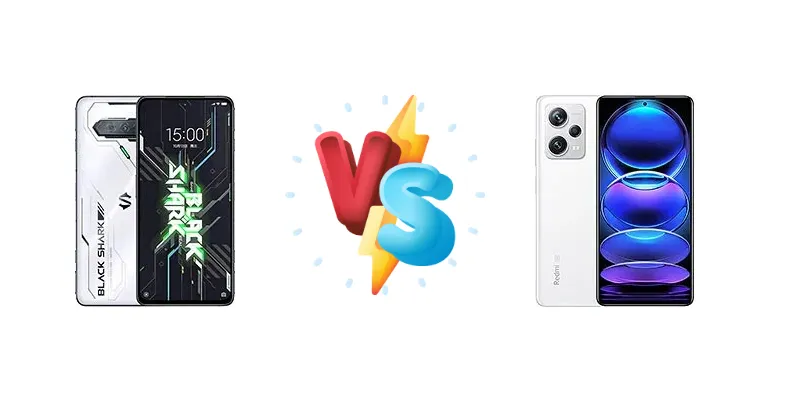
|
🏆 Quick Verdict
The Black Shark 4S Pro delivers raw gaming power with its Snapdragon 888+ chipset and optimized cooling. However, the Redmi Note 12 Pro+ boasts a superior camera system, longer battery life, and a potentially better display. For gamers, the Black Shark wins; for all-rounders, the Redmi Note 12 Pro+ is the stronger contender.
| PHONES | ||
|---|---|---|
| Phone Names | Xiaomi Black Shark 4S Pro | Xiaomi Redmi Note 12 Pro+ |
| Network | ||
|---|---|---|
| 2G bands | GSM 850 / 900 / 1800 / 1900 | GSM 850 / 900 / 1800 / 1900 - SIM 1 & SIM 2 |
| 3G bands | HSDPA 800 / 850 / 900 / 1700(AWS) / 1900 / 2100 | HSDPA 800 / 850 / 900 / 1900 / 2100 |
| 4G bands | 1, 2, 3, 4, 5, 7, 8, 18, 19, 20, 26, 28, 34, 38, 39, 40, 41 | 1, 3, 5, 8, 19, 34, 38, 39, 40, 41 - International, China |
| 5G bands | 1, 3, 8, 28, 41, 77, 78, 79 SA/NSA | 1, 3, 5, 8, 28, 38, 40, 41, 77, 78 SA/NSA - International |
| Speed | HSPA, LTE, 5G | HSPA, LTE-A (CA), 5G |
| Technology | GSM / CDMA / HSPA / EVDO / LTE / 5G | GSM / CDMA / HSPA / EVDO / LTE / 5G |
| CDMA2000 1xEV-DO | 1, 3, 5, 8, 28, 38, 41, 77, 78 SA/NSA - China | |
| Launch | ||
|---|---|---|
| Announced | 2021, October 13 | 2022, October 27 |
| Status | Available. Released 2021, October 16 | Available. Released 2022, November 01 |
| Body | ||
|---|---|---|
| Build | - | Glass front (Gorilla Glass 5), glass back |
| Dimensions | 163.7 x 76.2 x 9.9 mm (6.44 x 3.00 x 0.39 in) | 162.9 x 76 x 8.9 mm (6.41 x 2.99 x 0.35 in) |
| SIM | Nano-SIM + Nano-SIM | Dual SIM (Nano-SIM, dual stand-by) |
| Weight | 220 g (7.76 oz) | 208.4 g (7.34 oz) |
| Physical pop-up gaming triggers | IP53, dust and splash resistant | |
| Display | ||
|---|---|---|
| Protection | - | Corning Gorilla Glass 5 |
| Resolution | 1080 x 2400 pixels, 20:9 ratio (~395 ppi density) | 1080 x 2400 pixels, 20:9 ratio (~395 ppi density) |
| Size | 6.67 inches, 107.4 cm2 (~86.1% screen-to-body ratio) | 6.67 inches, 107.4 cm2 (~86.8% screen-to-body ratio) |
| Type | Super AMOLED, 144Hz, HDR10+, 1300 nits (peak) | OLED, 1B colors, 120Hz, Dolby Vision, HDR10+, 500 nits (typ), 900 nits (HBM) |
| Always-on display | - | |
| Platform | ||
|---|---|---|
| CPU | Octa-core (1x3.0 GHz Cortex-X1 & 3x2.42 GHz Cortex-A78 & 4x1.80 GHz Cortex-A55) | Octa-core (2x2.6 GHz Cortex-A78 & 6x2.0 GHz Cortex-A55) |
| Chipset | Qualcomm SM8350 Snapdragon 888+ 5G (5 nm) | Mediatek MT6877V Dimensity 1080 (6 nm) |
| GPU | Adreno 660 | Mali-G68 MC4 |
| OS | Android 11, Joy UI 12.8 | Android 12, MIUI 13 |
| Memory | ||
|---|---|---|
| Card slot | No | No |
| Internal | 256GB 8GB RAM, 256GB 12GB RAM, 512GB 16GB RAM | 256GB 8GB RAM, 256GB 12GB RAM |
| UFS 3.1 | UFS 2.2 | |
| Main Camera | ||
|---|---|---|
| Features | LED flash, HDR, panorama | Dual-LED dual-tone flash, HDR, panorama |
| Single | 20 MP, f/2.5, (wide), 0.8µm | - |
| Triple | 64 MP, f/1.8, (wide), 1/1.97", 0.7µm, PDAF 8 MP, f/2.2, 120˚ (ultrawide), 1/4.0", 1.12µm 5 MP (macro), AF | 200 MP, f/1.7, 24mm (wide), 1/1.4", 0.56µm, PDAF, OIS 8 MP, f/2.2, 120˚ (ultrawide), 1/4", 1.12µm 2 MP, f/2.4, (macro) |
| Video | 4K@30/60fps, 1080p@30/60/240fps, 1080p@960fps; HDR10+ | 4K@30fps, 1080p@30/60/120fps, 720p@960fps |
| Selfie camera | ||
|---|---|---|
| Features | HDR | HDR |
| Single | 20 MP, f/2.5, (wide), 0.8µm | 16 MP, f/2.5, (wide), 1/3.06", 1.0µm |
| Video | 1080p@30fps | 1080p@30/60fps |
| Sound | ||
|---|---|---|
| 3.5mm jack | Yes | Yes |
| 35mm jack | Yes | - |
| Loudspeaker | Yes, with stereo speakers | Yes, with stereo speakers |
| 24-bit/192kHz audio | 24-bit/192kHz audio | |
| Comms | ||
|---|---|---|
| Bluetooth | 5.2, A2DP, LE, aptX HD, aptX Adaptive | 5.2, A2DP, LE |
| Infrared port | - | Yes |
| NFC | Yes | Yes (market/region dependent) |
| Positioning | GPS, GLONASS, GALILEO, QZSS, BDS | GPS (L1), GLONASS (G1), BDS (B1I+B1c), GALILEO (E1), QZSS (L1) |
| Radio | No | No |
| USB | USB Type-C 2.0 | USB Type-C 2.0, OTG |
| WLAN | Wi-Fi 802.11 a/b/g/n/ac/6, dual-band, Wi-Fi Direct | Wi-Fi 802.11 a/b/g/n/ac/6, dual-band, Wi-Fi Direct |
| Features | ||
|---|---|---|
| Sensors | Fingerprint (side-mounted), accelerometer, gyro, proximity, compass, barometer | Fingerprint (side-mounted), accelerometer, proximity, gyro, compass |
| Battery | ||
|---|---|---|
| Charging | 120W wired, 50% in 5 min, 100% in 15 min | 120W wired, PD3.0, 100% in 19 min (advertised) |
| Type | Li-Po 4500 mAh | Li-Po 5000 mAh, non-removable |
| Misc | ||
|---|---|---|
| Colors | Black, White | Arctic White, Iceberg Blue, Obsidian Black, Trend edition |
| Models | - | 22101316UCP, 22101316UG |
| Price | About 650 EUR | $ 348.00 / £ 439.00 / € 399.00 / ₹ 29,949 |
| Tests | ||
|---|---|---|
| Battery life | - | Endurance rating 88h |
| Camera | - | Photo / Video |
| Display | - | Contrast ratio: Infinite (nominal) |
| Loudspeaker | - | -26.7 LUFS (Good) |
| Performance | - | AnTuTu: 498710 (v9) GeekBench: 2208 (v5.1), 2372 (v6) GFXBench: 22fps (ES 3.1 onscreen) |
Xiaomi Black Shark 4S Pro
- Unmatched gaming performance
- 120W ultra-fast charging
- High refresh rate display (144Hz)
- Dedicated gaming features (triggers, cooling)
- Powerful Snapdragon 888+ chipset
- Camera performance is not a priority
- Design may not appeal to everyone
- Can get warm under heavy load
Xiaomi Redmi Note 12 Pro+
- Excellent camera system
- Long battery life (88h endurance)
- Potentially superior display quality
- Fast 120W charging
- Stylish design
- Less powerful chipset than Black Shark 4S Pro
- Gaming performance not as optimized
- May lack dedicated gaming features
Display Comparison
The Redmi Note 12 Pro+ likely has a slight edge with its advertised 'infinite' contrast ratio, suggesting a vibrant and immersive display. While the Black Shark 4S Pro has a high refresh rate (typically 144Hz), the Redmi Note 12 Pro+'s display technology could offer better color accuracy and overall visual quality. Both offer excellent viewing experiences, but the Redmi Note 12 Pro+ potentially has a more refined panel.
Camera Comparison
The Redmi Note 12 Pro+ is expected to have a superior camera system. While specific details are missing, the 'Photo / Video' designation suggests a focus on imaging capabilities. The Black Shark 4S Pro's camera is decent, but not its primary strength. Expect better image quality, more features, and potentially improved low-light performance from the Redmi Note 12 Pro+.
Performance
The Black Shark 4S Pro's Snapdragon 888+ is the clear winner here. It's a significantly more powerful chipset than the Dimensity 1080, providing noticeably faster performance in demanding games and applications. The Black Shark's cooling system also helps maintain peak performance for longer periods. The Redmi Note 12 Pro+ is still capable, but not in the same league for hardcore gaming.
Battery Life
The Redmi Note 12 Pro+ takes the lead in battery life. Its endurance rating of 88h is impressive. The Black Shark 4S Pro's 120W charging is incredibly fast, but the Redmi Note 12 Pro+'s larger battery capacity and efficient chipset likely result in longer overall usage time.
Buying Guide
Who should buy the Xiaomi Black Shark 4S Pro? Serious mobile gamers seeking top-tier performance and dedicated gaming features. Who should buy the Xiaomi Redmi Note 12 Pro+? Users prioritizing camera quality, battery life, and a well-rounded smartphone experience with a premium feel.