
Xiaomi Black Shark 4 vs. Mi 11 Ultra: A Deep Dive into Gaming and Flagship Features
| Phones Images | |||||
|---|---|---|---|---|---|
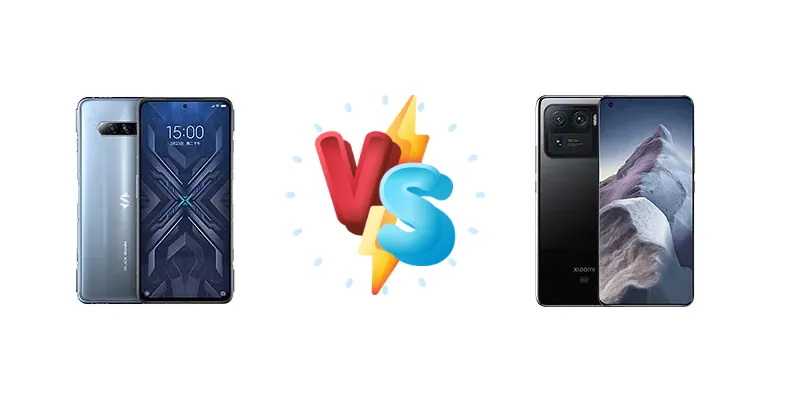
|
🏆 Quick Verdict
For the average user, the Xiaomi Mi 11 Ultra emerges as the more well-rounded device. While the Black Shark 4 excels in gaming, the Mi 11 Ultra’s superior camera system, brighter display, and wireless charging capabilities offer a more complete flagship experience, justifying its higher price point.
| PHONES | ||
|---|---|---|
| Phone Names | Xiaomi Black Shark 4 | Xiaomi Mi 11 Ultra |
| Network | ||
|---|---|---|
| 2G bands | GSM 850 / 900 / 1800 / 1900 | GSM 850 / 900 / 1800 / 1900 |
| 3G bands | HSDPA 800 / 850 / 900 / 1700(AWS) / 1900 / 2100 | HSDPA 850 / 900 / 1700(AWS) / 1900 / 2100 |
| 4G bands | 1, 2, 3, 4, 5, 7, 8, 18, 19, 20, 26, 28, 34, 38, 39, 40, 41 - International, China | 1, 2, 3, 4, 5, 7, 8, 12, 17, 20, 28, 32, 38, 40, 41, 42, 66 - International |
| 5G bands | 1, 3, 8, 28, 41, 77, 78, 79 SA/NSA - China | 1, 3, 5, 7, 8, 20, 28, 38, 40, 41, 77, 78, 79 SA/NSA - International |
| Speed | HSPA, LTE, 5G | HSPA, LTE, 5G |
| Technology | GSM / CDMA / HSPA / EVDO / LTE / 5G | GSM / CDMA / HSPA / EVDO / LTE / 5G |
| CDMA2000 1xEV-DO | 1, 3, 28, 41, 77, 78, 79 SA/NSA - China | |
| Launch | ||
|---|---|---|
| Announced | 2021, March 23 | 2021, March 29 |
| Status | Available. Released 2021, March 30 | Available. Released 2021, April 02 |
| Body | ||
|---|---|---|
| Build | - | Glass front (Gorilla Glass Victus), ceramic back, aluminum frame |
| Dimensions | 163.8 x 76.4 x 9.9 mm (6.45 x 3.01 x 0.39 in) | 164.3 x 74.6 x 8.4 mm (6.47 x 2.94 x 0.33 in) |
| SIM | Nano-SIM + Nano-SIM | Nano-SIM + Nano-SIM |
| Weight | 210 g (7.41 oz) | 234 g (8.25 oz) |
| Physical pop-up gaming triggers | IP68 dust/water resistant (up to 1.5m for 30 min) | |
| Display | ||
|---|---|---|
| Protection | - | Corning Gorilla Glass Victus |
| Resolution | 1080 x 2400 pixels, 20:9 ratio (~395 ppi density) | 1440 x 3200 pixels, 20:9 ratio (~515 ppi density) |
| Size | 6.67 inches, 107.4 cm2 (~85.8% screen-to-body ratio) | 6.81 inches, 112.0 cm2 (~91.4% screen-to-body ratio) |
| Type | Super AMOLED, 144Hz, HDR10+, 1300 nits (peak) | AMOLED, 1B colors, 120Hz, HDR10+, Dolby Vision, 900 nits (HBM), 1700 nits (peak) |
| Always-on display | - | |
| Platform | ||
|---|---|---|
| CPU | Octa-core (1x3.2 GHz Kryo 585 & 3x2.42 GHz Kryo 585 & 4x1.80 GHz Kryo 585) | Octa-core (1x2.84 GHz Cortex-X1 & 3x2.42 GHz Cortex-A78 & 4x1.80 GHz Cortex-A55) |
| Chipset | Qualcomm SM8250-AC Snapdragon 870 5G (7 nm) | Qualcomm SM8350 Snapdragon 888 5G (5 nm) |
| GPU | Adreno 650 | Adreno 660 |
| OS | Android 11, Joy UI 12.5 | Android 11, upgradable to Android 13, MIUI 14 |
| Memory | ||
|---|---|---|
| Card slot | No | No |
| Internal | 128GB 6GB RAM, 128GB 8GB RAM, 128GB 12GB RAM, 256GB 8GB RAM, 256GB 12GB RAM | 256GB 8GB RAM, 256GB 12GB RAM, 512GB 12GB RAM |
| UFS 3.1 | UFS 3.1 | |
| Main Camera | ||
|---|---|---|
| Features | LED flash, HDR, panorama | Laser AF, color spectrum sensor, Dual-LED flash, HDR, panorama, 1.1” AMOLED selfie display |
| Single | 20 MP, f/2.0, (wide), 0.8µm | 20 MP, f/2.2, 27mm (wide), 1/3.4", 0.8µm |
| Triple | 48 MP, f/1.8, (wide), 1/2.0", 0.8µm, PDAF 8 MP, f/2.2, 120˚ (ultrawide), 1/4.0", 1.12µm 5 MP (macro), AF | 50 MP, f/2.0, 24mm (wide), 1/1.12", 1.4µm, dual pixel PDAF, OIS 48 MP, f/4.1, 120mm (periscope telephoto), 1/2.0", 0.8µm, PDAF, OIS, 5x optical zoom 48 MP, f/2.2, 12mm, 128˚ (ultrawide), 1/2.0", 0.8µm, PDAF |
| Video | 4K@30/60fps, 1080p@30/60/240fps, 1080p@960fps | 8K@24fps, 4K@30/60fps, 1080p@30/60/120/240/960/1920fps, gyro-EIS, HDR10+ rec. |
| Selfie camera | ||
|---|---|---|
| Features | HDR | HDR, panorama |
| Single | 20 MP, f/2.0, (wide), 0.8µm | 20 MP, f/2.2, 27mm (wide), 1/3.4", 0.8µm |
| Video | 1080p@30fps | 1080p@30/60fps, 720p@120fps, gyro-EIS |
| Sound | ||
|---|---|---|
| 3.5mm jack | Yes | No |
| 35mm jack | Yes | No |
| Loudspeaker | Yes, with stereo speakers | Yes, with stereo speakers |
| 24-bit/192kHz audio | 24-bit/192kHz audio Tuned by Harman Kardon | |
| Comms | ||
|---|---|---|
| Bluetooth | 5.2, A2DP, LE, aptX HD, aptX Adaptive | 5.2, A2DP, LE, aptX HD, aptX Adaptive |
| Infrared port | - | Yes |
| NFC | Yes | Yes |
| Positioning | GPS, GLONASS, GALILEO, QZSS, BDS | GPS (L1+L5), GLONASS (L1), BDS (B1I+B1c+B2a), GALILEO (E1+E5a), QZSS (L1+L5), NavIC (L5) |
| Radio | No | No |
| USB | USB Type-C 2.0 | USB Type-C 2.0, OTG |
| WLAN | Wi-Fi 802.11 a/b/g/n/ac/6, dual-band, Wi-Fi Direct | Wi-Fi 802.11 a/b/g/n/ac/6e, dual-band, Wi-Fi Direct, DLNA |
| Features | ||
|---|---|---|
| Sensors | Fingerprint (side-mounted), accelerometer, gyro, proximity, compass, barometer | Fingerprint (under display, optical), accelerometer, gyro, compass |
| - | Virtual proximity sensing | |
| Battery | ||
|---|---|---|
| Charging | 120W wired, 100% in 17 min | 67W wired, PD3.0, QC4, 100% in 36 min 67W wireless, 100% in 39 min 10W reverse wireless |
| Type | Li-Po 4500 mAh | Li-Po 5000 mAh |
| Misc | ||
|---|---|---|
| Colors | Mirror Black, Pale Grey, Black, Blue, Silver | Ceramic White (Cosmic White), Ceramic Black (Cosmic Black) |
| Models | SHARK PRS-H0, SHARK PRS-A0, SHARK KSR-A0 | M2102K1G, M2102K1C |
| Price | About 930 EUR | About 1500 EUR |
| SAR | - | 1.08 W/kg (head) 0.81 W/kg (body) |
| SAR EU | - | 0.55 W/kg (head) 0.99 W/kg (body) |
| Tests | ||
|---|---|---|
| Battery life | Endurance rating 96h | Endurance rating 95h |
| Camera | Photo / Video | Photo / Video |
| Display | Contrast ratio: Infinite (nominal) | Contrast ratio: Infinite (nominal) |
| Loudspeaker | -27.4 LUFS (Good) | -24.3 LUFS (Very good) |
| Performance | AnTuTu: 617456 (v8) GeekBench: 3448 (v5.1) GFXBench: 54fps (ES 3.1 onscreen) | AnTuTu: 688720 (v8) GeekBench: 3191 (v5.1) GFXBench: 33fps (ES 3.1 onscreen) |
Xiaomi Black Shark 4
- Blazing-fast 120W charging
- Excellent gaming performance with Snapdragon 870
- More affordable price point
- Less advanced camera system
- Lower peak display brightness
- No wireless charging
Xiaomi Mi 11 Ultra
- Superior camera system with large sensor
- Brighter and more versatile display
- Wireless and reverse wireless charging
- Slower wired charging (67W)
- Higher price point
- Potential for more thermal throttling under sustained load
Display Comparison
Both phones feature displays with an 'Infinite' (nominal) contrast ratio, but differ significantly in brightness. The Mi 11 Ultra boasts a measured peak brightness of 943 nits, exceeding the Black Shark 4’s 694 nits. This translates to better visibility in direct sunlight for the Mi 11 Ultra. While both likely utilize AMOLED panels, the Mi 11 Ultra’s higher brightness and potential for a more color-accurate calibration make it superior for media consumption and outdoor use. The Black Shark 4’s display is still very good, but the Mi 11 Ultra offers a more premium visual experience.
Camera Comparison
The provided data only indicates 'Photo / Video' capabilities for both, lacking specifics. However, given the Mi 11 Ultra’s positioning as a flagship, it’s safe to assume a significantly more advanced camera system. The Mi 11 Ultra is known for its large 1/1.12” primary sensor, offering exceptional low-light performance and dynamic range. The Black Shark 4 likely features a more standard camera setup geared towards casual photography. The Mi 11 Ultra’s camera system is a key differentiator, appealing to users who prioritize image quality and versatility.
Performance
The core difference lies in the chipsets: the Black Shark 4 utilizes the Snapdragon 870 5G (7nm), while the Mi 11 Ultra features the Snapdragon 888 5G (5nm). The 5nm process of the 888 offers improved power efficiency and thermal performance compared to the 870’s 7nm node. While the 888 has a higher clocked Cortex-X1 prime core (2.84 GHz vs 3.2 GHz on the 870), the real-world performance difference is nuanced. The 870 is incredibly efficient and delivers excellent sustained performance, making it a strong choice for gaming. However, the 888’s Adreno 660 GPU provides a theoretical edge in graphically demanding tasks. Both phones benefit from ample RAM, though the specific configurations aren't detailed in the provided data.
Battery Life
Both phones exhibit comparable battery endurance, with ratings of 96 hours for the Black Shark 4 and 95 hours for the Mi 11 Ultra. However, their charging speeds diverge dramatically. The Black Shark 4’s 120W wired charging can fully charge the battery in just 17 minutes, a significant advantage for users who need a quick top-up. The Mi 11 Ultra, while offering 67W wired charging (with PD3.0 and QC4 support), takes 36 minutes to reach 100%. Furthermore, the Mi 11 Ultra adds 67W wireless charging and 10W reverse wireless charging, features absent on the Black Shark 4. The Black Shark 4 prioritizes speed, while the Mi 11 Ultra offers greater charging flexibility.
Buying Guide
Buy the Xiaomi Black Shark 4 if you prioritize raw gaming performance, rapid charging, and a more affordable price point. Its Snapdragon 870 and 120W charging are ideal for extended gaming sessions. Buy the Xiaomi Mi 11 Ultra if you value a top-tier camera system, a brighter and more versatile display, and the convenience of wireless charging, even if it means sacrificing some gaming-specific features and paying a premium.