
Xiaomi Black Shark 4 vs. OnePlus 9 Pro: A Deep Dive for Power Users
| Phones Images | |||||
|---|---|---|---|---|---|
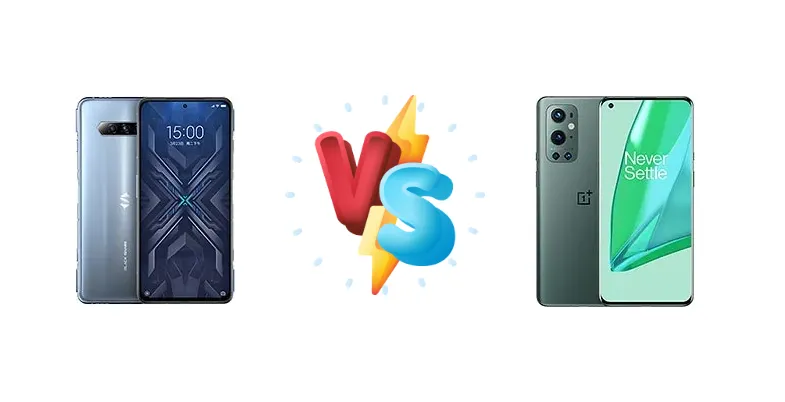
|
🏆 Quick Verdict
For dedicated mobile gamers prioritizing sustained performance and rapid charging, the Xiaomi Black Shark 4 is the clear winner. However, the OnePlus 9 Pro offers a more versatile package with a superior camera system and a more polished software experience, making it the better choice for everyday users.
| PHONES | ||
|---|---|---|
| Phone Names | Xiaomi Black Shark 4 | OnePlus 9 Pro |
| Network | ||
|---|---|---|
| 2G bands | GSM 850 / 900 / 1800 / 1900 | GSM 850 / 900 / 1800 / 1900 |
| 3G bands | HSDPA 800 / 850 / 900 / 1700(AWS) / 1900 / 2100 | HSDPA 800 / 850 / 900 / 1700(AWS) / 1800 / 1900 / 2100 |
| 4G bands | 1, 2, 3, 4, 5, 7, 8, 18, 19, 20, 26, 28, 34, 38, 39, 40, 41 - International, China | 1, 2, 3, 4, 5, 7, 8, 12, 13, 17, 18, 19, 20, 25, 26, 28, 32, 38, 39, 40, 41, 66 - EU |
| 5G bands | 1, 3, 8, 28, 41, 77, 78, 79 SA/NSA - China | 1, 3, 5, 7, 8, 20, 28, 38, 40, 41, 66, 78 SA/NSA - EU |
| Speed | HSPA, LTE, 5G | HSPA 42.2/5.76 Mbps, LTE Cat20 2000/200 Mbps, 5G |
| Technology | GSM / CDMA / HSPA / EVDO / LTE / 5G | GSM / CDMA / HSPA / LTE / 5G |
| CDMA2000 1xEV-DO | 1, 3, 28, 41, 78, 79 SA/NSA - CN | |
| Launch | ||
|---|---|---|
| Announced | 2021, March 23 | 2021, March 23 |
| Status | Available. Released 2021, March 30 | Available. Released 2021, March 30 |
| Body | ||
|---|---|---|
| Build | - | Glass front (Gorilla Glass 5), glass back (Gorilla Glass 5), aluminum frame |
| Dimensions | 163.8 x 76.4 x 9.9 mm (6.45 x 3.01 x 0.39 in) | 163.2 x 73.6 x 8.7 mm (6.43 x 2.90 x 0.34 in) |
| SIM | Nano-SIM + Nano-SIM | · Nano-SIM· Nano-SIM + Nano-SIM |
| Weight | 210 g (7.41 oz) | 197 g (6.95 oz) |
| Physical pop-up gaming triggers | IP68 dust/water resistant (up to 1.5m for 30 min) | |
| Display | ||
|---|---|---|
| Protection | - | Corning Gorilla Glass 5 |
| Resolution | 1080 x 2400 pixels, 20:9 ratio (~395 ppi density) | 1440 x 3216 pixels, 20:9 ratio (~525 ppi density) |
| Size | 6.67 inches, 107.4 cm2 (~85.8% screen-to-body ratio) | 6.7 inches, 108.4 cm2 (~90.3% screen-to-body ratio) |
| Type | Super AMOLED, 144Hz, HDR10+, 1300 nits (peak) | LTPO Fluid2 AMOLED, 1B colors, 120Hz, HDR10+, 1300 nits (peak) |
| Always-on display | Always-on display | |
| Platform | ||
|---|---|---|
| CPU | Octa-core (1x3.2 GHz Kryo 585 & 3x2.42 GHz Kryo 585 & 4x1.80 GHz Kryo 585) | Octa-core (1x2.84 GHz Cortex-X1 & 3x2.42 GHz Cortex-A78 & 4x1.80 GHz Cortex-A55 |
| Chipset | Qualcomm SM8250-AC Snapdragon 870 5G (7 nm) | Qualcomm SM8350 Snapdragon 888 5G (5 nm) |
| GPU | Adreno 650 | Adreno 660 |
| OS | Android 11, Joy UI 12.5 | Android 11, upgradable to Android 14, OxygenOS 14 |
| Memory | ||
|---|---|---|
| Card slot | No | No |
| Internal | 128GB 6GB RAM, 128GB 8GB RAM, 128GB 12GB RAM, 256GB 8GB RAM, 256GB 12GB RAM | 128GB 8GB RAM, 256GB 8GB RAM, 256GB 12GB RAM |
| UFS 3.1 | UFS 3.1 | |
| Main Camera | ||
|---|---|---|
| Features | LED flash, HDR, panorama | Laser AF, color spectrum sensor, Hasselblad Color Calibration, dual-LED flash, HDR, panorama |
| Quad | - | 48 MP, f/1.8, 23mm (wide), 1/1.43", 1.12µm, multi-directional PDAF, OIS 8 MP, f/2.4, 77mm (telephoto), 1.0µm, PDAF, OIS, 3.3x optical zoom 50 MP, f/2.2, 14mm (ultrawide), 1/1.56", 1.0µm, AF 2 MP, f/2.4, (monochrome) |
| Single | 20 MP, f/2.0, (wide), 0.8µm | 16 MP, f/2.4, (wide), 1/3.06", 1.0µm |
| Triple | 48 MP, f/1.8, (wide), 1/2.0", 0.8µm, PDAF 8 MP, f/2.2, 120˚ (ultrawide), 1/4.0", 1.12µm 5 MP (macro), AF | - |
| Video | 4K@30/60fps, 1080p@30/60/240fps, 1080p@960fps | 8K@30fps, 4K@30/60/120fps, 1080p@30/60/240fps, Auto HDR, gyro-EIS |
| Selfie camera | ||
|---|---|---|
| Features | HDR | HDR |
| Single | 20 MP, f/2.0, (wide), 0.8µm | 16 MP, f/2.4, (wide), 1/3.06", 1.0µm |
| Video | 1080p@30fps | 1080p@30fps, gyro-EIS |
| Sound | ||
|---|---|---|
| 3.5mm jack | Yes | No |
| 35mm jack | Yes | No |
| Loudspeaker | Yes, with stereo speakers | Yes, with stereo speakers |
| 24-bit/192kHz audio | 24-bit/192kHz audio | |
| Comms | ||
|---|---|---|
| Bluetooth | 5.2, A2DP, LE, aptX HD, aptX Adaptive | 5.2, A2DP, LE, aptX HD |
| NFC | Yes | Yes |
| Positioning | GPS, GLONASS, GALILEO, QZSS, BDS | GPS (L1+L5), GLONASS (G1), BDS (B1), GALILEO (E1+E5a) |
| Radio | No | No |
| USB | USB Type-C 2.0 | USB Type-C 3.1, OTG |
| WLAN | Wi-Fi 802.11 a/b/g/n/ac/6, dual-band, Wi-Fi Direct | Wi-Fi 802.11 a/b/g/n/ac/6, dual-band, Wi-Fi Direct, DLNA |
| Features | ||
|---|---|---|
| Sensors | Fingerprint (side-mounted), accelerometer, gyro, proximity, compass, barometer | Fingerprint (under display, optical), accelerometer, gyro, proximity, compass |
| Battery | ||
|---|---|---|
| Charging | 120W wired, 100% in 17 min | 65W wired, PD, 100% in 29 min 50W wireless, 100% in 43 min 5W reverse wireless |
| Type | Li-Po 4500 mAh | Li-Po 4500 mAh |
| Misc | ||
|---|---|---|
| Colors | Mirror Black, Pale Grey, Black, Blue, Silver | Morning Mist, Forest Green, Stellar Black |
| Models | SHARK PRS-H0, SHARK PRS-A0, SHARK KSR-A0 | LE2121, LE2125, LE2123, LE2120, LE2127 |
| Price | About 930 EUR | € 246.17 / $ 264.95 / £ 287.00 |
| Tests | ||
|---|---|---|
| Battery life | Endurance rating 96h | Endurance rating 86h |
| Camera | Photo / Video | Photo / Video |
| Display | Contrast ratio: Infinite (nominal) | - |
| Loudspeaker | -27.4 LUFS (Good) | -24.1 LUFS (Very good) |
| Performance | AnTuTu: 617456 (v8) GeekBench: 3448 (v5.1) GFXBench: 54fps (ES 3.1 onscreen) | - |
Xiaomi Black Shark 4
- Incredibly fast 120W charging
- Longer battery endurance
- More efficient Snapdragon 870 for sustained gaming
- Likely inferior camera system
- Lacks wireless charging
OnePlus 9 Pro
- Superior camera system with advanced features
- Versatile charging options (wired, wireless, reverse wireless)
- More refined software experience
- Shorter battery endurance
- Snapdragon 888 can throttle under sustained load
Display Comparison
Both devices feature excellent displays, but with different priorities. The OnePlus 9 Pro boasts a slightly brighter panel at 859 nits measured, compared to the Black Shark 4’s 694 nits. While the difference is noticeable, both are perfectly usable outdoors. The OnePlus 9 Pro likely utilizes LTPO technology (though not explicitly stated in the data) for adaptive refresh rates, potentially improving battery efficiency. The Black Shark 4, geared towards gaming, likely prioritizes refresh rate and response time over absolute peak brightness, though specific panel technology isn't detailed. Both displays have an 'Infinite' (nominal) contrast ratio, typical for OLED panels.
Camera Comparison
The provided data only indicates both phones have 'Photo / Video' capabilities, lacking specifics. Given OnePlus’s history and the 9 Pro’s positioning, it almost certainly features a more sophisticated camera system with larger sensors, advanced image processing, and features like Hasselblad color calibration. The Black Shark 4 likely prioritizes functionality over outright image quality, focusing on capturing gameplay or quick snapshots. Without sensor size or aperture data, it’s difficult to make a precise comparison, but the OnePlus 9 Pro is expected to deliver significantly better still photography and videography.
Performance
The core difference lies in the chipsets. The OnePlus 9 Pro is powered by the Snapdragon 888 (5nm), while the Black Shark 4 utilizes the Snapdragon 870 (7nm). The 888, with its Cortex-X1 prime core, offers a theoretical performance advantage, particularly in single-core tasks. However, the 870’s larger process node means it generally runs cooler and more efficiently, potentially leading to less thermal throttling during prolonged gaming. The Black Shark 4’s CPU configuration (3x2.42 GHz Kryo 585) is optimized for sustained performance, while the 9 Pro’s (3x2.42 GHz Cortex-A78) prioritizes peak performance. Both phones utilize Octa-core CPUs, but the architectural differences impact real-world performance and thermal behavior.
Battery Life
The Black Shark 4 boasts an endurance rating of 96 hours, exceeding the OnePlus 9 Pro’s 86 hours. This is partially due to the more efficient Snapdragon 870 and potentially a larger battery capacity (not specified in the data). However, the OnePlus 9 Pro compensates with significantly faster charging: 65W wired (29 minutes to 100%), 50W wireless (43 minutes), and 5W reverse wireless. The Black Shark 4’s 120W wired charging is incredibly fast (17 minutes to 100%), but lacks wireless charging options. The Black Shark 4’s longer endurance is beneficial for users who prioritize minimizing charging frequency, while the OnePlus 9 Pro offers convenience with its versatile charging options.
Buying Guide
Buy the Xiaomi Black Shark 4 if you need uncompromising gaming performance, exceptionally fast 120W charging, and a long-lasting battery for extended play sessions. Buy the OnePlus 9 Pro if you prefer a balanced flagship experience with a top-tier camera, a vibrant display, and a refined software experience, even if it means sacrificing some raw gaming horsepower and charging speed.