
Xiaomi 17 vs. Google Pixel 7a: A Deep Dive into Performance, Camera, and Value
| Phones Images | |||||
|---|---|---|---|---|---|
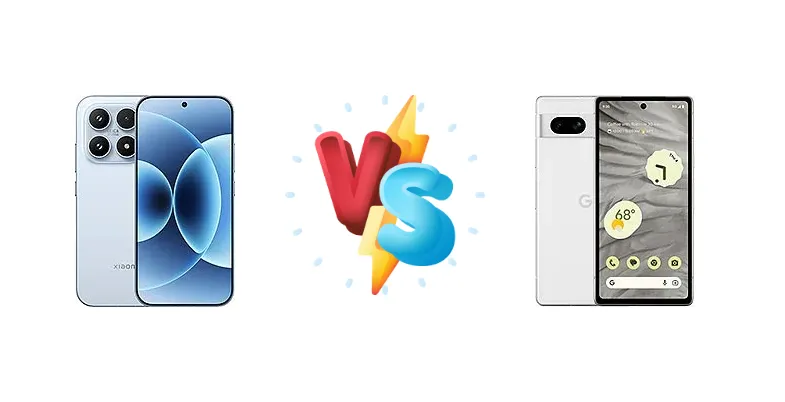
|
🏆 Quick Verdict
For users prioritizing raw power and future-proofing, the Xiaomi 17 is the clear winner. Its Snapdragon 8 Elite Gen 5 offers a significant performance advantage. However, the Pixel 7a remains a compelling choice for those deeply invested in the Google ecosystem and valuing exceptional camera software.
| PHONES | ||
|---|---|---|
| Phone Names | Xiaomi 17 | Google Pixel 7a |
| Network | ||
|---|---|---|
| 2G bands | GSM 850 / 900 / 1800 / 1900 | GSM 850 / 900 / 1800 / 1900 |
| 3G bands | HSDPA 800 / 850 / 900 / 1700(AWS) / 1900 / 2100 | HSDPA 800 / 850 / 900 / 1700(AWS) / 1900 / 2100 |
| 4G bands | 1, 2, 3, 4, 5, 7, 8, 12, 17, 18, 19, 20, 25, 26, 28, 34, 38, 39, 40, 41, 42, 48, 66 | 1, 2, 3, 4, 5, 7, 8, 12, 13, 14, 17, 20, 25, 26, 28, 29, 30, 38, 40, 41, 48, 66, 71 - GWKK3, G0DZQ |
| 5G bands | 1, 2, 3, 5, 7, 8, 12, 18, 20, 25, 26, 28, 38, 40, 41, 48, 66, 77, 78, 80, 81, 83, 84, 89 SA/NSA | 1, 2, 3, 5, 7, 8, 12, 14, 20, 25, 28, 30, 38, 41, 48, 66, 71, 77, 78 SA/NSA/Sub6 - GWKK3 |
| Speed | HSPA, LTE, 5G | HSPA, LTE, 5G |
| Technology | GSM / HSPA / LTE / 5G | GSM / HSPA / LTE / 5G |
| - | 1, 2, 3, 5, 7, 8, 12, 20, 25, 28, 38, 40, 41, 66, 75, 76, 77, 78, 79 SA/NSA/Sub6 - GHL1X, G82U8 | |
| Launch | ||
|---|---|---|
| Announced | 2025, September 25 | 2023, May 10 |
| Status | Available. Released 2025, September 27 | Available. Released 2023, May 10 |
| Body | ||
|---|---|---|
| Build | Glass front (Dragon Crystal Glass), aluminum frame | Glass front (Gorilla Glass 3), aluminum frame, plastic back |
| Dimensions | 151.1 x 71.8 x 8.1 mm (5.95 x 2.83 x 0.32 in) | 152 x 72.9 x 9 mm (5.98 x 2.87 x 0.35 in) |
| SIM | Nano-SIM + Nano-SIM | Nano-SIM + eSIM |
| Weight | 191 g (6.74 oz) | 193.5 g (6.84 oz) |
| - | IP67 dust/water resistant (up to 1m for 30 min) | |
| Display | ||
|---|---|---|
| Protection | Xiaomi Dragon Crystal Glass | Corning Gorilla Glass 3 |
| Resolution | 1220 x 2656 pixels, 19.5:9 ratio (~464 ppi density) | 1080 x 2400 pixels, 20:9 ratio (~429 ppi density) |
| Size | 6.3 inches, 97.1 cm2 (~89.5% screen-to-body ratio) | 6.1 inches, 90.7 cm2 (~81.8% screen-to-body ratio) |
| Type | LTPO AMOLED, 68B colors, 2160Hz PWM, 120Hz, Dolby Vision, HDR Vivid, HDR10+, 3500 nits (peak) | OLED, HDR, 90Hz |
| - | Always-on display | |
| Platform | ||
|---|---|---|
| CPU | Octa-core (2x4.6 GHz Oryon V3 Phoenix L + 6x3.62 GHz Oryon V3 Phoenix M) | Octa-core (2x2.85 GHz Cortex-X1 & 2x2.35 GHz Cortex-A78 & 4x1.80 GHz Cortex-A55) |
| Chipset | Qualcomm SM8850-AC Snapdragon 8 Elite Gen 5 (3 nm) | Google Tensor G2 (5 nm) |
| GPU | Adreno 840 | Mali-G710 MP7 |
| OS | Android 16, HyperOS 3 | Android 13, upgradable to Android 15, up to 5 major Android upgrades |
| Memory | ||
|---|---|---|
| Card slot | No | No |
| Internal | 256GB 12GB RAM, 512GB 12GB RAM, 512GB 16GB RAM, 1TB 16GB RAM | 128GB 8GB RAM |
| - | UFS 3.1 | |
| Main Camera | ||
|---|---|---|
| Dual | - | 64 MP, f/1.9, 26mm (wide), 1/1.73", 0.8µm, dual pixel PDAF, OIS 13 MP, f/2.2, 120˚ (ultrawide), 1.12µm |
| Features | Laser AF, color spectrum sensor, Leica lens, Dual-LED dual-tone flash, HDR, panorama | Dual-LED flash, Pixel Shift, Auto-HDR, panorama |
| Triple | 50 MP, f/1.7, 23mm (wide), 1/1.31", 1.2µm, dual pixel PDAF, OIS 50 MP, f/2.0, 60mm (telephoto), 1/2.76", 0.64µm, PDAF (10cm - ∞), OIS, 2.6x optical zoom 50 MP, f/2.4, 17mm, 102˚ (ultrawide), 1/2.76", 0.64µm | - |
| Video | 8K@30fps (HDR), 4K@30/60fps (HDR10+, 10-bit Dolby Vision HDR, 10-bit LOG), 1080p@30/60/120/240/960fps, 720p@1920fps, gyro-EIS | 4K@30/60fps, 1080p@30/60/120/240fps, OIS |
| Selfie camera | ||
|---|---|---|
| Features | HDR, panorama | HDR, panorama |
| Single | 50 MP, f/2.2, 21mm (wide), PDAF | 13 MP, f/2.2, 20mm (ultrawide), 1.12µm |
| Video | 4K@30/60fps, 1080p@30/60fps, HDR10+, gyro-EIS | 4K@30fps, 1080p@30fps |
| Sound | ||
|---|---|---|
| 3.5mm jack | - | No |
| 35mm jack | No | No |
| Loudspeaker | Yes, with stereo speakers (with Dolby Atmos) | Yes, with stereo speakers |
| Comms | ||
|---|---|---|
| Bluetooth | 5.4, A2DP, LE, aptX HD, aptX Adaptive, LHDC 5 | 5.3, A2DP, LE |
| Infrared port | Yes | - |
| NFC | Yes | Yes |
| Positioning | GPS (L1+L5), BDS (B1I+B1c+B2a), GALILEO (E1+E5a), QZSS (L1+L5), NavIC (L5), GLONASS | GPS, GLONASS, GALILEO, BDS, QZSS, NavIC |
| Radio | No | No |
| USB | USB Type-C 3.2, Display Port, OTG | USB Type-C 3.2 |
| WLAN | Wi-Fi 802.11 a/b/g/n/ac/6/7, dual-band, Wi-Fi Direct | Wi-Fi 802.11 a/b/g/n/ac/6e, tri-band |
| Features | ||
|---|---|---|
| Sensors | Fingerprint (under display, ultrasonic), accelerometer, proximity, gyro, compass, barometer | Fingerprint (under display, optical), accelerometer, gyro, proximity, compass, barometer |
| Battery | ||
|---|---|---|
| Charging | 100W wired, PD3.0, QC3+, 100W PPS 50W wireless 22.5W reverse wireless | 18W wired, PD3.0 7.5W wireless |
| Type | Si/C Li-Ion 7000 mAh | Li-Po 4385 mAh |
| Misc | ||
|---|---|---|
| Colors | Black, Blue, Pink, White | Charcoal, Snow, Sea, Coral |
| Models | - | GWKK3, GHL1X, G0DZQ, G82U8 |
| Price | About 540 EUR | € 179.90 / $ 150.00 / £ 170.00 / ₹ 25,980 |
Xiaomi 17
- Unmatched processing power with Snapdragon 8 Elite Gen 5
- Blazing-fast 100W wired and 50W wireless charging
- Likely superior display technology (adaptive refresh rate)
- Potential for higher price tag
- Xiaomi’s MIUI software can be polarizing
Google Pixel 7a
- Exceptional camera software and image processing
- Clean and streamlined Google software experience
- More affordable price point
- Slower 18W charging
- Less powerful Tensor G2 chipset compared to Snapdragon 8 Elite Gen 5
Display Comparison
The Pixel 7a boasts a measured peak brightness of 1070 nits, a respectable figure for outdoor visibility. However, the Xiaomi 17, while lacking specific brightness data, is likely to exceed this given its flagship positioning and the advancements in display technology typically found in Xiaomi’s high-end devices. The absence of LTPO in the Pixel 7a means it’s limited to a fixed refresh rate, while the Xiaomi 17 is expected to feature an adaptive refresh rate for improved power efficiency. Bezels are likely to be slimmer on the Xiaomi 17, contributing to a more immersive viewing experience.
Camera Comparison
The Pixel 7a is renowned for its computational photography prowess, leveraging Google’s image processing algorithms. However, without specific sensor details for the Xiaomi 17, it’s reasonable to assume a larger sensor and potentially more advanced optics given its flagship status. The Pixel 7a’s strength lies in its software, consistently delivering excellent dynamic range and accurate colors. The Xiaomi 17 will likely offer greater flexibility with manual controls and potentially superior low-light performance due to a larger sensor. Ignoring the typical 2MP macro lens found on both devices, the primary camera capabilities will be the deciding factor, with the Xiaomi 17 likely having an edge in hardware.
Performance
The core difference lies in the chipsets. The Xiaomi 17’s Qualcomm SM8850-AC Snapdragon 8 Elite Gen 5 (3nm) with its Oryon V3 Phoenix cores represents a significant leap in performance and efficiency over the Pixel 7a’s 5nm Google Tensor G2. The Snapdragon 8 Elite Gen 5’s octa-core configuration (2x4.6 GHz + 6x3.62 GHz) dwarfs the Tensor G2’s (2x2.85 GHz Cortex-X1 + 2x2.35 GHz Cortex-A78 + 4x1.80 GHz Cortex-A55). The 3nm process node of the Snapdragon 8 Elite Gen 5 translates to lower power consumption and reduced thermal throttling during sustained workloads, crucial for gamers and power users. While the Tensor G2 excels in AI tasks, the Xiaomi 17 will dominate in CPU and GPU-intensive applications.
Battery Life
The Pixel 7a’s endurance rating of 76 hours is a good baseline, but the Xiaomi 17’s charging capabilities are in a different league. With 100W wired charging, the Xiaomi 17 can likely achieve a full charge in under 30 minutes, a stark contrast to the Pixel 7a’s 18W charging. The Xiaomi 17 also supports 50W wireless and 22.5W reverse wireless charging, features absent on the Pixel 7a. While the Pixel 7a’s battery life is respectable, the Xiaomi 17’s faster charging and additional wireless options provide a more convenient and versatile experience.
Buying Guide
Buy the Xiaomi 17 if you demand the fastest possible Android experience for gaming, demanding applications, and long-term usability. Its superior chipset and charging capabilities cater to power users. Buy the Google Pixel 7a if you prioritize a streamlined software experience, exceptional camera image processing, and integration with Google services, all within a more budget-friendly package.