
Xiaomi 15T vs OnePlus 12R: Which Android Flagship Delivers the Best Value?
| Phones Images | |||||
|---|---|---|---|---|---|
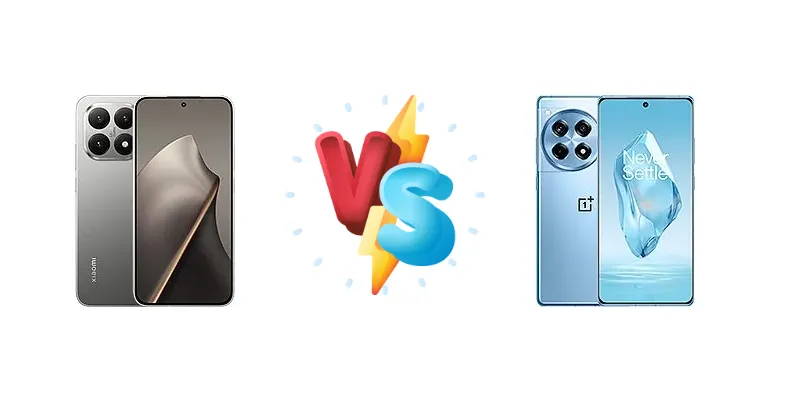
|
🏆 Quick Verdict
For the average user prioritizing all-day battery life and a brighter display, the Xiaomi 15T emerges as the winner. Its 57:44 hour endurance significantly surpasses the OnePlus 12R. However, the OnePlus 12R’s 100W charging, achieving a full charge in just 26 minutes, is a compelling advantage for those who value speed above all else.
| PHONES | ||
|---|---|---|
| Phone Names | Xiaomi 15T | OnePlus 12R |
| Network | ||
|---|---|---|
| 2G bands | GSM 850 / 900 / 1800 / 1900 | GSM 850 / 900 / 1800 / 1900 |
| 3G bands | HSDPA 800 / 850 / 900 / 1700(AWS) / 1900 / 2100 | HSDPA 850 / 900 / 1700(AWS) / 1900 / 2100 |
| 4G bands | 1, 2, 3, 4, 5, 7, 8, 12, 13, 17, 18, 19, 20, 26, 28, 32, 38, 40, 41, 42, 48, 66, 71 | 1, 2, 3, 4, 5, 7, 8, 12, 17, 18, 19, 20, 26, 28, 32, 38, 39, 40, 41, 66 |
| 5G bands | 1, 2, 3, 5, 7, 8, 12, 20, 26, 28, 38, 40, 41, 48, 66, 71, 75, 77, 78 SA/NSA | 1, 2, 3, 5, 7, 8, 12, 20, 28, 38, 40, 41, 66, 77, 78 SA/NSA |
| Speed | HSPA, LTE, 5G | HSPA, LTE, 5G |
| Technology | GSM / HSPA / LTE / 5G | GSM / CDMA / HSPA / LTE / 5G |
| Launch | ||
|---|---|---|
| Announced | 2025, September 24 | 2024, January 23 |
| Status | Available. Released 2025, September 24 | Available. Released 2024, February 06 |
| Body | ||
|---|---|---|
| Build | Glass front (Gorilla Glass 7i), plastic frame, fiber-reinforced plastic back | Glass front (Gorilla Glass Victus 2), aluminum frame, glass back |
| Dimensions | 163.2 x 78 x 7.5 mm (6.43 x 3.07 x 0.30 in) | 163.3 x 75.3 x 8.8 mm (6.43 x 2.96 x 0.35 in) |
| SIM | · Nano-SIM + Nano-SIM + eSIM + eSIM (max 2 at a time)· Nano-SIM + Nano-SIM | · Nano-SIM + Nano-SIM + eSIM (max 2 at a time)· Nano-SIM + Nano-SIM |
| Weight | 194 g (6.84 oz) | 207 g (7.30 oz) |
| Display | ||
|---|---|---|
| Protection | Corning Gorilla Glass 7i, Mohs level 6 | Corning Gorilla Glass Victus 2 |
| Resolution | 1280 x 2772 pixels, 19.5:9 ratio (~447 ppi density) | 1264 x 2780 pixels (~450 ppi density) |
| Size | 6.83 inches, 114.5 cm2 (~90.0% screen-to-body ratio) | 6.78 inches, 111.7 cm2 (~90.9% screen-to-body ratio) |
| Type | AMOLED, 68B colors, 120Hz, 3840Hz PWM, Dolby Vision, HDR10+, 3200 nits (peak) | LTPO4 AMOLED, 1B colors, 120Hz, HDR10+, Dolby Vision, 1600 nits (HBM), 4500 nits (peak) |
| Platform | ||
|---|---|---|
| CPU | Octa-core (1x3.25 GHz Cortex-A725 & 3x3.0 GHz Cortex-A725 & 4x2.1 GHz Cortex-A725) | Octa-core (1x3.2 GHz Cortex-X3 & 2x2.8 GHz Cortex-A715 & 2x2.8 GHz Cortex-A710 & 3x2.0 GHz Cortex-A510) |
| Chipset | Mediatek Dimensity 8400 Ultra (4 nm) | Qualcomm SM8550-AB Snapdragon 8 Gen 2 (4 nm) |
| GPU | Mali-G720 MC7 | Adreno 740 |
| OS | Android 15, upgradable to Android 16, HyperOS 3 | Android 14, up to 3 major Android upgrades, OxygenOS 15 |
| Memory | ||
|---|---|---|
| Card slot | No | No |
| Internal | 256GB 12GB RAM, 512GB 12GB RAM | 128GB 8GB RAM, 256GB 8GB RAM, 256GB 12GB RAM, 256GB 16GB RAM |
| Main Camera | ||
|---|---|---|
| Features | Leica lens, Color spectrum sensor, Ultra HDR, LED flash, HDR, panorama | Laser AF, color spectrum sensor, LED flash, HDR, panorama |
| Triple | 50 MP, f/1.7, 23mm (wide), 1/1.55", 1.0µm, PDAF, OIS 50 MP, f/1.9, 46mm (telephoto), 1/2.76", 0.64µm, PDAF, 2x optical zoom 12 MP, f/2.2, 15mm, 120˚ (ultrawide), 1/3.06", 1.12µm | 50 MP, f/1.8, 24mm (wide), 1/1.56", 1.0µm, multi-directional PDAF, OIS 8 MP, f/2.2, 16mm, 112˚ (ultrawide), 1/4.0", 1.12µm 2 MP (macro) |
| Video | 4K@30/60fps, 1080p@30/60/120/240/960fps, gyro-EIS, 10-bit Rec. 2020, HDR10+ | 4K@30/60fps, 1080p@30/60/120/240fps, gyro-EIS, OIS |
| Selfie camera | ||
|---|---|---|
| Features | HDR | HDR, panorama |
| Single | 32 MP, f/2.2, 21mm (wide), 1/3.44", 0.64µm | 16 MP, f/2.4, 26mm (wide), 1/3", 1.0µm |
| Video | 4K@30fps, 1080p@30/60fps, HDR10+ | 1080p@30fps, gyro-EIS |
| Sound | ||
|---|---|---|
| 35mm jack | No | No |
| Loudspeaker | Yes, with stereo speakers (with Dolby Atmos) | Yes, with stereo speakers |
| Comms | ||
|---|---|---|
| Bluetooth | 6.0, A2DP, LE | 5.3, A2DP, LE, aptX HD |
| Infrared port | Yes | Yes |
| NFC | Yes (market/region dependent) | Yes |
| Positioning | GPS (L1+L5), BDS (B1I+B1c+B2a), GALILEO (E1+E5a), QZSS (L1+L5), NavIC (L5), GLONASS | GPS, GALILEO, GLONASS, BDS, QZSS |
| Radio | No | No |
| USB | USB Type-C 2.0, OTG | USB Type-C 2.0 |
| WLAN | Wi-Fi 802.11 a/b/g/n/ac/6e, dual-band or tri-band, Wi-Fi Direct | Wi-Fi 802.11 a/b/g/n/ac/6/7, dual-band |
| Features | ||
|---|---|---|
| Sensors | Fingerprint (under display, optical), accelerometer, gyro, proximity, compass | Fingerprint (under display, optical), accelerometer, gyro, proximity, compass |
| Battery | ||
|---|---|---|
| Charging | 67W wired, PD3.0, 100% in 50 min | 100W wired, 100% in 26 min |
| Type | 5500 mAh | Li-Ion 5500 mAh |
| Misc | ||
|---|---|---|
| Colors | Black, Gray, Rose Gold | Iron Gray, Cool Blue, Electric Violet, Sunset Dune |
| Models | 25069PTEBG | CPH2609, CPH2585, CPH2611 |
| Price | $ 535.47 / £ 349.00 / € 435.43 | € 410.84 / $ 399.95 / £ 649.00 |
| SAR | - | 1.19 W/kg (head) 0.82 W/kg (body) |
| SAR EU | 0.99 W/kg (head) 0.99 W/kg (body) | - |
| EU LABEL | ||
|---|---|---|
| Battery | 57:44h endurance, 1600 cycles | - |
| Energy | Class A | - |
| Free fall | Class A (270 falls) | - |
| Repairability | Class C | - |
Xiaomi 15T
- Exceptional battery life (57:44h endurance)
- Brighter display (1525 nits)
- Potentially better sustained performance
- Slower charging speed (50 minutes)
- Chipset may not match Snapdragon 8 Gen 2 in peak performance
OnePlus 12R
- Incredibly fast 100W charging (26 minutes)
- Powerful Snapdragon 8 Gen 2 chipset
- Superior GPU performance for gaming
- Shorter battery life (57:44h endurance)
- Lower peak display brightness (1181 nits)
Display Comparison
The Xiaomi 15T boasts a significantly brighter display, reaching a measured peak of 1525 nits, compared to the OnePlus 12R’s 1181 nits. This translates to superior visibility outdoors under direct sunlight. While both utilize 4nm chipsets, the display brightness difference is a tangible benefit for outdoor users. We lack panel technology details (LTPO, PWM frequency) but the higher peak brightness is a clear win for the 15T. Bezels appear comparable based on available imagery, and color accuracy is assumed to be similar given both brands’ track records.
Camera Comparison
Without detailed camera specifications, a direct comparison is limited. However, given the market positioning, it’s reasonable to assume both phones feature capable main sensors. The OnePlus 12R likely benefits from Qualcomm’s image signal processor (ISP) for enhanced image processing. We can expect similar reliance on software algorithms for computational photography. The presence of a 2MP macro lens on either device is likely a marketing feature with limited practical utility. Sensor size and OIS implementation would be key differentiators, but are currently unknown.
Performance
The OnePlus 12R’s Snapdragon 8 Gen 2 (SM8550-AB) is generally considered a more powerful chipset than the Xiaomi 15T’s Dimensity 8400 Ultra. The Snapdragon 8 Gen 2 features a Cortex-X3 prime core clocked at 3.2 GHz, offering a performance edge in single-core tasks and bursty workloads. However, the Dimensity 8400 Ultra’s octa-core configuration, with its three Cortex-A725 cores at 3.0 GHz, is optimized for sustained performance and efficiency. The 4nm fabrication process is shared, but the Snapdragon 8 Gen 2’s Adreno GPU provides a more substantial graphics advantage, benefiting gamers. The 12R’s LPDDR5x RAM will also contribute to faster data transfer speeds.
Battery Life
The Xiaomi 15T’s endurance of 57:44 hours is a standout feature, significantly exceeding the OnePlus 12R’s score. While the 12R’s active use score of 14:32h is respectable, the 15T’s 14:56h combined with its superior overall endurance demonstrates a clear advantage in battery longevity. This is partially offset by the 12R’s blazing-fast 100W charging, which replenishes the battery to 100% in just 26 minutes, compared to the 15T’s 50-minute charge time. The 15T also claims 1600 charge cycles, suggesting a longer lifespan for the battery itself.
Buying Guide
Buy the Xiaomi 15T if you need exceptional battery life for extended use, value a brighter, more visible display in sunlight, and prioritize sustained performance over peak bursts. Buy the OnePlus 12R if you absolutely require the fastest possible charging speeds, frequently engage in graphically demanding gaming, and prefer the Qualcomm ecosystem. Both phones offer excellent value, but cater to distinct user priorities.