
Xiaomi 15 vs Samsung Galaxy S25 Ultra: A Deep Dive into Performance and Endurance
| Phones Images | |||||
|---|---|---|---|---|---|
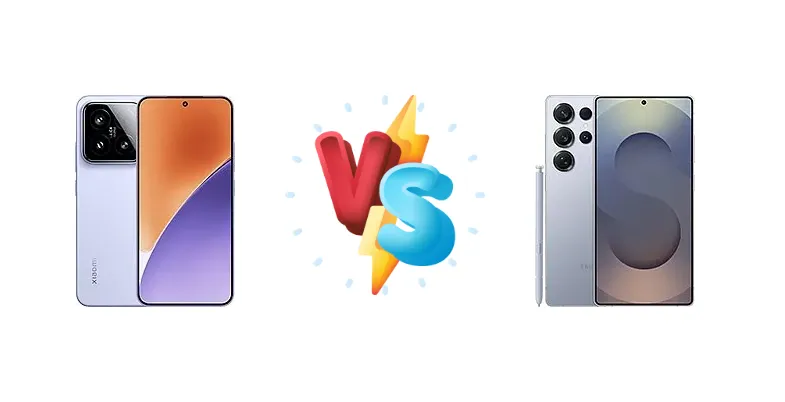
|
🏆 Quick Verdict
For the average user prioritizing longevity and rapid replenishment, the Xiaomi 15 emerges as the winner. Its exceptional 63:26h battery endurance and 90W charging significantly outperform the S25 Ultra’s 44:54h and 45W, making it ideal for power users and travelers.
| PHONES | ||
|---|---|---|
| Phone Names | Xiaomi 15 | Samsung Galaxy S25 Ultra |
| Network | ||
|---|---|---|
| 2G bands | GSM 850 / 900 / 1800 / 1900 | GSM 850 / 900 / 1800 / 1900 |
| 3G bands | HSDPA 800 / 850 / 900 / 1700(AWS) / 1900 / 2100 | HSDPA 850 / 900 / 1700(AWS) / 1900 / 2100 |
| 4G bands | 1, 2, 3, 4, 5, 7, 8, 12, 13, 17, 18, 19, 20, 25, 26, 28, 32, 38, 39, 40, 41, 42, 48, 66 - International | 1, 2, 3, 4, 5, 7, 8, 12, 13, 17, 18, 19, 20, 25, 26, 28, 32, 38, 39, 40, 41, 66 - International |
| 5G bands | 1, 2, 3, 5, 7, 8, 12, 20, 25, 26, 28, 38, 40, 41, 48, 66, 75, 77, 78 SA/NSA - International | 1, 2, 3, 5, 7, 8, 12, 20, 25, 26, 28, 38, 40, 41, 66, 75, 77, 78 SA/NSA/Sub6 - International |
| Speed | HSPA, LTE, 5G | HSPA, LTE (up to 7CA), 5G |
| Technology | GSM / HSPA / LTE / 5G | GSM / CDMA / HSPA / EVDO / LTE / 5G |
| Launch | ||
|---|---|---|
| Announced | 2024, October 29 | 2025, January 22 |
| Status | Available. Released 2024, October 29 | Available. Released 2025, February 03 |
| Body | ||
|---|---|---|
| Build | Glass front (Xiaomi Shield Glass), aluminum alloy frame (6M42) | Glass front (Corning Gorilla Armor 2), glass back (Gorilla Glass Victus 2), titanium frame (grade 5) |
| Dimensions | 152.3 x 71.2 x 8.1 / 8.4 / 8.5 mm | 162.8 x 77.6 x 8.2 mm (6.41 x 3.06 x 0.32 in) |
| SIM | · Nano-SIM + Nano-SIM· Nano-SIM + Nano-SIM + eSIM + eSIM (max 2 at a time) | · Nano-SIM + Nano-SIM + eSIM + eSIM (max 2 at a time) - INT· Nano-SIM + eSIM + eSIM (max 2 at a time) - USA· Nano-SIM + Nano-SIM - CN |
| Weight | 189 / 191 / 192 g (6.67 oz) | 218 g (7.69 oz) |
| Display | ||
|---|---|---|
| Protection | Xiaomi Shield Glass, Mohs level 6 | Corning Gorilla Armor 2, Mohs level 6 |
| Resolution | 1200 x 2670 pixels, 20:9 ratio (~460 ppi density) | 1440 x 3120 pixels, 19.5:9 ratio (~498 ppi density) |
| Size | 6.36 inches, 97.6 cm2 (~90.0% screen-to-body ratio) | 6.9 inches, 116.9 cm2 (~92.5% screen-to-body ratio) |
| Type | LTPO AMOLED, 68B colors, 1920Hz PWM, 120Hz, Dolby Vision, HDR10+, 3200 nits (peak) | Dynamic LTPO AMOLED 2X, 120Hz, HDR10+, 2600 nits (peak) |
| Platform | ||
|---|---|---|
| CPU | Octa-core (2x4.32 GHz Oryon V2 Phoenix L + 6x3.53 GHz Oryon V2 Phoenix M) | Octa-core (2x4.47 GHz Oryon V2 Phoenix L + 6x3.53 GHz Oryon V2 Phoenix M) |
| Chipset | Qualcomm SM8750-AB Snapdragon 8 Elite (3 nm) | Qualcomm SM8750-AC Snapdragon 8 Elite (3 nm) |
| GPU | Adreno 830 | Adreno 830 (1200 MHz) |
| OS | Android 15, up to 4 major Android upgrades, HyperOS 2 | Android 15, up to 7 major Android upgrades, One UI 7 |
| Memory | ||
|---|---|---|
| Card slot | No | No |
| Internal | 256GB 12GB RAM, 256GB 16GB RAM, 512GB 12GB RAM, 512GB 16GB RAM, 1TB 16GB RAM | 256GB 12GB RAM, 512GB 12GB RAM, 1TB 12GB RAM, 1TB 16GB RAM |
| Main Camera | ||
|---|---|---|
| Features | Laser AF, color spectrum sensor, Leica lens, Dual-LED dual-tone flash, HDR, panorama | Laser AF, Best Face, LED flash, auto-HDR, panorama |
| Quad | - | 200 MP, f/1.7, 24mm (wide), 1/1.3", 0.6µm, multi-directional PDAF, OIS 10 MP, f/2.4, 67mm (telephoto), 1/3.52", 1.12µm, PDAF, OIS, 3x optical zoom 50 MP, f/3.4, 111mm (periscope telephoto), 1/2.52", 0.7µm, PDAF, OIS, 5x optical zoom 50 MP, f/1.9, 120˚ (ultrawide), 1/2.5", 0.7µm, dual pixel PDAF, Super Steady video |
| Triple | 50 MP, f/1.6, 23mm (wide), 1/1.31", 1.2µm, dual pixel PDAF, OIS 50 MP, f/2.0, 60mm (telephoto), 1/2.76", 0.64µm, PDAF (10cm - ∞), OIS, 2.6x optical zoom 50 MP, f/2.2, 14mm, 115˚ (ultrawide), 1/2.76", 0.64µm | - |
| Video | 8K@24/30fps (HDR), 4K@24/30/60fps (HDR10+, 10-bit Dolby Vision HDR, 10-bit LOG), 1080p@30/60/120/240/960fps, 720p@1920fps, gyro-EIS | 8K@24/30fps, 4K@30/60/120fps, 1080p@30/60/120/240fps, 10-bit HDR, HDR10+, stereo sound rec., gyro-EIS |
| Selfie camera | ||
|---|---|---|
| Features | HDR, panorama | HDR, HDR10+ |
| Single | 32 MP, f/2.0, 21mm (wide), 1/3.14", 0.7µm | 12 MP, f/2.2, 26mm (wide), 1/3.2", 1.12µm, dual pixel PDAF |
| Video | 4K@30/60fps, 1080p@30/60fps, HDR10+, gyro-EIS | 4K@30/60fps, 1080p@30fps |
| Sound | ||
|---|---|---|
| 35mm jack | No | No |
| Loudspeaker | Yes, with stereo speakers | Yes, with stereo speakers |
| Comms | ||
|---|---|---|
| Bluetooth | 5.4/6.0, A2DP, LE, aptX HD, aptX Adaptive, LHDC 5 | 5.4, A2DP, LE |
| Infrared port | Yes | - |
| NFC | Yes | Yes |
| Positioning | GPS (L1+L5), GLONASS (G1), BDS (B1I+B1c+B2a), GALILEO (E1+E5a), QZSS (L1+L5) | GPS, GLONASS, BDS, GALILEO, QZSS |
| Radio | No | No |
| USB | USB Type-C 3.2, Display Port, OTG | USB Type-C 3.2, DisplayPort 1.2, OTG |
| WLAN | Wi-Fi 802.11 a/b/g/n/ac/6e/7, dual-band or tri-band, Wi-Fi Direct | Wi-Fi 802.11 a/b/g/n/ac/6e/7, tri-band, Wi-Fi Direct |
| Features | ||
|---|---|---|
| Sensors | Fingerprint (under display, ultrasonic), accelerometer, proximity, gyro, compass, barometer | Fingerprint (under display, ultrasonic), accelerometer, gyro, proximity, compass, barometer |
| Battery | ||
|---|---|---|
| Charging | 90W wired, PD3.0, QC3+ 50W wireless 10W reverse wireless | 45W wired, PD3.0, 65% in 30 min 15W wireless (Qi2 Ready) 4.5W reverse wireless |
| Type | Market-dependent versions:· Si/C Li-Ion 5240 mAh - Global· Si/C Li-Ion 5400 mAh - China | Li-Ion 5000 mAh |
| Misc | ||
|---|---|---|
| Colors | Black, White, Liquid Silver, Green, Lilac | Titanium Silver Blue, Titanium Black, Titanium White Silver, Titanium Gray, Titanium Jade Green, Titanium Jet Black, Titanium Pink Gold |
| Models | 24129PN74G, 24129PN74I, 24129PN74C | SM-S938B, SM-S938B/DS, SM-S938U, SM-S938U1, SM-S938W, SM-S938N, SM-S9380, SM-S938E, SM-S938E/DS |
| Price | $ 789.99 / £ 519.00 / € 648.25 | € 895.00 / $ 859.98 / £ 799.99 / ₹ 110,498 |
| SAR | - | 1.26 W/kg (head) 0.64 W/kg (body) |
| SAR EU | 0.99 W/kg (head) 1.00 W/kg (body) | 1.25 W/kg (head) 1.42 W/kg (body) |
| EU LABEL | ||
|---|---|---|
| Battery | 63:26h endurance, 1000 cycles | 44:54h endurance, 2000 cycles |
| Energy | Class A | Class B |
| Free fall | Class C (90 falls) | Class A (270 falls) |
| Repairability | Class C | Class C |
Xiaomi 15
- Exceptional battery life (63:26h endurance)
- Ultra-fast 90W wired charging
- Higher peak display brightness (1517 nits)
- Fewer battery charge cycles (1000)
- Potentially less refined software experience compared to Samsung
Samsung Galaxy S25 Ultra
- Slightly faster CPU clock speeds
- Longer battery lifespan (2000 charge cycles)
- Samsung’s established ecosystem and software features
- Significantly shorter battery endurance (44:54h)
- Slower wired charging (45W)
Display Comparison
Both the Xiaomi 15 and Samsung Galaxy S25 Ultra feature high-end displays, with the Xiaomi 15 achieving a measured peak brightness of 1517 nits, slightly surpassing the S25 Ultra’s 1417 nits. While the difference isn’t massive, the Xiaomi 15’s higher brightness will be noticeable in direct sunlight. Both likely employ LTPO technology for adaptive refresh rates, though this isn’t specified. The S25 Ultra’s display benefits from Samsung’s established color calibration expertise, but the Xiaomi 15’s brightness advantage is a key differentiator.
Camera Comparison
While detailed camera specs are absent, the focus should be on image processing and sensor quality. Given Samsung’s history, the S25 Ultra likely prioritizes vibrant, saturated colors, while Xiaomi often aims for a more natural look. The absence of sensor details makes a direct comparison difficult, but the S25 Ultra’s reputation for camera innovation suggests a potential advantage in computational photography. The lack of mention of high-resolution sensors or advanced zoom capabilities on either device suggests a focus on overall image quality rather than megapixel count.
Performance
Both devices are powered by the Qualcomm SM8750-AB/AC Snapdragon 8 Elite (3nm), featuring an octa-core CPU configuration with 2x Oryon V2 Phoenix L cores at 4.32 GHz (Xiaomi 15) vs 4.47 GHz (S25 Ultra) and 6x Oryon V2 Phoenix M cores at 3.53 GHz on both. The S25 Ultra’s marginally higher clock speed on the prime cores translates to a slight performance edge in CPU-intensive tasks, but the real-world difference will be minimal for most users. Both utilize LPDDR5x RAM, and thermal management will be crucial to sustaining peak performance; the 3nm process should aid in efficiency.
Battery Life
The Xiaomi 15’s battery endurance of 63:26h is a standout feature, significantly exceeding the Samsung Galaxy S25 Ultra’s 44:54h. This translates to nearly a full day and a half of additional usage. The Xiaomi 15 also boasts 90W wired charging, capable of rapidly replenishing the battery, alongside 50W wireless and 10W reverse wireless charging. The S25 Ultra’s 45W wired charging, while still fast, is considerably slower. The S25 Ultra’s 2000 charge cycles are double that of the Xiaomi 15’s 1000, suggesting a longer lifespan for the battery itself, potentially offsetting the shorter overall endurance.
Buying Guide
Buy the Xiaomi 15 if you need all-day battery life and the fastest possible charging speeds, prioritizing endurance over marginal performance gains. It’s the perfect choice for users who frequently travel, game on the go, or simply dislike battery anxiety. Buy the Samsung Galaxy S25 Ultra if you prefer a slightly faster CPU for demanding tasks and value Samsung’s established ecosystem and software features, accepting a trade-off in battery endurance and charging speed.