
Realme GT 7 Pro vs Xiaomi 15: A Deep Dive into Battery, Display, and Performance
| Phones Images | |||||
|---|---|---|---|---|---|
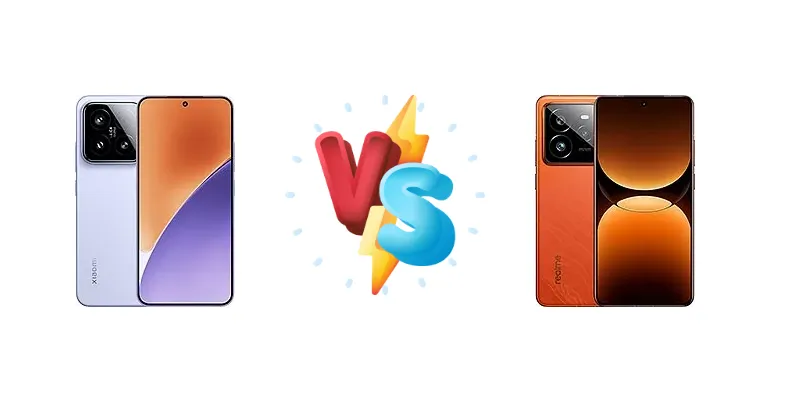
|
🏆 Quick Verdict
For the average user, the Realme GT 7 Pro emerges as the stronger contender. Its dramatically superior battery endurance (75:23h vs 63:26h) and blazing-fast 120W charging, capable of a full charge in under 40 minutes, outweigh the Xiaomi 15’s brighter display for most daily use cases.
| PHONES | ||
|---|---|---|
| Phone Names | Xiaomi 15 | Realme GT 7 Pro |
| Network | ||
|---|---|---|
| 2G bands | GSM 850 / 900 / 1800 / 1900 | GSM 850 / 900 / 1800 / 1900 |
| 3G bands | HSDPA 800 / 850 / 900 / 1700(AWS) / 1900 / 2100 | HSDPA 800 / 850 / 900 / 1700(AWS) / 1900 / 2100 |
| 4G bands | 1, 2, 3, 4, 5, 7, 8, 12, 13, 17, 18, 19, 20, 25, 26, 28, 32, 38, 39, 40, 41, 42, 48, 66 - International | 1, 2, 3, 4, 5, 7, 8, 12, 13, 17, 18, 19, 20, 26, 28, 38, 39, 40, 41, 66 - International |
| 5G bands | 1, 2, 3, 5, 7, 8, 12, 20, 25, 26, 28, 38, 40, 41, 48, 66, 75, 77, 78 SA/NSA - International | 1, 2, 3, 5, 7, 8, 20, 28, 38, 40, 41, 66, 77, 78 SA/NSA - International |
| Speed | HSPA, LTE, 5G | HSPA, LTE, 5G |
| Technology | GSM / HSPA / LTE / 5G | GSM / HSPA / LTE / 5G |
| Launch | ||
|---|---|---|
| Announced | 2024, October 29 | 2024, November 04 |
| Status | Available. Released 2024, October 29 | Available. Released 2024, November 04 |
| Body | ||
|---|---|---|
| Build | Glass front (Xiaomi Shield Glass), aluminum alloy frame (6M42) | Glass front (Gorilla Glass 7i), aluminum frame, glass back (Panda Glass) |
| Dimensions | 152.3 x 71.2 x 8.1 / 8.4 / 8.5 mm | 162.5 x 76.9 x 8.6 mm (6.40 x 3.03 x 0.34 in) |
| SIM | · Nano-SIM + Nano-SIM· Nano-SIM + Nano-SIM + eSIM + eSIM (max 2 at a time) | Nano-SIM + Nano-SIM |
| Weight | 189 / 191 / 192 g (6.67 oz) | 222.8 g (7.87 oz) |
| Display | ||
|---|---|---|
| Protection | Xiaomi Shield Glass, Mohs level 6 | Corning Gorilla Glass 7i, Mohs level 5 |
| Resolution | 1200 x 2670 pixels, 20:9 ratio (~460 ppi density) | 1264 x 2780 pixels (~450 ppi density) |
| Size | 6.36 inches, 97.6 cm2 (~90.0% screen-to-body ratio) | 6.78 inches, 111.7 cm2 (~89.4% screen-to-body ratio) |
| Type | LTPO AMOLED, 68B colors, 1920Hz PWM, 120Hz, Dolby Vision, HDR10+, 3200 nits (peak) | LTPO AMOLED, 1B colors, 120Hz, 2600Hz PWM, HDR10+, Dolby Vision, 1000 nits (typ), 2000 nits (HBM), 6500 nits (peak) |
| Platform | ||
|---|---|---|
| CPU | Octa-core (2x4.32 GHz Oryon V2 Phoenix L + 6x3.53 GHz Oryon V2 Phoenix M) | Octa-core (2x4.32 GHz Oryon V2 Phoenix L + 6x3.53 GHz Oryon V2 Phoenix M) |
| Chipset | Qualcomm SM8750-AB Snapdragon 8 Elite (3 nm) | Qualcomm SM8750-AB Snapdragon 8 Elite (3 nm) |
| GPU | Adreno 830 | Adreno 830 |
| OS | Android 15, up to 4 major Android upgrades, HyperOS 2 | Android 15, up to 3 major Android upgrades, Realme UI 6.0 |
| Memory | ||
|---|---|---|
| Card slot | No | No |
| Internal | 256GB 12GB RAM, 256GB 16GB RAM, 512GB 12GB RAM, 512GB 16GB RAM, 1TB 16GB RAM | 256GB 12GB RAM, 256GB 16GB RAM, 512GB 12GB RAM, 512GB 16GB RAM, 1TB 16GB RAM |
| Main Camera | ||
|---|---|---|
| Features | Laser AF, color spectrum sensor, Leica lens, Dual-LED dual-tone flash, HDR, panorama | Color spectrum sensor, Dual-LED flash, HDR, panorama |
| Triple | 50 MP, f/1.6, 23mm (wide), 1/1.31", 1.2µm, dual pixel PDAF, OIS 50 MP, f/2.0, 60mm (telephoto), 1/2.76", 0.64µm, PDAF (10cm - ∞), OIS, 2.6x optical zoom 50 MP, f/2.2, 14mm, 115˚ (ultrawide), 1/2.76", 0.64µm | 50 MP, f/1.8, 24mm (wide), 1/1.56", 1.0µm, multi-directional PDAF, OIS 50 MP, f/2.7, 73mm (telephoto), 1/1.95", 0.8µm, multi-directional PDAF, OIS, 3x optical zoom 8 MP, f/2.2, 16mm, 112˚ (ultrawide), 1/4.0", 1.12µm |
| Video | 8K@24/30fps (HDR), 4K@24/30/60fps (HDR10+, 10-bit Dolby Vision HDR, 10-bit LOG), 1080p@30/60/120/240/960fps, 720p@1920fps, gyro-EIS | 8K@24fps, 4K@30/60fps, 1080p@30/60/120/240fps, gyro-EIS |
| Selfie camera | ||
|---|---|---|
| Features | HDR, panorama | Panorama |
| Single | 32 MP, f/2.0, 21mm (wide), 1/3.14", 0.7µm | 16 MP, f/2.5, 25mm (wide), 1/3.09", 1.0µm |
| Video | 4K@30/60fps, 1080p@30/60fps, HDR10+, gyro-EIS | 1080p@30/60fps |
| Sound | ||
|---|---|---|
| 35mm jack | No | No |
| Loudspeaker | Yes, with stereo speakers | Yes, with stereo speakers |
| Comms | ||
|---|---|---|
| Bluetooth | 5.4/6.0, A2DP, LE, aptX HD, aptX Adaptive, LHDC 5 | 5.4, A2DP, LE |
| Infrared port | Yes | Yes |
| NFC | Yes | Yes, 360˚ |
| Positioning | GPS (L1+L5), GLONASS (G1), BDS (B1I+B1c+B2a), GALILEO (E1+E5a), QZSS (L1+L5) | GPS (L1+L5), BDS (B1I+B1c+B2a), GALILEO (E1+E5a), QZSS (L1+L5), NavIC (L5), GLONASS |
| Radio | No | No |
| USB | USB Type-C 3.2, Display Port, OTG | USB Type-C |
| WLAN | Wi-Fi 802.11 a/b/g/n/ac/6e/7, dual-band or tri-band, Wi-Fi Direct | Wi-Fi 802.11 a/b/g/n/ac/6/7, dual-band |
| Features | ||
|---|---|---|
| Sensors | Fingerprint (under display, ultrasonic), accelerometer, proximity, gyro, compass, barometer | Fingerprint (under display, ultrasonic), accelerometer, gyro, proximity, compass |
| Battery | ||
|---|---|---|
| Charging | 90W wired, PD3.0, QC3+ 50W wireless 10W reverse wireless | 120W wired, 13 min to 50%, 37 min to 100% 120W wired, 30 min to 100% - India only version |
| Type | Market-dependent versions:· Si/C Li-Ion 5240 mAh - Global· Si/C Li-Ion 5400 mAh - China | Market-dependent versions:· Si/C Li-Ion 6500 mAh (Global)· Si/C Li-Ion 5800 mAh (India only) |
| Misc | ||
|---|---|---|
| Colors | Black, White, Liquid Silver, Green, Lilac | Mars Orange, Galaxy Grey, White |
| Models | 24129PN74G, 24129PN74I, 24129PN74C | RMX5010, RMX5011 |
| Price | $ 789.99 / £ 519.00 / € 648.25 | € 594.99 / $ 705.54 / ₹ 50,998 |
| SAR EU | 0.99 W/kg (head) 1.00 W/kg (body) | - |
| EU LABEL | ||
|---|---|---|
| Battery | 63:26h endurance, 1000 cycles | 75:23h endurance, 800 cycles |
| Energy | Class A | Class A |
| Free fall | Class C (90 falls) | Class C (90 falls) |
| Repairability | Class C | Class B |
Xiaomi 15
- Brighter display for outdoor use
- 50W wireless charging support
- 10W reverse wireless charging
- Potentially longer battery cycle life (1000 cycles)
- Significantly shorter battery endurance
- Slower wired charging speed (90W)
Realme GT 7 Pro
- Exceptional battery life (75:23h endurance)
- Ultra-fast 120W wired charging
- Higher peak display brightness
- Potentially better sustained performance due to cooling
- Lower battery cycle life (800 cycles)
- No wireless charging
Display Comparison
The Realme GT 7 Pro’s display is the clear winner in terms of peak brightness, reaching a measured 2336 nits compared to the Xiaomi 15’s 1517 nits. This translates to significantly better visibility under direct sunlight. While both likely utilize LTPO technology for adaptive refresh rates (not specified in the data, but standard for this class), the Realme’s brightness advantage is undeniable. The Xiaomi 15 may offer superior color accuracy or calibration, but without specific data, this remains speculative. The higher brightness of the GT 7 Pro will be particularly beneficial for users who frequently use their phones outdoors or consume HDR content.
Camera Comparison
The provided data lacks camera specifications, making a direct comparison impossible. However, given the Realme GT series’ history, it’s reasonable to expect a focus on high-resolution sensors and versatile camera systems. The Xiaomi 15, traditionally, emphasizes computational photography and image processing. Without sensor size, aperture, or OIS details, we can only speculate. The absence of any mention of a telephoto lens on either device suggests a potential weakness in zoom capabilities compared to competitors.
Performance
Both devices are powered by the Qualcomm SM8750-AB Snapdragon 8 Elite (3 nm) with the same CPU configuration: an octa-core setup featuring 2x4.32 GHz Oryon V2 Phoenix L cores and 6x3.53 GHz Oryon V2 Phoenix M cores. This means raw processing power will be virtually identical. Performance differences will likely stem from thermal management and sustained performance. While not specified, Realme’s GT series often prioritizes aggressive cooling solutions, potentially allowing for longer peak performance during demanding tasks like gaming. Both devices utilize LPDDR5x RAM, ensuring fast memory access speeds.
Battery Life
The Realme GT 7 Pro dominates in battery performance. Its 75:23h endurance rating significantly surpasses the Xiaomi 15’s 63:26h. This translates to a real-world difference of over an hour in active use (17:31h vs 16:28h). Crucially, the GT 7 Pro’s 120W wired charging is a game-changer, achieving a 50% charge in just 13 minutes and a full charge in 30-37 minutes (depending on region). The Xiaomi 15’s 90W wired charging is respectable, but considerably slower. The inclusion of 50W wireless charging and 10W reverse wireless charging on the Xiaomi 15 adds convenience, but doesn’t compensate for the slower wired charging speed or lower overall endurance. The GT 7 Pro also has a slightly higher battery cycle count (800 vs 1000), which may indicate a slightly faster degradation rate over the long term.
Buying Guide
Buy the Xiaomi 15 if you prioritize a stunningly bright display for outdoor visibility and content consumption, and are comfortable with a more frequent charging schedule. Buy the Realme GT 7 Pro if you demand exceptional battery life, need the fastest possible charging speeds, and value long-term usability without constantly seeking a power outlet.